


DESICCANT
What are desiccant beads?
Desiccant beads are moisture-absorbing materials that help maintain a dry state. They are the opposite of humectants, which promote moisture retention. Desiccants remove moisture from the air and create and maintain a moisture-free environment.
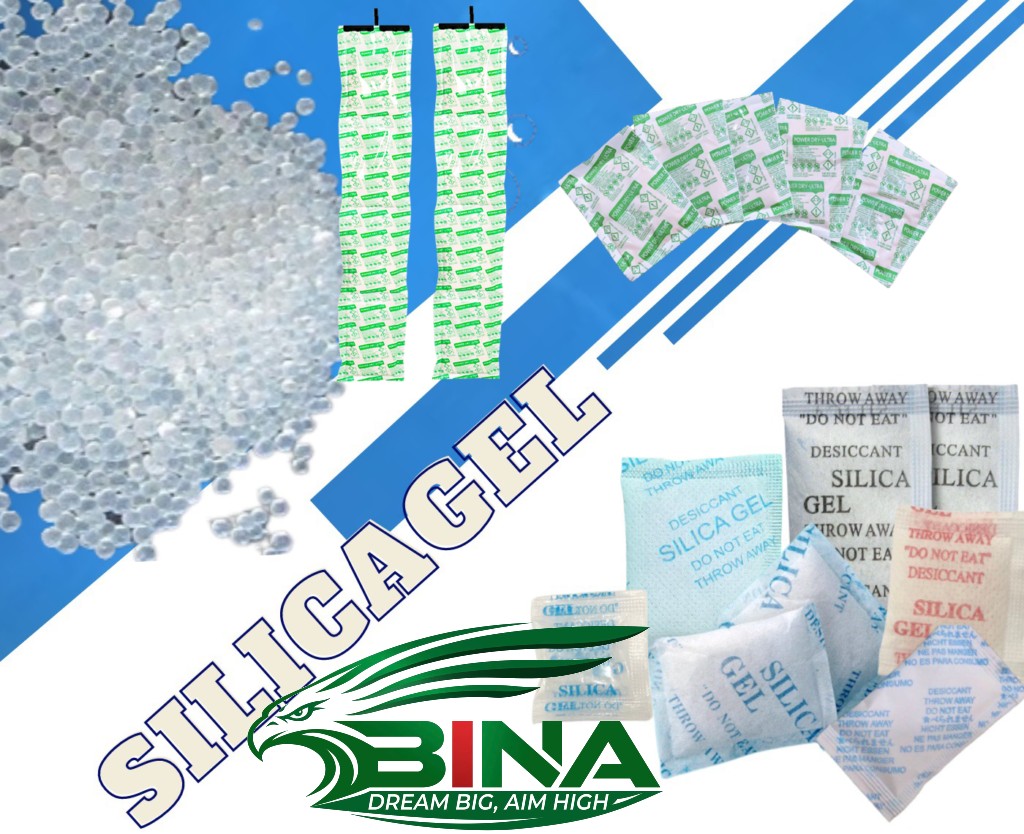 |
Humid environments can cause damage to electronic devices, clothing, cosmetics, medicines and vitamins, along with many other products. Moisture creates an environment prone to bacteria, mold and fungi and deterioration. Moisture in electronic devices can cause permanent damage and corrosion. By using desiccants, this damage can be prevented.
◆Learn more:
- https://hadupack.com/en/danh-muc/tui-phuc-hop/
- https://hadupack.com/en/danh-muc/vat-tu-phong-sach/
- https://hadupack.com/en/danh-muc/bang-dinh/
- https://hadupack.com/en/danh-muc/day-dai/
Desiccants are commonly found in the packaging of products that can be damaged by moisture and water vapor. But desiccants are also used in other areas where moisture can cause problems. One example is in insulated and soundproof windows, where multiple panes of glass are held together with a small gap between the panes to provide insulation. If moisture enters this gap, condensation can lead to fogging and obstruct visibility. Window manufacturers place a small amount of desiccant between the panes of glass to absorb moisture and humidity in the enclosed space, keeping the windows free from condensation and fogging.
 |
Common Types of Desiccants
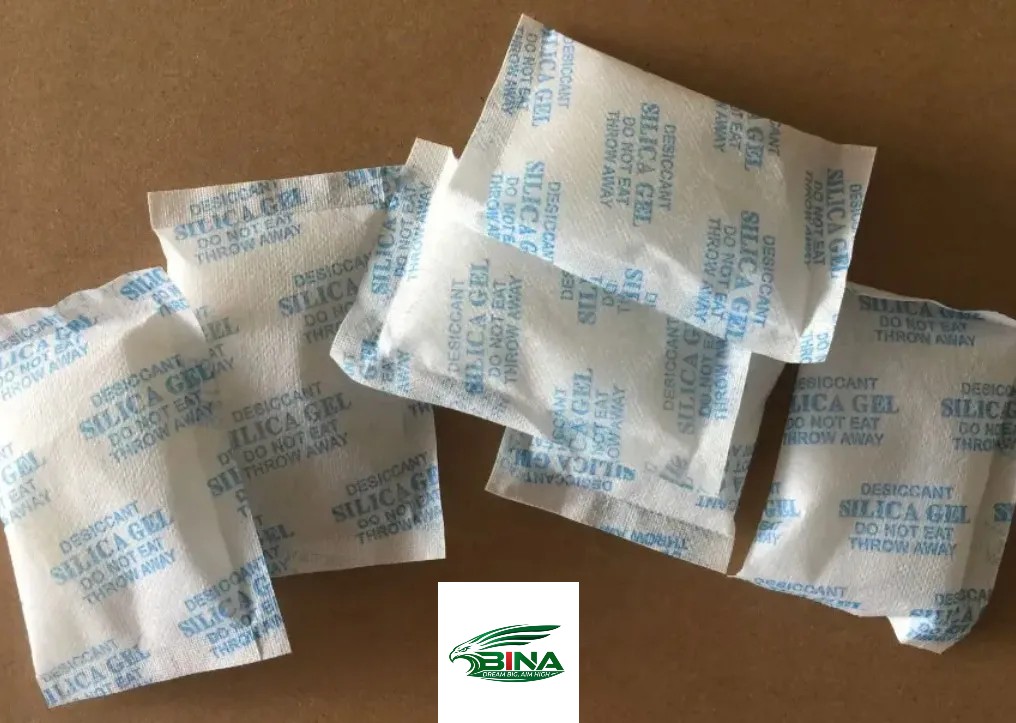
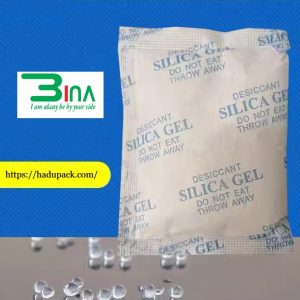
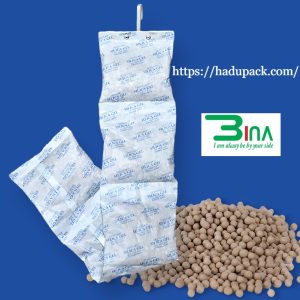
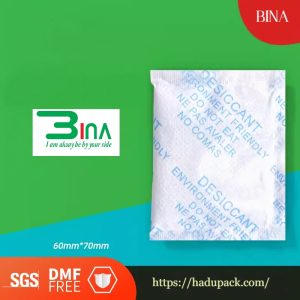
Desiccant packets are commonly found in consumer products, from shoe boxes to vitamins. The small silica gel packets or small cylindrical containers you find in packaging are desiccants. There are many types of substances that can be used as desiccants. Some of the most common desiccants include:
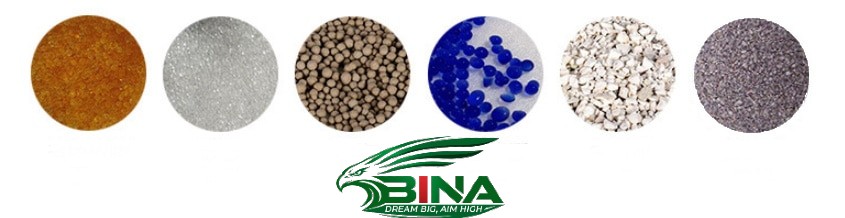
- Silica gel (usually in the form of small “beads”)
- Activated carbon
- Calcium chloride
- Sulfate carbon
- Activated alumina
- Montmorillonite clay
- Molecular sieves
 |
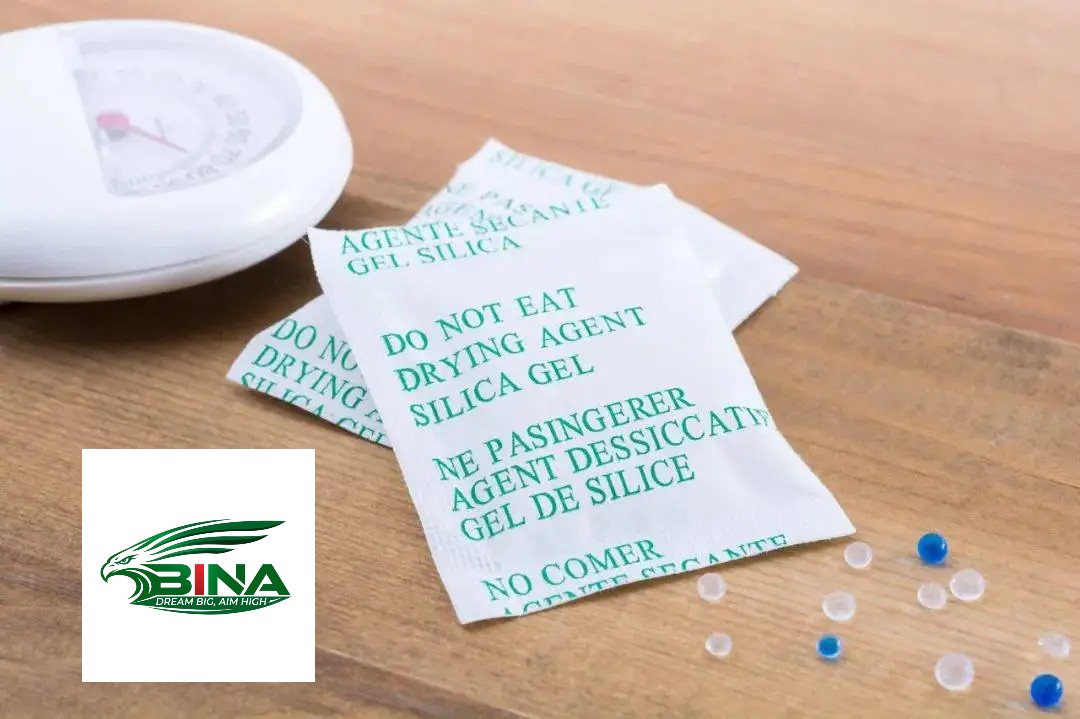
Key details about desiccant packets
- Main ingredients: The most common ingredients include silica gel (transparent, spherical, absorbent, and safe), minerals/clay (natural and environmentally friendly), calcium chloride (high moisture absorption capacity), and quicklime (high moisture absorption capacity, generates heat after absorbing water, and is corrosive).
- How it works: Through physical adsorption or chemical reactions, moisture molecules inside the packaging are trapped in internal pores, thereby reducing the relative humidity inside the container.
- Applications: Commonly found in snacks (such as seaweed and biscuits), medicines, shoe boxes, handbags, clothing, digital cameras, and document storage boxes.
- Moisture-proof benefits: Prevents mold, deterioration, rust, dampness, and clumping during long-distance transportation or storage.
- Safety note: Quicklime desiccants can generate heat when they come into contact with water, so they should be kept out of reach of children.
 |
Many desiccants can serve multiple purposes. For example, activated carbon not only acts as a desiccant but can also eliminate odors. Silica gel beads can come with various humidity indicators, changing color if the packet is exposed to a significant amount of moisture. Desiccants can also be used in breathing filters that function to prevent contamination.
Specially blended desiccants can also be tailored to serve very specific functions. Desiccants have many applications in industry, manufacturing, and beyond. At Hadupack, we can help you choose the right desiccant for your application. Contact us today!
Showing all 6 results
Sản Phẩm Mới


Tin Tức
 Temperature Warning LabelWednesday July 29th, 2026
 Moisture indicator stripThursday July 23rd, 2026
 Mold-resistant PE sheetThursday July 23rd, 2026
 LDPE mold-resistant sheetThursday July 23rd, 2026
 What is fabric interfacing?Wednesday July 22nd, 2026
 White plastic slip sheetSaturday July 18th, 2026
 HDPE plastic slip sheetSaturday July 18th, 2026
 VCI anti-rust powderSaturday July 18th, 2026
 3M sandpaperWednesday April 15th, 2026
 Solder – Solder wire – Solder bar – Solder pasteTuesday April 14th, 2026

