


Description
What are electronic circuit board labels?
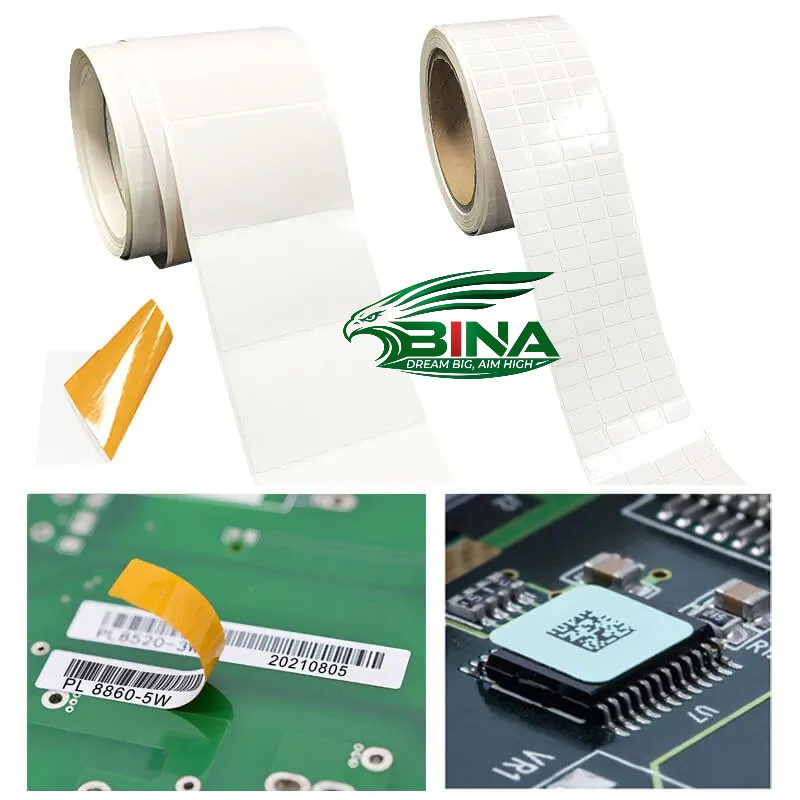
Electronic circuit board labels are labels and markings on printed circuit boards (PCBs) that serve as important identification indicators used to identify components, track the manufacturing process, and indicate whether the product complies with standards.
 |
Core functions of electronic circuit board markings:
Component identification: Marks the installation positions of components such as resistors (e.g., R1) and capacitors (e.g., C1).
Assembly guidance: Supports engineers and technicians in manual or automated soldering and assembly. Safety warnings: Marks polarity, test points, warning labels, and manufacturer information.
◆Learn more:
 |
Types of silkscreen labels and physical PCB labels and tags
- Silkscreen labels: Permanently printed white or contrasting text and symbols directly on the solder mask layer of the circuit board to indicate component reference designators.
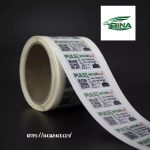
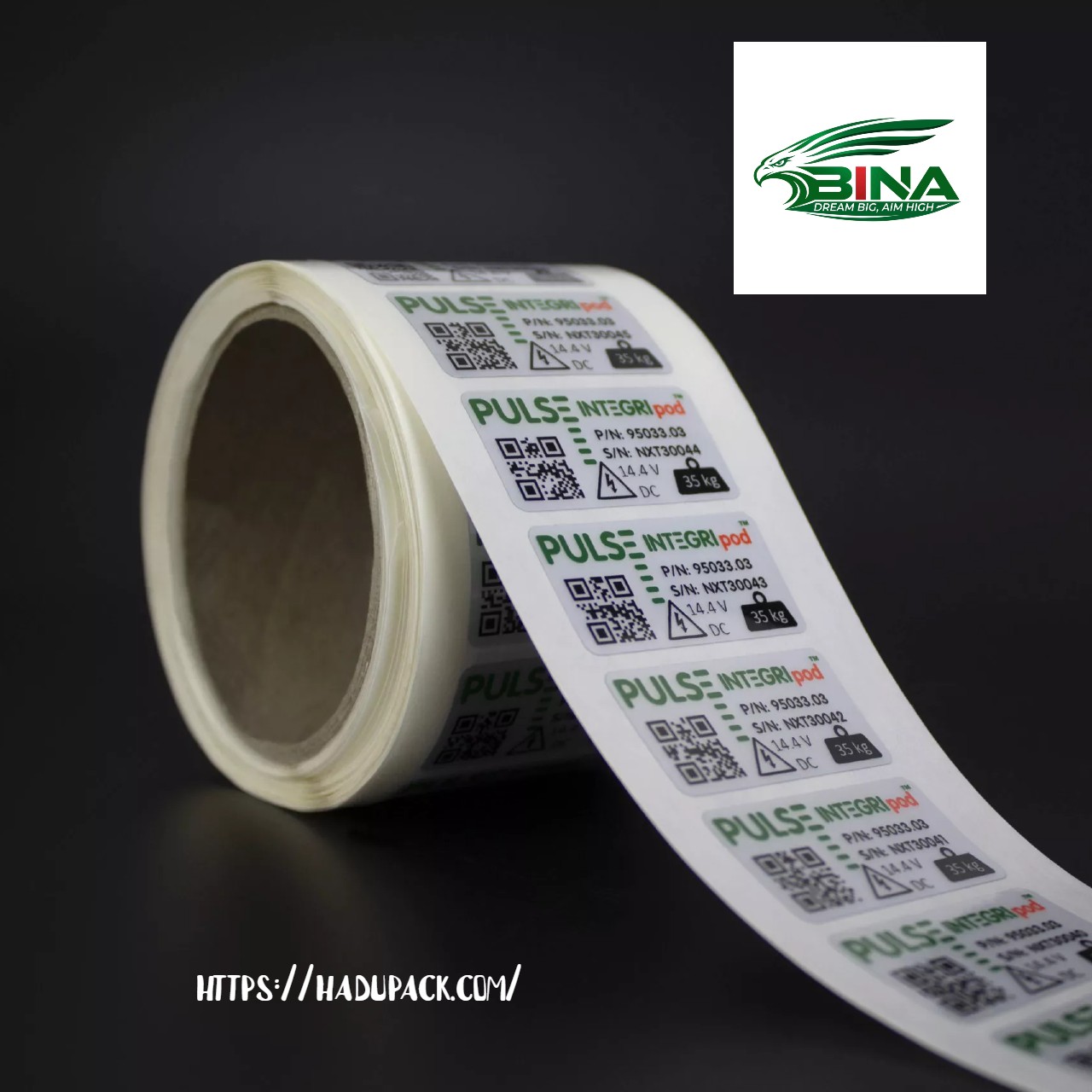
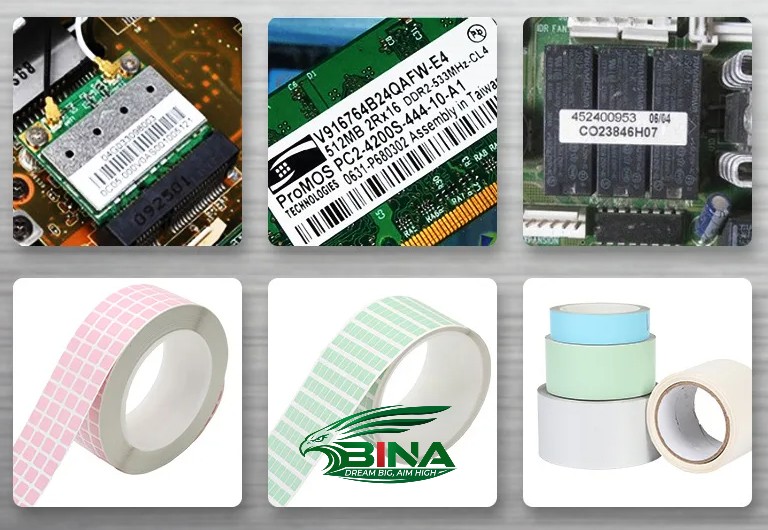
- Barcode/QR code labels: Physical labels attached to high-temperature-resistant materials (such as polyimide), containing serial numbers, used for traceability during the SMT manufacturing process.
- RFID labels, RFID electronic tags: Radio-frequency identification tags made of metal-resistant materials or FR-4, supporting automatic identification and data reading in harsh environments.
 |
Meaning of common component markings
- Reference designator prefixes: R represents a resistor, C represents a capacitor, L represents an inductor, D represents a diode, U or IC represents an integrated circuit, Q represents a transistor (triode), and J represents a connector.
- Polarity and values: Polarized components are usually marked with a + sign or a negative-polarity stripe; resistor and capacitance values are mainly abbreviated (for example: 103 represents 10 × 10³Ω or 10nF).
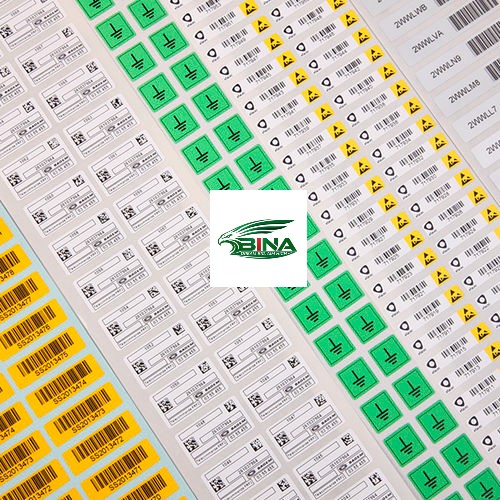
- Compliance and certification marks: The CE and FCC marks indicate that the product complies with EU safety standards and the electromagnetic compatibility regulations of the U.S. Federal Communications Commission.
- Warning and environmental symbols: Such as the “Do not litter” crossed-out wheeled bin symbol (WEEE Directive) and the anti-static hand symbol.
 |
Essential requirements:
- High contrast: Designed with high color contrast (typically black and white) to ensure accurate automatic scanning of barcodes and QR codes.
- Compatibility with thermal transfer printing technology: Manufactured for printing using thermal transfer methods or high-resolution industrial printers (up to 600 DPI), helping prevent ink smudging when exposed to chemicals or high temperatures.
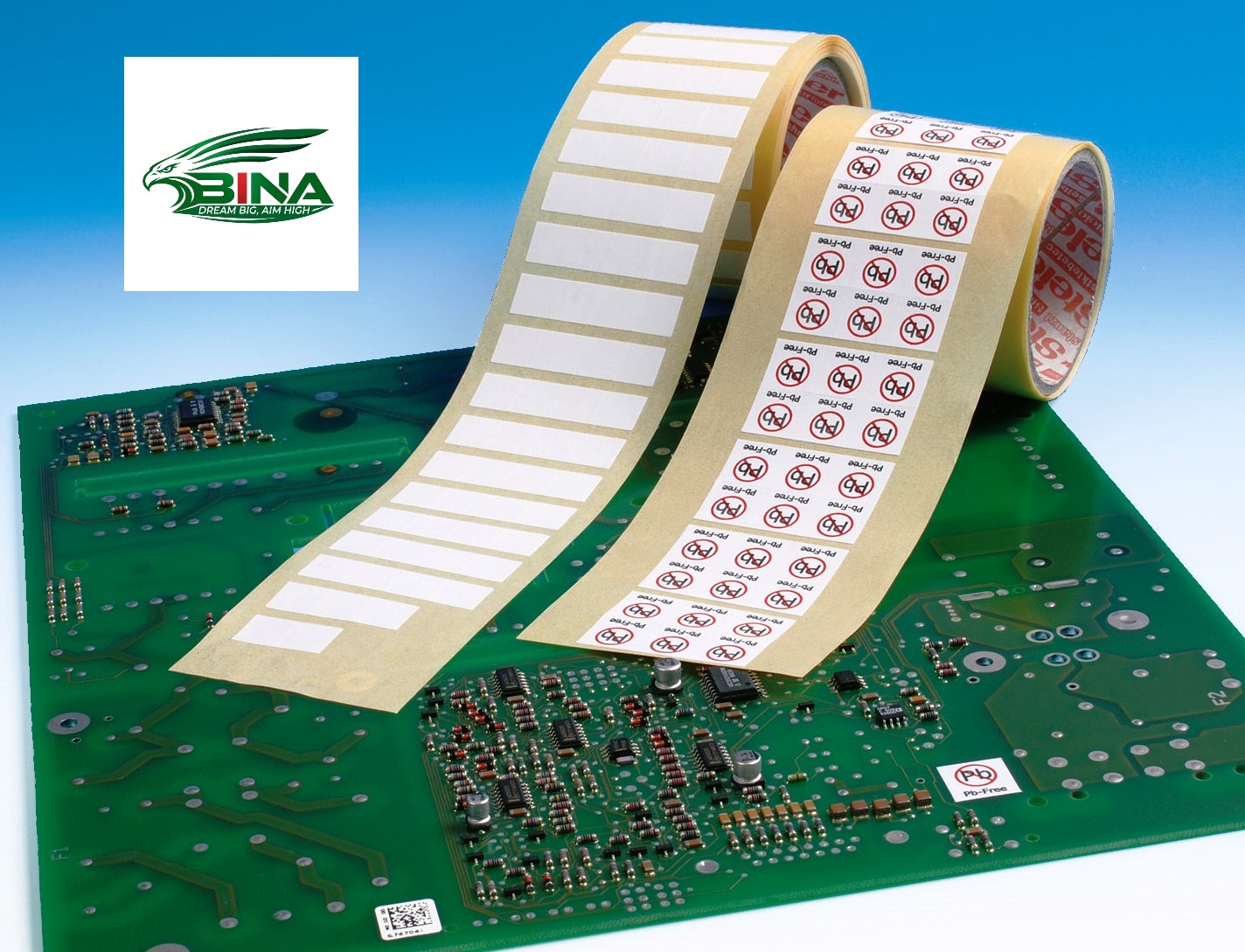
- Miniaturized size: Designed with extremely small pre-cut dimensions (down to 4 x 4 mm) to fit dense circuit layouts without obstructing circuit traces or components.