


Description
What is a composite strapping tensioning tool?
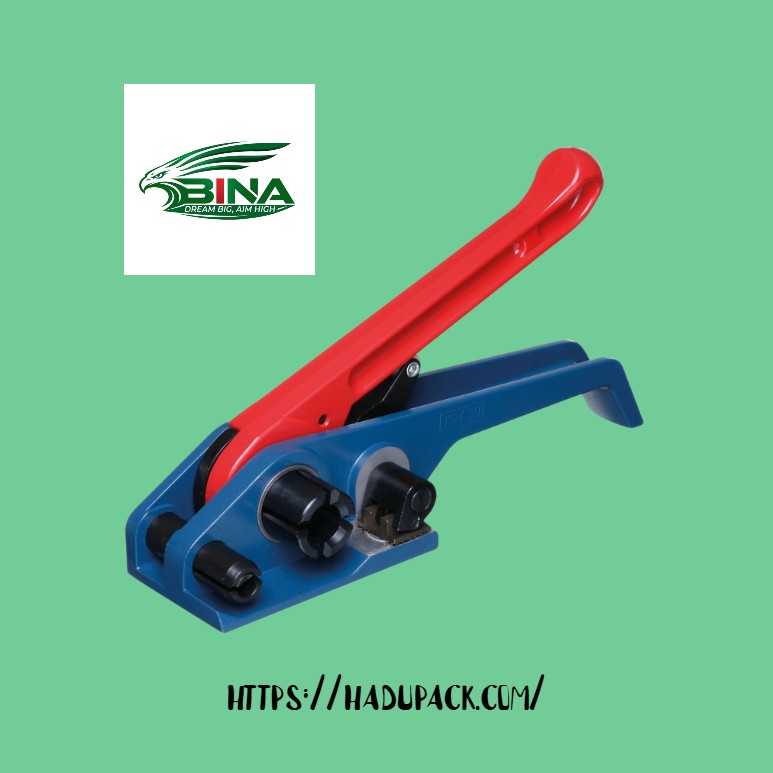
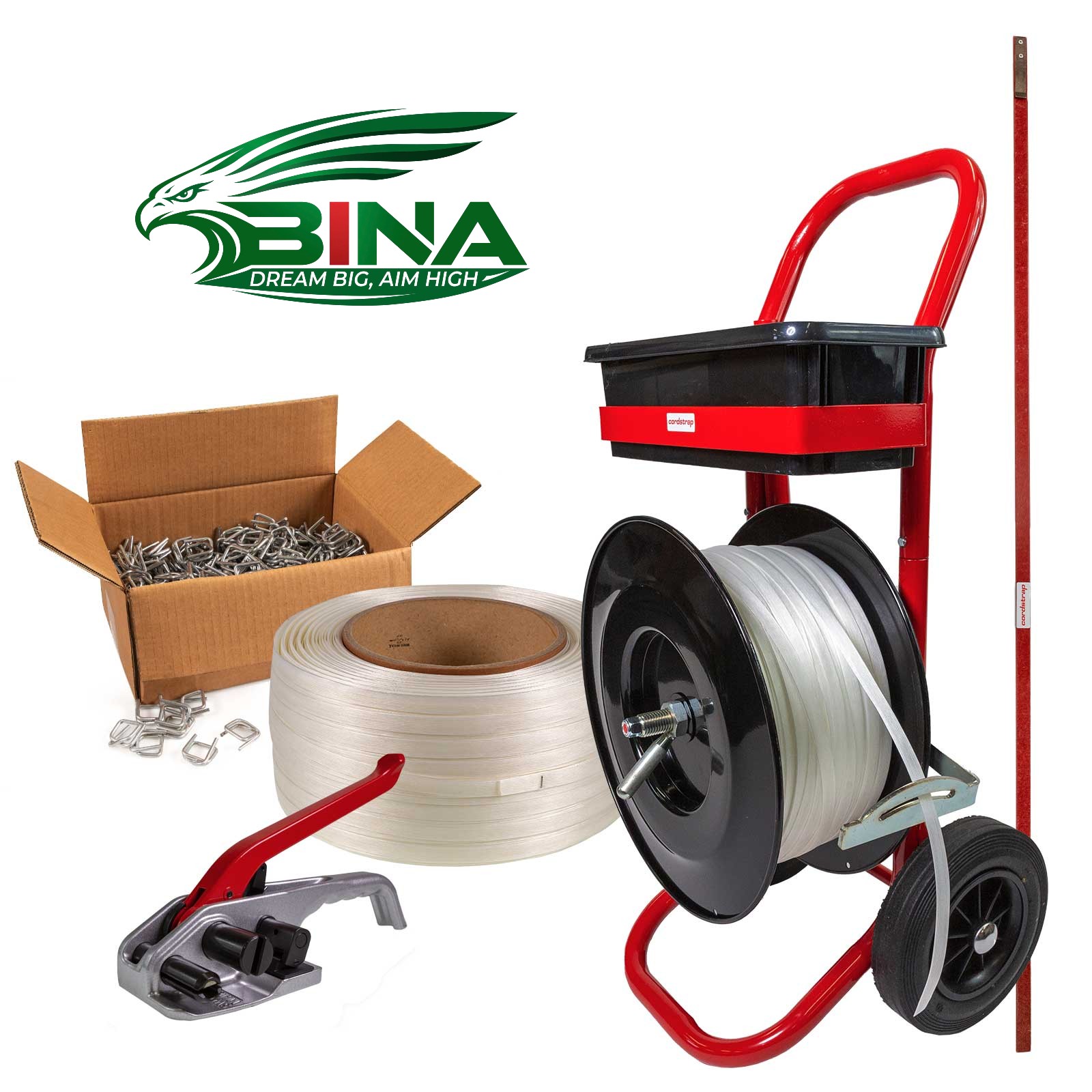
A composite strapping tensioning tool is a professional packaging device operated manually or electrically, used to tension, seal, and cut polyester straps and soft composite strapping (such as soft rope and PP plastic straps and PET plastic straps).
 |
Common types and features of composite strapping tools:
- Manual strapping tensioning tools: Provide strong clamping and tensioning force through gears and a crank handle, with an integrated cutting blade, suitable for use with metal buckles, easy to operate and requiring no power source.
- Combination strapping tools: Integrate tightening and sealing functions; some advanced models (such as pneumatic or heat-sealing devices) can be directly joined by friction welding, eliminating the need for additional metal buckles.
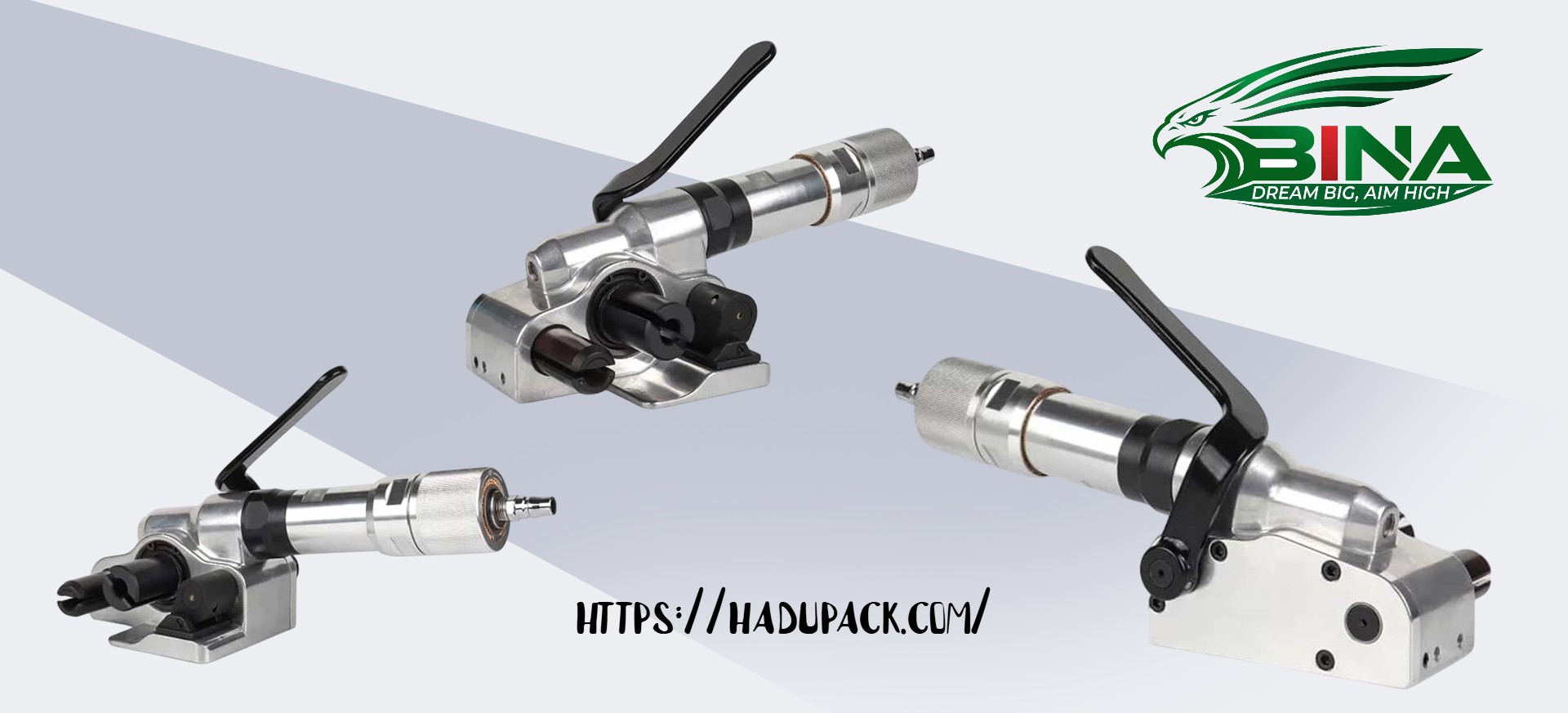
- Battery-powered electric tools: Provide automatic tensioning and welding functions, offering high efficiency and portability and suitable for high-intensity, high-volume logistics packaging operations.
 |
◆Learn more:
- https://hadupack.com/san-pham/day-dai-thep/
- https://hadupack.com/san-pham/dung-cu-siet-day-dai-thep/
Structure of Composite Strapping Tools
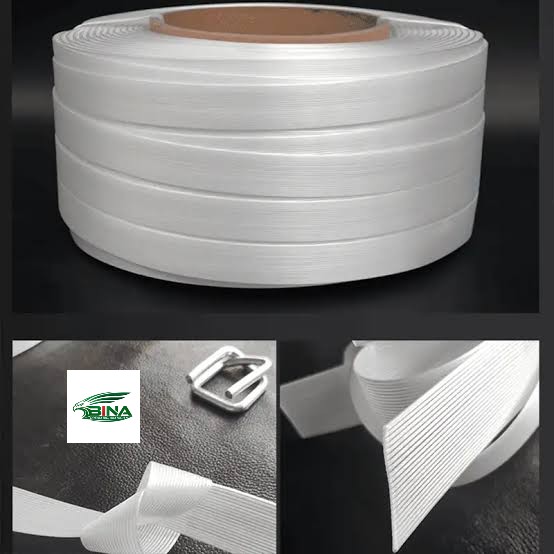
Composite material strapping tools (commonly referring to tools for tensioning and cutting fiber-reinforced composite packaging straps and PET plastic straps, or auxiliary strap clamps used to shape composite components in the aerospace industry) are generally designed around the core principles of high strength, light weight, and portability. Below is the typical structure of the most common manual/electric composite material strapping machines in industry:
 |
🛠️ Core structural components:
1.Drive and power system:
- Manual type: Includes a long lever and ratchet gear mechanism, achieving high pulling force through mechanical amplification.
- Electric/pneumatic type: Brushless DC motor or integrated cylinder, generating torque through a reduction gearbox.
2. Tensioning mechanism
- Tensioning wheel/roller: The surface usually has ultra-fine alloy teeth (anti-slip texture) to grip the strap.
- One-way ratchet gear: Ensures the strap can only move forward during tensioning and will not spring back.
- Pressing block: Works together with the tensioning wheel to clamp the end of the packaging strap.
3. Welding and cutting mechanism:
The cutting component is made of high-hardness tool steel (such as SKD11) to quickly cut off excess composite strap.
- Heated friction pad (for electric/pneumatic types only): Generates heat through high-speed, high-pressure friction to immediately seal the overlapping surfaces of the composite strap.
- Holding clamp (for manual types only): Used with metal buckles, clamping and deforming the buckles through lateral mechanical force.
4. Housing and support structure:
- High-strength aluminum/magnesium alloy base: Bears the main tensile load, ensuring the tool does not deform.
- Engineering plastic housing (such as PA66+GF): Encloses the motor and electrical circuitry, providing drop resistance, insulation, and reduced weight.
- Ergonomic handle: Usually coated with TPE/rubber to improve grip comfort and slip resistance.
5. Control and power system (for smart/electric types only):
- Lithium battery pack: Usually a high-performance 18V-22V lithium battery to extend battery life.
- Control circuit (PCB): Used to adjust tension, set welding time, and monitor battery level.
 |
Specifications of composite strapping tools
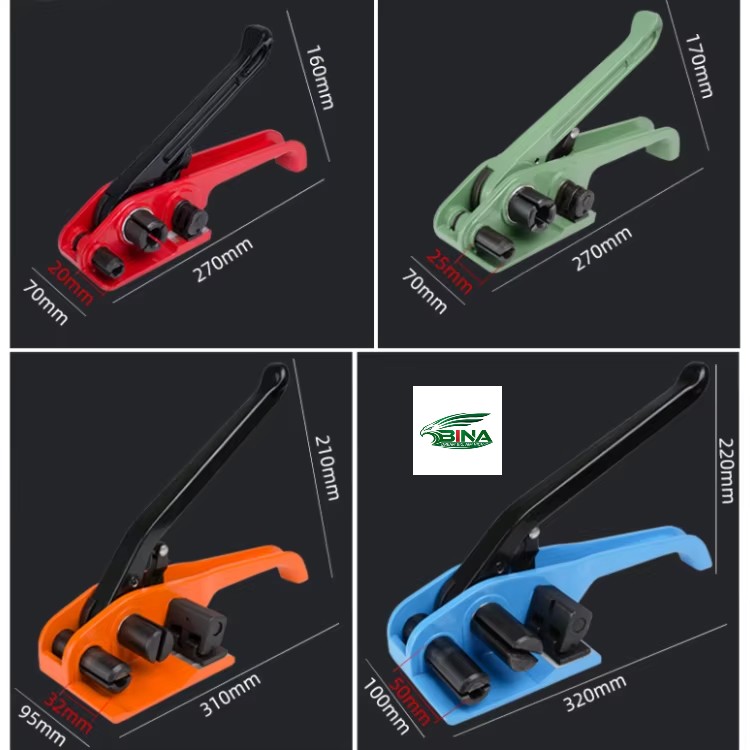
Composite strapping tools (generally referring to tensioners and strapping tools that use composite polyester strapping/cord) are mainly classified according to the width of the compatible strapping and the drive method.
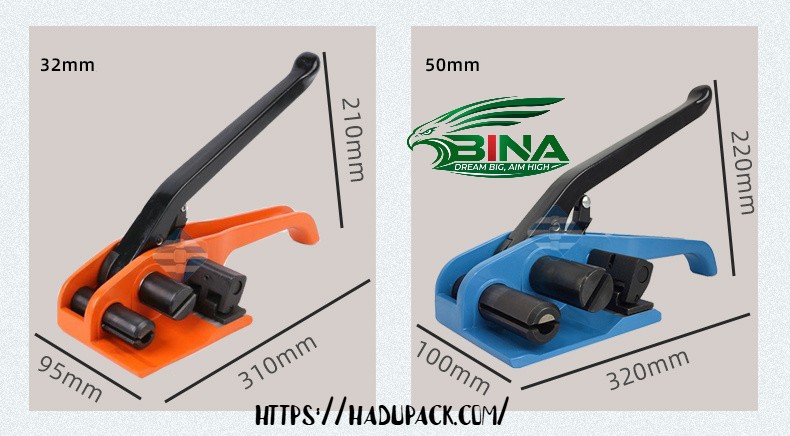
- According to compatible strapping width (specification models): The clamping and opening dimensions of the tools generally correspond to different widths of composite fiber strapping:
- 13 mm (1/2 inch): Suitable for strapping lightweight goods, such as small wooden crates and lightweight pallets.
- 16 mm / 19 mm (3/4 inch): The most common versatile specifications, suitable for medium- and heavy-load pallets, logistic transportation, and container securing (the corresponding tensioner’s maximum compatible width is usually up to 0.75 inch).
- 25 mm (1 inch): Suitable for strapping heavy industrial goods and large machinery.
- 32 mm to 40 mm (1-1/4 to 1-1/2 inch): Extra-heavy-duty specifications (such as XW-32 or high-capacity models), specifically designed for strapping operations requiring extremely high tensile strength, such as for large goods, steel, and timber at ports.
 |
💡Regarding “composite material strapping clamps for manufacturing processes”, if you are referring to specialized strapping tools used in vacuum bagging or autoclave molding to secure composite material cores or molds, their structure is completely different:
- High-temperature-resistant strap body: usually made of silicone, polyimide (PI), or stainless steel.
- Spring clamp: used to compensate for volume changes caused by thermal expansion and contraction during composite curing, maintaining constant clamping force.
- Quick-release locking pin: enables quick one-handed operation inside the vacuum bag.
To provide you with more accurate information, please let me know: Are you interested in strapping machines for logistics packaging or clamping tools for composite material manufacturing processes? Do you need information on manual, pneumatic, or electric operation? Do you need maintenance instructions or troubleshooting guidance related to contact BiNa Vietnam Joint Stock Company ?