


Description
First, let’s learn what PVC plastic film is.
PVC stands for polyvinyl chloride. It is referred to as “toxic plastic” by Greenpeace International. However, due to its low cost and ease of production, it has become the second most widely used plastic after PE. Today, it is found everywhere in our daily lives, posing a serious threat to the environment and human health.
 |
Why does Greenpeace International call PVC “toxic plastic”?
PVC is the only chlorinated plastic among the five main types of common plastics. Because it contains chlorine, its flexibility can be changed by adding plasticizers. PVC without plasticizers is rigid, like water pipes. But PVC with plasticizers can be soft, like plastic wrap.
In addition to plasticizers, PVC also has very poor heat resistance. To prevent PVC products from cracking under sunlight or high temperatures, stabilizers must be added, often heavy metals such as lead, cadmium and zinc. Therefore, PVC is not simply PVC; it also contains plasticizers and stabilizers that are harmful to health and the environment. While PVC without additives is non-toxic, it is also useless.
The reason Greenpeace International calls PVC “toxic plastic” is not simply whether it contains additives, but also because it harms the environment and human health at every stage of its entire life cycle, from raw material extraction, production and use to disposal.
 |
◆Learn more:
- https://hadupack.com/san-pham/mang-bopp/
- https://hadupack.com/san-pham/in-tui-nhua/
- https://hadupack.com/san-pham/mang-co-pof/
What are the main hazards of using PVC?
The entire life cycle of PVC involves toxic substances. From the raw material chlorine, to the intermediate product EDC (dichloroethane) during production, to VCM (vinyl chloride, a monomer used to polymerize PVC) produced from EDC; then the stabilizers (such as lead and cadmium) and plasticizers (phthalates, such as DEHP) added when PVC is processed into various products, and hydrochloric acid and dioxins (“the poison of the century”) generated by incineration after disposal, all of these substances pose significant toxic hazards.
 |
What are the main restricted substances related to PVC in the EU?
The EU RoHS Directive (2011/65/EU) targets all electronic and electrical products exported to Europe. This directive has regulated the restriction or prohibition of certain hazardous chemicals for many years.
In 2015, an amending directive ((EU) 2015/863) was issued to announce an increase in the number of regulated hazardous substances.
From the original six restricted substances (Pb, Cd, Hg, Cr+6, PBB, PBDE), four more substances were added – phthalates (DEHP, BBP, DBP, DIBP).
Market surveillance and random inspections will officially begin on July 22, 2019. Currently, the most commonly used plasticizers in PVC products are phthalate esters, more than 90% of phthalate ester plasticizers are used in PVC materials and among them, diethylhexyl phthalate (DEHP) is the most widely used and is a substance banned in the European Union
 |
Are there any alternative materials for PVC products currently in use?
Plasticized PVC products are very common in everyday life and are widely used in building materials (such as PVC floor tiles), food packaging (shrink film), films, pipes, toys, containers, and medical devices.
Due to PVC’s low cost and excellent performance, different applications require different materials. Currently, there are new materials that can replace it…
- 1. Food packaging films or electronic components can be replaced with PE, PP, or PET films.
- 2. For food packaging, development may shift toward non-toxic plastics such as PET or PLA.
- 3. PVC shrink label films can be replaced with PET.
- 4. PVC building materials can be replaced with ABS or PP.
- 5. Pipes can be replaced with PE or PP.
- 6. Electrical wires and cables can be replaced with cross-linked PE, or bromine-free flame retardants can be added to improve flame resistance.
- 7. In the automotive materials industry, TPO or TPU can replace dashboard covering materials, while PU leather or polyester fabric can replace seat upholstery materials, etc.
- 8. PVC adhesive tape or PVC film can be replaced with TPU or custom-made rubber film.
Whether all end products will use alternative materials to replace PVC remains to be seen. In addition to mandatory government policies, price and performance are important factors for major manufacturers.
 |
Which film materials can replace PVC plastic film?
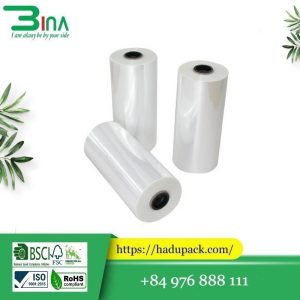
Common household items such as food wrap, phone screen protectors, automotive window tint films, vinyl flooring and heat-shrink labels all rely on PVC film. This is because PVC film has many advantages. Its greatest advantage is its excellent flame-retardant properties.
In addition, transparent PVC film has excellent transparency, good oil resistance, and good barrier properties against water vapor and oxygen.
It also has good corrosion resistance to many substances, such as acids, alkalis and salts.
Now that PVC has been labeled as a toxic plastic, are there any other types of film that can replace it?Which film materials can replace PVC plastic film?
Common household items such as food wrap, phone screen protectors, automotive window tint films, plastic flooring and heat shrink labels all rely on PVC film. This is because PVC film has many advantages. Its greatest advantage is its excellent flame retardancy.
In addition, transparent PVC film has excellent transparency, good oil resistance and good barrier properties against water vapor and oxygen.
It also has good corrosion resistance to many substances such as acids, alkalis and salts.
Now that PVC has been labeled as a toxic plastic, are there any other types of film that can replace it?
 |
*The plastic film materials network offers you 4 film alternatives:
Help you replace PVC-containing films!
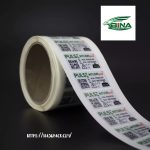
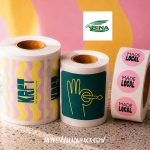
(1) Printing Film (PVC Flooring, Packaging Printing):
• Alternative Materials:
PVC-containing films used in printing processes must be replaced due to EU regulations.
• Applications:
1. Printing films for PVC flooring or PVC floor tiles in the building materials industry.
2. Businesses related to label printing and packaging printing.
3. Applications requiring lamination with PP materials after printing.
2) Protective Film (Used in PCB Manufacturing):
• Alternative Materials:
Currently, PVC-containing protective films are used on PCB production lines. Due to environmental regulations, new alternative materials need to be found.
• Applications:
- 1. Suitable for electroplating tapes, anti-corrosion tapes, and electroplating protective films currently used in PCB manufacturing plants.
- 2. Related film materials used to protect PCB electroplating or etching processes.
(3) Heat Shrink Film (Battery Packaging, Food Packaging):
• Replacement:
Currently used heat shrink films containing PVC materials need to be completely replaced.
• Applications:
- 1. The food packaging industry.
- 2. The battery packaging and automotive battery packaging industries.
(4) Anti-Fog Film (Used for Food Packaging):
• Alternatives:
Replace PVC anti-fog film with “PP anti-fog film” or “PE anti-fog film”
• Applications:
Anti-fog film for bathroom mirrors, anti-fog film for food packaging.
PVC Plastic Film Manufacturing Process
The most common manufacturing process for PVC (polyvinyl chloride) film is calendering, although some types of film are also produced using blown film extrusion or cast film extrusion. Among these methods, calendering is the most widely used and industrially mature process; the core process steps include:
I. PVC Film Manufacturing Process Using Calendering
1. Raw Material Preparation and Mixing
- Formulation: PVC resin powder and various additives (such as plasticizers, stabilizers, lubricants, fillers, and colorants) are weighed according to precise proportions.
- High-speed mixing: The raw materials are fed into a high-speed mixer (operating at approximately 1000 rpm) for heating and preliminary plasticization (the temperature is typically controlled between 90°C and 120°C).
- Cooling and plasticization: The hot mixed material is transferred to a cooling mixer to reduce its temperature or fed directly into a twin-screw or single-screw extruder for melting and complete plasticization.
2. Feeding Stage
- The uniformly plasticized melt is fed into the gap between the calender rolls (typically a 4-roll or 5-roll calender).
- The calender rolls are internally heated using steam or hot water, allowing the PVC material to form a continuous and stable “material bank” between the rolls.
3. Calendering and Forming
- Under the influence of high temperatures and high shear pressure from the multi-roll system (for example, an inverted L-type or F-type 4-roll calender), the molten PVC is continuously compressed and stretched into film with the specified thickness and width.
- Surface treatment: During this stage, embossed rolls or mirror-finished chrome-plated rolls can be used to create patterns, matte surfaces, or high-gloss effects on the film surface.
4. Film Take-Off and Cooling/Forming
- Film take-off: The film is smoothly drawn away from the calender using a take-off roll system.
- Cooling and forming: The film undergoes temperature adjustment and passes through a multi-stage cooling roll assembly (typically maintained at 10°C to 50°C) to reduce its temperature and stabilize its dimensions.
5. Post-Production Processing and Film Winding
- Edge trimming: Uneven edges on both sides of the film are trimmed off (the resulting scrap can be recycled, ground into smaller pieces, and reused).
- Surface coating/Printing (Optional): Depending on requirements, the film may undergo printing, antistatic treatment, back-side coating, or lamination with a substrate (such as a backing fabric or carrier film).
- Film winding: A tension control system is used to wind the PVC film evenly into rolls; after quality inspection, the film is packaged for shipment.
II. Overview of Other Manufacturing Processes
- Blown film extrusion (Blown film process): Suitable for producing thin PVC films (cellophane-like films) or certain types of food wrap. PVC resin powder or pellets are melted in an extruder and extruded through an annular die; compressed air is introduced to inflate the molten plastic into a film bubble, which is then cooled, flattened using a forming frame (A-frame), pulled away, and wound into rolls.
- Solvent casting: PVC is dissolved in a specialized organic solvent to form a casting solution; this solution is evenly coated onto a steel conveyor belt or carrier mesh; the solvent is removed by heating, and the resulting film layer is then peeled off. Due to environmental concerns and the high cost of solvent recovery, this method is now less common.
If you would like more information, please let me know:
Are you interested in rigid PVC sheets or flexible PVC film/food wrap?
Do you need information about temperatures, equipment parameters, or the formulation for a specific process step?