



Description
Plastic strap tensioner buckle
Plastic strap tensioner buckles, also known as plastic strap buckles, are lightweight, durable, and rust-resistant buckles designed to join, tighten, and securely lock plastic straps (typically polypropylene) used for packaging. Ideal for light-duty applications such as sealing small cartons, they are applied by hand without tools, providing an economical, user-friendly fastening solution and are often recyclable.
 |
◆Learn more:
- https://hadupack.com/san-pham/bo-sat-dong-dai/
- https://hadupack.com/san-pham/dung-cu-siet-day-dai-thep/
- https://hadupack.com/san-pham/day-dai-in-logo/
Structure of Plastic Strapping Buckles
The core design of PP and PET plastic strapping buckles lies in their ability to provide secure clamping and friction locking. They are typically made of high-strength nylon or rigid plastic, with a rectangular or horseshoe-shaped frame design. The internal structure includes strap grooves, friction-enhancing teeth, and self-locking slots. Combined with the physical tension of PP/PET strapping, they lock effectively when tightened, achieving a secure connection. The following are the structural features of PP and PET strapping buckles:
 |
1. Structural Shape
- Main frame: Primarily rectangular or U-shaped, with the force distributed through the strap holes at both ends, creating a compact structure.
- Locking mechanism: The buckle has special teeth or protrusions on the inside. When the strap is under tension, these teeth bite into the PP or PET plastic strap, increasing friction and preventing the strap from slipping.
- Strap threading grooves: The grooves are well designed to allow the strap to be threaded in one direction (inserted) and automatically lock when subjected to force in the opposite direction.
 |
2. Emphasis on types of buckles made from different materials
- PET Buckles (PET Plastic Strapping): Generally stronger and more robust. To match the high strength of PET strapping, the buckles are made thicker and feature multiple sturdy teeth to increase friction. The structure is usually designed to be more robust to withstand very high tensile forces.
- PP Buckles (PP Plastic Strapping): Relatively lightweight and flexible. Their buckle structure focuses more on high friction. The design typically uses rectangular sliding slots, working together with the deformation of the PP strapping itself to lock it in place.
3. Working structure
One-way self-locking: The buckle structure allows the strapping to pass through smoothly for tightening. When the tension stops, the internal teeth of the buckle use the reverse tension of the strapping itself to achieve instant self-locking.
In summary, this type of buckle uses a reasonable mechanical structure to securely fasten PP or PET plastic strapping for tightly packaging goods.
 |
 |
Key features and benefits:
- Easy to use: No specialized tensioning or sealing tools are required, as the strapping is tightened by hand.
- Material: Made from durable plastic materials such as polypropylene (PP), they are rust-resistant and lighter than metal alternatives.
- Applications: Primarily designed for packaging and securing lightweight goods, such as corrugated cardboard boxes.
- Compatibility: Primarily used with polypropylene strapping from 12mm to 15mm.
- Function: The strapping is threaded through the buckle, with a design that allows it to be tightened by hand.
 |
Plastic buckles vs. metal buckles
- Plastic buckles: Best for low-tension applications, light loads, and manual operation without tools.
- Metal buckles: Suitable for heavier loads and provide higher tension, sometimes used with woven strapping or composite strapping.
These types of buckles are widely used in logistics and transportation to secure packages and, in some cases, to secure pallets.
Plastic strapping buckles are lightweight, durable, and rust-resistant buckles designed to join, tighten, and securely lock plastic strapping (typically polypropylene) used for packaging. Ideal for light-duty applications such as sealing small cartons, they are used by hand without tools, offering an economical, user-friendly fastening solution that is often recyclable.
 |
 |
How to use plastic strapping buckles
PP (polypropylene) and PET (polyester) plastic strapping buckles are common types of packaging buckles. PP buckles are lightweight and resistant to bending, making them suitable for packaging lightweight goods, and are often used with manual or automatic strapping machines. PET buckles (plastic steel buckles) are highly durable and can withstand greater tensile forces, making them suitable for transporting heavy goods. When using them, make sure the buckle clamps the strap tightly, taking advantage of the raised ridges on the surface or the integrated welded structure to secure the buckle firmly.
1. PP plastic strapping buckle (Packaging buckle)
- PP buckles are usually lightweight and brightly colored, and are commonly used to seal boxes and bundle lightweight items.
- Suitable applications: Cartons, lightweight items.
How to use:
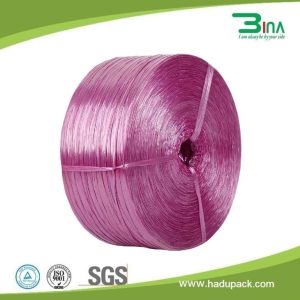
- Wrap the strap around the package.
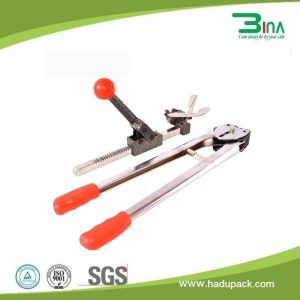
- Use a manual strapping tool to thread the two straps through the slots on the PP buckle.
- Tighten the strap with a strapping machine.
- The PP buckle uses its own mechanical locking force to secure the strap.
 |
2. PET Plastic Buckles (Plastic Steel Buckles)
PET buckles (plastic steel buckles) have a smooth surface, high hardness, and strong tensile strength.
- Applications: Packaging heavy goods, securing pallets; can replace steel strapping.
- How to use: Thread the strapping into the PET buckle by hand, ensuring the protruding side of the buckle faces upward, or follow the instructions on the buckle. Tighten using a strapping tensioning tool.
- In some high-strength PET applications, plastic steel buckles can be used to directly secure the strapping, eliminating the need for metal buckles.
 |
3. Notes on Use (General)
- Oil Resistance: PET locks have better resistance to embrittlement caused by oils and grease than PP locks, but neither should be stored at excessively high temperatures for long periods.
- Safety: PET plastic is prone to becoming brittle under ultraviolet radiation; long-term outdoor storage requires monitoring its aging.
- Selection Tip: For heavy machinery or large wooden crates, prioritize high-strength PET locks; for lightweight packaging, choose the more affordable PP locks.