




Description
What is composite strapping?
Composite strapping is a tool used to secure and tightly bind goods during transportation, so it requires extremely high strength to protect the goods, keep them safe and securely fixed in place, and prevent them from shifting or breaking. Therefore, if the strength of composite strapping does not meet this standard, it can affect the goods and even pose a danger to users. Therefore, in this article, we will share with our valued customers the factors that affect the strength of composite strapping, so that readers can take note before purchasing strapping or use the right type to achieve the best results.
 |
 |
 |
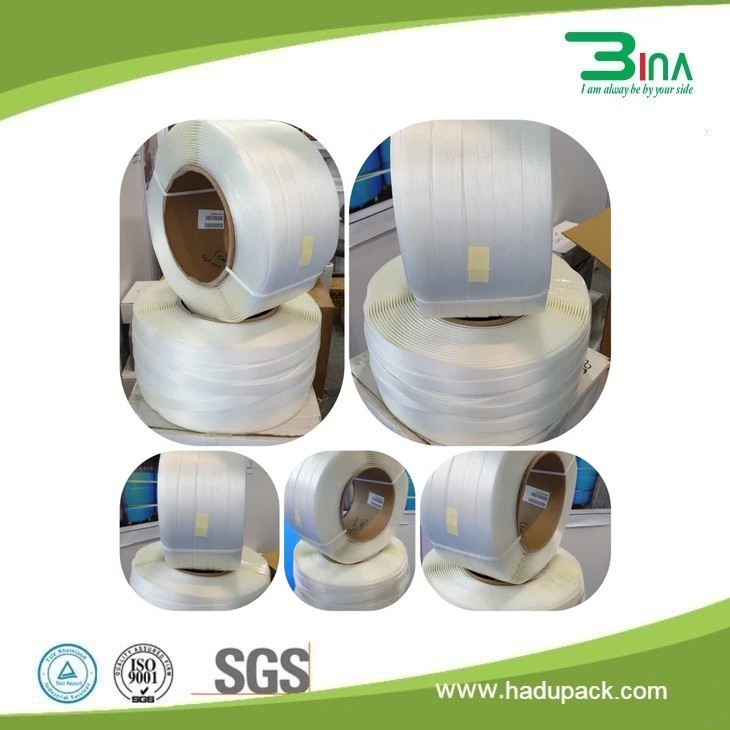
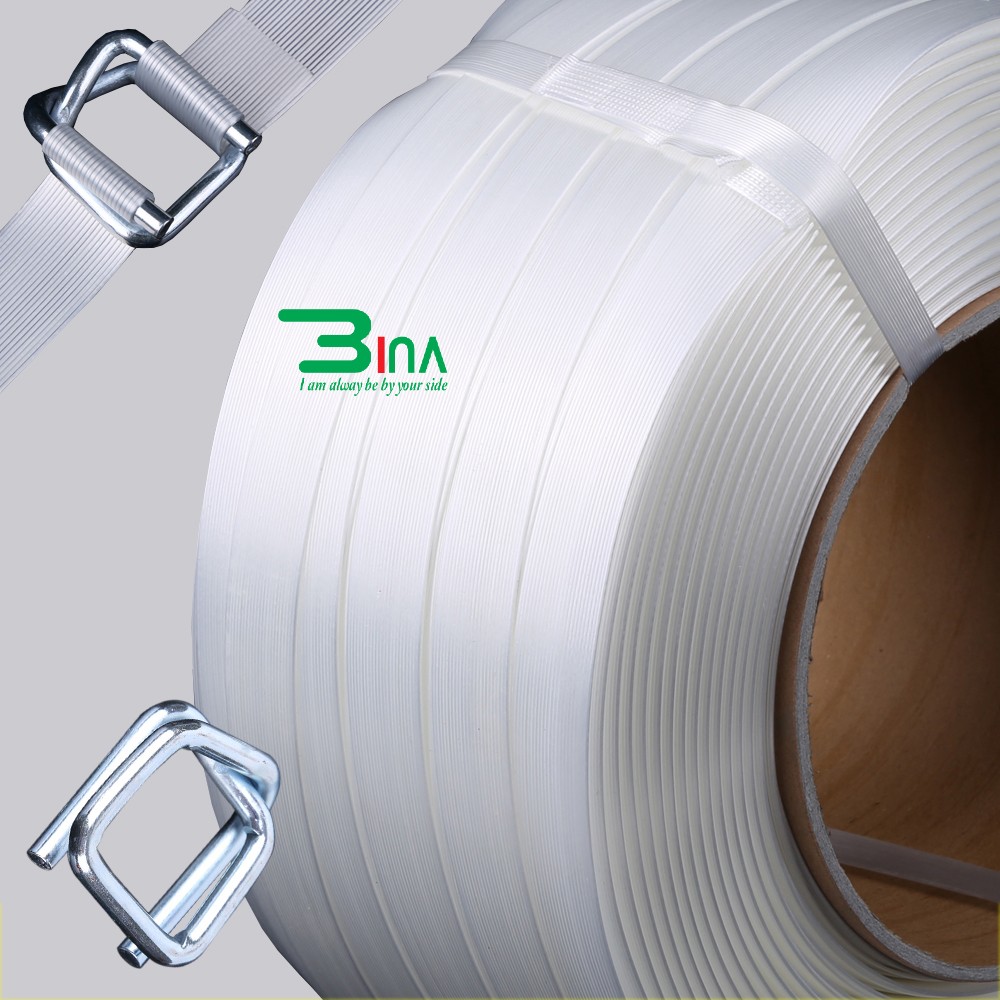
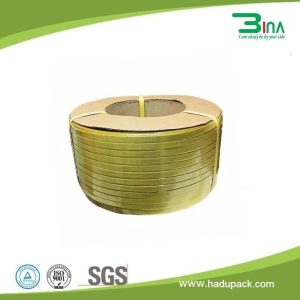
A strong, non-metallic, and safer strapping system would be composite strapping. As the name suggests, composite strapping is a packaging load-securing solution designed by combining multiple materials into a single high-performance strap. During transportation, polyester strapping can absorb shocks and impacts.
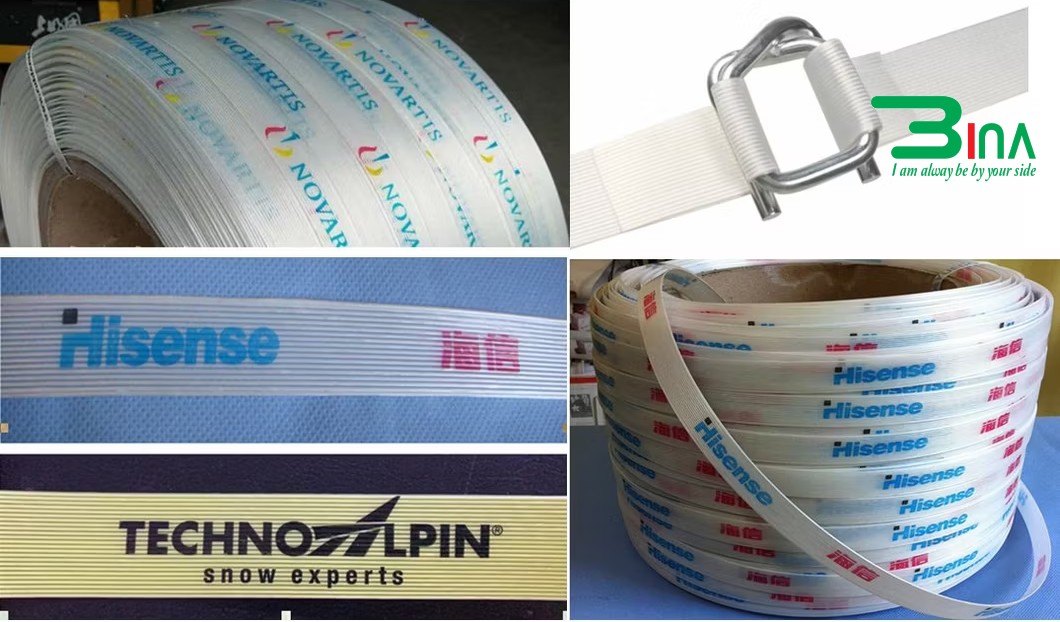
It has high retained tension and is a strong and safe alternative to steel strapping. Made from layers of untwisted, high-strength parallel polyester fibers coated with Polypropylene (PP), the unique and patented manufacturing process for these fibers allows container strapping to achieve higher strength, lower elongation, and resistance to most chemical solvents, caustic substances, and acids.
 |
 |
 |
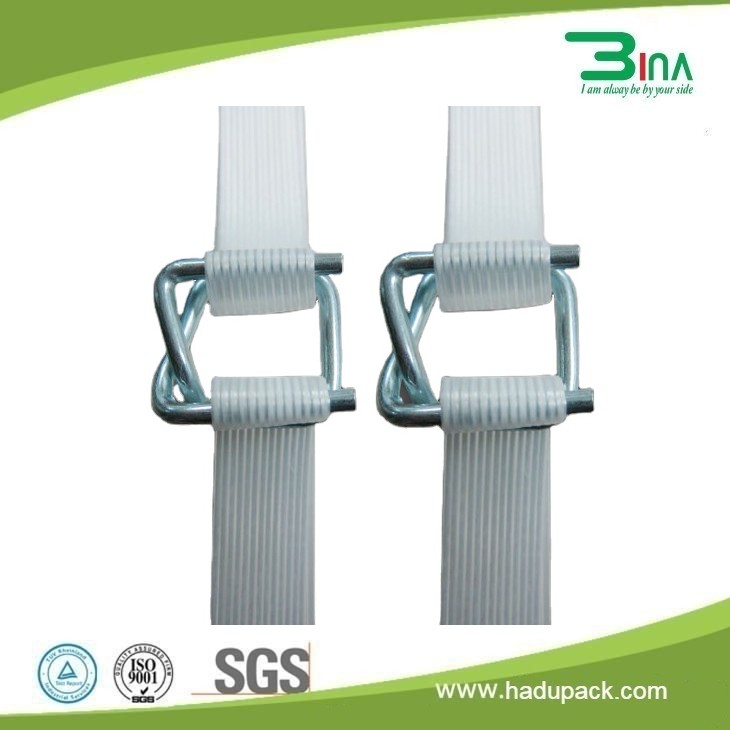
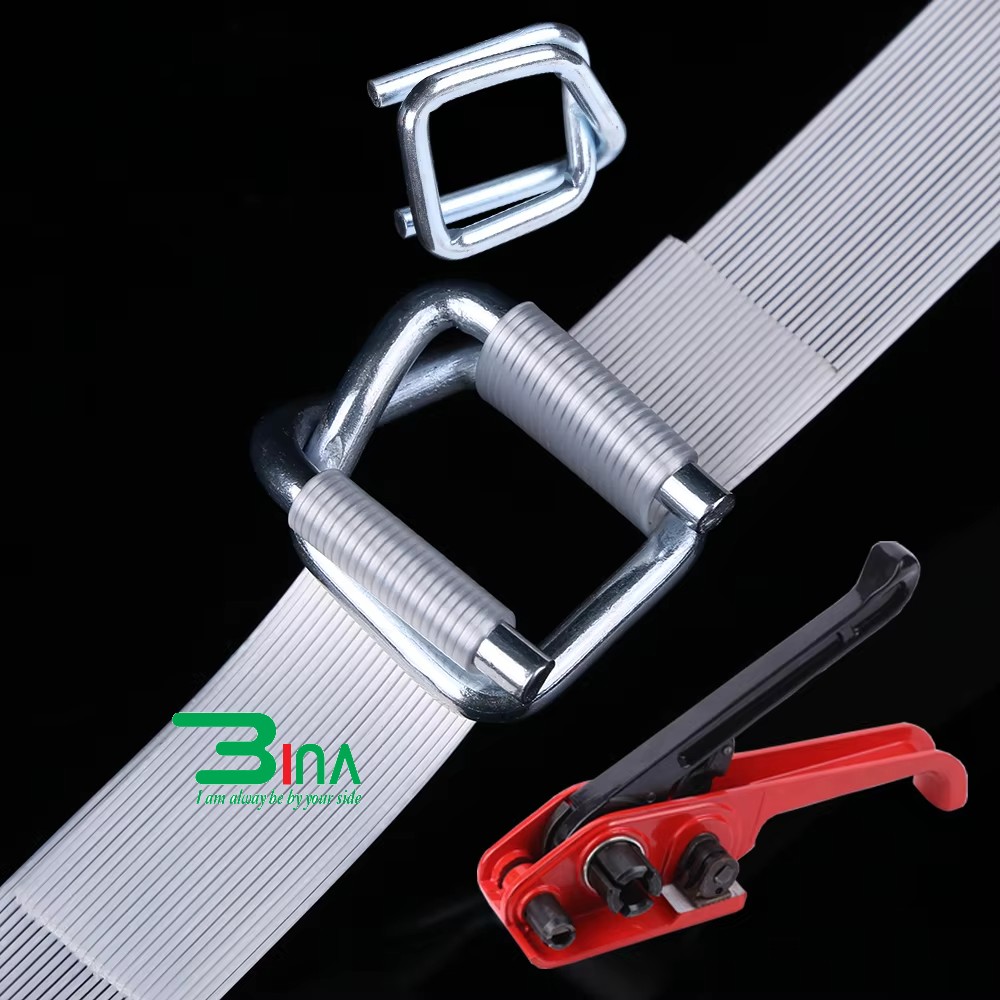
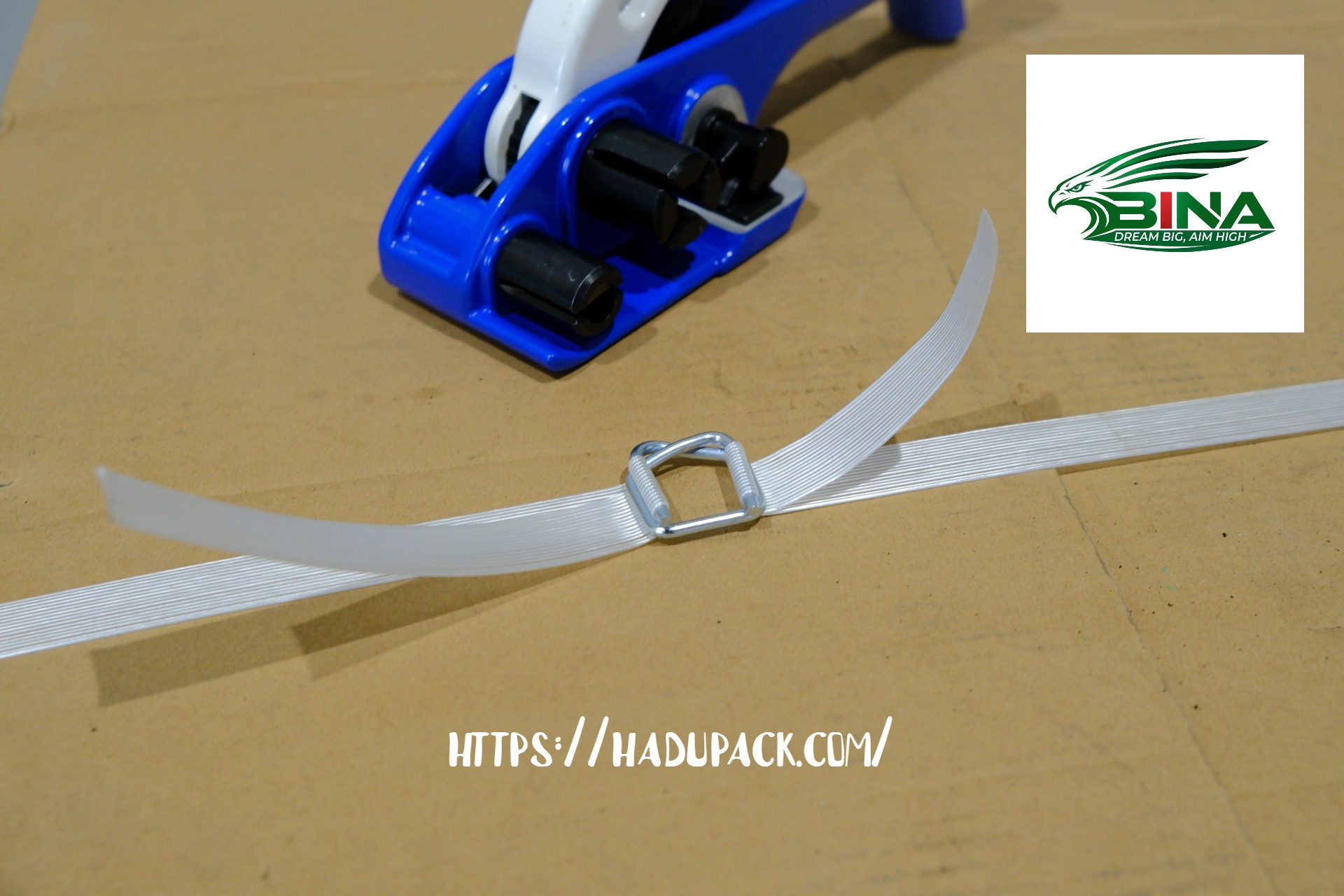
Composite plastic strapping is commonly used for goods that may expand, settle, or contract during transportation. Specially manufactured for use on rough environmental materials and sharp edges, the strapping is optimized for securing cargo. Composite polyester strapping is typically connected using wire buckles, and the buckle closes when tension is applied to the strapping. They require a manual tensioning tool and a lightweight cutter, making them faster and more convenient than steel strapping. For optimal results, pair composite strapping with nitrate wire buckles.
◆Learn more:
- https://hadupack.com/san-pham/day-dai-thep/
- https://hadupack.com/san-pham/day-dai-nhua-pp/
- https://hadupack.com/san-pham/day-rut-nhua/
Features of composite strapping
- Polyester composite strapping offers a range of properties that make it an alternative to traditional steel strapping in various industrial applications. These straps exhibit remarkable strength, comparable to steel strapping while offering several additional advantages. The lightweight material of polyester composite strapping also helps reduce the overall load weight.
- High impact resistance is a standout feature, as they can effectively absorb impact energy thanks to their unique properties, elasticity and ability to recover after deformation. This quality ensures that polyester composite strapping maintains tension and load-bearing capacity even under harsh conditions, reducing the risk of cargo damage during transportation.
- Another notable advantage is their ability to retain tension. With a high tensile strength ranging from 0.5 to 8.5 tons, these straps can easily replace standard steel strapping and other strapping materials, providing a cost-effective solution. It requires less tooling cost, less wear and tear and less maintenance, making it an economical choice for packaging needs.
- In addition, polyester composite strapping is non-abrasive, protecting product surfaces from scratches and damage, which is particularly important for delicate or painted items. These straps do not corrode, eliminating concerns about joining, sticking, rusting or rotting that can affect steel strapping alternatives. Their high UV resistance makes them suitable for long-term outdoor storage and their Polypropylene coating enhances durability, making them compatible with chemical goods.
- Finally, the flexibility of polyester composite strapping makes them an attractive choice for many industries, as they excel in re-tensioning, shock absorption and resistance to twisting. Whether in manufacturing, transportation or storage, these straps provide a reliable and cost-effective securing solution, contributing to the safety and security of goods during transportation.
 |
Safety and environmental benefits
- Polyester has fewer sharp edges than steel strapping, making it safer for users. The blunt edges of polyester strapping are gentler on hands and forklift tires, preventing cuts and damage. Composite polyester strapping also does not dangerously snap back when removed, helping reduce the risk of injury to workers and recipients.
- Using polyester strapping also helps reduce environmental impact. Polyester is produced from raw plastic materials during the manufacturing process and is a recyclable material. Workers can collect removed polyester strapping by bundling it and disposing of it in a trash bin or through closed-loop recycling programs after removing the strapping.
 |
Uses of strapping
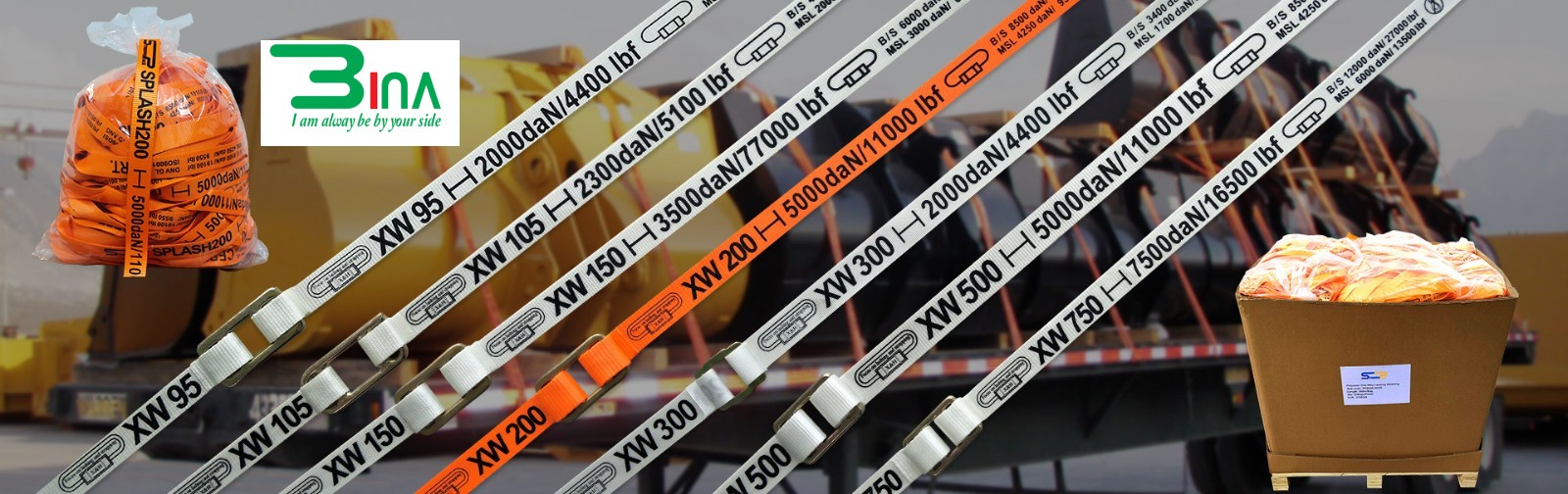
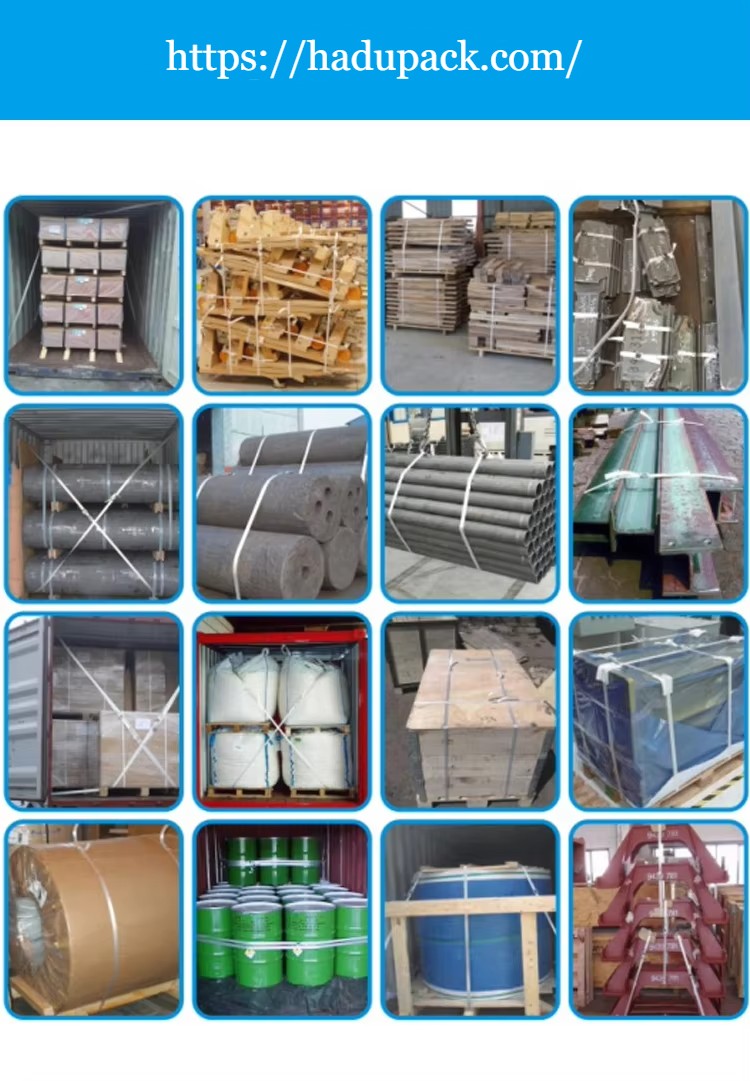
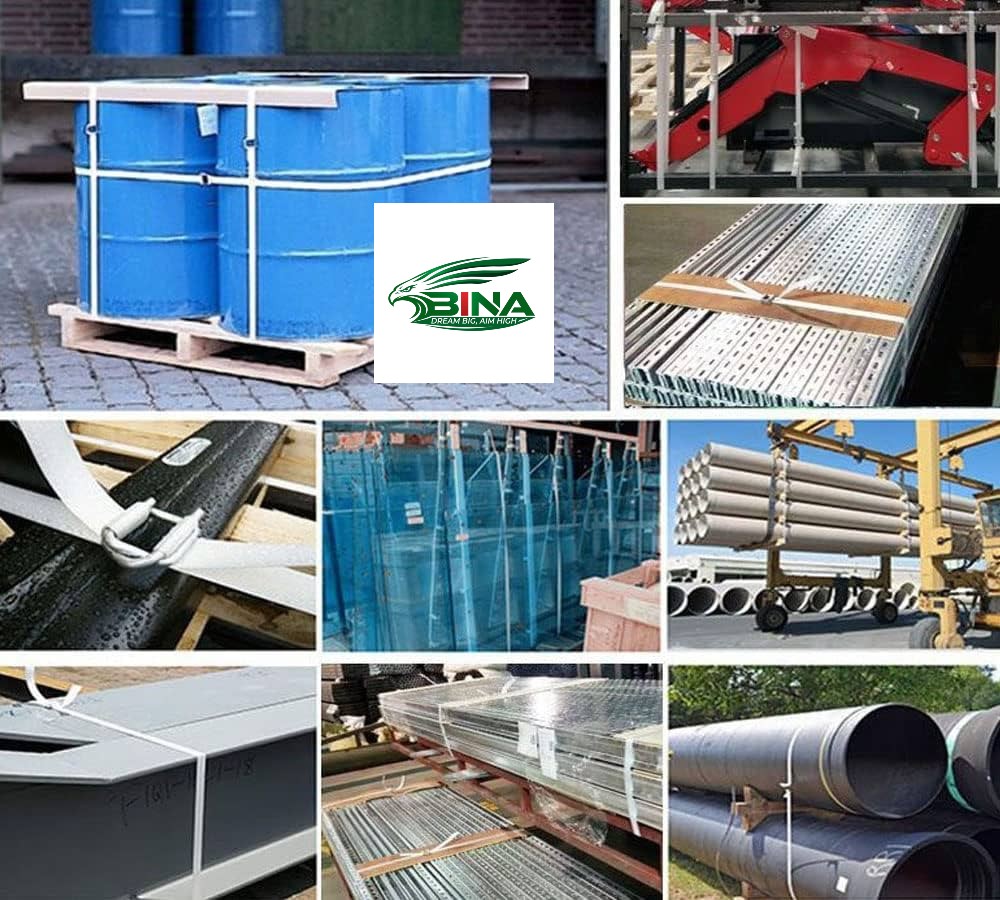
- Bundle items together for handling and transportation
- Secure items to pallets, skids, and crates
- Brace wooden boxes, crates, and cartons
- Secure items to flatcars and semi-trailers
 |
How important is the durability of composite strapping?
- In transportation operations, goods are often heavy and carry large loads, so cargo straps must be of high quality and sturdy to ensure safety during use.
- High-strength straps can securely tie down heavy machinery, equipment, and bulky goods, preventing them from deteriorating after a period of use.
- Straps with good durability can withstand harsh weather conditions, can be reused many times, and have a long service life.
- High-strength composite strapping can tighten cargo extremely well. It does not stretch or break during use. This helps prevent goods from breaking and the products inside the boxes from being damaged or malfunctioning.
 |
 |
Technical information on composite strapping:
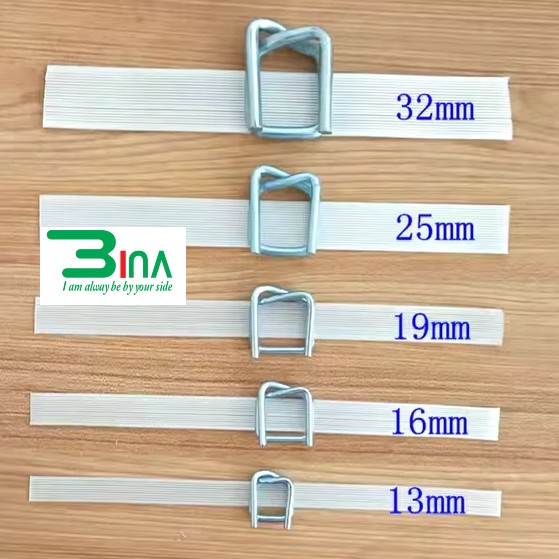
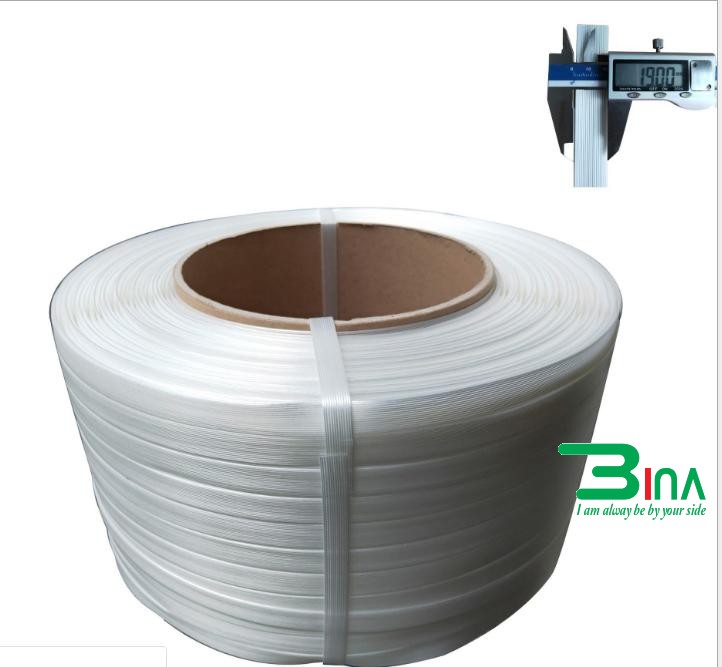
Hadupack supplies all types of Composite strapping with widths from 13mm to 32mm:
| Product code | Width | Length | Thickness | Minimum breaking strength | Minimum breaking strength of the system | Packaging |
| Hadupack40 | 13 mm | 1100 m/roll | 300 Kg (300 DaN) | 500 Kg (500 DaN) | 2 rolls/carton | |
| Hadupack50 | 16 mm | 850 m/roll | 425 kg (425 DaN) | 680 Kg (680 DaN) | 2 rolls/carton | |
| Hadupack60 | 19 mm | 600 m/roll | 0.9mm | 475 Kg (475 DaN) | 760 Kg (760 DaN) | 2 rolls/carton |
| Hadupack85 | 25 mm | 500 m/roll | 1mm | 785 Kg (785 DaN) | 1500 Kg (1500 DaN) | 2 rolls/carton |
| Hadupack105 | 32 mm | 230 m/roll | 1.3 mm | 1500 Kg (1500 DaN) | 2500 Kg (2500 DaN) | 2 rolls/carton |
Note:
- 19mm composite strapping: approximately 600m/roll, 1000 pieces/box. Suitable for packages weighing under 900 kg.
- 25mm composite strapping: approximately 500m/roll, 500 pieces/box. Suitable for packages weighing from 900 kg to 1500 kg.
- 32mm composite strapping: approximately 230m/roll, 250 pieces/box. Suitable for packages weighing approximately 2500 kg.
- Suitable strapping tools must be selected for Composite strapping.
- The main color of the product is white, with a weight ranging from 20-25 kg/roll.
 |
Factors Affecting the Durability of Composite Strapping
The durability of strapping is an essential factor in ensuring the safety and performance of the system. The following are some factors that affect the durability of composite strapping:
- Strap size: The strap size must be suitable for the weight of the goods. The larger and heavier the goods, the greater the length and width that should be used. Composite straps currently have common widths of approximately 13mm – 16mm – 19mm – 25mm – 32 mm, corresponding to load-bearing capacities from 0.5 to 2.4 tons.
- Strap thickness: The thickness of the strap is an important factor in determining its durability. Thicker straps can be stronger and more durable than thinner straps. Heavy-duty straps are used to secure heavy items and can withstand greater forces.
- How to use the strap: After use, the straps should be stored properly to ensure durability and safety. When using them, there are some things to note – For large quantities of goods, first secure the goods with a rigid box or pallet, then thread the strap around the package – Do not use items with sharp edges.
Length, width, thickness, and usage all affect the durability of the strap. Therefore, users need to choose the right type of strap and use it correctly to ensure maximum durability and effectiveness.
 |
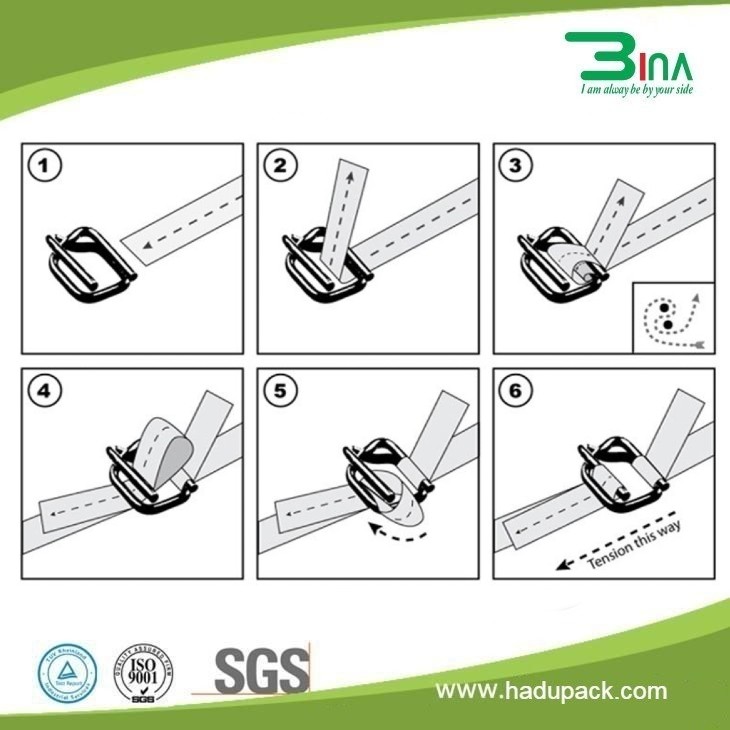
Instructions for using composite plastic strapping
Step 1: Wrap the strapping around the goods
Start by wrapping the composite strapping securely around the package. When using a steel wire buckle (wire buckle), it is best to thread the strapping underneath the bottom of the package first. This helps minimize the amount of strapping wasted during the process
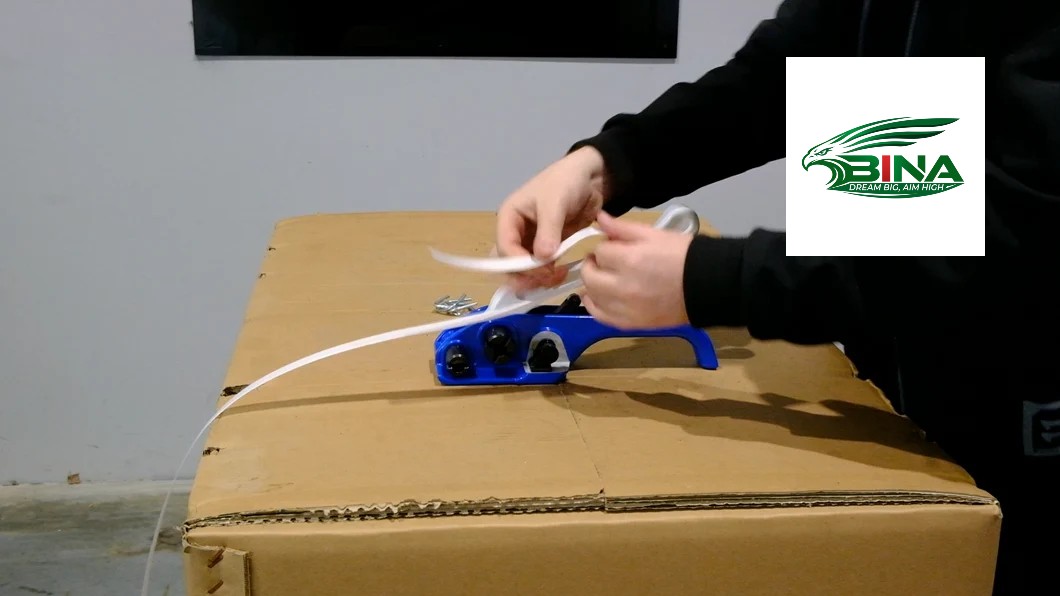 |
Step 2: Thread the end of the cord through the buckle
Thread the end of the cord (the free end) through the underside of the buckle. Although you can thread it straight through the buckle, we recommend threading it in a loop, as this method is quicker and easier to do.
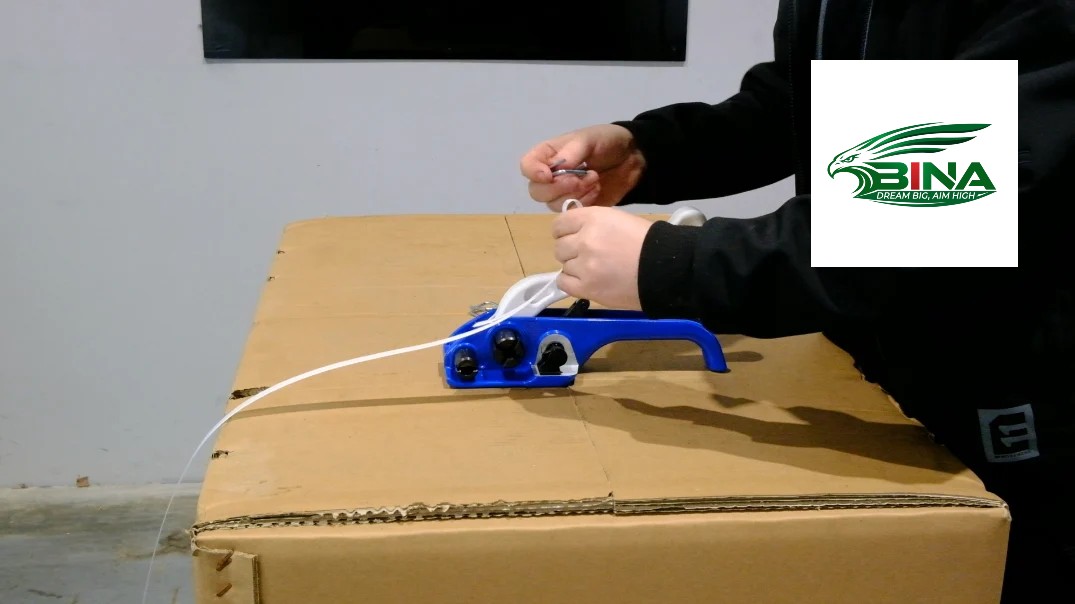 |
Step 3: Thread the end of the cord from the spool through the clasp
Next, thread the end of the cord (the part still connected to the spool) through the top of the clasp to form a loop. Avoid cutting the cord at this step. Pulling the cord directly from the spool will help minimize waste and give you better control during the process.
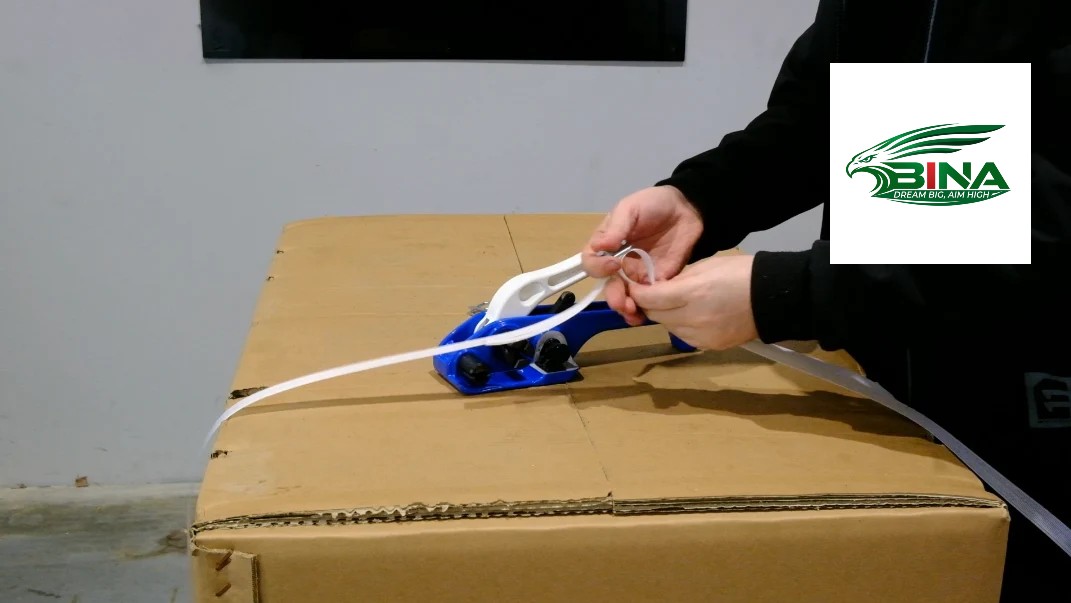 |
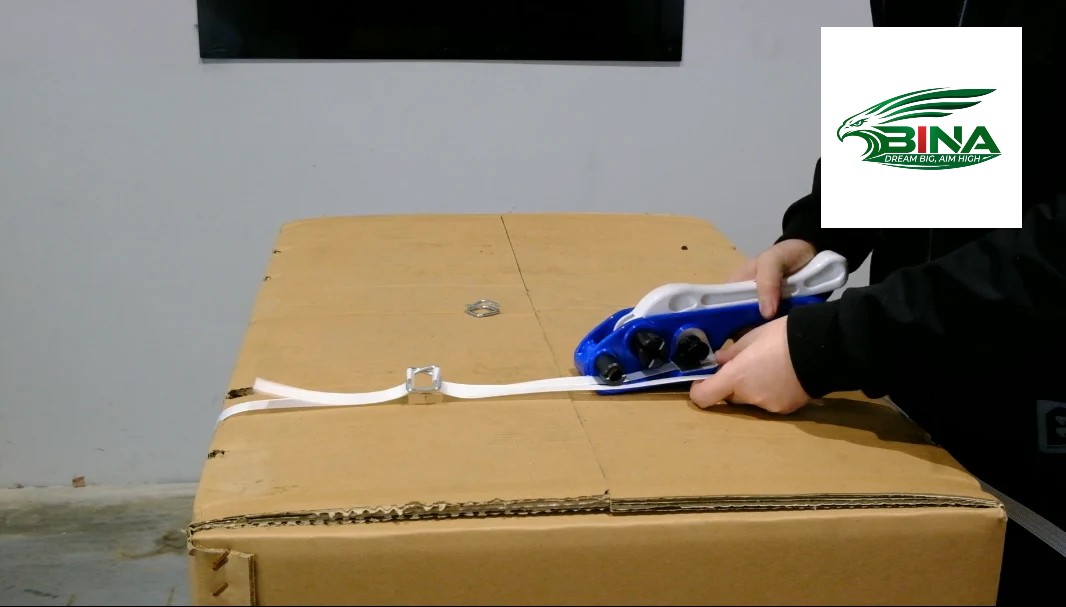
Step 4: Attach the lower strap to the strap tensioning tool
Place the strap tensioning tool about one foot (approximately 30 cm) from the strap buckle. Thread the lower strap underneath the cutting blade and into the rear clamping mechanism, then squeeze the handle to secure the strap. This method ensures that the strap tensioning process is smooth and applies even tension without damaging the strap.
 |
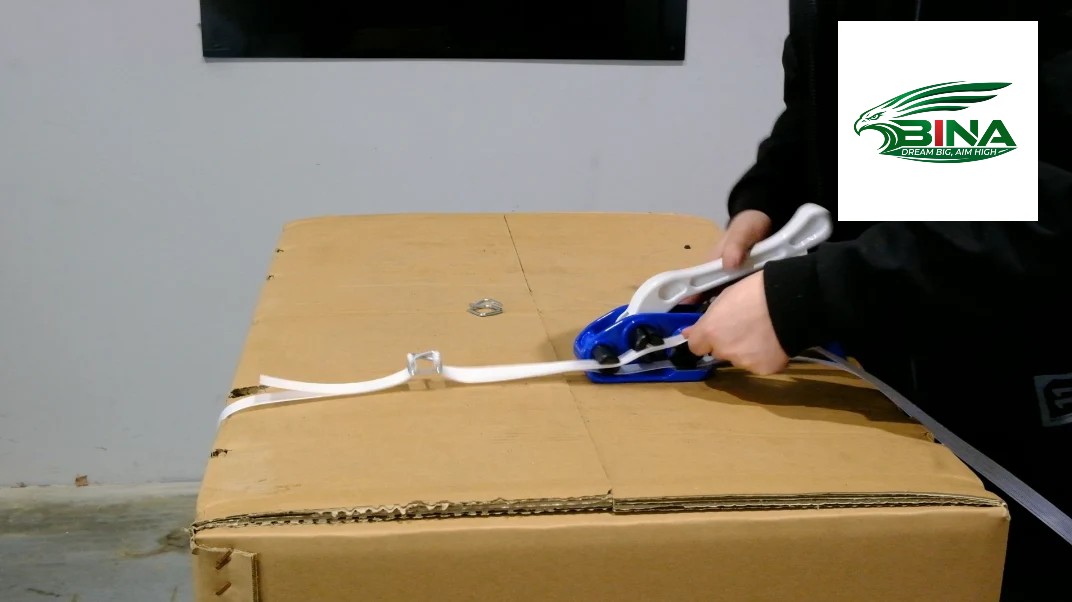
Step 5: Install the upper strap and remove slack
Before beginning to tighten, use your hands to remove as much slack from the strap as possible. Windlass-type tensioning devices have a limited strap take-up range, so removing slack will ensure that the tightening force reaches its maximum. Then, thread the upper strap through the cutting blade and insert it into the windlass mechanism.
 |
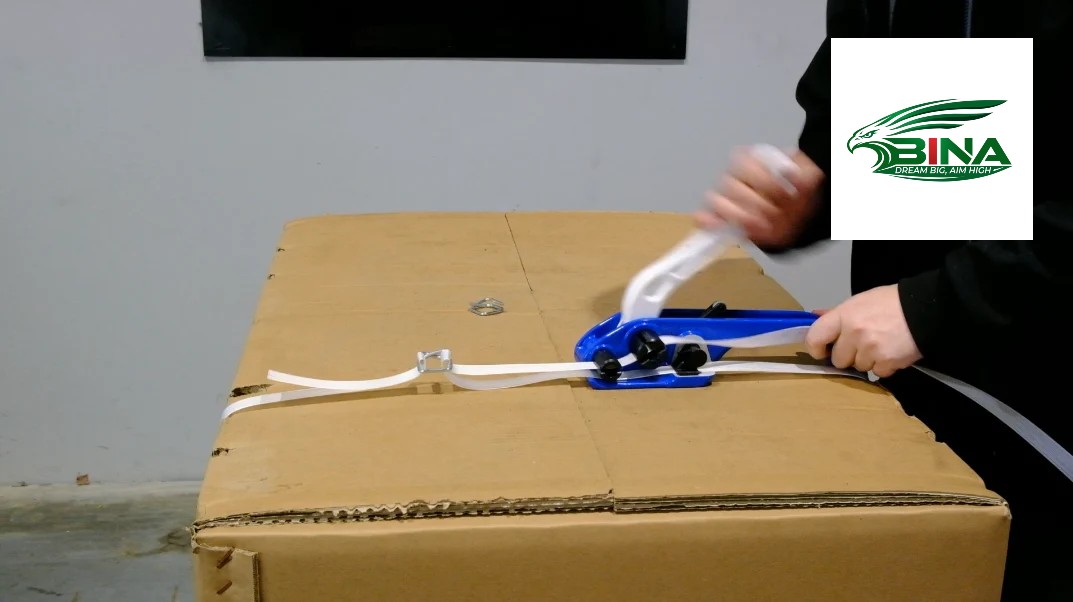
Step 6: Tighten the strap
Start tightening until the strap is taut and the strap lock clamps firmly onto the straps.
 |
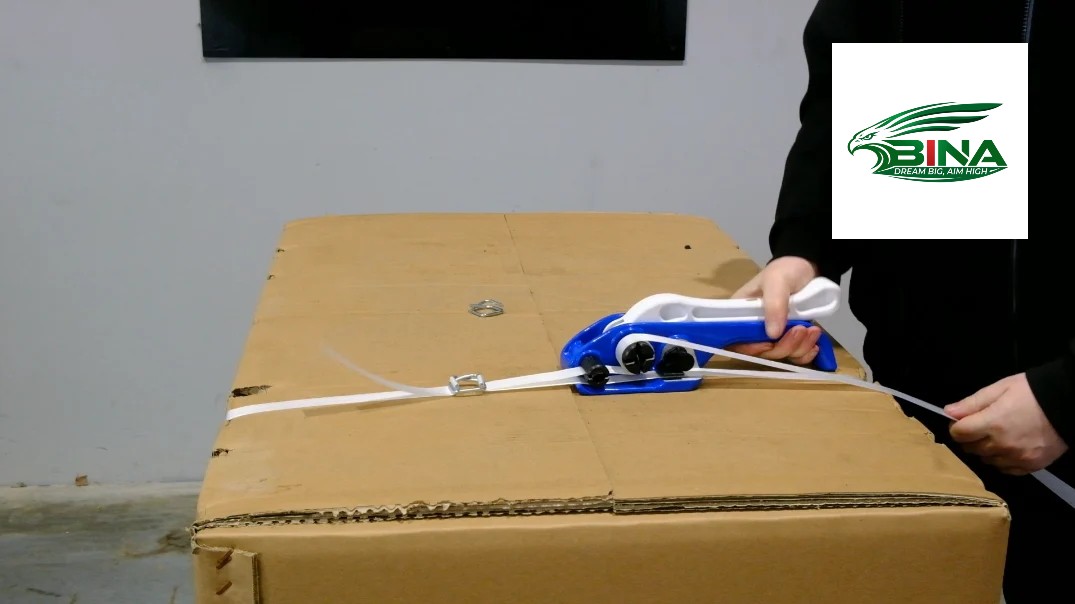
Step 7: Cut the strap
When the desired tension is achieved, squeeze the handle of the cutting tool to cleanly cut the strap. The strap lock will tighten onto the strap, creating a strong and secure connection.
 |
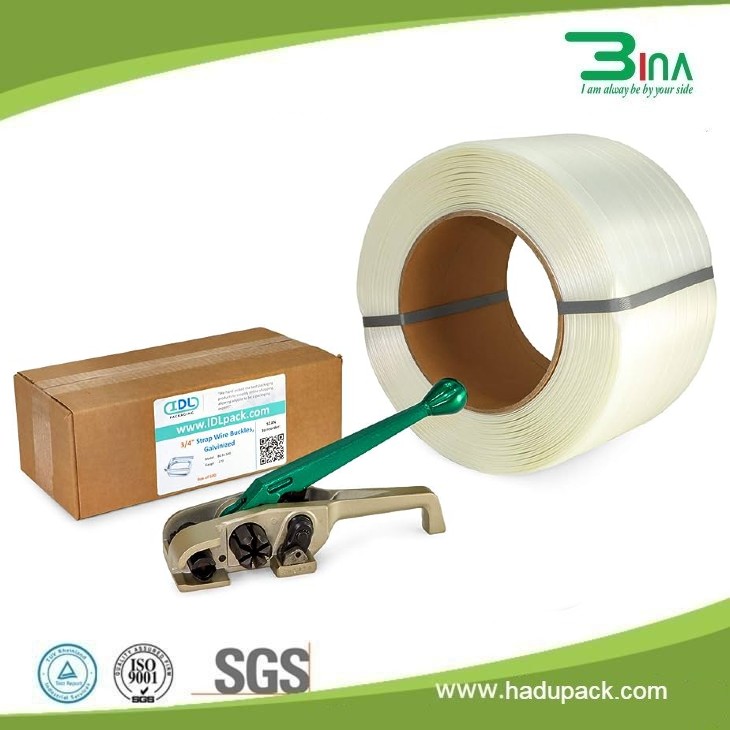
Composite strapping kits
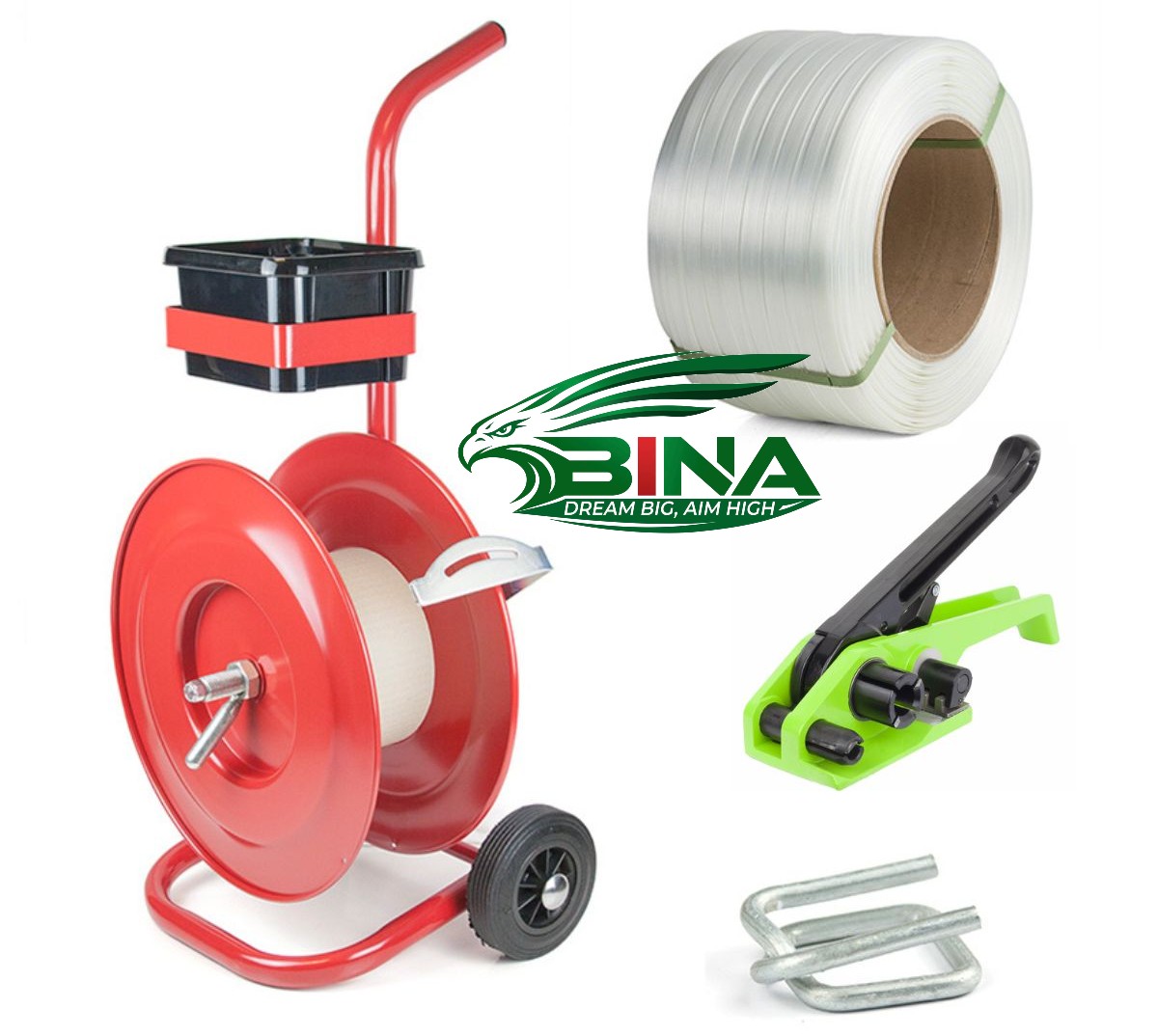
Composite strapping kits provide a complete, ready-to-use solution for securing heavy or irregularly shaped loads. Each kit includes high-strength composite strapping, sturdy galvanized steel buckles, and a handheld tensioning tool, providing everything needed to safely and efficiently strap pallets, wooden crates, steel bundles, or machinery.
Designed for convenience, the product is ideal for transport or warehousing companies seeking a flexible, non-metallic alternative to traditional steel strapping. Hadupack’s composite strapping kits offer superior load retention, excellent moisture and corrosion resistance, and flexibility for securing goods of almost any shape; this is one of the most reliable and easy-to-use cargo securing systems available today.
 |
Why choose composite strapping from Hadupack?
- High tensile strength
- Safer to handle than steel strapping
- Corrosion-resistant and weather-resistant, suitable for outdoor use
- Soft surface, minimizing the risk of scratching goods
- Compatible with simple handheld strapping tools
 |
Composite strapping offers the perfect balance of strength, safety, and flexibility. It is an excellent choice for strapping pallets, packages, wood, and machinery for domestic or export needs.
Buy composite strapping from Hadupack
BiNa Vietnam Joint Stock Company supplies a wide range of composite strapping, buckles, and strapping tensioning tools, ready for fast delivery throughout Vietnam. Whether you need a handheld tool kit for on-site use or a comprehensive strapping system for industrial processes, our team is always ready to advise on the most suitable solution.
 |
- BiNa Vietnam Joint Stock Company
- No. 289 Thanh Am Street, Viet Hung Ward, Hanoi City, Vietnam
- +84 522 806 806
- MST: 0111436560
- www://hadupack.com
- Admin@binajsc.com.vn










Reviews
There are no reviews yet.