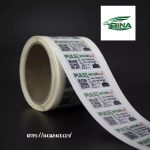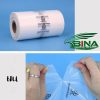



What is an HDPE plastic slip sheet?
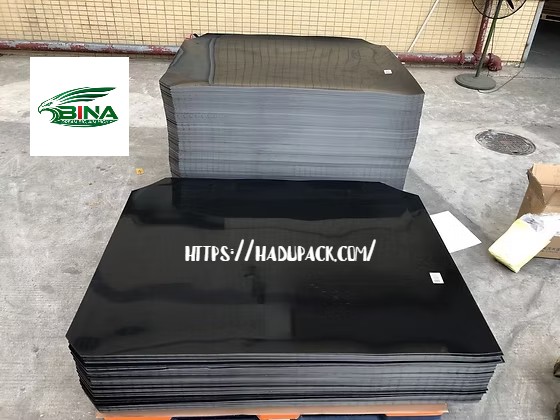
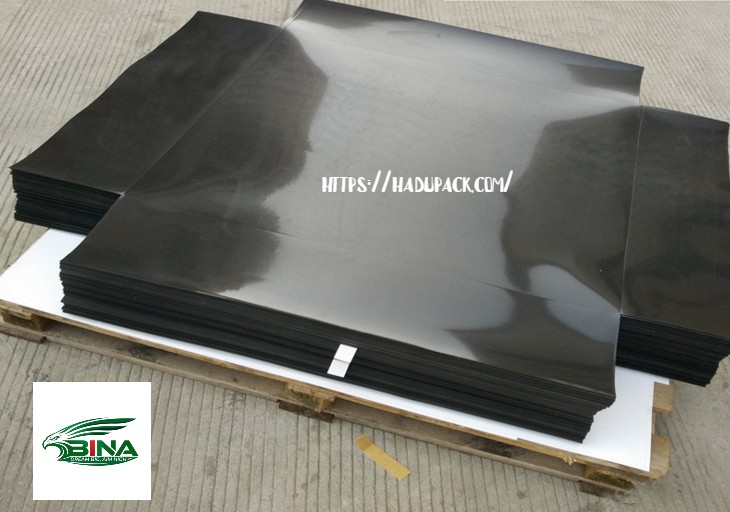
HDPE plastic slip sheets, also known as HDPE plastic liners, are an ultra-thin pallet alternative made from high-density polyethylene. Only 1-2 mm thick, they save up to 90% of warehouse space. When used with a forklift push-pull system, they are not only waterproof, abrasion-resistant, and capable of bearing heavy loads, but also significantly reduce logistics and warehousing costs.
 |
◆Learn more:
Their core advantages include:
- Ultra-thin space saving: compared with bulky wooden pallets, 1,000 sheets take up only about 1 cubic meter. This saves a significant amount of container space.
- Extremely low cost: the price per sheet is usually only about 25% of that of conventional wooden pallets, providing a clear cost advantage.
- Durable and moisture-resistant: made from high-density polyethylene (HDPE), they are waterproof, resistant to acids and alkalis, and tear-resistant.
- How it works: The sheets have folded edges (wing edges). A push-pull device at the front of the forklift clamps the edge of the sheet and pulls it onto the forks. During unloading, the push-pull system automatically pushes the goods to the designated position, and the sheet can be reused or recycled. It works like a sturdy “flying carpet”, making it easy to transport goods.
 |
Material specifications (HDPE):
- Tensile strength: Good.
- Surface anti-slip treatment: Typically, one side is smooth for sliding, while the other side has an anti-slip coating to secure the goods.
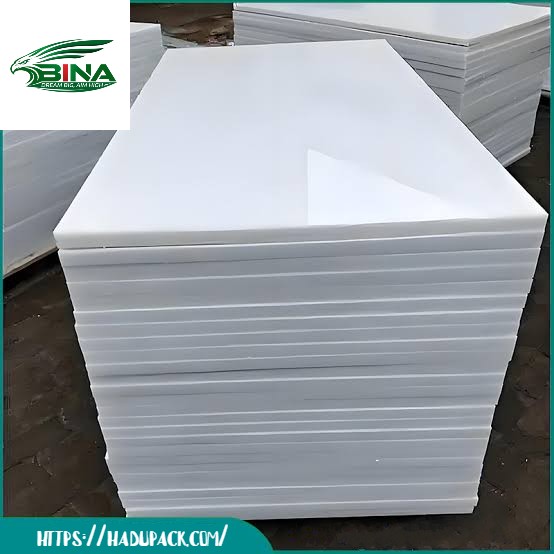
- Applications: Widely used in container transportation, bagged goods (such as rice and cement), and handling of cartonized goods.
 |
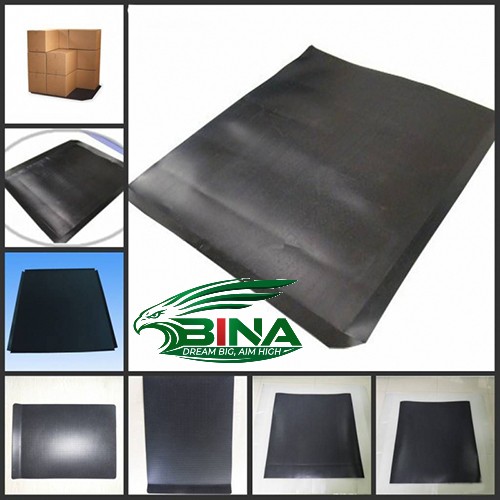
Classification of HDPE plastic slip sheets
HDPE plastic slip sheets (also known as pallet slip sheets or push-pull sheets) are classified according to the number of folded edges, thickness, and anti-slip treatment. They are commonly used for storing and transporting goods, significantly saving space and reducing pallet costs.
I. Classification by number of folded edges (flaps):
Based on the number of edges folded upward, slip sheets are mainly classified as follows:
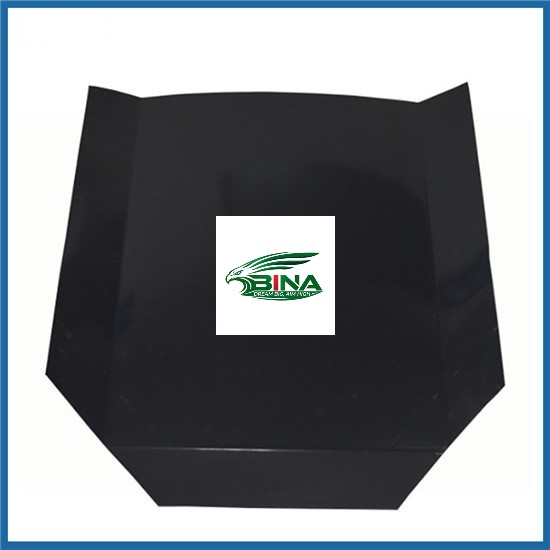
- One-side fold: Folded on only one side, mainly used in cases where the forklift pushes and pulls goods from one direction only.
- Two-side fold: Folded on both sides, suitable for push-pull operations from two opposite directions.
- Three-side fold: Folded in three directions, mainly used to align goods and prevent them from sliding during transportation.
- Four-side fold: Folded in all four directions, providing the best wrapping and securing of goods.
II. Classification by thickness:
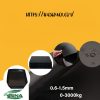
- Based on the weight requirements of the goods to be transported, slip sheet thickness typically ranges from 0.6 mm to 3.0 mm: Thin (0.6 mm – 0.8 mm): Suitable for lighter goods.
- Standard (1.0 mm – 1.2 mm): The most commonly used type, suitable for most standard goods.
- Thicker version (1.5 mm – 3.0 mm): Extremely strong load-bearing capacity, suitable for heavy goods or repeated use.
III. Classification by surface treatment:
Based on friction requirements, there are different surface treatment methods:
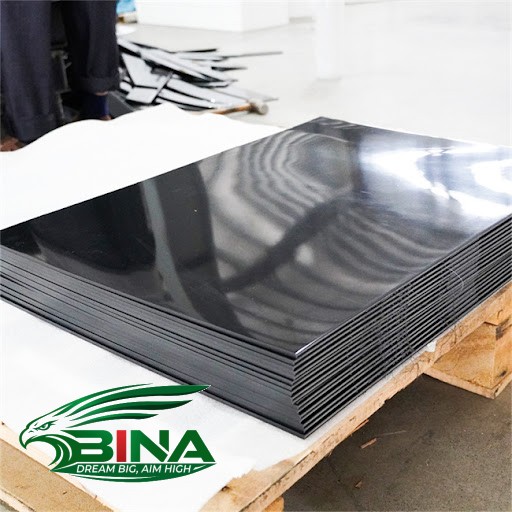
- Smooth surface: Smooth on both sides, mainly used for the bottom contact surface with the forklift slip sheet, allowing easy sliding.
- Anti-slip surface: The surface is embossed or coated with a special layer to increase the coefficient of friction and prevent cartons or goods on top from sliding during transportation.
 |
HDPE plastic slip sheet production process:
HDPE (High-Density Polyethylene) plastic slip sheets are typically manufactured through an extrusion process. This process involves heating and melting the HDPE raw material, extruding it through a die to form continuous flat sheets, which are then cooled, shaped, and treated with an anti-slip surface before being cut to the desired size. The detailed manufacturing process for HDPE plastic slip sheets (also known as slip sheets or slip mats) is as follows:
1. Raw material preparation and mixing:
- Virgin HDPE resin pellets are thoroughly mixed with specific proportions of additives (such as UV stabilizers, colorants, and anti-slip agents).
- Characteristics: HDPE itself has extremely high tensile strength (resistance to breaking under tension) and abrasion resistance.
2. Melting and plasticizing the raw material:
The mixed raw materials are fed from the hopper into a single-screw extruder.
- Heating: The heaters inside the barrel heat the raw materials to 180°C to 220°C.
- Melting: The rotating screw pushes the raw materials forward, melting them into a homogeneous viscous liquid through shear force and heat.
 |
3. Extrusion: Molten HDPE is extruded through a die with a wide opening (T-die).
Sheet thickness: The die gap determines the basic thickness of the slip sheet. Typically, the slip sheet thickness ranges from 0.8mm to 1.5mm.
4. Calendering and cooling:
- Calendering: The extruded sheet enters a multi-roll calender, which flattens the sheet and ensures uniform thickness.
- Surface treatment: Depending on the application, the calender rolls may have special textures, making one side of the slip sheet smooth (for easy pushing and pulling) and the other side matte or with a mesh-like pattern (increasing friction to prevent goods from slipping).
- Cooling: The sheet passes through cooling water rollers or a cooling water bath, where it hardens and solidifies as the temperature decreases.
5. Pulling and cutting:
- Pulling: A caterpillar haul-off machine pulls the sheet at a constant speed, ensuring continuous production and dimensional stability.
- Cutting: An automatic length-cutting machine cuts the continuous sheet material into individual pads according to the specified parameters (e.g.: standard pallet dimensions).
6. Post-processing (customized) edge finishing:
- One or more edges of the slip sheet often need to be heat-bent (forming a small 90° edge) to facilitate clamping operations by the forklift’s push-pull mechanism.
- Edge treatment: Chamfer or round the edges to prevent scratching the packaging film or causing injury to operators during cargo handling.
 |
Instructions for using HDPE plastic slip sheets
HDPE (High-Density Polyethylene) plastic sheets have extremely high abrasion resistance and very low friction. They are commonly used in logistics transportation (as pallets) or for shock absorption in industry. When using them, lay them flat on a dry surface or pallet, keep the center of gravity of the goods balanced, and use specialized tools to push, pull, and move them.
1. Main uses and methods of use
- Logistics transportation (Pallet use): Stack the goods flat on the HDPE plastic sheet. Secure the goods with stretch wrap. Use a specialized forklift with a push-pull mechanism to grip the folded edges of the plastic sheet. Use the friction and pushing force of the push-pull mechanism to gradually push the goods into the container or rack. Reverse the process to unload the goods.
- Industrial liners and cushioning: Place directly under equipment requiring shock absorption, impact protection, or abrasion resistance. Due to the slippery material, ensure that the equipment’s center of gravity is stable to prevent slipping.
 |
2. Notes
- Anti-slip and safety: HDPE surfaces are very smooth. When used in areas with heavy foot traffic, ensure that it is a specially designed anti-slip mat or avoid using it on slopes to prevent slipping.
- Temperature control: HDPE meets food-contact standards, but may soften at high temperatures. Avoid direct contact with heat sources or placing it under excessively hot equipment.
- Daily cleaning: HDPE has excellent stain resistance. Simply wipe the surface with a damp cloth to clean.
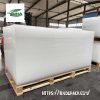
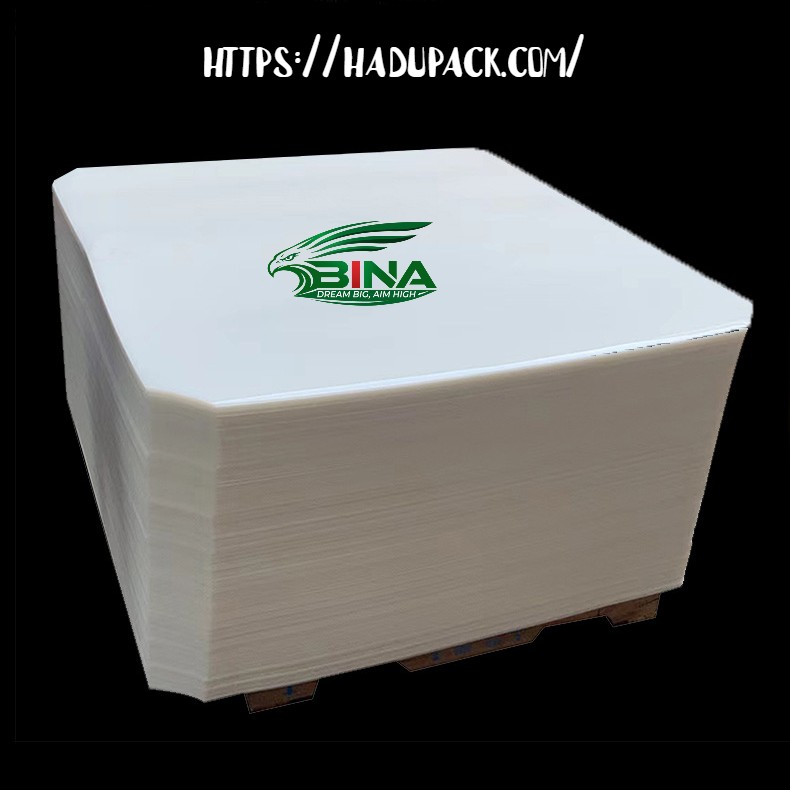
If you need to purchase or use these products, please let BiNa Vietnam Joint Stock Company know: What type of goods are you transporting? What is the estimated total weight of the goods? Does your forklift have a push-pull mechanism for slip sheets? I can help you recommend the most suitable slip sheet thickness and design. 3-page slip sheet (slip sheet) White plastic slip sheet/Pull-push slip sheet… White plastic slip sheets are made from virgin HDPE plastic resin. Our plastic pallet slip sheets at https://hadupack.com can be customized according to customers’ needs.