

Description
What is nonwoven fabric?
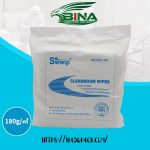
Nonwoven fabric (also known as nonwoven textile or nonwoven material) is a type of fabric-like material created by directly bonding and interlacing fibers through physical, chemical, or thermal methods without the traditional spinning and weaving processes. Its characteristics include fast production, low cost, a wide variety of types, breathability, and moisture resistance.
 |
◆Learn more:
- https://hadupack.com/san-pham/vai-chong-tinh-dien-phong-sach/
- https://hadupack.com/san-pham/khau-trang-phong-sach/
- https://hadupack.com/san-pham/quan-ao-phong-sach/
Main characteristics and components
- Process: The fibers are directly bonded through methods such as needle punching, thermal bonding, melt blowing, and spunlace bonding without interlacing.
- Raw materials: Mainly synthetic fibers with resin components (PP, PET, PE, etc.), but also natural fibers (cotton, wool, linen).
- Characteristics: Lightweight, water-resistant, breathable, bacteria-filtering, tear-resistant (depending on the manufacturing process).
Common uses of nonwoven fabric
Nonwoven fabric is widely used in everyday life:
- Healthcare and health: Face masks (water-resistant outer layer, melt-blown bacteria-filtering middle layer), sheet masks, cotton pads, wet wipes, diapers, sanitary pads, surgical gowns.
- Eco-friendly living: Reusable shopping bags, drawstring bags, storage boxes, tablecloths.
- Industry and agriculture: Filter materials (filter membranes), industrial wiping cloths, agricultural covering and insulation fabrics, weed-control mats in gardens.
- Household and apparel: Garment covers, dust covers, lining fabrics, bed sheets.
 |
Classification of Nonwoven Fabrics
Nonwoven fabrics are mainly classified based on the production process, raw material composition, and application. The main classifications include spunlace, meltblown, needle-punched, and thermally bonded nonwoven fabrics, which are commonly made from polypropylene (PP) or polyester (PET) fibers and have characteristics such as breathability, moisture resistance, high production efficiency, and low cost.
 |
Here are the detailed classifications:
1. Classification by production process (the most common classification)
- Spunlace nonwoven fabric: Uses fine, high-pressure water jets to entangle the fibers into a web, increasing strength. Commonly used in wet wipes and masks.
- Thermal Bonded nonwoven fabric: Combines hot-melt adhesive materials in fiber or powder form into the fiber web, melting them and allowing them to solidify after cooling.
- Airlaid nonwoven fabric: Creates a web by opening wood pulp sheets into individual fibers and then forming them using air; has water-absorbent properties.
- Spunbond nonwoven fabric: Polymers are extruded to form continuous fibers, which are then laid directly and bonded together. Has high strength and breathability. Commonly used in medical protective clothing.
- Meltblown nonwoven fabric: Extremely fine fibers provide excellent filtration. Commonly used as the middle layer of masks.
- Needle-punched nonwoven fabric: Nonwoven fabric created by punching through loose fibers with needles, causing them to interlock into a fabric. Commonly used in felt and geotextiles.
- Wetlaid nonwoven fabric: Fibrous raw materials are dispersed in water to form a web.
 |
2. Classification by raw material composition
- PP (Polypropylene): The most common type, lightweight, breathable, and waterproof.
- PET (Polyester): Highly durable and heat-resistant, commonly used in functional fabrics.
- Viscose/Cotton: Good water absorption, commonly used in personal hygiene products.
- PLA (Polylactic Acid): A biodegradable and environmentally friendly material.
3. Classification by application
- Medical and healthcare: Masks, protective clothing, surgical gowns, diapers, wet wipes.
- Industrial applications: Geotextiles (road engineering), automotive interiors, packaging materials.
- Civilian and apparel applications: Eco-friendly bags, linings, footwear materials, filter materials.
These materials, as they do not require traditional textile manufacturing processes, can be produced quickly and at low cost, so they are widely used in modern industry and everyday life.
 |
Nonwoven fabric production process
Nonwoven fabric production is a technology that directly bonds and interlaces fibers or filaments into a web through physical, chemical, or thermal methods, without the need for traditional spinning and weaving processes. The core processes include fiber raw material preparation, web formation (such as carding, spunbonding, meltblowing, and wet-laid processes), bonding (such as needle punching, thermal bonding, and hydroentangling), and finishing.
 |
I. Main technological production processes
- Raw material preparation: Short or long fibers (PP, PET, PA, cotton, etc.).
- Web formation: Arranging the fibers into a web.
- Dry-laid: Arranging short fibers into a web using a carding machine (such as needle bonding, thermal bonding).
- Spunbond: Melting and extruding polymers into fine filaments, then directly laying them into a web.
- Meltblown: Using high-speed hot air to stretch molten polymers into an ultrafine fiber web.
- Wet-laid: Dispersing and spreading fibers in a water medium, similar to papermaking.
- Bonding: Bonding the fibers together.
- Needle punching: Mechanically entangling the fibers using many small needles.
- Thermal bonding: Bonding the fibers by melting them with heat (including hot calendering and hot air bonding).
- Hydroentanglement/Water jet: Entangling the fibers using fine, high-pressure water jets.
- Chemical bonding: Bonding the fibers using adhesives.
- Finishing and final winding: Edge trimming, shaping, surface treatment (e.g.: water-repellent treatment, hydrophilic treatment).
 |
II. Common Types and Characteristics of Nonwoven Fabrics
- Spunbond: High strength, durable and breathable; used in medical protective clothing and packaging materials.
- Meltblown nonwoven fabric: Ultrafine fibers, good coverage and high filtration efficiency; the primary filtration material for masks.
- Needle-punched nonwoven fabric: Thick and abrasion-resistant; used in civil engineering, carpets and sound insulation materials.
- Spunlace nonwoven fabric: Soft and highly absorbent; used in wet wipes and medical gauze.
Nonwoven fabric production combines the principles of plastics, chemicals, papermaking and textiles, offering advantages such as fast production speed, low cost and a wide variety of types.
 |
 |
Common Problems in Nonwoven Fabric Production
Although nonwoven fabric production has advantages such as a short process and high speed, it faces many technical and process challenges in actual production. The following are common technical problems and challenges:
1. Technical Challenges of the Melt-Blown Process
- Control of fiber fineness and uniformity: The melt-blown process requires precise control of the temperature and pressure of the molten resin, as well as the air speed and temperature of the high-pressure hot air stream. Improper control can lead to uneven fiber fineness, resulting in porous fabric, uneven thickness, or insufficient strength.
- Nozzle clogging: High-temperature molten polymer is prone to thermal degradation or the formation of impurities, causing nozzle clogging and resulting in “floating fibers” or fibers with uneven thickness.
- Electrostatic charging effect: Melt-blown fabric requires electrostatic charging technology to enhance adsorption capacity (used in masks), but the stability of charging parameters (voltage, speed) is very difficult to control, directly affecting filtration efficiency.
 |
2. Raw Materials and Quality Control
- Abnormal raw materials: The use of recycled fabric scraps or raw materials with unstable quality can easily create “abnormal fibers” (such as thick knots or glue spots), leading to production interruptions, yarn breakage, or defects in the finished product.
- Balancing product strength and softness: In hot calendering production, to achieve high strength, the fibers are often overheated and excessively melted, resulting in a finished product that is stiff and lacks softness. Balancing strength and softness is a major technical challenge.
3. Challenges in the Reinforcement Process
- Wastewater treatment in the Spunlace process: Spunlace technology uses high-pressure water jets to entangle the fibers, generating a large amount of wastewater containing fiber debris. This places extremely high demands on the factory’s filtration and wastewater treatment systems.
- Temperature and pressure control during hot calendering: Uneven temperature or pressure distribution across the hot calendering rollers can lead to “spots” on the fabric surface, characterized by localized excessive melting (thin and brittle) or insufficient melting (insufficient strength).
 |
 |
4. Environmental and Structural Challenges
- Fiber web uniformity: Uneven fiber distribution on the web-forming machine (irregular web structure) can lead to varying densities or even gaps.
- Ambient temperature and humidity: Synthetic fiber production is highly sensitive to static electricity. Poor temperature and humidity control can easily generate static electricity, causing fibers to stick to the machine or resulting in uneven web formation.
- Waste and environmental pressures: Most nonwoven fabrics are made from synthetic fibers such as polypropylene (PP) and polyester (PET), which are very difficult to naturally decompose after disposal, making environmentally friendly treatment a major challenge.
The main challenges in nonwoven fabric production lie in precisely controlling the high-temperature melt process, ensuring the stability of high-speed mechanical operations, and guaranteeing the quality of raw materials.
 |
 |
Notes on Selecting Nonwoven Fabric
When selecting nonwoven fabric, to ensure it meets your needs (such as shopping bags, handicrafts, dust covers, etc.), you should pay attention to the following key aspects, mainly divided into four aspects: material, thickness, production process, and intended use:
1. Material Selection
- Polypropylene (PP): The most common material for eco-friendly bags, characterized by its light weight, water resistance, and breathability.
- Polylactic Acid (PLA): A biodegradable material with a lower environmental impact.
- Virgin material versus powder material: High-quality nonwoven fabric (granular/virgin material) has good resistance to aging and no unpleasant odor; lower-priced “powder” material may have a chemical odor and be more prone to breaking.
- Special materials: Spunlace nonwoven fabric (soft to the touch, requiring no adhesive) or eco-friendly PET material, etc.
 |
2. Thickness/Weight
The thickness of non-woven fabric is usually expressed as “grams per square meter (g)”. The higher the number, the thicker, heavier, and more durable the fabric.
- 50g – 70g: Thin, suitable for dust bags, shoe covers, and temporary bags.
- 70g – 90g: Standard thickness, commonly used for wholesale shopping bags and gift bags.
- 100g and above: Thicker, with stronger load-bearing capacity, suitable for durable shopping bags that need to be reused many times.
3. Fabric Production Process
- Uniformity: Check whether the fabric color is even and whether there are any significant color differences.
- Surface treatment: Check whether the surface is smooth and free of excess fibers or defects.
- Tear resistance and tightness: If making bags, pay attention to whether the heat-welded (ultrasonic) edges are secure and ensure there are no tears.
 |
 |
4. Usage Notes
- Breathability and water resistance: Non-woven fabric is breathable and slightly water-resistant, making it suitable for dust protection and clothing storage.
- Not tear-resistant: Non-woven fabric does not withstand excessive stretching; please pay attention to the load-bearing limit when carrying heavy items.
- Washing restrictions: Hand wash with cold water, gently wipe stains, and air dry in the shade. Do not machine wash or tumble dry, as this may make the fabric brittle or cause the printed layer on the surface to peel off.
- Summary of selection suggestions: For everyday/environmentally friendly bags, choose PP material and 70g-90g heat-sealed bags, which are both durable and lightweight. For craft/packaging bags, choose according to the required softness and color.
Detailed information about Hadupack us
 |