



Description
What is an ionizing air gun for static elimination?
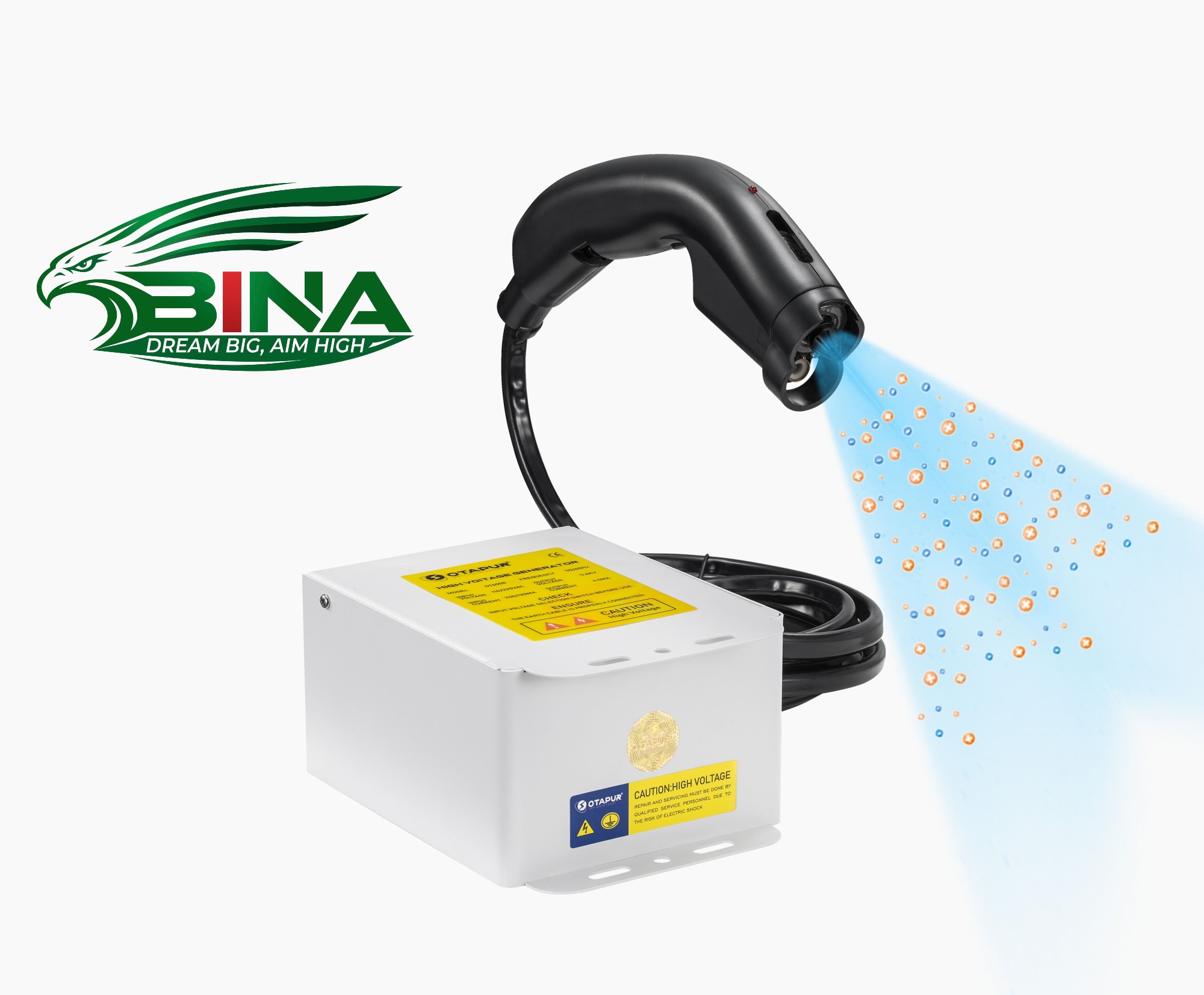
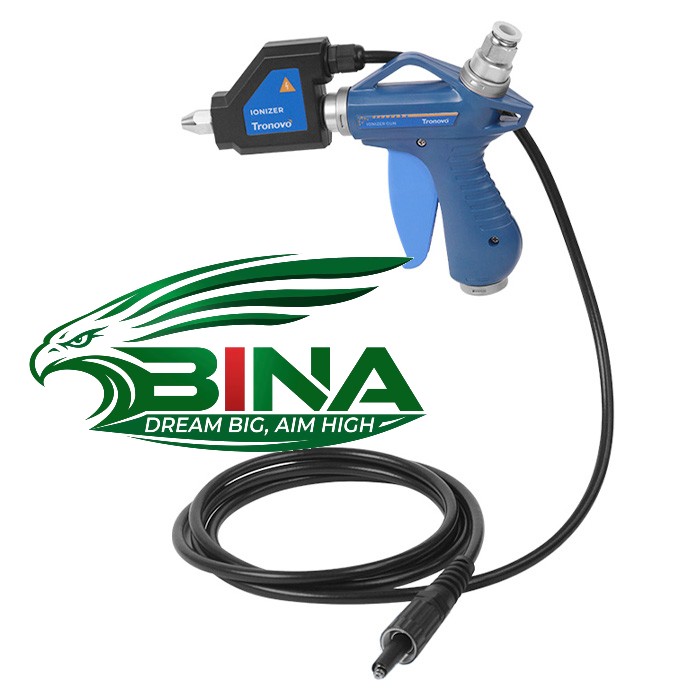
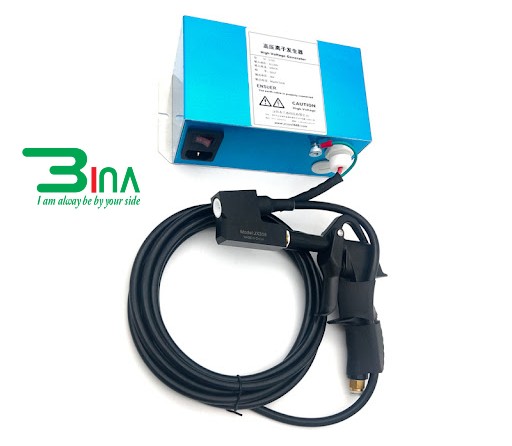
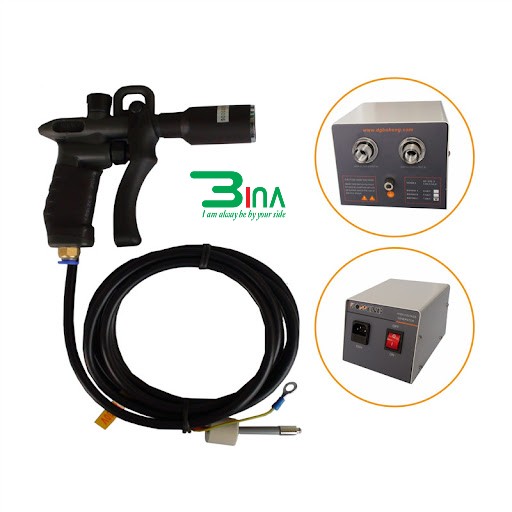
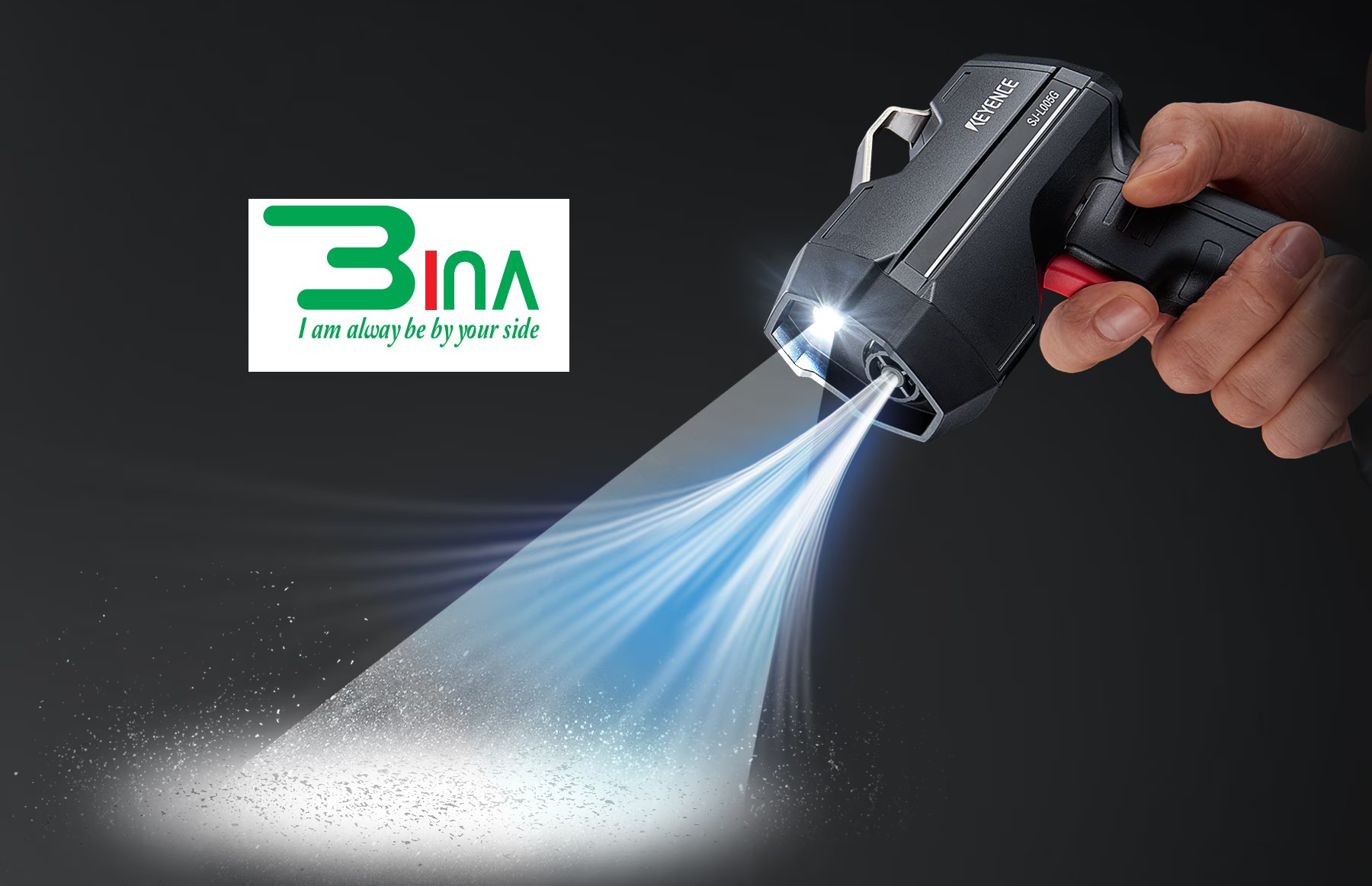
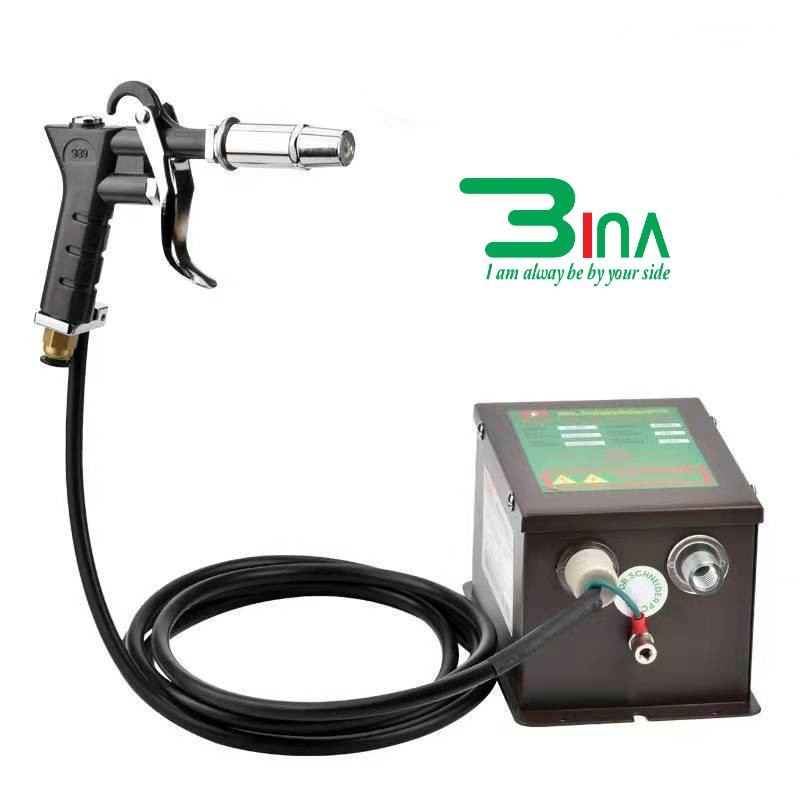
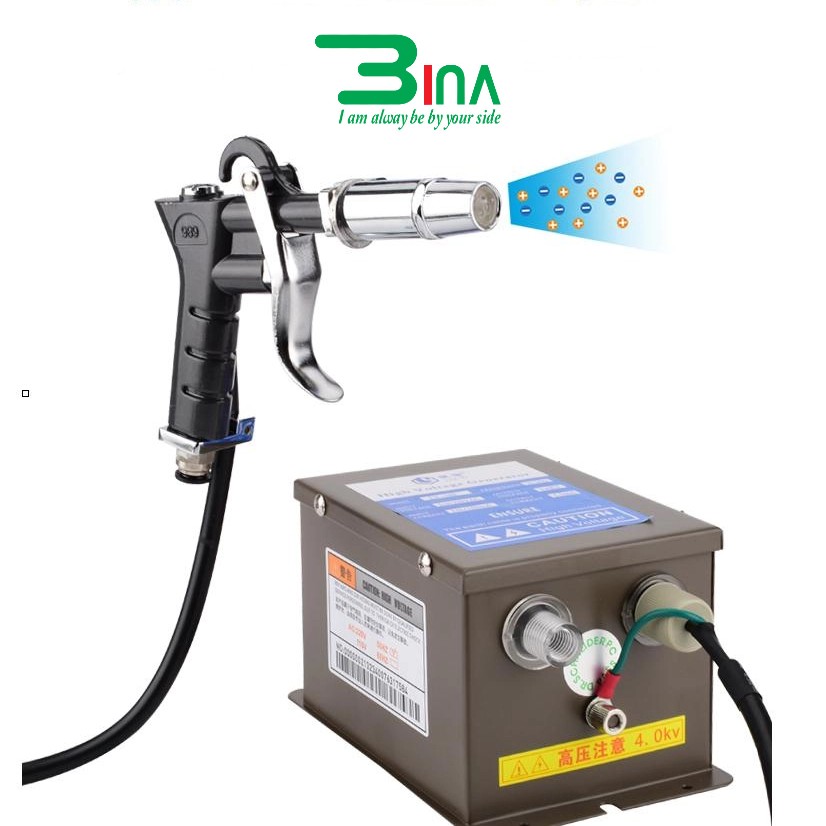
An ionizing air gun, also known as an ionizing blow gun or electrostatic dust removal gun, is a handheld industrial static elimination device. It uses compressed air to generate a large amount of positive and negative ions through high-voltage ionization technology, blowing the ion stream toward the area requiring static elimination to quickly neutralize static electricity on the surface of objects and remove dust particles. This device is widely used in industries that require high cleanliness and are prone to electrostatic contamination, such as electronic assembly, precision instruments, plastic packaging, and paint spraying.
 |
Core functions of the ionizing air gun for static elimination:
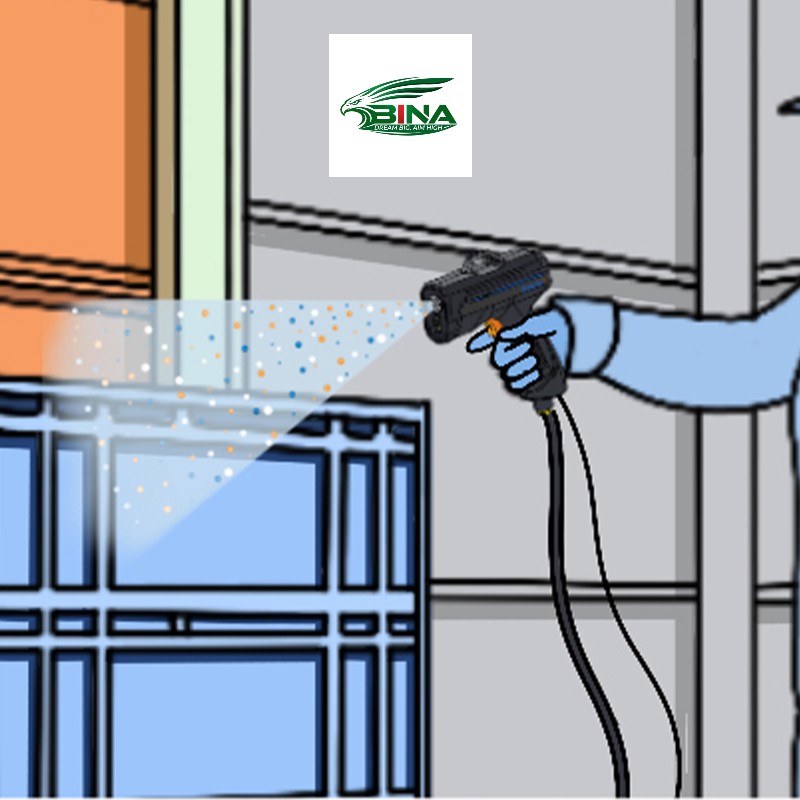
- High-efficiency static elimination: The high-voltage corona discharge at the ionizing needle ionizes air molecules, generating positive and negative ions that neutralize charges on the surface of objects, thoroughly resolving dust attraction and component damage caused by static electricity.
- Powerful dust removal: Combined with compressed airflow, it easily blows away adhering dust and small impurities after static elimination.
- Wide range of applications: Suitable for plastic molding, painting operations, precision electronic assembly, pharmaceutical packaging, and other applications.
- User-friendly design: Handheld design, simple operation, adjustable airflow, and usually equipped with grounding protection to ensure safety.
 |
Daily usage notes:
- Regular maintenance: Dust accumulated on the ion needle must be cleaned regularly, otherwise it will affect ion generation efficiency.
- Safe grounding: The machine body must be properly grounded during use to prevent static electricity buildup.
- Dry air source: Dry, filtered compressed air must be used to prevent moisture from causing rust or electrical sparks at the ion needle.
Environmental restrictions: Do not use in flammable or explosive working environments.
 |
Structure of an ion air gun for static elimination:
The utility model discloses an ion air gun for static elimination, relating to the field of dust and static electricity removal equipment. It comprises: an ion generating device and an air spraying device arranged at the muzzle, and further comprises: a positioning device arranged at the muzzle and used to determine the blowing position. The ion air gun provided by the utility model emits a focused beam by means of the positioning device. After positioning the blowing position, the ion generating device and the air spraying device are turned on to blow onto the object being blown, thereby achieving precise positioning of the blowing position. By accurately positioning the blowing distance, the ion air gun is easy to use and can achieve the best effect in removing static electricity and impurities.
 |
Technical field:
This utility model relates to the field of dust and static electricity removal equipment, particularly ion air guns.
☞See more:
Background technology:
During the production of thin-film transistor liquid crystal displays (TFT-LCDs), static electricity and foreign matter are easily generated or introduced during module assembly. Therefore, an ion air gun is required at the module assembly station. The LCD and backlight are treated to remove static electricity and impurities.
An ion air gun is a tool for removing static electricity and foreign matter from surfaces. It uses the discharge of an ion needle at the gun muzzle to ionize the high-pressure airflow passing through the muzzle into a large quantity of positive and negative ions. The ion wind blows onto and adheres to the product surface, thereby neutralizing it. It can neutralize static electricity on the product surface and remove impurities from the surface.
The ion air gun provided according to the prior art is suspended by an upper tether to save space and facilitate use. The tether is a structure independent of the ion air gun and can be retracted up and down. The operator pulls the ion air gun down toward the backlight or the upper part of the panel and presses the switch to perform the blowing process.
When using this type of ion air gun for blowing treatment, the operator cannot effectively control the blowing position and distance and can only rely on the operator’s sense. The best effect cannot be achieved if it is too far away or too close. Therefore, the ion air gun provided by the current technology is very inconvenient to use and cannot ensure the effectiveness of removing static electricity and foreign matter.
 |
Utility model content:
The utility model provides an ion air gun, which can achieve better results in eliminating static electricity and foreign matter.
To solve the above technical problems, the utility model ion air gun adopts the following technical solutions:
- The ion air gun includes: an ion generating device and an air spraying device arranged at the gun head, and further includes: a positioning device arranged at the gun head for positioning the blowing position.
- It also includes: a distance device for positioning the blowing distance.
- The ion air gun also includes a positioning controller, which is electrically connected to the distance device and the positioning device respectively. The distance device controls the operation of the positioning device through the positioning controller.
- The positioning controller is a solenoid valve.
- It also includes: a main switch, electrically connected to an external power supply, for controlling the opening and closing of the ion generating device and the air spraying device.
- The main switch is electrically connected to the positioning controller. When the ion air gun is placed at the blowing distance, the positioning controller controls the main switch to turn on.
- The main switch is a solenoid valve.
- The fixed-distance device includes: a tether extending from inside the ion air gun. The tether is provided with a button. On the ion air gun, the ion air gun extends correspondingly to the tether. position.
- The distance measuring device includes: a position sensor.
- The positioning device is a laser transmitter.
In the technical solution of this embodiment, a positioning device is provided to emit a focused light beam, and after positioning the blowing position, the ion generating device and the air spraying device are turned on to perform blowing, thereby realizing the blowing position and the blowing position. With accurate positioning capability at a long distance, the ion air gun is very easy to use and can achieve the best effect in eliminating static electricity and impurities.
 |
Description of the drawings of the electrostatic discharge ion air gun:
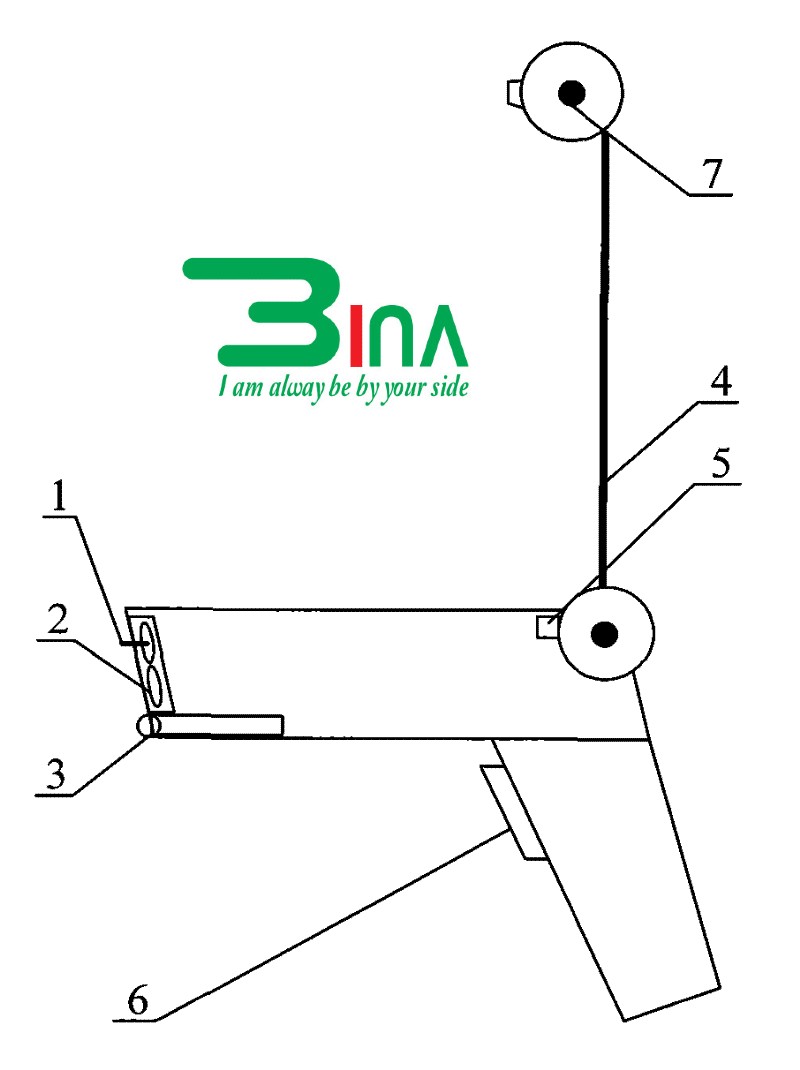
To explain more clearly the embodiments of the invention or technical solutions in the prior art, the drawings needed in the description of the embodiments will be briefly introduced below. Obviously, the drawings in the following description are only for this purpose. purpose of the present utility model For some embodiments of the new type, those of ordinary skill in the art can also obtain other drawings based on these drawings without creative effort. Figure 1 is a structural diagram of the ion air gun according to an embodiment of the present utility model.
 |
Explanation of reference symbols:
1 – Ion gun; 2 – Air outlet tube; 3 – Laser emitter; 4 – fastening wire; 5 – positioning controller; 6 – main switch; 7-coil.
Detailed implementation:
The embodiment of the invention proposes an ion air gun, which can achieve better effects in removing static electricity and foreign matter. The ion air gun according to the embodiment of the invention will be described in detail below with reference to the accompanying drawings.
An embodiment of the invention provides an ion air gun. As shown in Figure 1, the ion air gun comprises: an ion generating device, an air spraying device and a positioning device arranged at the gun muzzle, wherein the positioning device is used for positioning. Blow the accompanying position.
In the technical solution of this embodiment, a positioning device is configured to emit a focused light beam and after positioning the position to be blown, the ion generating device and the air spraying device are turned on to perform blowing, thereby achieving the blowing effect on the object being blown. With accurate attachment position and blowing distance, the ion air gun is easy to use and can achieve the best effect in removing static electricity and foreign matter.
In addition, the ion air gun further comprises: a distance measuring device for positioning the blowing distance. The blowing distance is the distance between the muzzle of the ion air gun and the object being blown.
 |
Furthermore, the ion air gun also includes: a positioning controller 5, electrically connected respectively to the fixed-distance device and the fixed-position device. The fixed-distance device controls the operation of the fixed-position device through the positioning controller 5, that is, the fixed-distance device detects the ions. When the distance between the muzzle of the air gun and the target to be blown reaches the required blowing distance, the positioning device is controlled to open through the positioning controller 5 and the positioning device continues to locate the position of the blowing positioning gun.
In addition, the ion air gun also includes: a main switch 6, electrically connected to an external power supply and used to control the opening and closing of the ion generating device and the air spraying device.
The following is an example in which the ion generating device is corona discharge from an ion needle 1 installed at the gun throat, the air spraying device sprays air from an air outlet 2 installed at the muzzle, and the positioning device is a laser transmitter 3 that emits a highly focused beam. According to this embodiment, the positioning controller 5 and the main switch 6 are preferably solenoid valves.
Furthermore, the fixed-distance device may be a tether structure, including: a tether 4, disposed on the ion air gun and extending from inside the ion air gun. The positioning controller 5 is connected to the tether 4 and is electrically connected to the main switch 6. When the tether 4 is extended to a certain length such that the distance between the muzzle of the ion air gun and the object to be blown (the LCD screen and the backlight surface) meets the operating requirements, the positioning controller 5 is turned on.
Specifically, when the operator uses the ion air gun according to the invention for blow processing, he first pulls the ion air gun downward to extend the tether 4 from which the ion air gun is suspended when the tether 4 is stretched to a certain length range when the tether can no longer be pulled down (the extended length of the tether is preset according to the operating requirements), which means that when the gun is lowered to the height required for blowing, the ion wind also means that the distance between the muzzle of the ion air gun and the object to be blown meets the operating requirements, at this time the tether 4 controls the operation of the positioning controller 5, thereby starting the laser at the front end of the muzzle of the ion air gun. The device 3, the front end of the muzzle emits a laser beam, aimed at the position to be blown, to accurately determine the blowing position.
 |
To control the pull-down length of tether 4, a protruding stop from tether 4 may be provided at one end of tether 4. The position of the stop may be flexibly set on tether 4 corresponding to the ion air gun, which may be at the top, with a limit position set corresponding to the position where tether 4 protrudes from the ion air gun. When tether 4 is extended and its stop reaches the limit position, it can no longer be pulled out. thereby controlling the pull-down length of tether 4 and when the stop reaches the limit position, positioning controller 5 is controlled to operate. Since tether 4 extends from inside the ion air gun, only a single stop can be provided to determine the length of tether 4.
Therefore, furthermore, reel 7 may be provided at the upper end of tether 4 where it is fixed and suspended, to wind tether 4 back up. Since the length of tether 4 extending out of the ion air gun is of a fixed length, reel 7 allows. The length of tether 4 pulled out determines the blowing distance, so a number of gears can be provided on reel 7 according to different blowing distances to which the object is to be blown, thereby limiting the number of different pull-out lengths of tether 4, so that the precise position of the blowing distance can be flexibly achieved for different objects to be blown.
After precisely positioning the blowing position and blowing distance, the operator can press main switch 6 to control the opening of the solenoid valves of the ion generating device and the air spraying device. At this time, ion needle 1 discharges, passing through the air spraying device. The high-pressure airflow is ionized into a large number of positive and negative ions, while the wind continues to be blown out from air outlet 2 to form ion wind adhering to the surface of the object to be blown, thereby neutralizing the static electricity on the surface of the object to be blown and removing foreign matter adhering to the surface.
Furthermore, positioning controller 5 is electrically connected to main switch 6, meaning that positioning controller 5 can also effectively control main switch 6. When the ion air gun is placed at the blowing distance, the positioning controller will control main switch 6. The switch is on. Specifically, when tether 4 is pulled down to the required blowing distance, main switch 6 controls the ion generating device and the air spraying device to operate, ensuring that before the blowing distance is reached, the ion generating device will operate effectively and the air spraying device will not start, thereby limiting the pull-down length of the ion air gun and controlling the blowing distance.
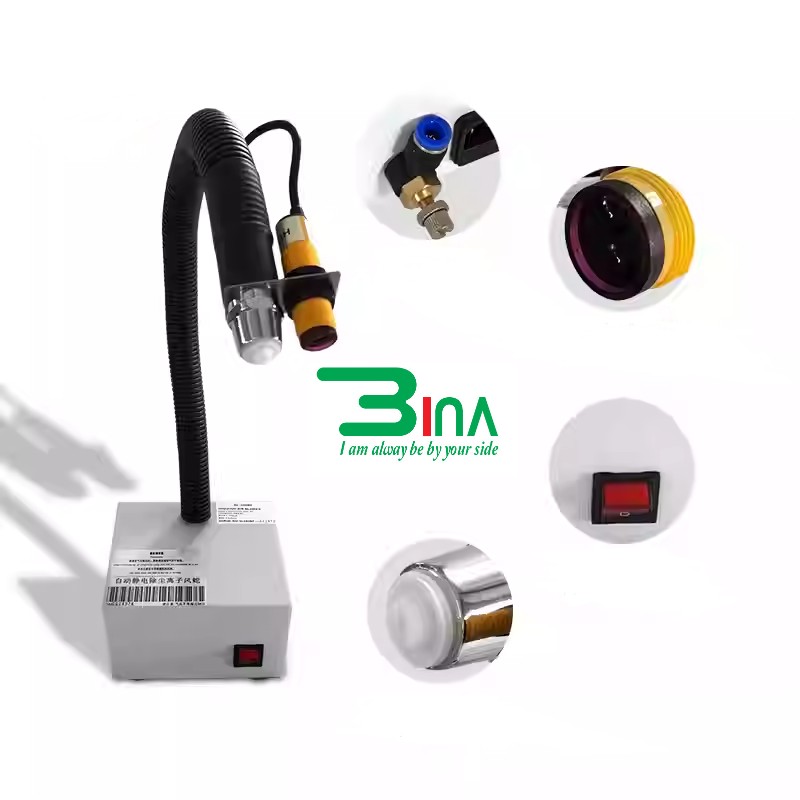 |
It should be noted that the distance measuring device may also be a structure comprising a position sensor. The position sensor may be arranged at the head of the ion air gun. When the position sensor detects that the ion air gun has reached the blowing distance required by the operation, it sends a position signal to trigger the operation of the positioning controller 5 electrically connected to the fixed-distance device, thereby turning on the laser emitter 3 added to the front end of the muzzle of the ion air gun, so as to further determine the blowing position.
In the technical solution of this embodiment, before turning on the ion air gun, a fixed positioning device is arranged to emit a focused beam to locate the blowing position and a fixed-distance device is arranged to control the positioning controller to control the fixed distance device. Turn on the positioning device and control the ion generator and air spraying. The effectiveness of the spraying device ensures that only when a certain blowing distance is reached are the ion generating device and the air spraying device allowed to turn on for blowing, thereby achieving a more accurate blowing position and making the blowing distance using the air gun more convenient and achieving the best effect in removing static electricity and foreign matter.
The above are only specific implementation modes of the present utility model, but the protection scope of the present utility model is not limited thereto. Any person familiar with the technical field can readily conceive of changes or modifications within the technical scope disclosed by the present utility model. Such replacements shall fall within the protection scope of the present utility model. Therefore, the protection scope of the present utility model shall be subject to the protection scope of the claims.
 |
Instructions for using an ionizing air gun for static elimination
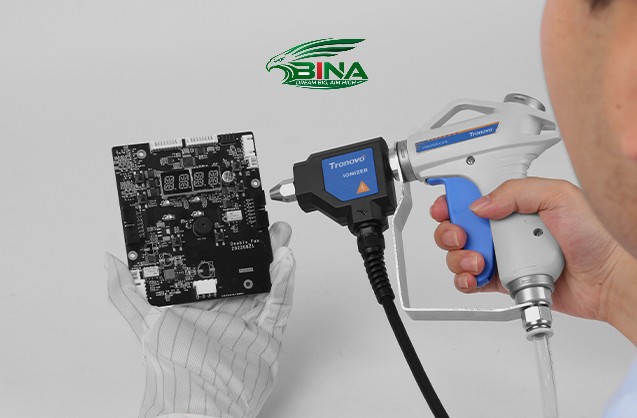
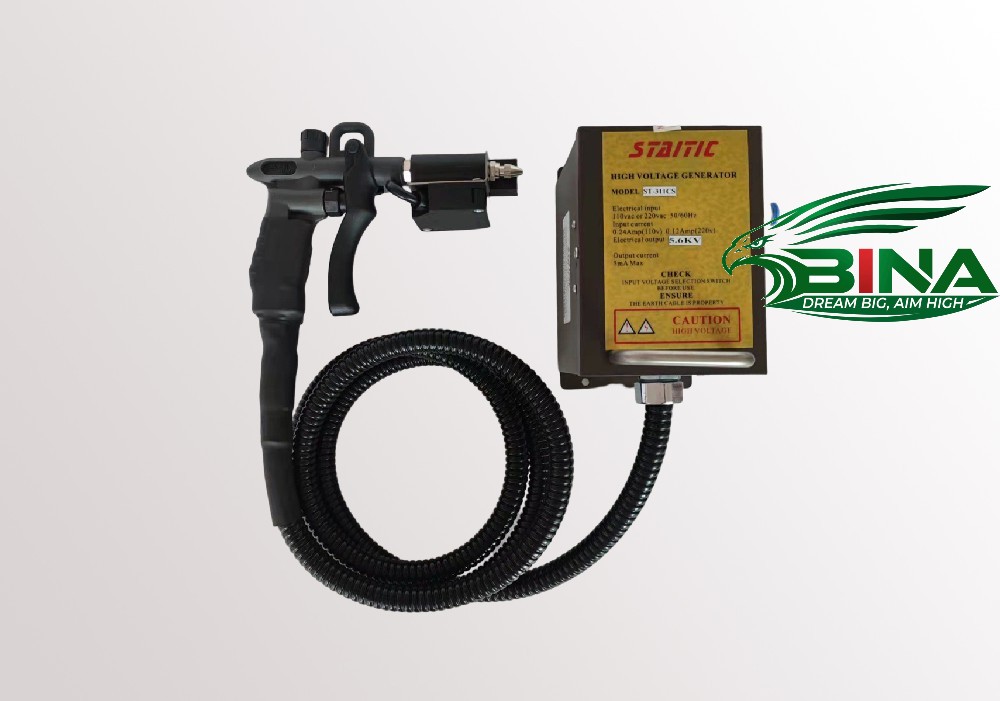
The ion gun (static eliminator) is mainly used to remove static electricity and dust from the surface of objects. When using it, connect the gun to a clean compressed air supply of 0.1–0.6 MPa and a 220V power supply (with the grounding wire properly connected). Adjust the distance between the gun and the object being inspected to approximately 200-300mm. Press the switch to simultaneously generate an ion stream and compressed air for effective cleaning and static elimination. Regular cleaning of the ion needle is very important for maintenance.
 |
I. Installation and Preparation
- Prepare the air supply: Ensure that the compressed air is filtered and the pressure is controlled at 0.1-0.6MPA
- Connect the power supply: Connect to a 220V AC/50Hz power supply, ensure that the grounding wire is intact and fully grounded to prevent accidents.
- Connect the gun: Connect the gun’s high-voltage cable to the high-voltage power supply and connect the air hose.
II. Operating Procedure
- Power/Air Supply On: Turn on the power switch (the indicator light will illuminate) and simultaneously connect the air supply.
- Adjust the distance: Maintain a distance of approximately 200-300mm between the nozzle and the surface of the object.
- Cleaning operation: Hold the air gun handle; ionized air will be sprayed out along with the airflow. Move the air gun around the working surface in all directions to neutralize static electricity on the object’s surface with positive and negative ions and blow away dust.
- Turn off the machine: After operation, first turn off the power indicator, then turn off the air supply.
III. Precautions and Maintenance
- Safety requirements: The power should not be turned on and off frequently during operation (an interval of more than 1 minute between turning on and off is recommended). It is recommended not to work continuously for too long to avoid fatigue.
- Daily cleaning: If the static elimination effect of the air gun decreases, it may be due to dust accumulation on the ion needle. After turning off the power, use a cotton swab dipped in anhydrous alcohol to clean the discharge needle and the internal gaps.
- Avoid collisions: The air gun is a lightweight and precision product; it must be protected from impacts during use to extend its service life.
- Important note: Damage caused by failure to operate according to the instructions for use is generally not covered by the free warranty.