



Description
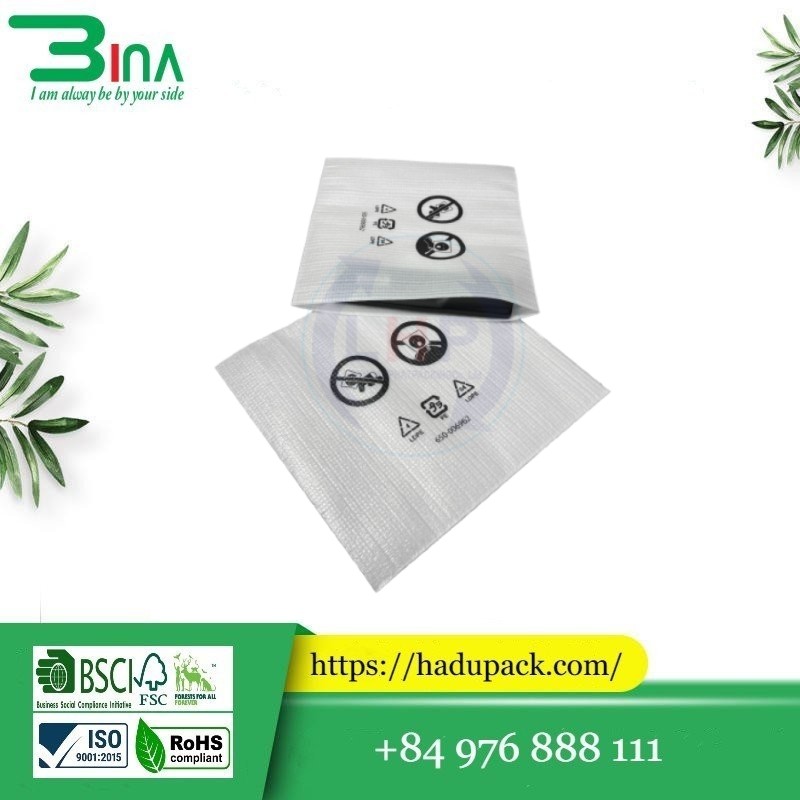
What are PE foam bags?
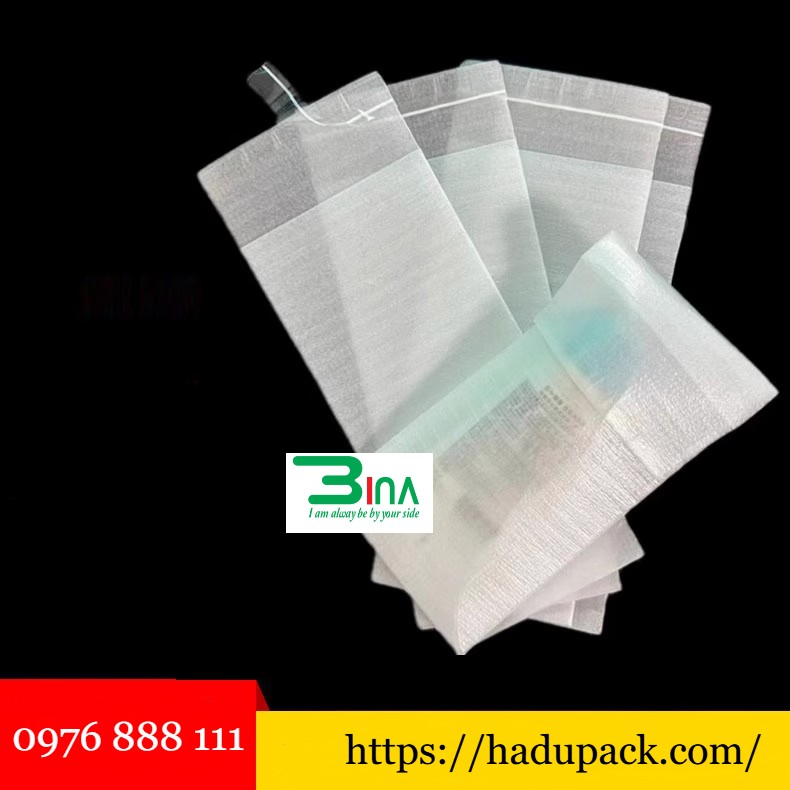
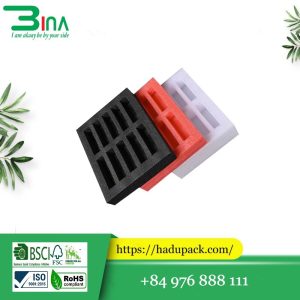
PE foam bags are a lightweight packaging solution that provides cushioning protection around your products. Made from polyethylene, our foam bags provide the highest level of protection to create a highly efficient shipping package. Foam bags are ideal for protecting fragile products that are prone to scratches during shipping, such as painted or glass products.
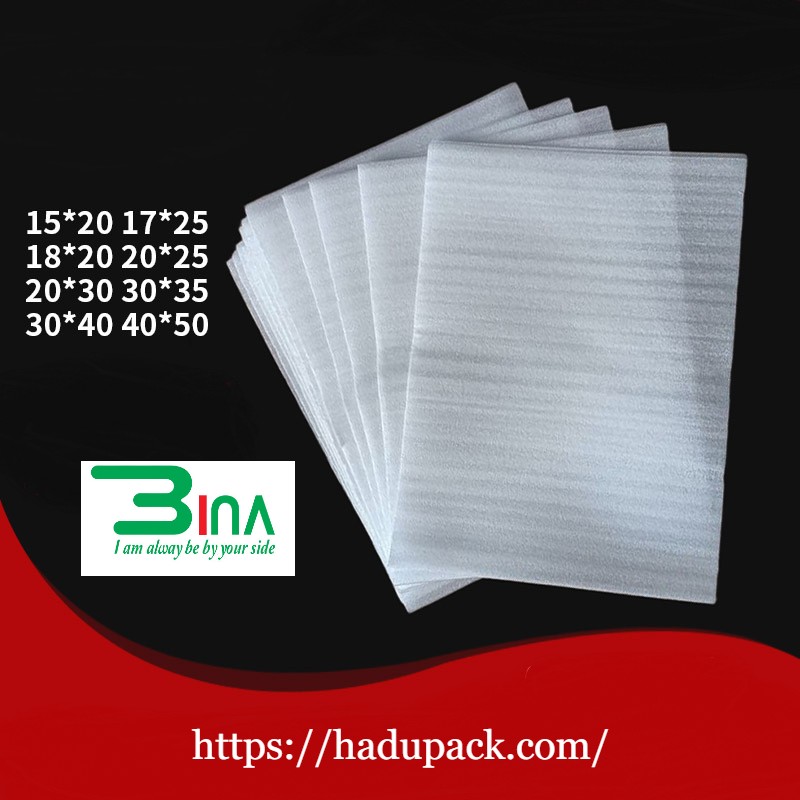 |
Foam bags are quick and easy to use and can be fitted with self-sealing strips to improve packaging efficiency. This can save valuable packing time if you are cutting and taping loose foam sheets. We offer a variety of foam thicknesses and will recommend the optimal density based on your performance requirements and supply chain variables.
◆Learn more:
- https://hadupack.com/san-pham/tui-pe/
- https://hadupack.com/san-pham/tui-niem-phong/
- https://hadupack.com/san-pham/tui-vai-khong-det/
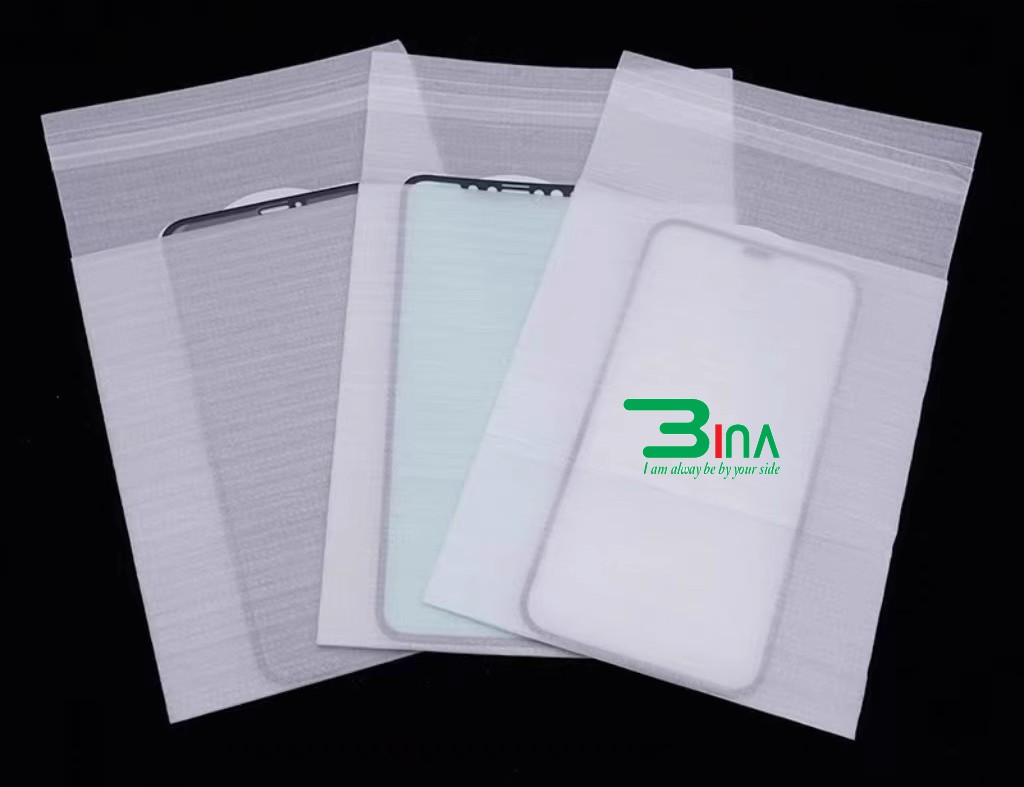 |
To enhance product presentation, foam bags can be supplied in a variety of colors. We also offer printed foam bags, providing an opportunity to communicate and promote any brand or product information. Since foam bags are lightweight, they also help minimize shipping costs and carbon emissions.
 |
Effective PE foam bags
- Soft and lightweight protective packaging
- Many sizes available in stock, ready for immediate delivery
- Protects against dust, moisture and scratches
- Save when ordering in bulk with our renowned volume discounts!
- Foam bags with a 30mm folded edge
- Recyclable and reusable
 |
PE foam bag sizes
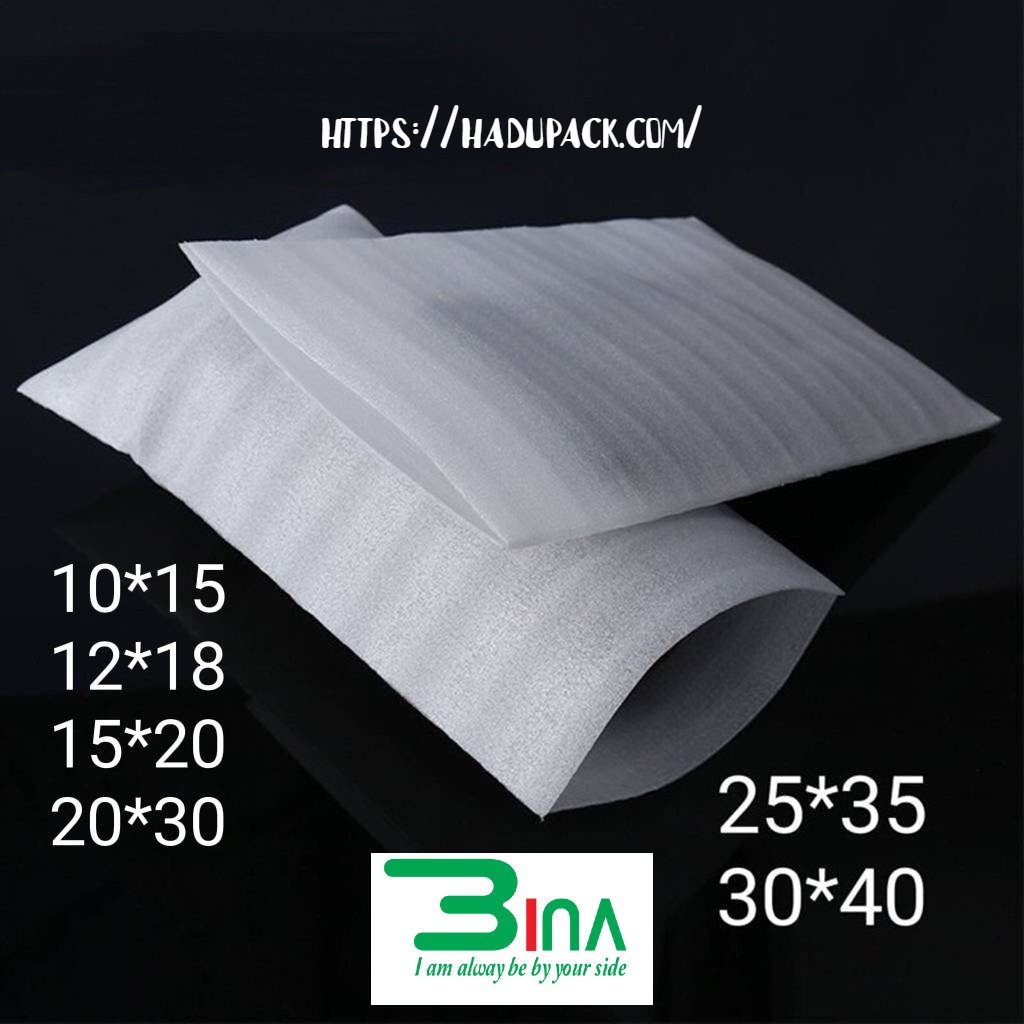
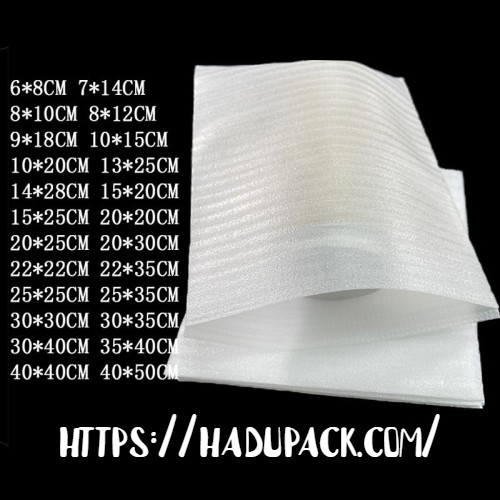
EPE foam bags (pearl cotton bags) can be customized in size and height. Common sizes range from small to medium and large, with thicknesses from or more. They are mainly used for shockproof packaging of precision electronic equipment, glass, and fragile items.
Common sizes and specifications of EPE foam bags:
- Available specifications: Common standard sizes: 4 x 6″; 6 x 9″; 8 x 10″; 9 x 12″; 10 x 13″; 12 x 15″
- Size range: Specifications are highly flexible, from small items (such as ) to large items, all of which can be customized.
- Thickness: Usually made of pearl cotton, thicker versions can reach or more.
- Applications: Double-sided EPE bags combine shockproof, scratch-resistant, and moisture-resistant functions.
Machine production usually has tolerances. If used to package square, fragile items, please consider the thickness of the pearl cotton; generally, it is recommended to increase the actual measured size to accommodate them.
These foam bags provide soft, non-abrasive protection for your delicate items that are prone to scratching or marking. Made from 1.5mm polyethylene foam, they are one of the gentlest packaging options available on the market and will also provide reliable, long-lasting protection against dust and moisture. Foam is an extremely lightweight packaging material and is ideal for protecting glass, ceramics, wood, chrome, and painted surfaces. Many sizes are available directly from stock, each with a 30mm folded edge.
 |
EPE foam bag production process
The EPE foam bag (pearl cotton bag) production process mainly consists of two steps: foaming to produce the material in roll form and subsequent processing to form the bags. The core process uses low-density polyethylene (LDPE) pellets, which are physically foamed (usually using butane gas) and extruded into pearl cotton rolls. These rolls are then cut and heat-sealed to form bags, producing a lightweight material with good cushioning properties.
Production of EPE pearl cotton rolls (Core material processing)
- Raw material preparation: Low-density polyethylene (LDPE) pellets, anti-shrinkage agent, nucleating agent and physical foaming agent (such as butane) are mixed in a certain ratio.
- High-temperature plasticization and extrusion: The mixture is melted and physically foamed under high pressure and high temperature in the foaming machine.
- Mold forming: When the molten plastic is extruded from the mold (die head), the pressure decreases, and the foaming agent rapidly vaporizes, causing the polyethylene to form countless tiny pearl-like pores, thereby expanding into foam tubes.
- Cooling and rewinding: The formed foam tubes are shaped, cooled, cut into rolls, and finally heat-treated and packaged.
Post-production processing of EPE pearl cotton bags (Finished product manufacturing)
- Film lamination/Heat bonding (As required): For bags requiring greater thickness or special composite structures, thin rolls are heated with a hot air gun and then bonded together to increase thickness.
- Cutting: Wide pearl cotton rolls are cut into the required width and length for the bags using a cutting machine.
- Bag making (Heat sealing): The edges of the pearl cotton sheets are heat-sealed at high temperature using a heat-sealing machine (edge sealing machine) to form bags.
- Punching/Folding (Optional): Punching is performed to create handles; or specific folding configurations are made.
Finished product inspection and packaging.
Characteristics of EPE pearl cotton bags
- Physical foaming: Butane gas is used for physical foaming, which is non-toxic, leaves no residue and is environmentally friendly.
- Pearl-like structure: Dense texture, with the characteristic of becoming more fluffy during use, superior to ordinary foam.
- High performance: Lightweight, shock-resistant, impact-resistant, moisture-resistant, heat-insulating and sound-insulating.
 |
Printing on PE foam bags
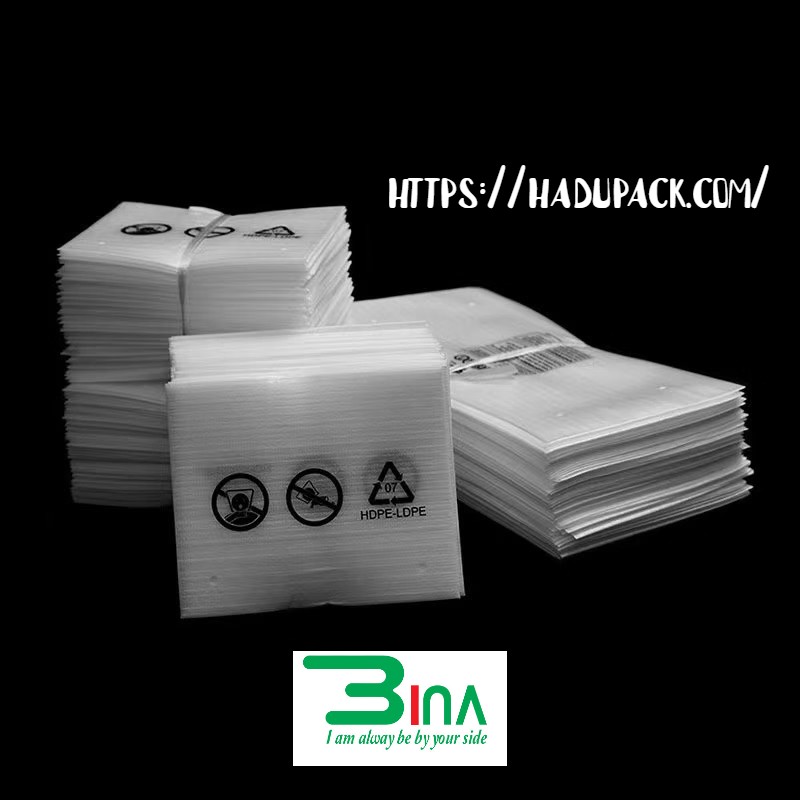
Printing on EPE (expanded polyethylene) foam bags primarily uses flexographic or screen printing methods. The key point is that the smooth surface and anti-aging/anti-static coating of EPE require special treatment (such as corona treatment) to enhance ink adhesion. Environmentally friendly water-based inks are commonly used, suitable for printing logos, barcodes, or simple anti-static symbols, achieving flexibility, shock resistance, environmental friendliness, and brand promotion.
Printing methods:
- Flexographic printing: Suitable for mass production, fast printing speed, thin ink layer, and environmentally friendly.
- Screen printing: Suitable for small quantities, a wide variety of products, and large patterns, with a thicker ink layer.
- Surface treatment (Important): EPE is a low-surface-energy material, and corona treatment is often required before printing to alter the surface tension, helping the ink adhere more firmly.
- Ink selection: Using environmentally friendly water-based inks ensures that the printed bags meet environmental requirements.
- Customizable content: Common customization options include company logos, anti-static symbols (blue), contact information, and material symbols.
- Printing environment: Printing is usually carried out sheet by sheet before bag making, or continuously directly on EPE rolls.
 |
Anti-static PE foam bags
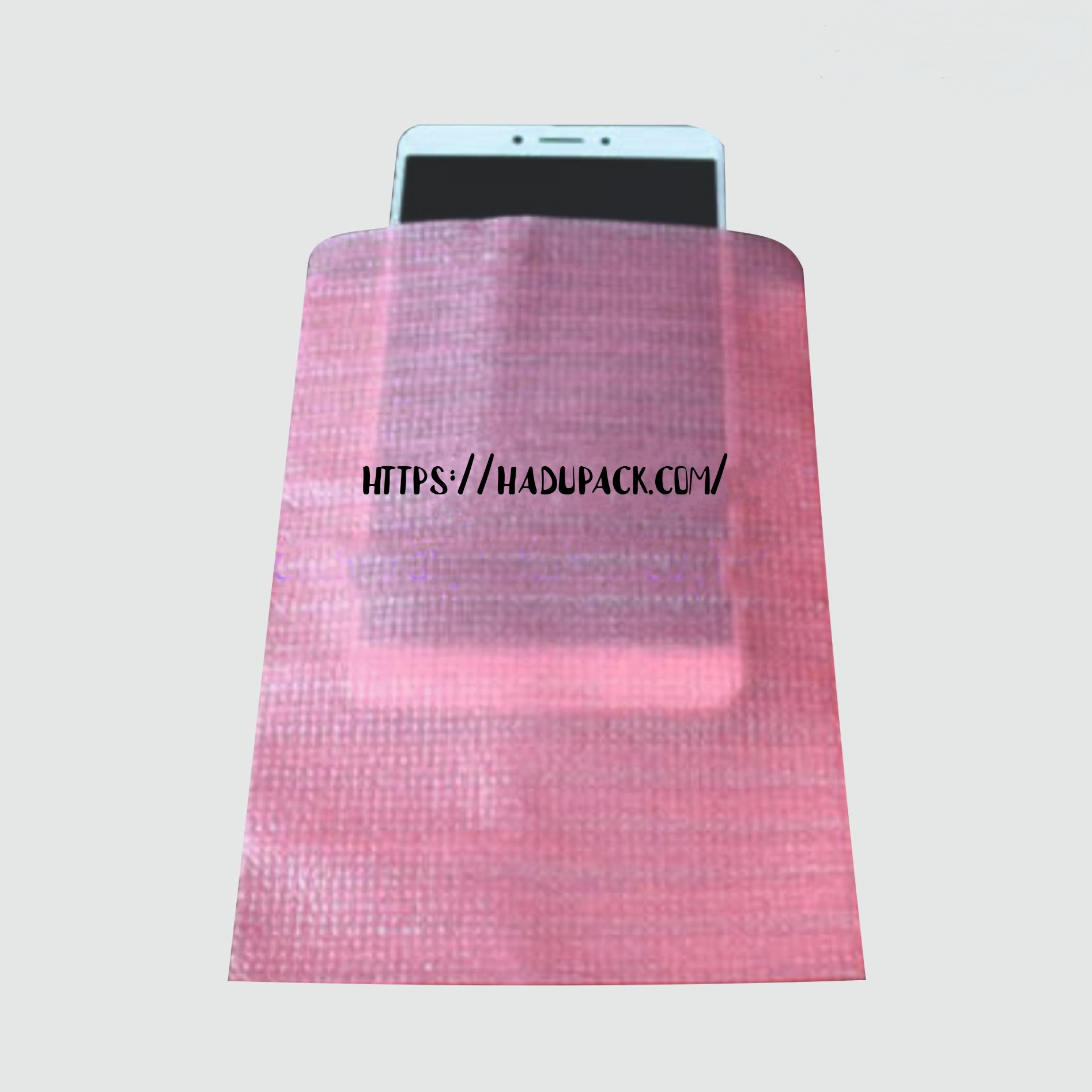
Anti-static EPE foam bags (also known as anti-static pearl cotton bags) are a new type of environmentally friendly packaging material made from low-density polyethylene (LDPE) through a physical foaming process with the addition of anti-static agents. They have excellent cushioning, shock absorption, moisture resistance, and thermal insulation properties, with surface resistivity typically reduced to -Ω. They are mainly used to protect sensitive electronic components from damage caused by static electricity.
Key features and advantages:
- Anti-static properties: The surface is usually pink or contains anti-static agents, eliminating static electricity generated by friction and protecting electronic components.
- High cushioning and protection: The independent closed-cell foam structure makes the bags elastic and durable, providing effective cushioning, shock absorption, and abrasion resistance.
- Superior physical properties: Lightweight, waterproof, moisture-resistant, thermally insulating, corrosion-resistant, environmentally friendly, and recyclable.
- Wide range of applications: Particularly suitable for packaging computers, monitors, instruments, and delicate electronic components.
Compared with conventional packaging:
- It overcomes the disadvantages of conventional expanded polystyrene (EPS) foam, such as being brittle, easily deformed, and having poor elasticity.
- Anti-static EPE foam bags are usually pink and are widely used in logistics, online shopping, and especially in the technology and electronics industries for cushioning and protection.
 |
Applications of PE foam bags
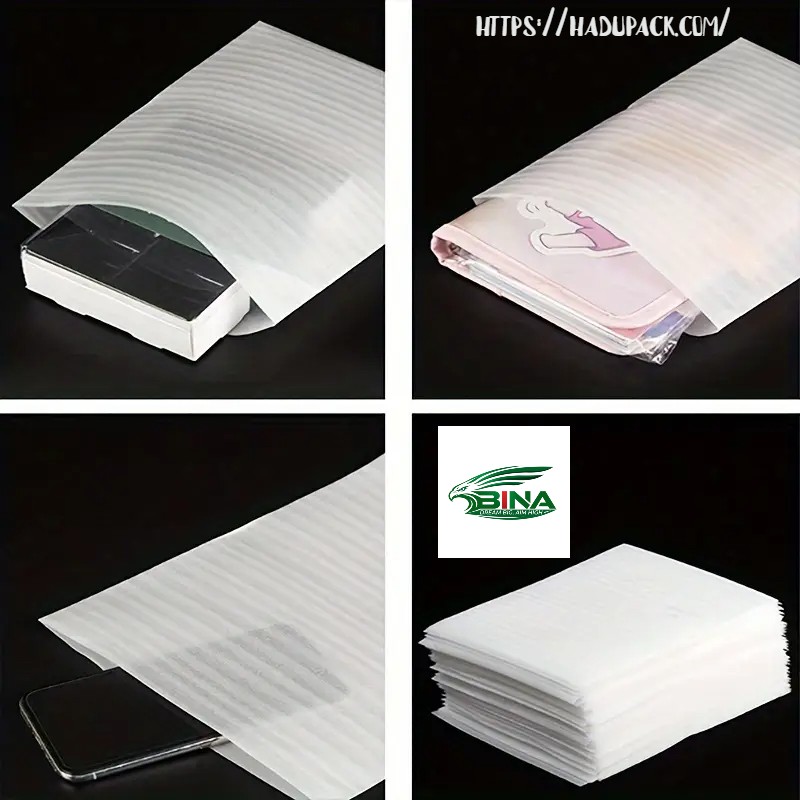
EPE foam bags (expanded polyethylene) are an environmentally friendly packaging material with high cushioning performance and light weight, widely used for transporting and protecting electronic products, precision instruments, handicrafts, glass and ceramics, and furniture. Thanks to their waterproof, shock-absorbing, and impact-resistant closed-cell structure, they are commonly used as product surface protection bags, anti-static liner bags, furniture corner protectors, and void-filling materials inside shipping containers.
Specific application areas are as follows:
- Electronic product packaging: Impact protection for mobile phones, computers, picture tubes, and precision electronic components; anti-static versions are commonly used for electronic chips.
- Transportation and express delivery: Suitable for cushioning and shock protection when packaging fragile items (ceramics, glass), lamps, audiovisual equipment, toys, and high-end household appliances.
- Furniture and precision instrument protection: Made into liner bags to protect furniture surfaces, corner protection, and protection during the transportation of mechanical parts and high-end medical equipment.
- Industrial and daily use: Used as surface layers for belts, footwear, handbags, and hardware tools to prevent scratches; also used as lightweight insulation layers in cold-chain transportation.
EPE foam bags have good flexibility and can be flexibly designed into various shapes to meet different product requirements.
 |
Tips for choosing EPE foam bags
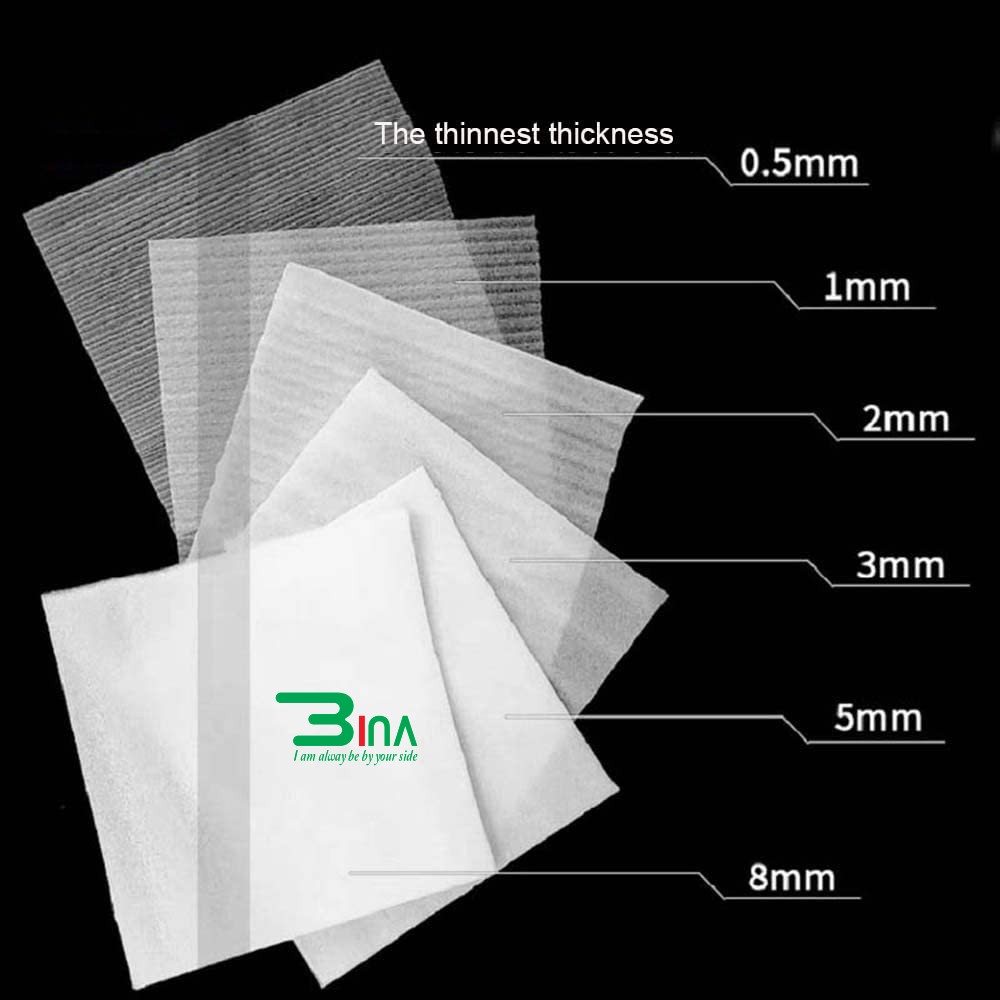
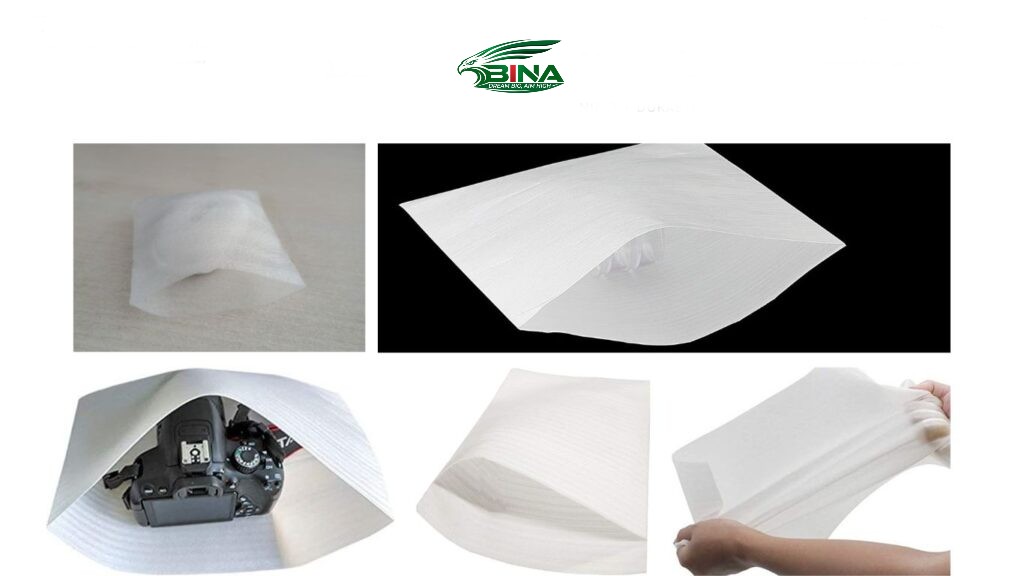
When choosing EPE foam bags, select the appropriate thickness (usually 0.5mm-5mm) and density (shock resistance) based on the weight and fragility of the product. Make sure the size is slightly larger than the product for easy insertion, and choose environmentally friendly materials with a smooth surface and good flexibility. For high-risk items, thicker EPE foam with anti-static properties is recommended. The specific selection points are as follows:
Thickness selection (Shock resistance):
- Lightweight, Surface protection: 0.5mm – 1mm. Suitable for protecting electronic product casings from scratches and fragile gift packaging.
- Medium, Shock-absorbing cushioning: 1.5mm – 3mm. Suitable for packaging daily necessities, ceramics and digital accessories.
- Heavy, High-strength shock resistance: 3mm – 5mm or more. Suitable for shipping and packaging heavy machinery parts and high-end electronic equipment.
Density and environmental friendliness: Choose pearl cotton with moderate density and high compressive strength (usually 25-40 times the foaming process) to ensure the recovery rate and avoid damage to objects caused by prolonged pressure. Check whether it is an environmentally friendly material with good waterproof and corrosion resistance.
Functional requirements: Anti-static: Electronic components and circuit boards must be packaged in pink pearl cotton bags or bags marked as anti-static to prevent static discharge.
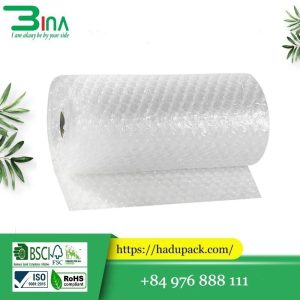
Composite materials: When higher strength is required, pearl cotton bags lined with bubble film or composite PE film can be selected.
Appearance inspection: The surface should be smooth, flexible and free of obvious cracks or holes. Shock absorption should be better than ordinary foam (EPS).
Size determination: Due to the thickness of pearl cotton, after measuring the length, width and height of the object, at least 1-2 cm of clearance should be added in each dimension to ensure proper placement and good protection.
 |
How to Store EPE Foam Bags
EPE foam bags (expanded polyethylene) should be stored in a dry, cool, well-ventilated place, away from direct sunlight. They should be rolled up or neatly arranged in the warehouse, avoiding direct sunlight, rain, creasing, and damage from sharp objects. Contact with strong acids, strong alkalis, oils, and organic solvents is strictly prohibited. The recommended room temperature is [enter temperature here], and mold and dust must be prevented. For long-term storage, the bags should be inspected and turned over monthly. The specific storage requirements are as follows:
Storage environment: They must be stored in a warehouse. Do not store them outdoors to prevent aging (brittleness, discoloration) caused by direct sunlight or damage from moisture from rain. Maintain a dry and well-ventilated environment; in high-humidity conditions, use a dehumidifier.
Stacking method:
- No creasing: It is best to store them in rolls; do not fold or stack them on top of one another.
- Stable and neat: Follow the principle of “stable, neat, and secure” to prevent them from becoming loose.
- Avoid placing heavy objects on top of EPE foam to prevent deformation or reduced elasticity.
Safety precautions:
- Avoid solvents: Absolutely avoid contact with strong acids, strong alkalis, engine oil, gasoline, and other organic solvents.
- Keep away from fire: The storage area must be at least 1 meter away from heat-generating equipment and sources of fire.
- Prevent dust and moisture: For long-term storage, cover with plastic film to prevent dust and moisture.
Maintenance and management:
- Regular inspection: Pearl cotton stored for a long period should be turned over once a month.
- Handle with care during transportation: Avoid damaging the outer protective film during loading and unloading to prevent scratching or damaging the edges of the pearl cotton.




Reviews
There are no reviews yet.