



Description
What is a thermal-insulated silver foil foam bag?
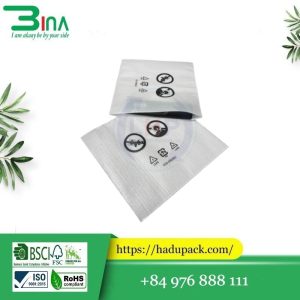
A thermal-insulated silver foil foam bag, also known as an insulated foam bag, is a type of packaging material used in the transportation industry that combines thermal insulation and cushioning functions. It typically consists of multiple layers of aluminum foil composite material with a layer of fine polyethylene (PE)/XPE foam on the inside, providing thermal insulation, moisture resistance, lightweight properties, and impact resistance. These bags are suitable for transporting and protecting frozen and chilled food, pharmaceuticals, and electronic products.
 |
◆Learn more:
- https://hadupack.com/san-pham/tam-mut-xop-pe-foam/
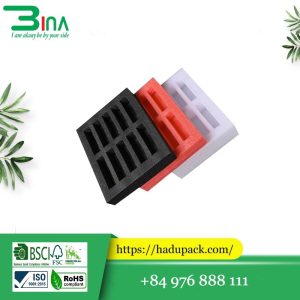
- https://hadupack.com/san-pham/mang-xop-pe-foam/
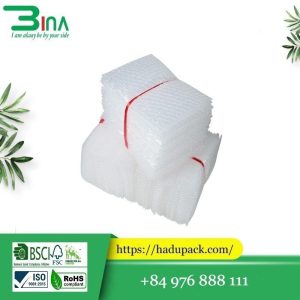
- https://hadupack.com/san-pham/tui-xop-bong-bong/
Here are the main characteristics and applications of insulated foam bags:
1. Main structure and operating principle
- Outer layer (Reflective layer): Uses aluminum foil to effectively reflect thermal radiation from the outside and block sunlight and high ambient temperatures.
- Middle layer (Barrier layer): EPE foam (expanded polyethylene) or XPE with a closed-cell structure to prevent heat conduction and maintain the temperature inside the bag.
- Inner layer (Cushioning layer): Foam material provides excellent compression resistance and shock absorption, protecting the goods inside from damage.
 |
2. Core advantages
- Thermal insulation/Cold insulation: Effectively slows down heat exchange, keeping items at specific temperatures for extended periods (e.g.: transporting fresh agricultural produce).
- Cushioning and shock absorption: The foam has excellent elasticity and softness, providing superior impact protection.
- Moisture and water resistance: The closed-cell foam structure provides extremely high moisture resistance.
- Lightweight: Low density and light weight, minimizing additional shipping costs.
3. Common Application Scenarios
- Cold chain transportation of fresh agricultural products: Frozen/refrigerated transportation of fruits, vegetables, meat and seafood.
- Pharmaceutical transportation: Short-distance transportation of temperature-sensitive products such as vaccines, reagents and medicines.
- Food insulation: Insulated bags or cooler bags for bento boxes and cold drinks.
- Electronic product packaging: Precision instruments or electronic components that require shock protection.
This type of packaging is ideal for online shopping of fresh produce, leveraging the properties of closed-cell foam to significantly extend cooling time in hot weather.
 |
Production Process of Insulated Foam Bags
The production process of insulated foam bags (commonly referring to EPE pearl cotton bags or composite foam bags) mainly consists of four core steps: raw material pre-foaming, extrusion, composite processing and cutting.
This is a flexible packaging material formed by high-pressure foaming of low-density polyethylene, with both thermal insulation and cushioning functions. The detailed production process is as follows:
1. Preparation of raw materials and preliminary foaming
- Raw materials: Low-density polyethylene (LDPE) is used as the basic raw material.
- Mixing and foaming: The raw material is melted and mixed with a foaming agent (such as butane), a nucleating agent, etc., under heating conditions.
- Preliminary foaming: In a high-pressure foaming machine, the foaming agent expands rapidly by releasing pressure, foaming the polyethylene particles into low-density white foam beads.
 |
2. Extrusion
- Sheet/film formation: The foam material is extruded through a die (die lip) to form continuous pearl cotton sheets or films with a certain thickness.
- Cooling and shaping: The extruded foam sheet is cooled and initially shaped using a shaping ring and cooling fan to stabilize its dimensions.
3. Lamination (Optional)
- Lamination with aluminum foil or aluminum film: To enhance thermal insulation and durability, pearl cotton is often laminated with aluminum film or aluminum foil.
- Lamination process: The pearl cotton sheet is bonded to a surface material (such as aluminum foil) by hot pressing or adhesive to form a composite thermal insulation material.
 |
4. Cutting and bag making
- Cutting: The continuous rolls of pearl cotton are cut into suitable sheets using a slicing machine or film press according to the required dimensions.
- Heat sealing and bag making: The cut sheets are sealed using a high-temperature heat sealing machine to form the final insulated bags (pearl cotton bags, foam bags).
Main technical specifications:
- Butane gas application: Using butane gas as a foaming agent is a key technology to ensure a fine foam structure.
- Die lip control: The die lip design of the extruder directly determines the thickness and uniformity of the foam.
- Lamination process: The lamination process determines the tear resistance of the insulation bag and the adhesion of the aluminum foil.
 |
Common Problems in the Production of Insulated Bags
Common challenges in the production of PE foam insulated bags (typically using EPE pearl cotton) include uneven foaming ratios and density, rough surfaces, pinholes and delamination during lamination, and environmental recycling pressures.
These issues are often closely related to raw material quality control, processing temperature settings, and mechanical parameter adjustments.
I. Technical challenges in foaming and raw materials
- Inconsistent Density and Strength: During the foaming process of EPE (Expanded Polyethylene) foam, uneven pore distribution and an unstable foaming ratio can result in inconsistent insulation board density, significant variations in thermal insulation performance, and even insufficient local strength.
- Poor Plasticization and Material Clumping: Polyethylene (PE), which has a low melting point, is prone to uneven plasticization or material clumping during melting if the temperature is not properly controlled. This can affect recycled pellets and subsequent processing operations.
- Surface Defects: Defects such as bubble rupture, surface roughness, and shrinkage cavities may appear on the foam surface, affecting its appearance.
 |
II. Challenges in Composite Lamination and Molding Processes
- Multilayer Delamination: If the insulation layer (foam) and the outer film layer (such as aluminum foil) are not firmly bonded, delamination can easily occur during transportation or use.
- Physical Damage (Pinholes): During extrusion or transportation, the composite film is prone to developing tiny pinholes due to friction with metal components, severely compromising its waterproofing and thermal insulation performance.
- Dimensional Instability: Processed EPE sheets are prone to shrinkage or deformation due to changes in cooling rates or storage conditions.
III. Challenges in Post-Processing and Physical Properties
- Material Deformation: EPE foam is susceptible to permanent deformation under pressure, resulting in poor reusability.
- Heat-Sealing Technology for Edges: Ensuring that the edges of insulated bags are waterproof while preventing the foam layer from melting and becoming thinner due to excessively high sealing temperatures is a key technical challenge in the manufacturing process.
 |
IV. Environmental and Material Property Challenges
- White Pollution: PE products have relatively low recycling rates and can release environmental pollutants when incinerated, making them subject to increasingly stringent environmental regulations.
- Physical Brittleness: If the material formulation is inappropriate, PE foam may become brittle, prone to breakage, and generate dust.