
Description
What are chemical labels?
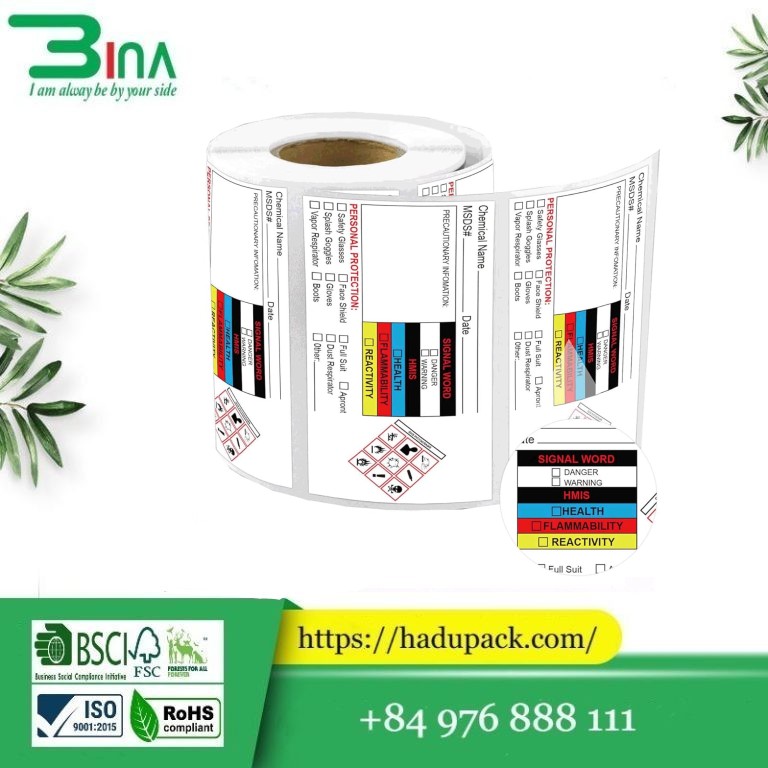
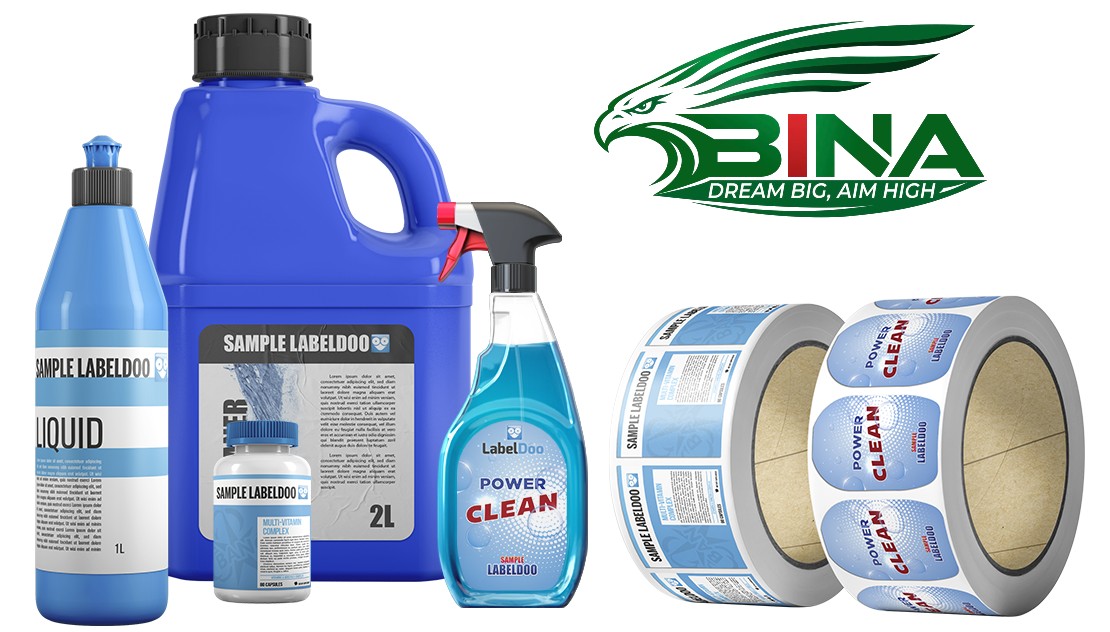
Printing chemical labels is the process of creating specialized labels used to indicate hazards, safety precautions, hazard symbols, and ingredient information for hazardous chemicals. These labels must comply with national or international standards (such as the Globally Harmonized System of Classification and Labelling of Chemicals GHS) and must be highly durable, including resistance to chemical corrosion, water, oil, and abrasion.
 |
◆Learn more:
- https://hadupack.com/san-pham/in-tem-bac/
- https://hadupack.com/san-pham/nhan-mac-khu-keo/
- https://hadupack.com/san-pham/tem-nhan-hai-lop/
Key features:
- Compliance: Must include chemical identification, symbols, signal words, hazard statements, precautionary statements and supplier information.
- Highly durable materials: Label materials (typically synthetic materials such as PP, PET and PVC) and printing inks must withstand prolonged exposure to various chemicals.
- Printing requirements: Printed text must be clear, with colors that strongly contrast with the background, typically using red, black and white.
- Applications: Applied, hung or printed on the surfaces of chemical containers, bottles and other packaging to indicate safe handling procedures.
Chemical label printing is very important to ensure the complete and safe communication of information about hazardous chemicals during production, transportation and use.
 |
Chemical Label Materials
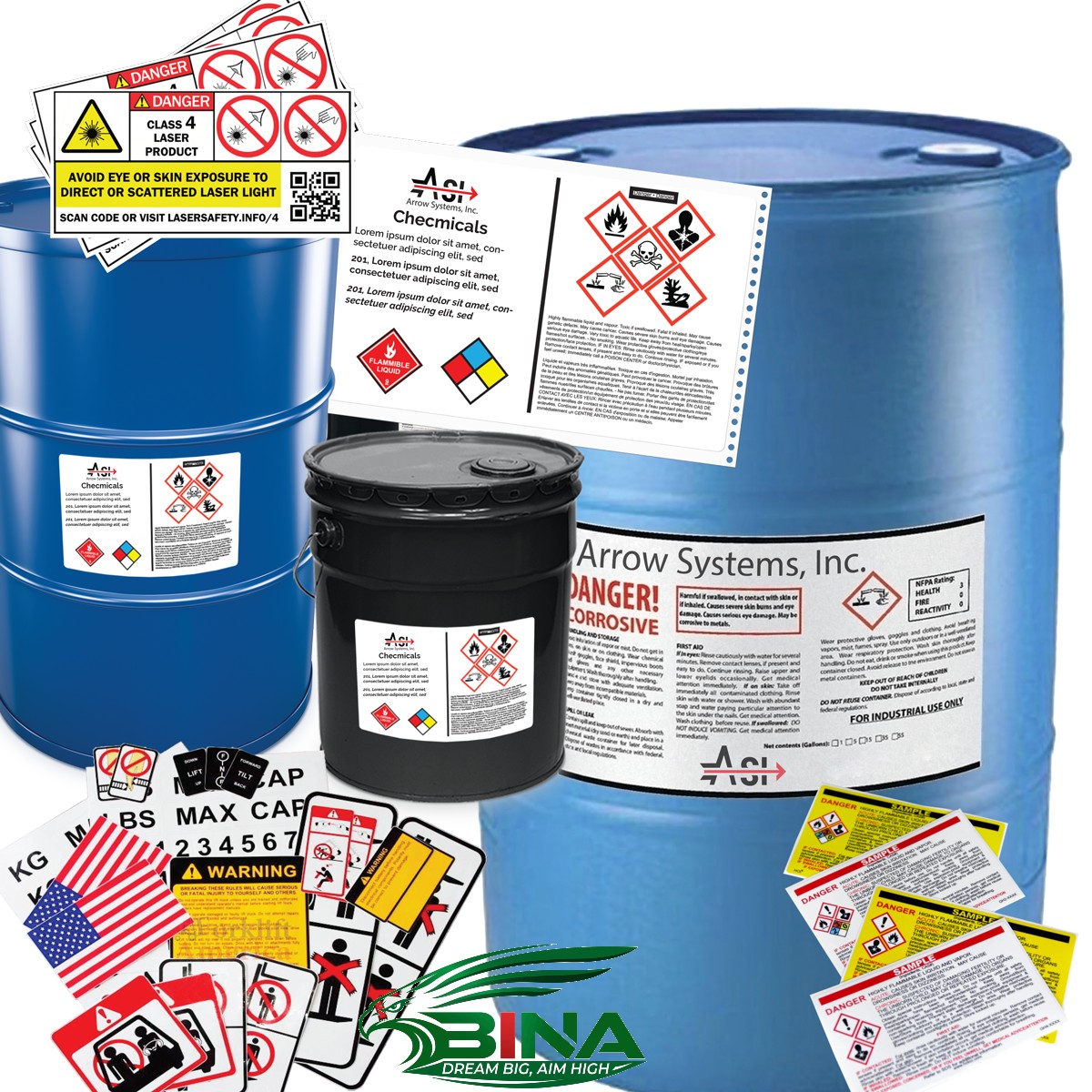
Chemical label materials are designed to withstand harsh environments (such as chemical solvents, strong acids and alkalis, high and low temperatures) and typically use substrates such as PET, PP, PVC, or synthetic paper, combined with strong, durable adhesives. They comply with GHS standards and offer resistance to corrosion, staining, weathering, and tearing, making them suitable for labeling chemical containers, paints, solvents, and laboratory containers.
I. Main Substrate Classifications
- Polyester (PET): The most commonly used high-performance material, offering excellent heat and chemical resistance, suitable for long-lasting labeling.
- Polypropylene (PP): Good flexibility and resistance to acids and alkalis, suitable for labeling bottle bodies.
- Synthetic paper: Such as matte PP, tear-resistant, suitable for color ink printing, commonly used for GHS-compliant labels.
- Polyvinyl Chloride (PVC): Suitable for uneven surfaces, with good weather resistance.
II. Adhesive Properties
- Strong, durable adhesive: Ensures strong adhesion on low-surface-energy surfaces (such as HDPE containers).
- Solvent-resistant adhesive: Will not peel off even when the surface is contaminated with chemicals.
- Specialized adhesive (such as RP75): Suitable for special new containers, high-temperature or humid conditions.
III. Application Areas and Environments
- GHS chemical labels: Must comply with the BS5609 marine standard and remain in place after immersion in seawater for 3 months.
- Chemical/Paint/Solvent Containers: Require extremely strong corrosion resistance.
- Laboratories/Electronic Equipment: Require freeze resistance, autoclave sterilization, or antistatic properties.
IV. Selection Criteria
- Substrate: HDPE (high viscosity required), stainless steel, glass, etc.
- Environmental Challenges: Exposure to oil, acids, alkalis, outdoor sunlight, and extremely high or low temperatures.
- Printing Methods: Thermal transfer printing (most common, abrasion-resistant), thermal printing, or water-based ink waterproof printing.
 |
Chemical Label Production Process
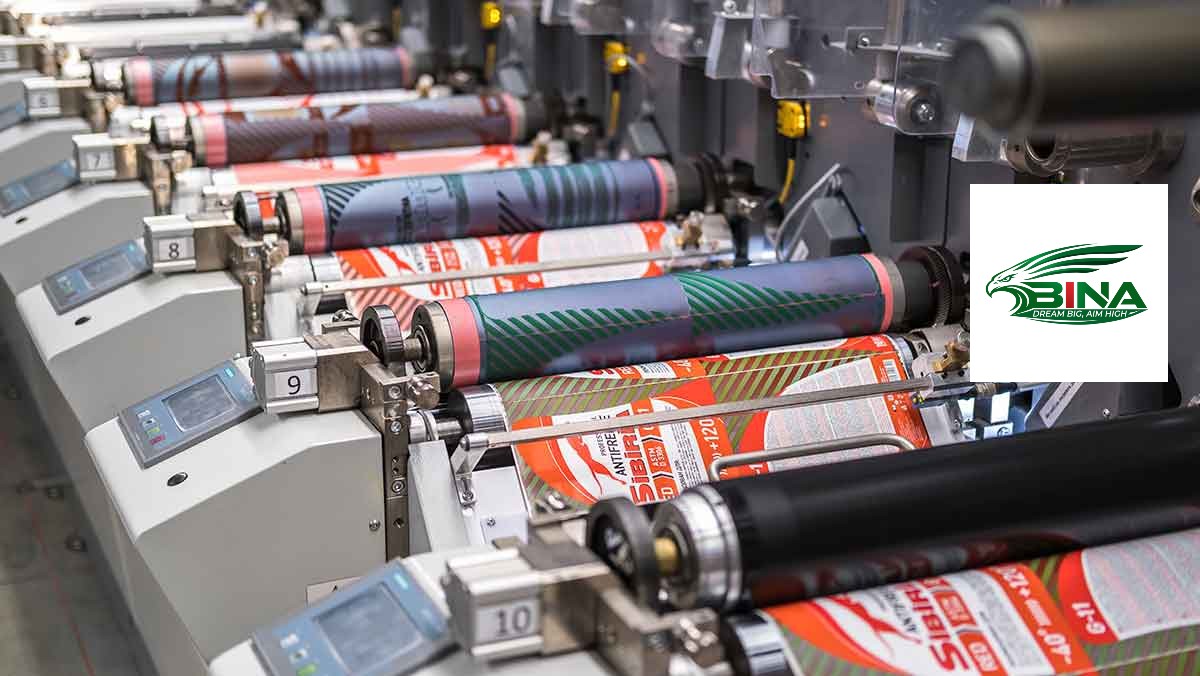
The production of chemical labels must comply with GHS (Globally Harmonized System of Classification and Labelling of Chemicals) standards, using materials that are resistant to corrosion and ultraviolet radiation, withstand high and low temperatures, and have high adhesion. The core process is: design and content review -> material selection -> printing -> surface lamination (coating) -> die cutting -> quality inspection. By combining carbon ribbon thermal transfer technology with high-performance films, information is ensured to remain clearly displayed for a long time, meeting traceability requirements throughout the entire chemical lifecycle.
 |
I. Complete Chemical Label Production Process
Data and Design Confirmation (GHS Compliance): Based on the content of the Safety Data Sheet (SDS/MSDS), determine the classification of hazardous chemicals, symbols, signal words, hazard statements and precautionary statements.
Substrate Selection (Corrosion-Resistant Materials):
- Face material: Synthetic paper, PET, PP, PVC or polyolefin films with resistance to chemical solvents, oils and strong acids and alkalis are commonly used.
- Adhesive: High-performance pressure-sensitive adhesives (acrylic adhesives or hot-melt adhesives) are used to ensure firm adhesion to polyethylene containers, metal cans or glass bottles.
Printing Methods:
- Flexographic/relief printing: Suitable for high-volume production and solid-color designs, offering high production efficiency.
- Thermal Transfer (TTR) Technology: Uses resin-based carbon ribbons for printing, providing excellent solvent and chemical resistance, a key technology in label production that meets stringent environmental requirements such as BS5609 certification.
Surface Coating and Post-Printing Processing:
- Coating: A transparent PET or PP film is applied to enhance weather resistance, water resistance and chemical resistance.
- Die Cutting: Printed self-adhesive label rolls are die-cut into the final shapes and sizes as required.
- Finished Product Inspection: Rigorous inspections are performed on label adhesion, print clarity and content accuracy.
II. Main Technical Specifications
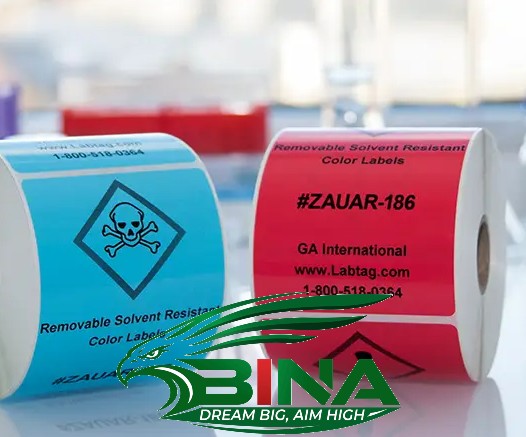
- Compliance: Mandatory printing of red diamond-shaped GHS pictograms, ensuring strict content compliance.
- Durability: Resistant to ultraviolet rays and chemical immersion, and resistant to peeling and fading under extreme temperatures.
- Traceability: Uses one-item-one-code technology, enabling digital logistics management through barcodes or QR codes.
 |
Chemical Label Applications
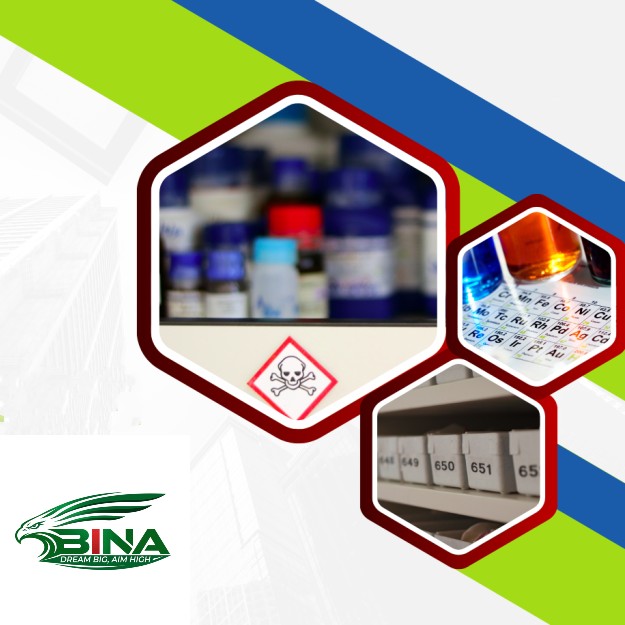
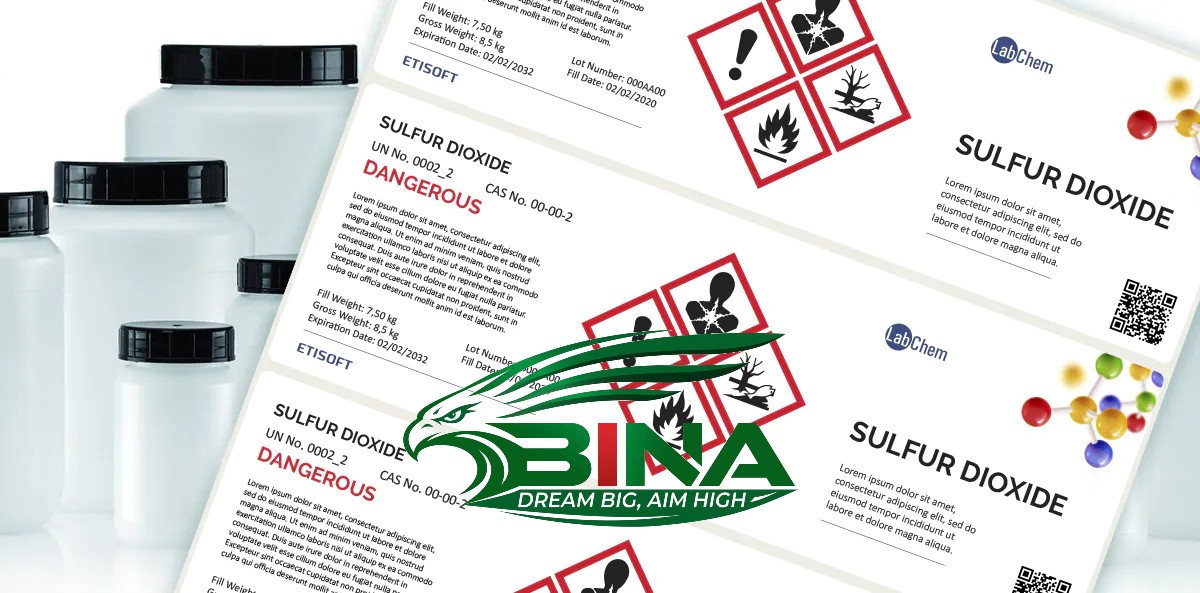
Chemical labels are primarily used to identify, manage, and track hazardous chemicals, ensuring safety throughout production, transportation, and use. Their core applications include compliance with the GHS system by providing hazard warnings, basic chemical information (name, composition), emergency contact information, and ensuring compliance (BS5609). They are commonly used on the outer packaging of chemical containers.
 |
Core application scenarios for chemical labels:
- Safety warnings and compliance (GHS Standards): Under the Globally Harmonized System of Classification and Labelling of Chemicals (GHS), labels must clearly identify the physical hazards (e.g., flammability, explosiveness), health hazards (e.g., toxicity, corrosiveness), and environmental hazards of chemicals using pictograms, codes, and text, ensuring that workers are properly aware of potential risks.
- Logistics and tracking: Labels often include chemical information, batch numbers, manufacturers, barcodes or QR codes for identification, transportation, and traceability. They need to be corrosion-resistant and abrasion-resistant to withstand harsh environments.
- Emergency response instructions: Labels include specific product safety instructions, first-aid measures, and the manufacturer’s emergency contact number to facilitate prompt action in the event of spills or accidental injuries.
- Routine chemical management: Chemical containers used in warehouses and laboratories help personnel identify materials, prevent misuse, and ensure compliant storage.
Label materials and production: Considering the properties of chemicals, chemical labels need to have high durability (solvent resistance, resistance to extreme temperatures). They are often made of synthetic paper (such as YUPO) or polyester film, combined with high-damping ribbon printing to ensure integrity on chemical containers.