
Description
There are 21 different types of labels on garments, which we can distinguish across 4 aspects: material, function, sewing method, and production process.
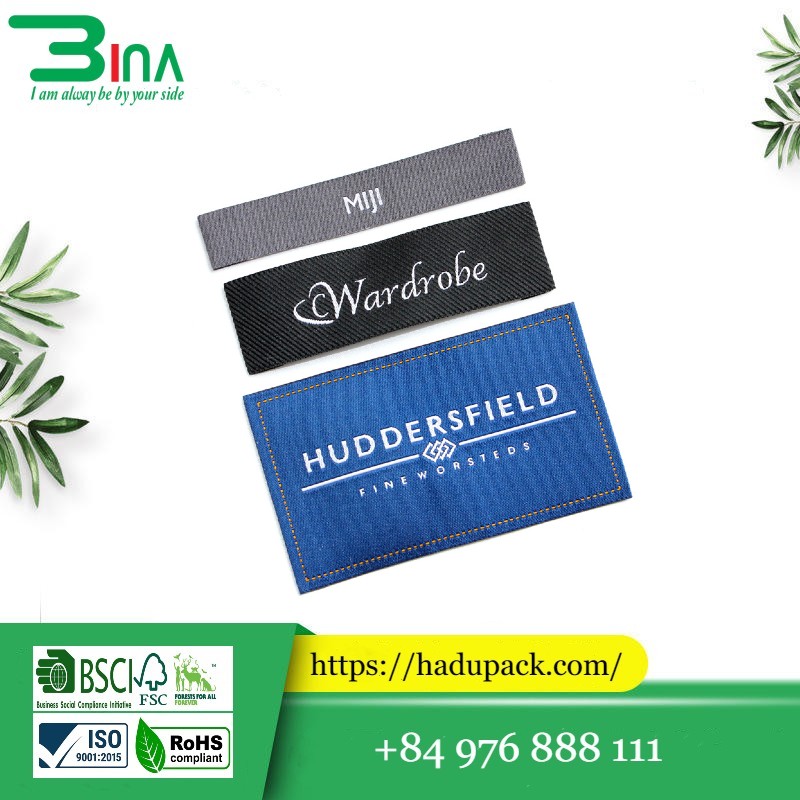
At Hadupack, our mission is to provide everyone with professional custom clothing labels, retail-quality labels, and hang tags. Whether for brand identification, personalized gifts, or ensuring proper garment care, our labels meet all your needs. Are you a passionate amateur tailor, a growing brand owner, or somewhere in between? We are committed to providing personalized clothing labels tailored to your unique needs and budget in the most convenient way.
 |
Explore our extensive collection of custom clothing labels, including woven labels, printed labels, and eco-friendly cotton labels, available in a variety of sizes, shapes, colors, and finishes. Each label is meticulously woven or printed to match your unique design. Each label is meticulously woven or printed to match your special design, using vibrant, long-lasting threads and inks that will ensure your creations truly stand out from the crowd.
◆Learn more:
- https://hadupack.com/san-pham/nhan-in-satin/
- https://hadupack.com/san-pham/tem-7-mau/
- https://hadupack.com/san-pham/tem-dan-camera/
- https://hadupack.com/san-pham/mac-det/
 |
- Metal labels
- Leather labels
- PVC labels
- Fabric labels
- TPU labels
- Main labels
- Care (washing) labels
- Size labels
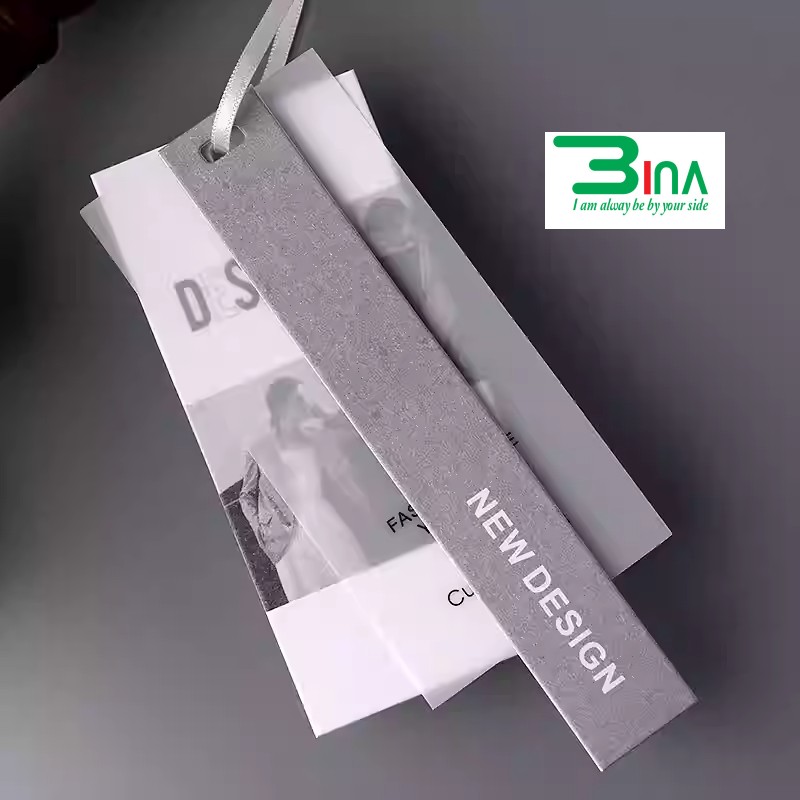
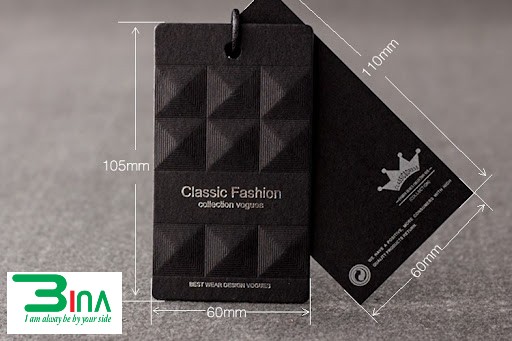
- Hang tags
- Flag labels
- Iron-on labels
- Heat transfer labels
- Sew-on labels
- Metal labels
- Taffeta woven labels
- Printed labels
- Hot-stamped leather labels
- Cast metal & PVC labels
- Embroidered labels
- High-frequency labels
 |
Why are clothing labels so important?
As we all know, clothing labels are an important part of clothing decoration. They are not just a piece of fabric or a tag. They can clearly indicate the brand logo, clothing size and list of materials, place of origin, manufacturer, care information, etc. Many customers will decide whether to buy clothing based on the label. Therefore, labels are very important for product sales. This article also introduces different types of clothing labels from four perspectives.
 |
Classification by material
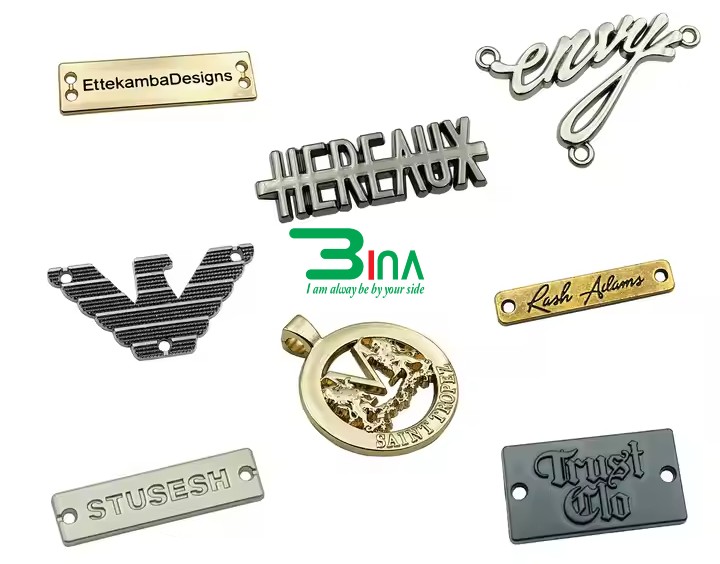
According to material, we can divide clothing labels into metal labels, leather labels, PVC (rubber, silicone) labels, fabric labels and TPU labels.
- Metal labels: What are metal labels? Metal labels are metal tags & accessories for clothing, hats or handbags, which can be engraved with a brand logo. Metal labels come in many types such as aluminum labels, stainless steel labels, silver labels, copper labels, brass labels, zinc alloy labels, etc. Metal labels are then widely used, and processes include stamping, printing, laser cutting, etc.
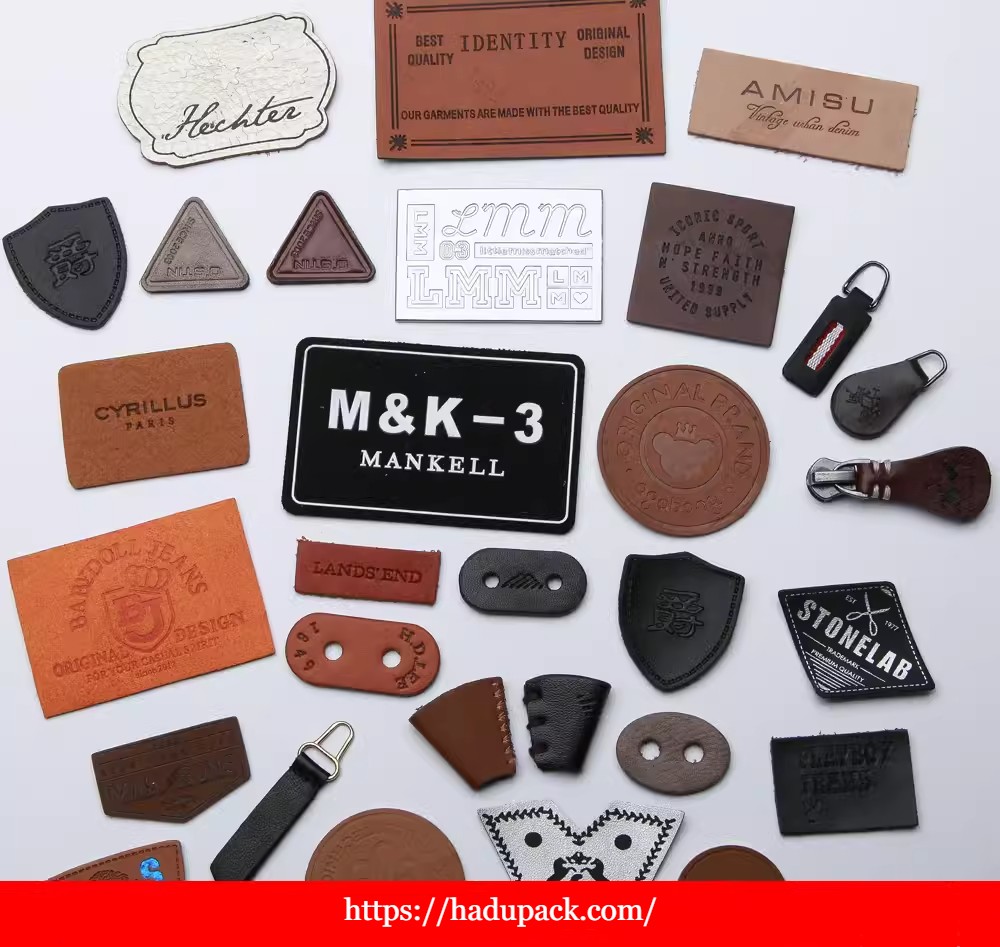
- Leather labels: What are leather labels? Leather labels are one of the types of labels made from leather material. we can also call them leather tags or leather patches. They come in artificial leather (PU), genuine (real) leather or suede (microfiber) label types. Suitable for clothing jackets, denim, hats, handbags, etc. And all leather labels can use printing, embossing or hot gold/silver stamping to add personalized logos and metal tags. Then, attachment methods include sewing, ironing, adhesive or using Velcro.
- PVC labels: What are PVC labels? PVC labels are made of soft PVC rubber material. Its full name is Polyvinyl Chloride. PVC labels and silicone labels belong to rubber labels. And they are special sticker & patch types for clothing such as jackets, handbags, hats, canvas and outdoor products. Most PVC labels can highlight the brand image by adding a company logo or brand name. So, you can use them by sewing, gluing, self-adhesive, soft magnetic backing. But anyway, just attach them in your own way.
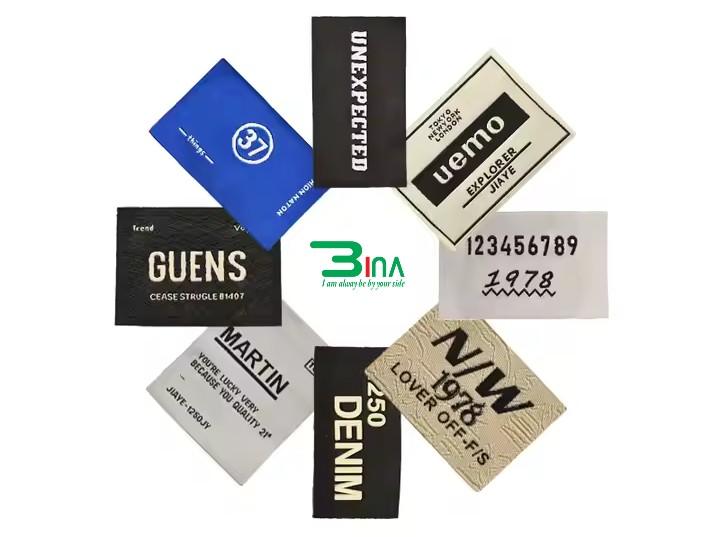
- Fabric labels: What are fabric labels? Fabric labels are made from fabric materials including woven and printed fabric labels, durable and soft. And the materials include satin, nylon, taffeta, polyester, adhesive tape, ribbon, non-woven fabric, cotton fabric. Therefore, they are ideal for T-shirts, jackets, shirts, pants, children’s clothing, etc.
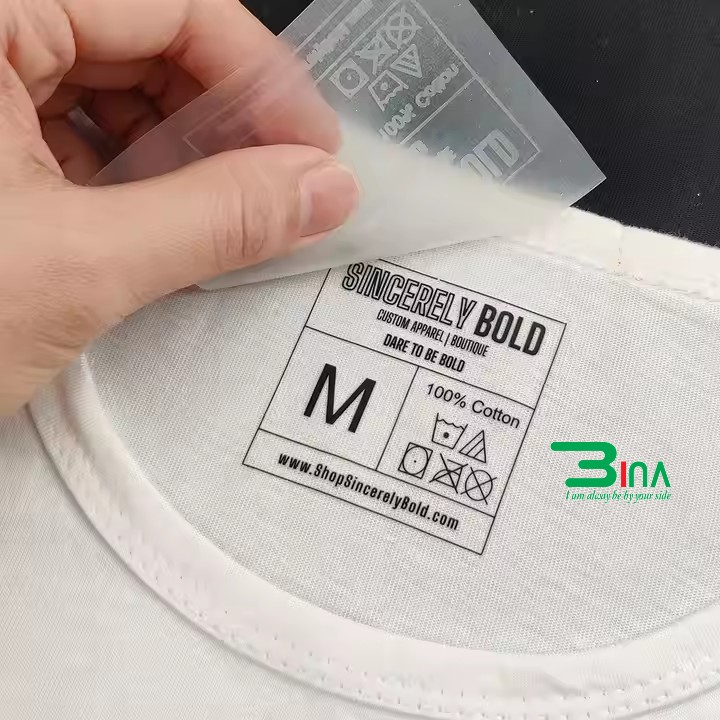
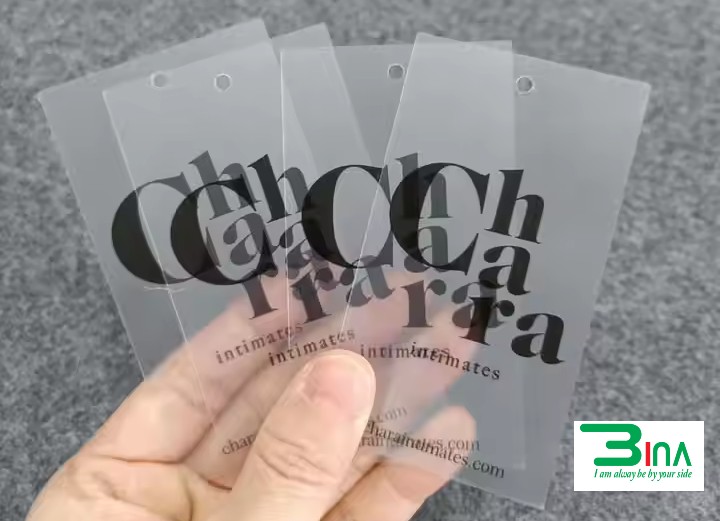
- Transparent TPU labels: What are TPU labels? TPU labels, also known as transparent clothing labels, are soft thin labels with logos printed on a rubber-like material. Their main material is TPU (Thermoplastic Polyurethane) material. Therefore, it is more environmentally friendly than silicone and PVC. In addition, we use screen printing, matte, frosted, copper, etc. to make the labels. Above all, it shows a clear, transparent or frosted effect. In short, they are suitable for swimwear, underwear, etc.
 |
Classify by function
Based on the function of the labels, we divide them into main labels, care labels, size labels, hang tags and flag labels.
 |
- Main Label: What is a main label? A main label is a type of clothing label that is woven, printed, heat-transferred, or made of leather to add a logo and brand name to the fabric. The label is usually located inside and at the back of the collar of a shirt, or at the seam between the inside and back of pants. Generally, a piece of clothing must have a main label when labels are used.
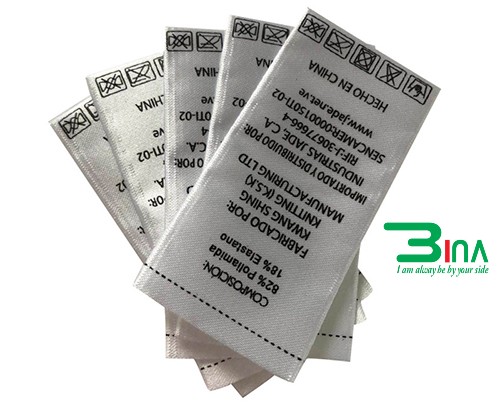
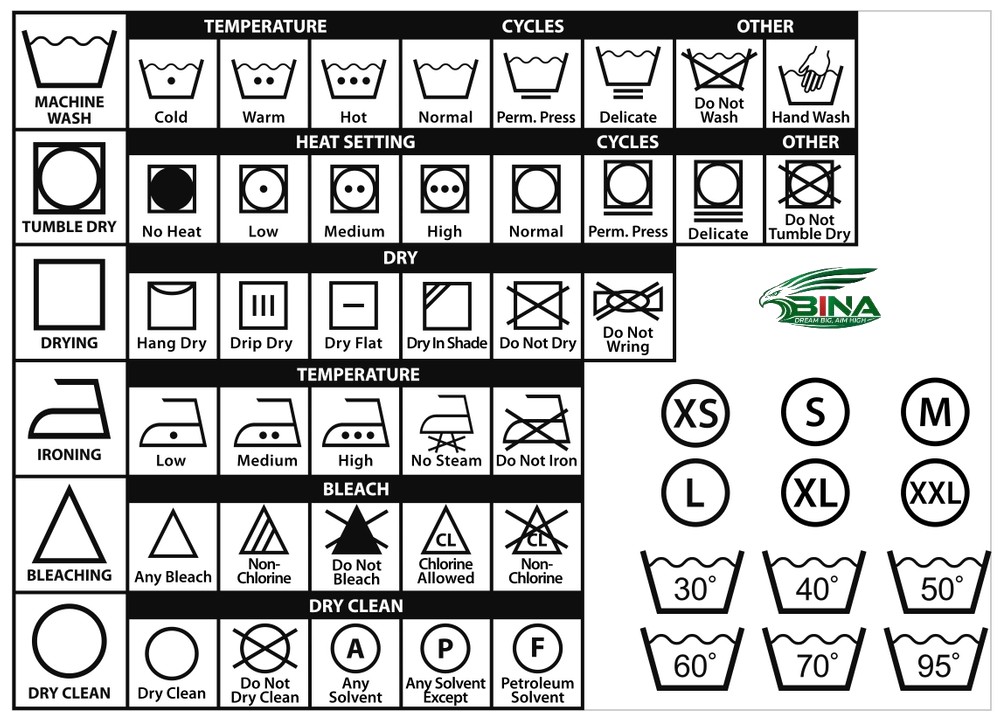
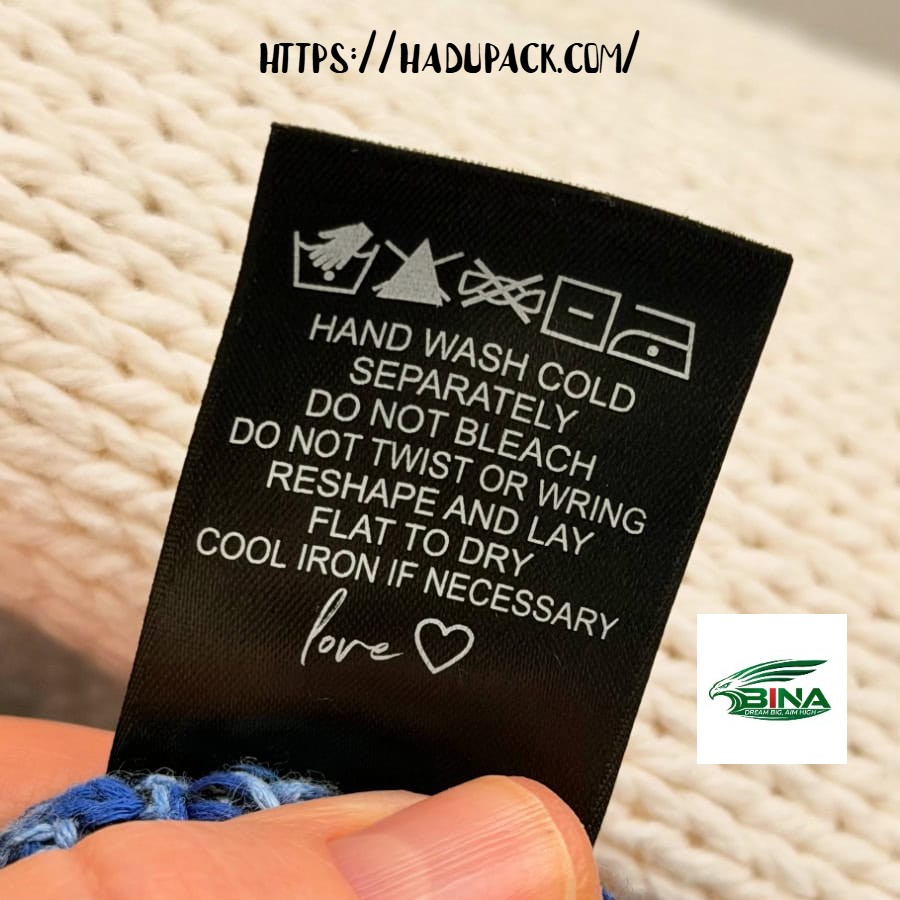
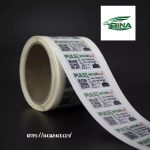
- Care Label: What is a care label? A care label is a clothing washing label and care symbol that indicates the fabric composition, clothing care information, and proper washing methods. We attach the symbols to clothing or textiles. Such as washing, dry cleaning, drying, and ironing clothes. Generally, factories or brands will use washing instructions and print the company logo and size on the label.
- Size Label: What is a size label? A size label is a printed or woven clothing label displaying a specific size on clothing. Such as sizes S, M, L, and XL for clothing, bedding, footwear, and handbags. Size labels include printed size labels and woven size labels. And they are laser-cut or hot-cut. Its materials include polyester and cotton, satin, nylon, etc. When people shop, the first thing they encounter with a piece of clothing is to look at its size. To assess whether it will fit them.
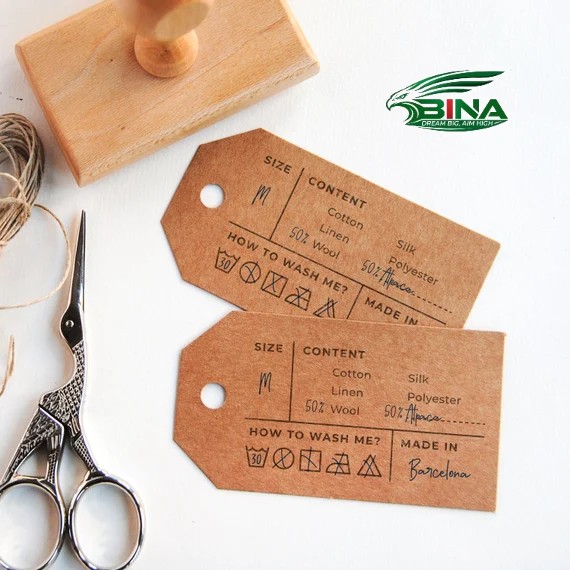
- Hang Tag: What is a hang tag? A hang tag is a clothing tag that uses paper, plastic, metal, leather, and fabric materials to print a brand logo or product information. Such as price, care symbols, contact information, social links or website, brand story, etc. In addition, we hang them on the product using cords, ropes, metal chains, etc. On the cord tag, a brief description and design of the product are printed. While some certificates are hung on the product as a hang tag.
- Flag Label: What is a flag label? A flag label is a small clothing label attached to the lower outside of fabric, clothing, bedding, etc. Generally, it will print or weave the brand logo and company name to indicate ownership. Therefore, we can make the label as a brand label or name label to display the brand image.
 |
Classified by attachment method
Based on how the labels are attached, we divide them into iron-on labels, heat transfer labels, sew-on labels, metal labels & rivet and bent-leg tags.
 |
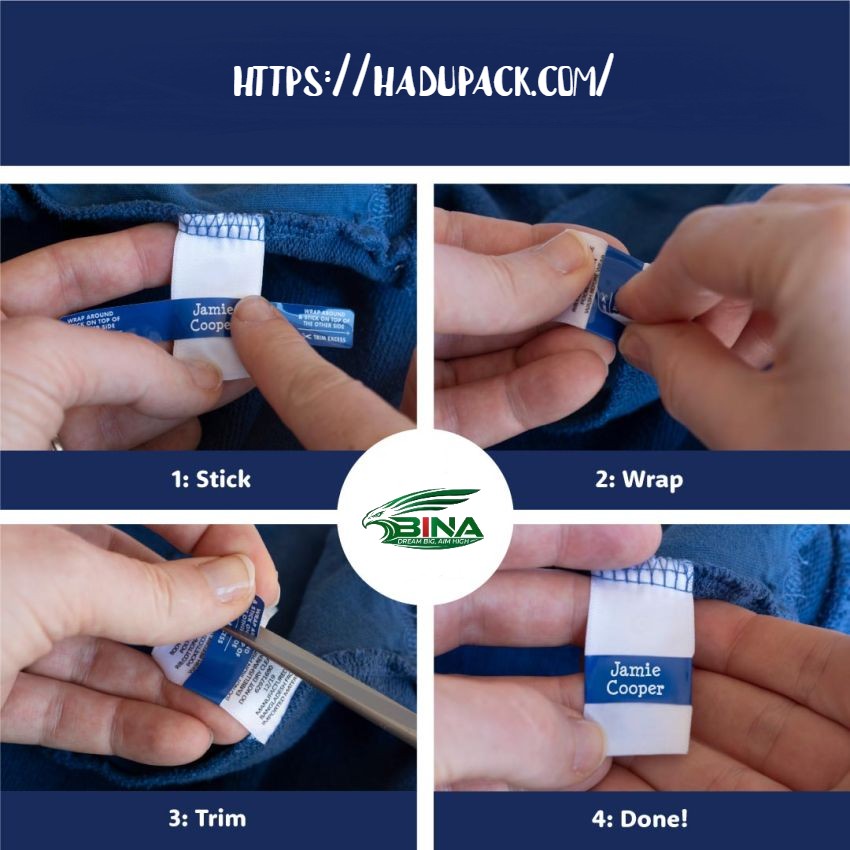
- Iron-on labels: What are iron-on labels? Iron-on labels are made with a heat-adhesive backing that is peeled off and ironed onto fabric using an iron. After that, you will have a perfect iron-on label with a waterproof effect, durable and skin-friendly. Therefore, they are ideal for T-shirts, shirts, T-shirts, trousers, pants, uniforms, etc. From there, personalized logos and brand names, contact information, websites or care symbols, etc. can be printed.
- Heat transfer labels: What are heat transfer labels? Heat transfer labels are the main labels of clothing and use heat pressing to apply a logo or design onto special transfer paper, synthetic film or plastic film. Then, peel off the film and apply them to the clothing fabric. Therefore, we can also call them tagless labels or heat transfer labels. Of course, they are perfect for T-shirts.
- Sew-on labels: What are sew-on labels? Sew-on labels are a type of clothing label that is sewn onto any type of fabric using a sewing machine. But, their edges usually leave grooves, holes that can be sewn. Any type of label that can be sewn belongs to sew-on labels. Such as woven labels, printed labels, leather labels, fabric, PVC or metal labels.
- PVC sew-on labels: Metal labels with rivets & bent legs. There are 2 main types of ways to attach metal tags & labels. That is attaching them with rivets or using bent legs. When customizing metal labels, customers often choose two ways to attach labels to clothing, hats, bags, etc. And they are easy to add to items.
 |
Classification by production process
According to the label production process, we divide them into woven labels, printed labels, hot-stamped leather labels, molded metal & PVC labels, embroidered labels, and high-frequency labels.
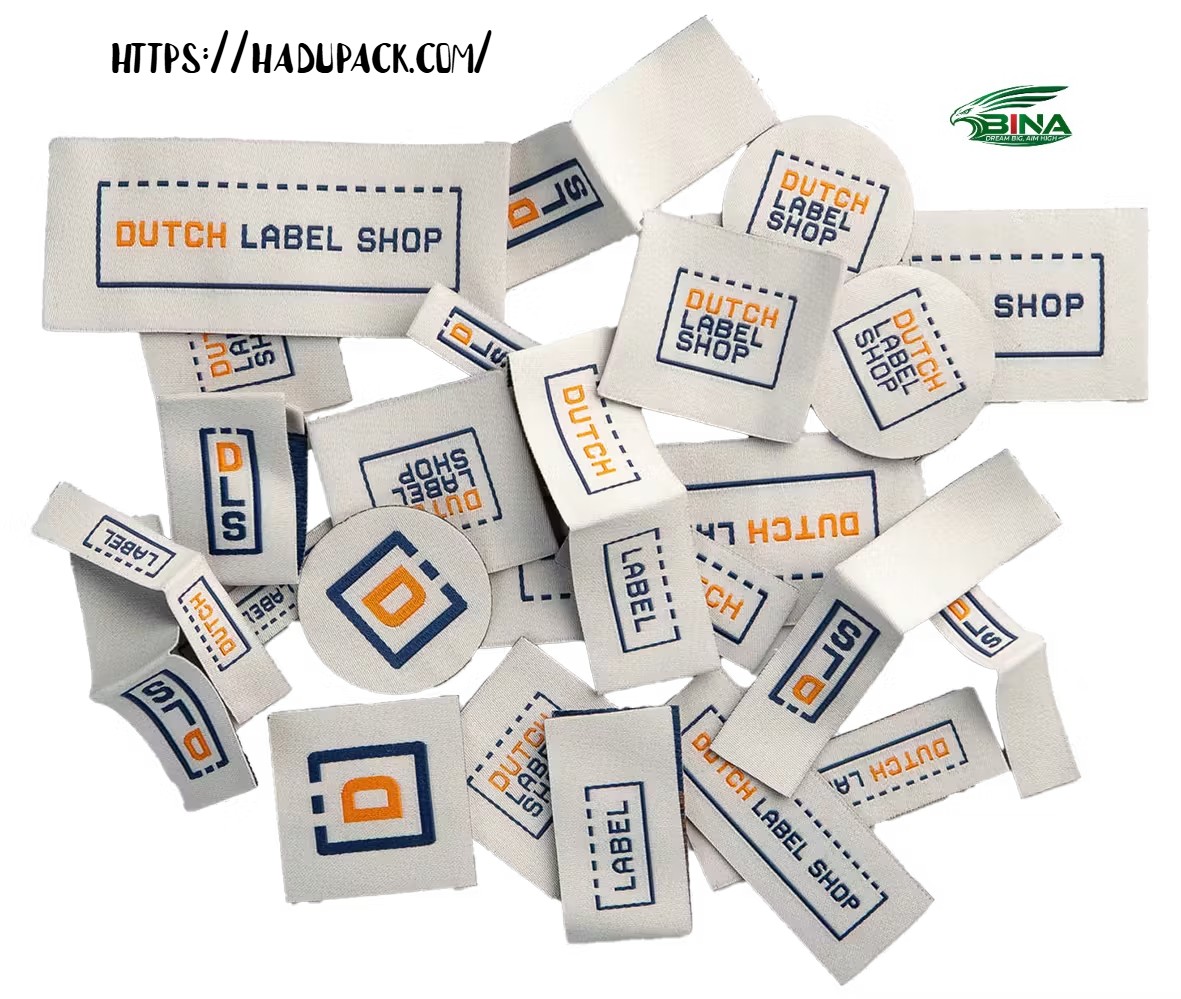
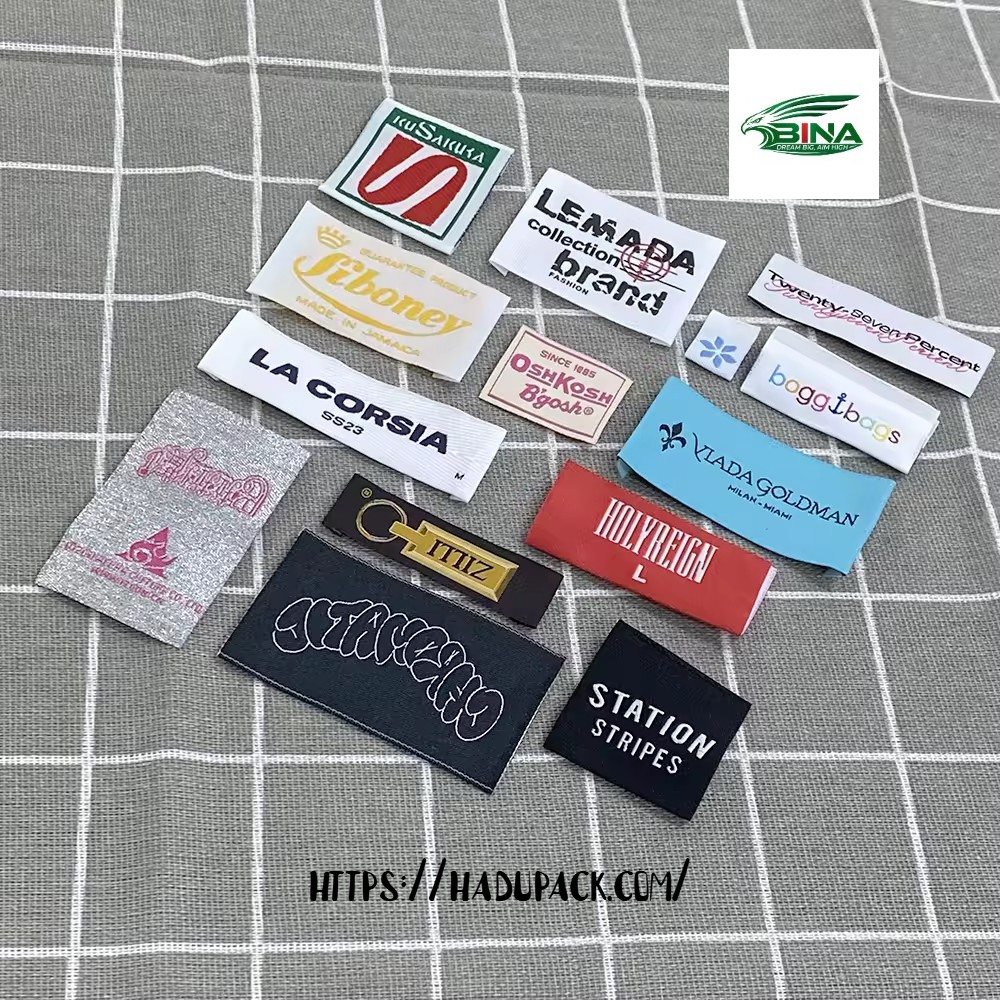
- Woven labels: Woven labels are a main type of label for clothing brands, woven from fabrics including brocade, polyester, satin, taffeta, and cotton. And there are many types of labels. Such as cotton woven labels, selvage woven labels, damask woven labels, satin woven labels, hook woven labels, iron-on woven labels.
- Printed labels: Printed labels are usually located inside clothing labels and use printing methods to print logos, product information, company names, contact details, or website links to improve brand image. And their materials include TPU, ribbon, cotton, satin, nylon, polyester, taffeta, canvas, adhesive tape, leather. In general, they have many types such as care or washing labels, size labels, etc.
- Hot-stamped leather labels: Hot-stamped leather labels are commonly used on the back waist of jeans, but of course, they are also used on handbags, tote bags, footwear, and hats. Leather labels are usually heat pressed (ironed at high temperature and for a certain period of time). There are also voltage (high frequency), screen printing, laser, sewing, embroidery, hardware… etc. Product materials include first-layer leather, second-layer leather, microfiber leather, and artificial leather (PU and PVC), synthetic leather. Leather labels can be added to items by adding 3M adhesive, adding Velcro, punching holes, piercing, etc. Therefore, they are suitable for clothing, household items, etc.
- Molded metal & PVC labels: Metal labels and some PVC labels commonly use stamping and molding processes. They are a good way to produce labels. Because the finished products will be durable and have a smooth surface. At the same time, we can embellish metal labels with diamonds, paint, punching, and dripping. The plating and sealing enamel can ensure that each product will not oxidize or fade.
- Embroidered labels: What are embroidered labels? Embroidered labels are a type of clothing design created by layering thread stitches on top of each other. The main types of embroidered labels include flat labels, 3D labels, towel labels, sequin labels, fabric labels, toothbrush labels, handmade embroidered labels, mixed embroidered labels, etc. Embroidered labels can use the following 3 ways to add backing to items: Iron-on backing: for handbags, hats, jackets, etc.; Sewing: machine-sewn onto clothing for long-term use;
- Adhesive backing: for clothing used for a short period of time; Velcro backing (hook and loop): for easy putting on-removing jackets, outerwear, etc.
- High-frequency labels: What are high-frequency labels? High-frequency labels are labels that use high-frequency technology to heat-weld silicone/PVC materials onto felt fabric. This label is also called a felt label. High frequency refers to electromagnetic wave frequencies greater than 100 kHz. In addition, the labels have many applications. Such as for clothing, gifts, toys, footwear, bows, decorative ribbon printing, etc.
 |
Clothing Label Applications:
Clothing labels are essential for branding, care instructions, and legal compliance, and are attached by sewing, ironing, or heat pressing. Common applications include collar labels, care instruction labels on the side seam, hang tags, and external branding labels on denim pockets or sleeves. Materials range from woven polyester to satin, TPU, and leather. Key applications and uses:
- Brand labels: Placed on the inside/outside collar, sleeves, or hem to build brand recognition.
- Care and composition labels: Sewn into the inner seam to provide washing instructions and material composition.
- Size labels: Placed on the inside collar or waistband for easy identification.
- Flag labels: Small, decorative labels sewn into the outer seam to create a subtle branding accent.
- Hang tags: Temporary external tags displaying pricing, branding, and marketing information.
- Tagless labels: Printed directly onto garments, especially underwear, sportswear, and T-shirt necklines, for comfort.
 |
Common Application Methods
- Sew-on labels: Durable, traditional method suitable for woven and satin labels.
- Iron-on/heat-transfer labels: Quick, durable, and comfortable, commonly used for care labels and labels on fabrics that are difficult to sew.
- Hang tags/loop tags: Attached with plastic fasteners, fabric, or string.
Label Application Areas
- Clothing: Jeans, underwear, shirts, and sportswear.
- Accessories: Socks, hats, and handbags.
- Home textiles: Bed sheets and furniture covers.
 |
Tips for choosing clothing labels
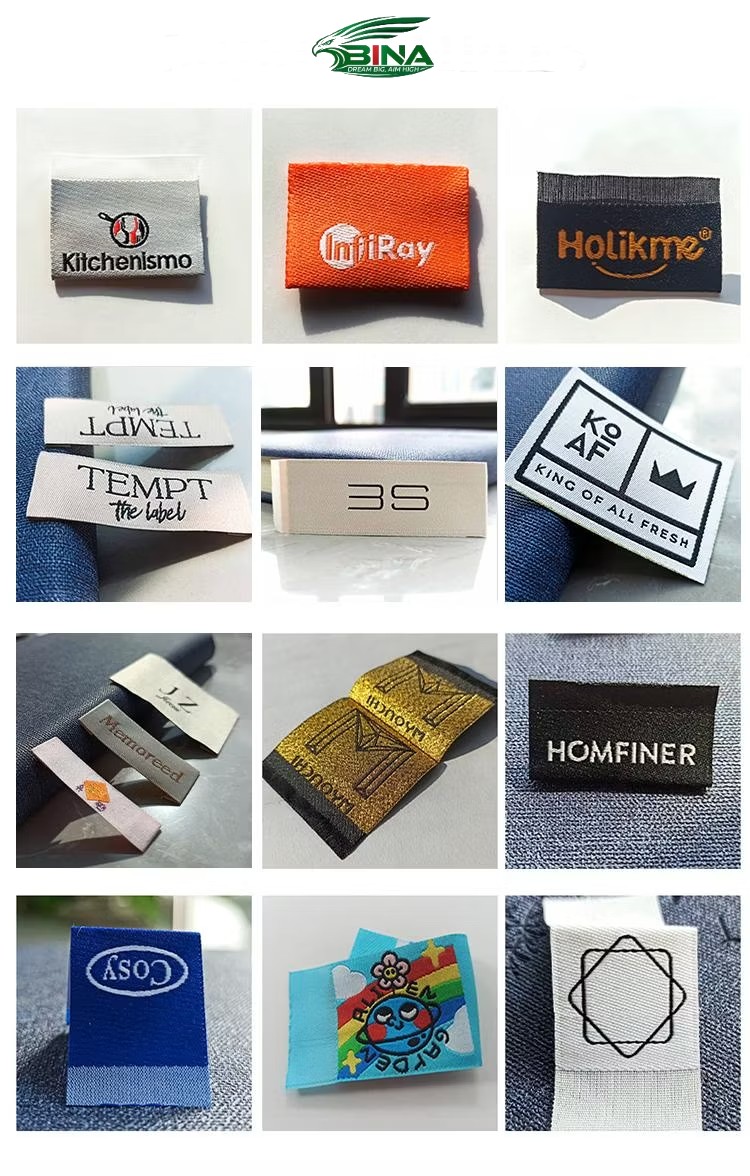
Choosing clothing labels requires matching the material, type (woven, printed, heat-transfer) and design with your brand identity, product type and budget, while also ensuring durability during washing and comfort for the wearer. Woven labels are ideal for premium, durable brand identification, while printed labels offer more cost-effective and detailed options.
Key factors for choosing labels:
- Brand positioning & Quality: Premium brands often use high-quality woven labels, while streetwear and casual fashion brands may use eye-catching printed or heat-transfer designs. The quality of the label should match the quality of the clothing.
- Material & Intended use of clothing: High-stress items such as denim or outerwear are suitable for thick woven labels. Delicate items such as underwear, silk or children’s clothing require soft materials such as satin or soft woven labels to avoid discomfort.
- Durability and comfort: Labels must withstand washing without peeling or fading; polyester is durable, while cotton or satin is soft and comfortable against the skin.
- Sustainability: Consider eco-friendly options such as organic cotton, recycled polyester or biodegradable labels.
 |
Label types:
- Woven labels: The industry standard for branding, offering a premium, durable, sturdy, and detailed option (e.g., damask).
- Printed labels: Best for care instructions and detailed graphics on softer fabrics.
- Heat transfer labels: Used to create a “tagless” feel, ideal for sportswear and workout clothing.
- Hang tags: Used to convey brand messaging and pricing information, not intended for long-term storage.
 |
Guide to Buying Clothing Labels
Buying clothing labels involves choosing between durable woven labels for displaying brand logos and cost-effective printed labels for care instructions, based on budget, garment type, and brand image. Factors to consider include material comfort (satin/cotton), legal compliance regarding fiber content and origin, and choosing between sewing, heat pressing, or attaching hang tags.
1. Types of Clothing Labels
- Woven labels: Premium, durable, and luxurious; ideal for brand logos on collars.
- Printed labels: Versatile, cost-effective, and soft (usually satin or cotton); ideal for T-shirts and children’s clothing.
- Care/fiber content labels: Labels required to clearly state fiber content, country of origin, and care instructions.
- Size tags: Small, simple labels indicating the garment size.
- Hang tags: External tags used to print logos and prices, removed after purchase.
 |
2. Things to consider before purchasing
- Brand image & Quality: Choose a label quality that suits the clothing. High-end clothing requires high-density woven labels, while everyday clothing is suitable for printed labels.
- Comfort: Ensure that labels in contact with the skin are soft (satin, soft cotton).
- Durability: Woven labels are more resistant to fading and damage over time than printed labels.
- Attachment method: Decide between sewing, heat pressing, or adhesive application.
- Regulatory compliance: Ensure all labels meet the legal requirements of the target market regarding content and origin.
3. Choosing a manufacturer
- Quality assurance: Check that the printing ink is soft and skin-friendly.
- Minimum order quantity (MOQ): Larger quantities help reduce unit costs, but many suppliers offer lower MOQs for startups.
- Sample inspection: Request samples (proofs) to verify colors and materials before mass production.
 |
4. Common label materials
- Polyester: Very durable, high fiber density, and chemical resistant.
- Cotton: Natural appearance, soft, and suitable for eco-friendly brands. Satin fabric: Smooth, glossy surface, often used for delicate fabrics or underwear.
5. Required information
- Brand name/Logo
- Size
- Fiber composition (e.g.: 100% Cotton)
- Care instructions (symbols or text)
- Country of origin (e.g.: Made in Viet





Reviews
There are no reviews yet.