



Description
What Are Vegetable Oil Labels?
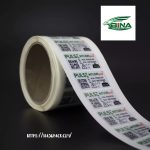
Vegetable oil labels consist of text, images, and symbols displayed on the packaging of prepackaged edible vegetable oils. They provide essential information about the product’s characteristics, ingredients, manufacturer, nutritional value, and safety.
The key information typically includes the product name, ingredient list (clearly indicating the raw materials and genetically modified organism (GMO) status), net weight or volume, manufacturer details, production date, expiration date, and storage conditions.
These labels primarily help consumers identify the type and quality of vegetable oil, make informed purchasing decisions, and ensure compliance with mandatory food labeling regulations.
 |
◆Learn More:
- https://hadupack.com/san-pham/nhan-mac-bao-bi-khau-trang/
- https://hadupack.com/san-pham/decal-giay-kraft-nau/
- https://hadupack.com/san-pham/tem-nhan-chong-tham-nuoc/
Essential Label Information
- 1. Product Name: Clearly indicates the type of edible oil, such as soybean oil, peanut oil, or blended edible vegetable oil.
- 2. Ingredient List: Ingredients are listed in descending order by quantity. If the product contains hydrogenated vegetable oil, it must be clearly labeled as “hydrogenated” or “partially hydrogenated.”
- 3. GMO Labeling: When genetically modified ingredients are used, the label must prominently indicate “Produced from Genetically Modified ××” in accordance with applicable labeling regulations.
- 4. Quality Grading: According to applicable national standards, edible oils may be classified into Grade 1, Grade 2, and other grades. Higher grades generally indicate a greater degree of refinement.
- 5. Production Process: Specifies whether the oil is produced through mechanical pressing or solvent extraction.
- 6. Nutritional Information: Provides details such as energy, total fat content, fatty acid composition (saturated, monounsaturated, and polyunsaturated fatty acids), vitamin E, and other relevant nutritional values.
 |
How to Read Vegetable Oil Labels When Shopping
- 1. Check Ingredients and GMO Information: Pay attention to the type of vegetable oil and determine whether it is labeled as “GMO” or “Non-GMO.”
- 2. Check the Production Process: Strongly flavored oils, such as peanut oil and sesame oil, are often produced through mechanical pressing, including cold pressing. Mild-flavored oils, such as those used in salad oil blends, may be produced through solvent extraction.
- 3. Check Quality Standards: Verify that the product complies with applicable national food quality and safety standards.
- 4. Check Nutritional Information: If you are looking for nutritional variety, examine the fatty acid composition to understand the proportions of saturated, monounsaturated, and polyunsaturated fats.
Guidelines for Avoiding Misleading Labels
- 1. Misleading “Non-GMO” Claims: Labeling products made from crops for which genetically modified varieties have not been commercially approved, such as peanuts and olives, as “Non-GMO” may mislead consumers into believing that the products offer a special advantage.
- 2. Health Benefit Claims: Food labels must not make unauthorized medical or therapeutic claims, such as “reduces blood lipids” or suggests that the product can treat or prevent diseases.
- 3. Altered Production Dates: Check for signs of double printing, overwritten dates, or labels that appear to have been covered or tampered with, as these may indicate unauthorized changes to the production date.
 |
Materials Used for Vegetable Oil Label Printing
Materials used for vegetable oil label printing must offer excellent oil resistance, water resistance, and compliance with food safety standards. Film-based self-adhesive labels are commonly used for this purpose.
Popular material options include BOPP (Biaxially Oriented Polypropylene), PET, and synthetic paper, combined with high-strength adhesives to prevent labels from curling or peeling in oily and greasy environments.
Environmentally friendly printing inks, such as vegetable oil-based inks, are also used in the printing process.
The following are detailed guidelines for selecting materials for vegetable oil label printing:
Label Face Material Selection:
- 1. BOPP Film (Glossy/Matte): One of the most commonly used materials, offering excellent water resistance, oil resistance, and abrasion resistance at a reasonable cost. Suitable for various types of plastic and glass vegetable oil bottles.
- 2. Synthetic Paper: Combines the excellent printability of paper with the waterproof and oil-resistant properties of plastic films, providing a high-quality texture and appearance.
- 3. PET Materials: Offer high transparency and excellent heat resistance, making them suitable for premium transparent vegetable oil packaging.
- 4. Adhesive Requirements: Strong, oil-resistant adhesives, such as hot-melt adhesives or acrylic-based adhesives, should be used to prevent oil penetration and label peeling.
- 5. Food Safety Standards: Materials must comply with applicable national food safety standards (such as GB 4806.1-2016, where relevant). Printing materials must not contaminate the edible oil.
- 6. Environmentally Friendly Options: Vegetable oil-based inks or suitable UV-curable inks are recommended to help reduce volatile organic compound (VOC) emissions and meet environmental requirements.
- 7. Surface Finishing: Glossy or matte lamination and protective varnishing can enhance the label’s surface texture while further improving water resistance, oil resistance, and overall durability.
In summary, the recommended solution is a combination of “Environmentally Friendly Printing Inks + Lamination/Protective Varnishing + PET/BOPP Films + Oil-Resistant Adhesives” to ensure high-quality, durable, and reliable vegetable oil labels
 |
Vegetable Oil Label Production Process
The production of vegetable oil labels must comply with applicable food safety regulations. The core production processes include design, layout preparation, printing on self-adhesive materials or paper, film lamination (for water and oil resistance), die cutting, slitting, and quality inspection.
Vegetable oil labels must clearly display essential information, including the product name, raw materials, extraction method (pressing or solvent extraction), nutritional composition, and whether genetically modified ingredients are used. They must also comply with applicable edible vegetable oil hygiene and safety standards.
Key Requirements and Processes in Vegetable Oil Label Production:
- 1. Label Content Compliance: According to applicable labeling regulations, edible vegetable oil labels must clearly indicate the production method, such as mechanical pressing or solvent extraction. If the vegetable oil is produced from genetically modified soybeans or rapeseeds, the term “Genetically Modified” must be clearly displayed on the label where required by law.
- 2. Material Selection: Use oil-resistant, waterproof, and tear-resistant materials, such as PET and PP self-adhesive labels, to withstand oil leakage, prolonged exposure to moisture, and oily conditions. These materials help ensure that printed information remains clear and that labels do not easily peel off.
- 3. Post-Printing Finishing: After printing, glossy or matte lamination is commonly applied to enhance water and oil resistance, protecting the labels from damage during transportation, storage, and use.
- 4. Labeling Management: Imported edible oils and certain blended vegetable oils may require special labeling in accordance with national regulations on genetically modified agricultural products.
- 5. Production Process Information: Edible vegetable oil packaging labels must clearly indicate the manufacturing technology and production process, including physical pressing and chemical solvent extraction, where required by applicable regulations. This information helps consumers understand the production methods and make informed purchasing decisions.
 |
Common Questions About Vegetable Oil Labels
Edible vegetable oil labels should include essential information such as the product name, ingredient list (clearly indicating the proportions of different oils in blended products), net weight or volume, manufacturer details, production date, expiration date, storage conditions, food production license number (SC), quality grade, and processing method (mechanical pressing or solvent extraction).
Key factors to consider include the proportions of individual oils in blended products, quality grade classifications (Grade 1 oils are generally more refined, while Grade 3 and Grade 4 oils tend to retain stronger natural flavors), and whether the product contains genetically modified ingredients.
I. Key Guidelines for Reading and Evaluating Vegetable Oil Labels
Check the “Quality Grade” and “Processing Method”:
- 1. Quality Grade: Edible vegetable oils may be classified into Grade 1, Grade 2, Grade 3, and Grade 4. Grade 1 oils are generally more refined and suitable for stir-frying, while Grade 3 and Grade 4 oils typically retain stronger natural flavors.
- 2. Processing Method: Vegetable oils are commonly produced through two methods: “Mechanical Pressing” and “Solvent Extraction.” Both methods can meet national food safety standards and produce safe edible oils when properly processed. However, mechanically pressed oils are often considered better at preserving their natural flavors.
Check the “Ingredient List” and “Composition”:
- 1. Blended Vegetable Oils: Under applicable labeling regulations, the percentage of each edible vegetable oil in a blend may need to be clearly stated. Failure to disclose the required proportions can result in non-compliant product labeling.
- 2. Non-GMO / GMO Information: Labels should clearly indicate the genetically modified status of relevant ingredients, where required, allowing consumers to make informed purchasing decisions.
- 3. Check the “Oil Type” and “Quality Grade”: The first ingredient listed should represent the oil present in the largest proportion of the product.
- 4. Pure Olive Oil and Camellia Seed Oil: These oils may be classified into Grade 1 and Grade 2 under certain applicable product grading standards.
5. Pay Attention to Fatty Acid Composition:
-
Saturated Fatty Acids: Generally more resistant to oxidation at high temperatures, but excessive consumption should be avoided.
-
Monounsaturated Fatty Acids: Such as oleic acid, are generally considered beneficial for cardiovascular health when they replace saturated fats in the diet.
-
Polyunsaturated Fatty Acids: Such as linoleic acid and alpha-linolenic acid, are more susceptible to oxidation and may be less stable under prolonged high-temperature cooking conditions.
 |
II. Common Labeling Pitfalls and Issues
- 1. Mislabeling of Blended Oils: Misrepresenting the proportions or order of different vegetable oils in the ingredient list to make a product appear to contain a higher percentage of premium-quality oils than it actually does.
- 2. Counterfeit Products and Fraudulent Repackaging: Falsifying product origins or repackaging low-quality or unrefined oils as premium-quality packaged edible oils.
- 3. Illegal Advertising Claims: Exaggerating product benefits, making unauthorized health or functional claims (such as “functional oil”), and using misleading or concealed labeling information.
- 4. Discrepancies Between Label Information and Actual Products: Food production license numbers (SC) that do not match the declared place of origin, or deliberately obscured information about the actual repackaging location.
III. Vegetable Oil Solidification Issues
- 1. Phenomenon: At low temperatures, certain vegetable oils (such as soybean oil) may change from transparent to cloudy, form crystals, or even partially or completely solidify.
- 2. Explanation: This is a natural physical phenomenon related to the crystallization and melting characteristics of vegetable oils. It does not necessarily indicate a decline in quality, and the oil generally remains safe for consumption if it has been properly stored and is within its shelf life.
Hadupack recommends choosing reputable brands with complete product labels, clearly identified origins, and transparent ingredient information. Consumers should also carefully compare ingredient lists and fatty acid compositions to make informed purchasing decisions.