


Description
Clothing tag printing – Hang tag printing enhances your brand on apparel and accessories
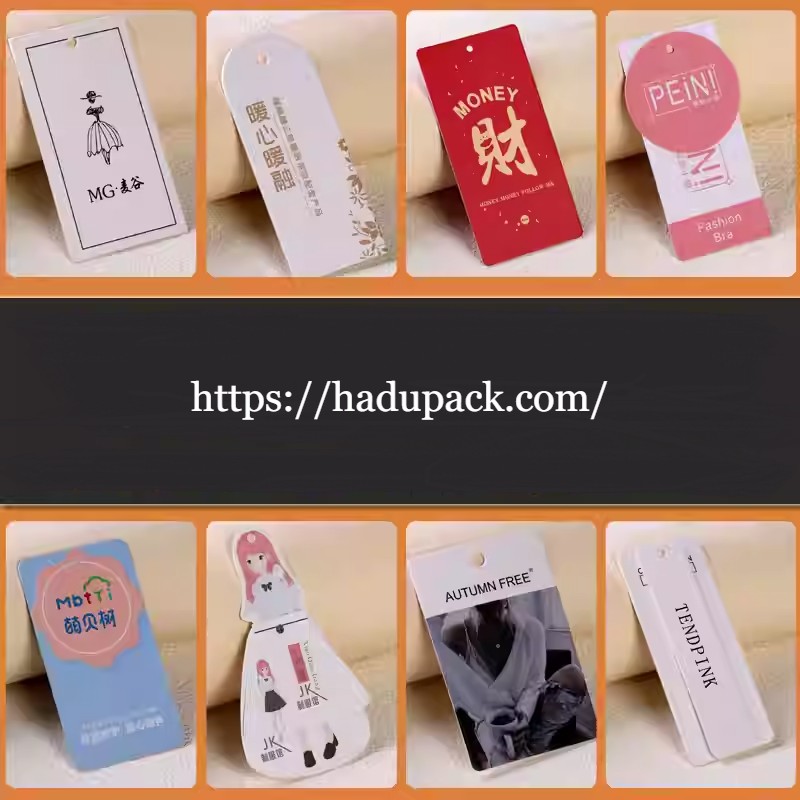
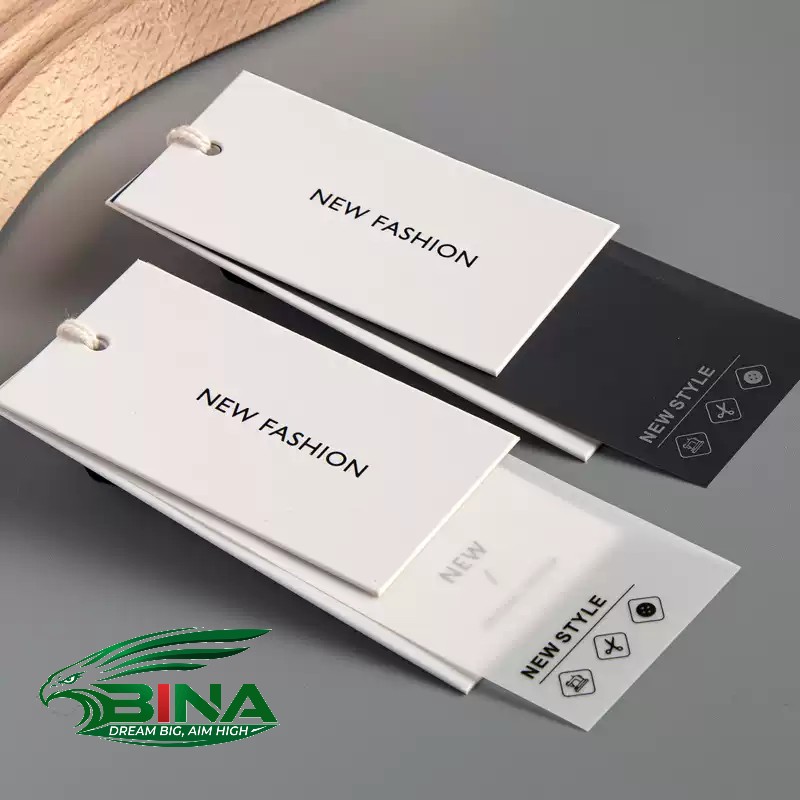
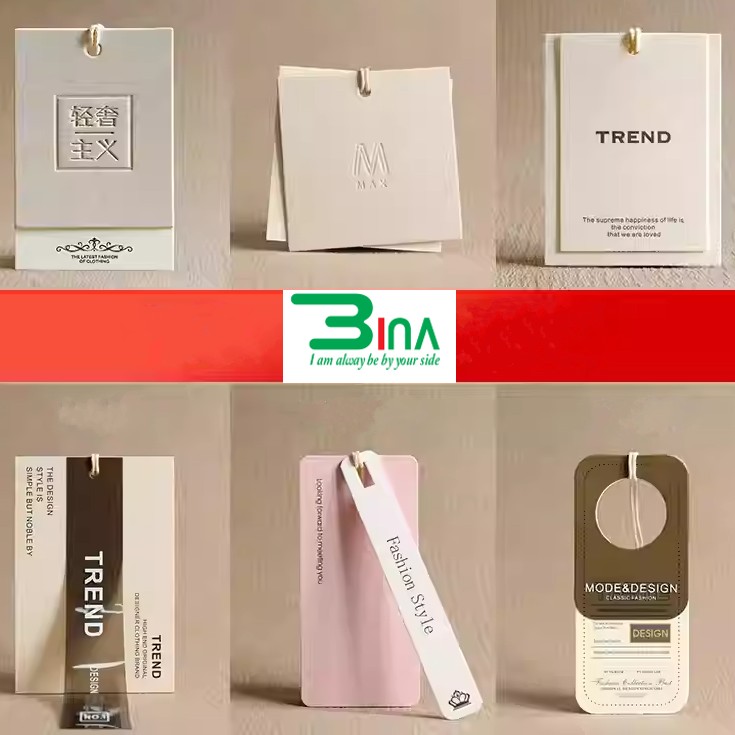
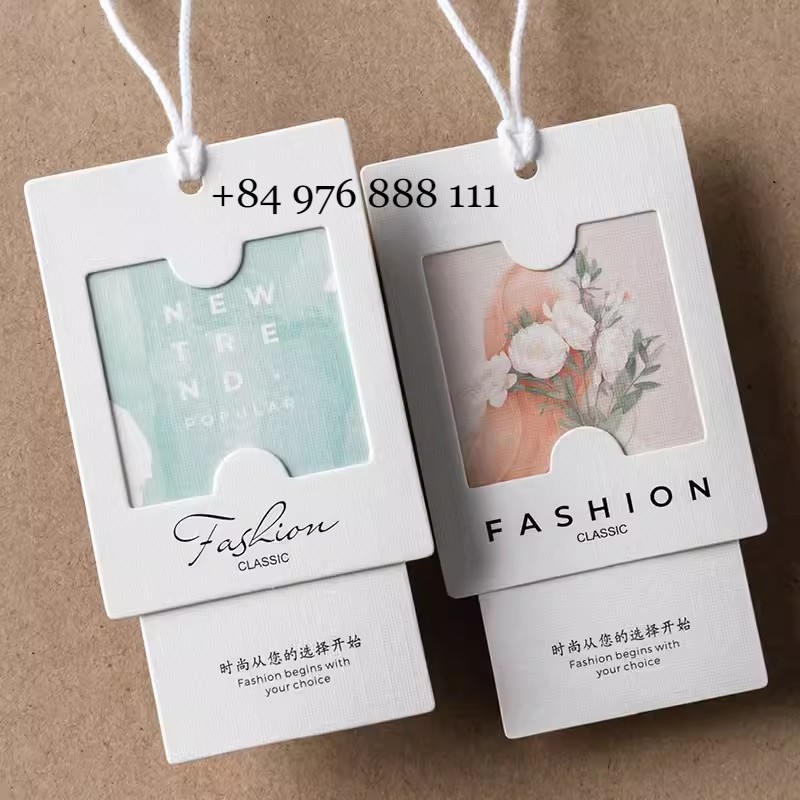
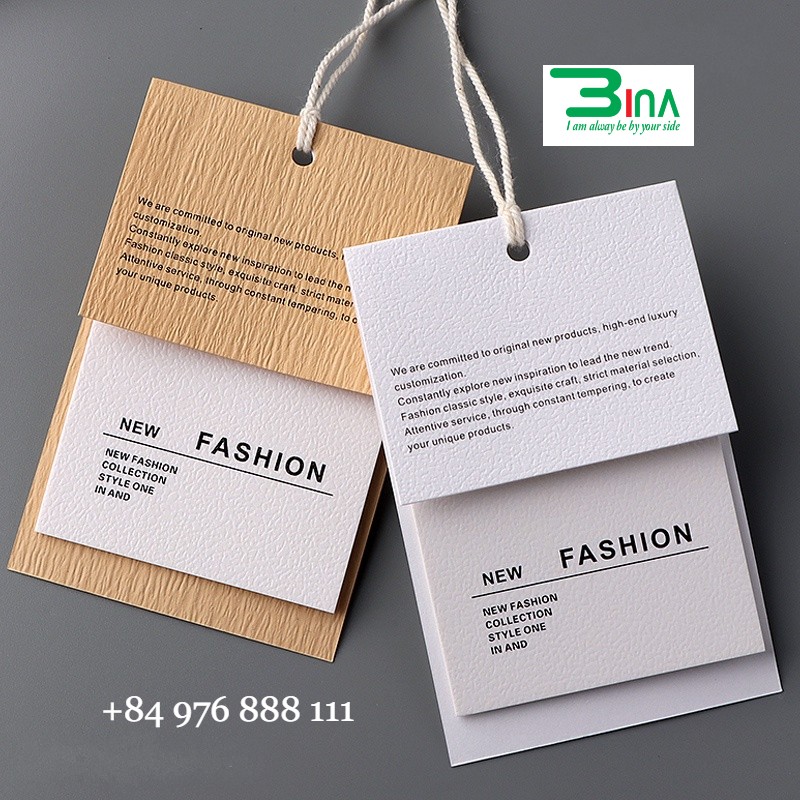
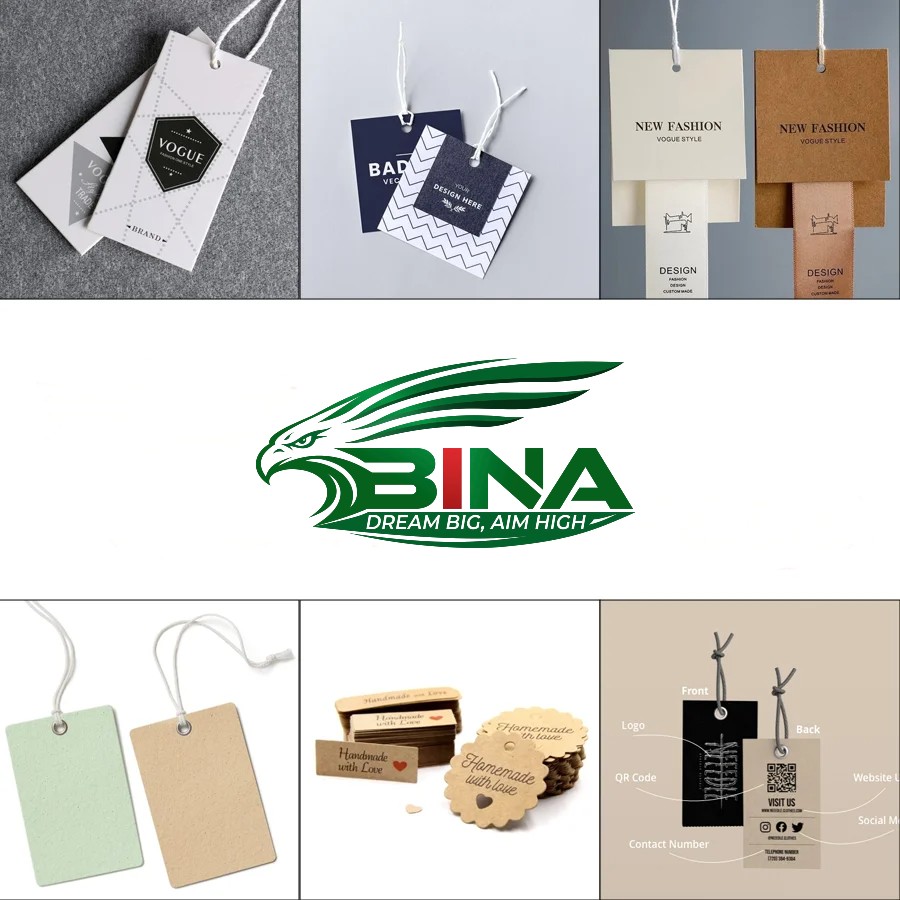
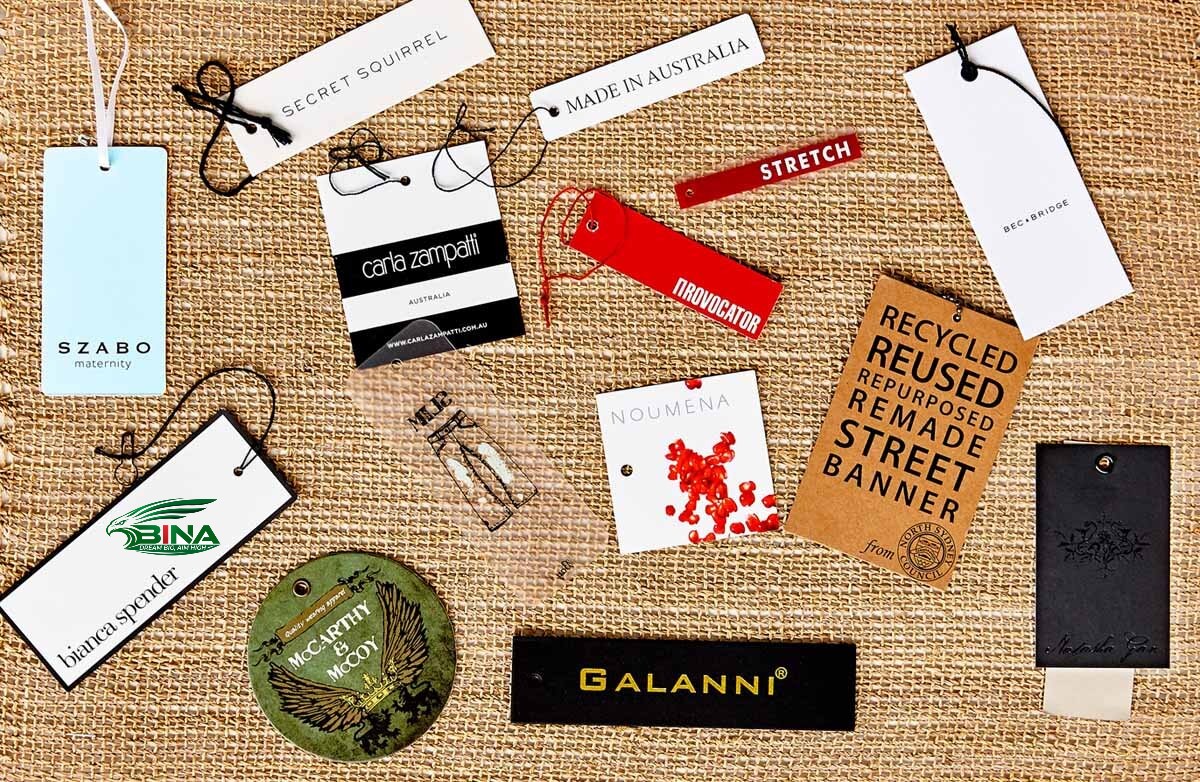
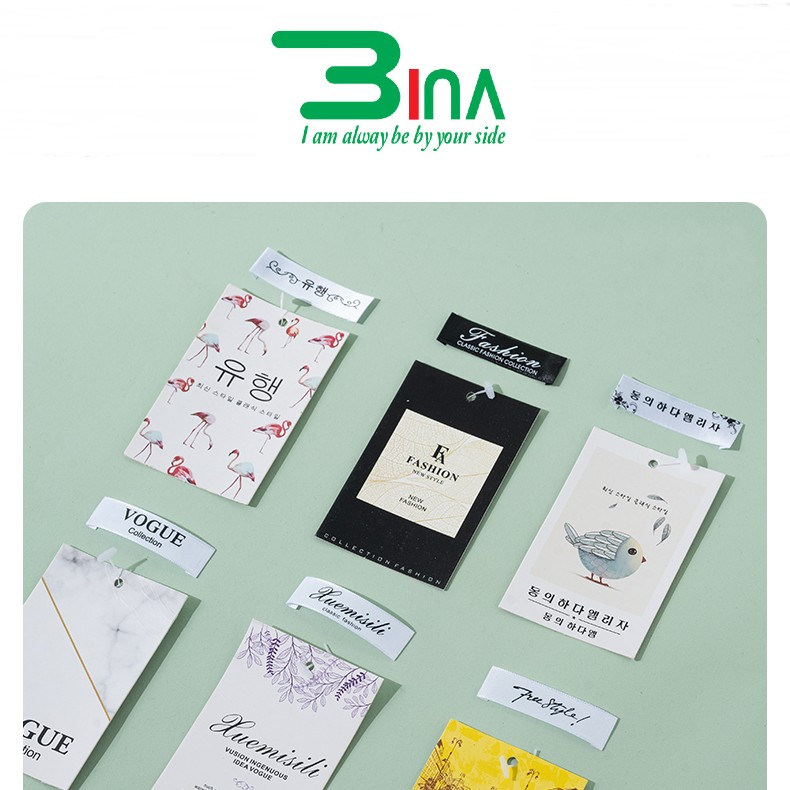
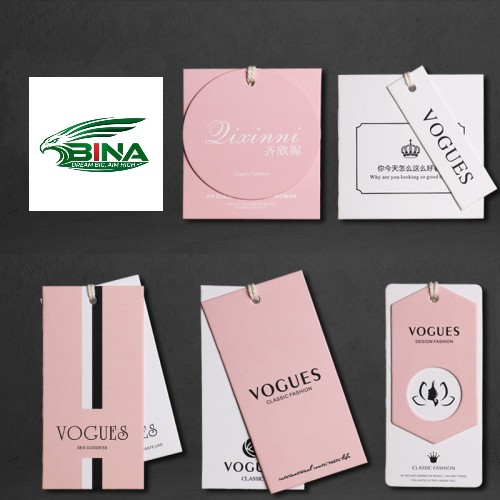
Clothing tag printing, hang tag printing is a customized printing service that involves printing brand logos, product specifications, barcodes, washing instructions or advertising messages onto paper, plastic or other materials, then cutting, punching holes and finally attaching the tags to products. It is a “mobile billboard” that combines information delivery and brand promotion, commonly used in the apparel, packaging, food and retail industries to enhance the perceived quality of products
 |
 |
Common applications of clothing tags:
- Clothing and accessories: Display brand names, sizes, prices, fabric materials, and washing instructions.
- Product packaging: Used as labels for gift boxes, promotional items, and food products, enhancing the product’s sophistication.
- Industrial labels: Such as industrial hang tags and sample labels.
- Cultural and creative packaging: Showcase product stories and design patterns.
◆Learn more:
- https://hadupack.com/san-pham/hop-dung-banh-trung-thu/
- https://hadupack.com/san-pham/vo-hop-dung-qua-tet/
- https://hadupack.com/san-pham/in-hop-qua-tang/
 |
 |
What materials are hang tags made from?
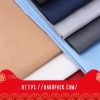
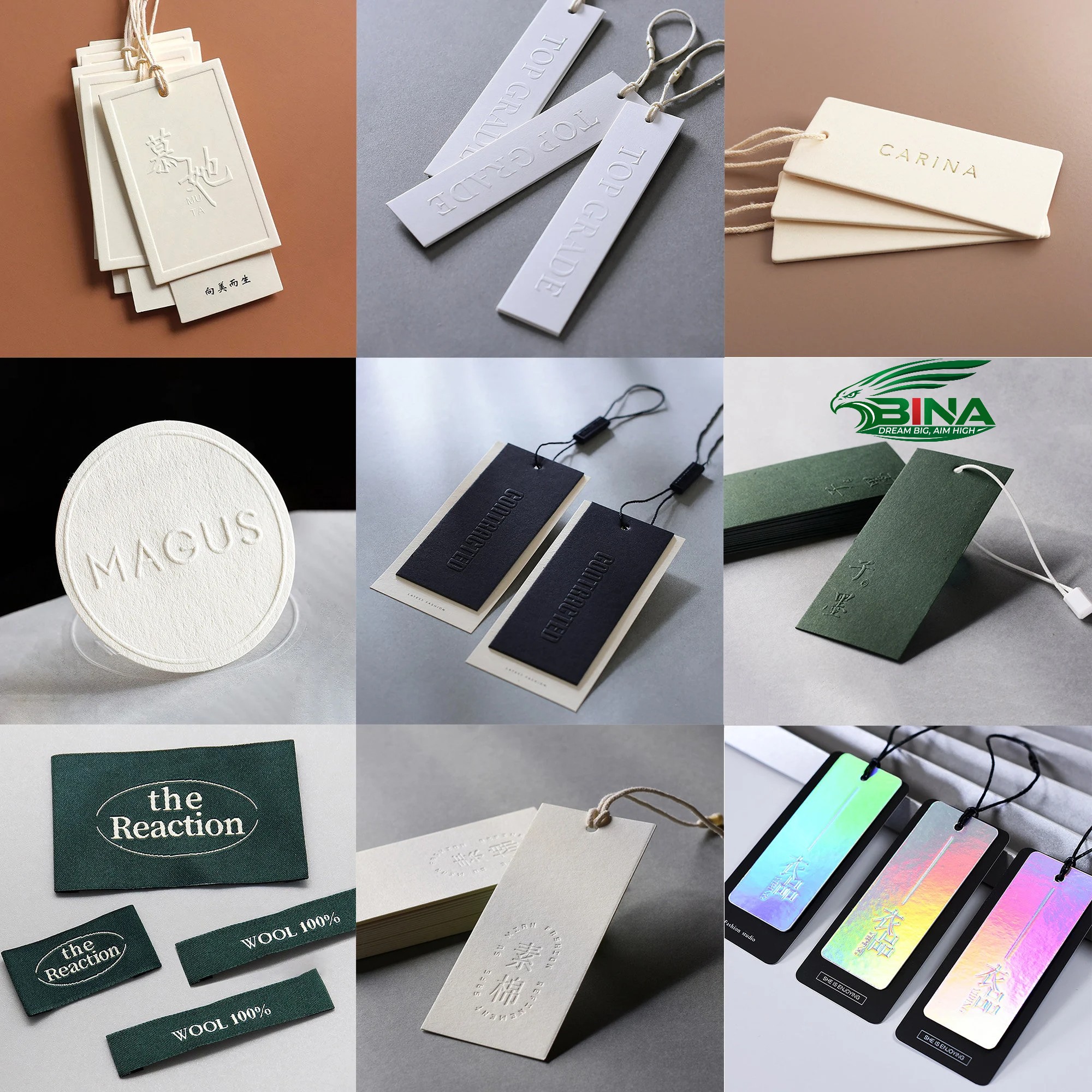
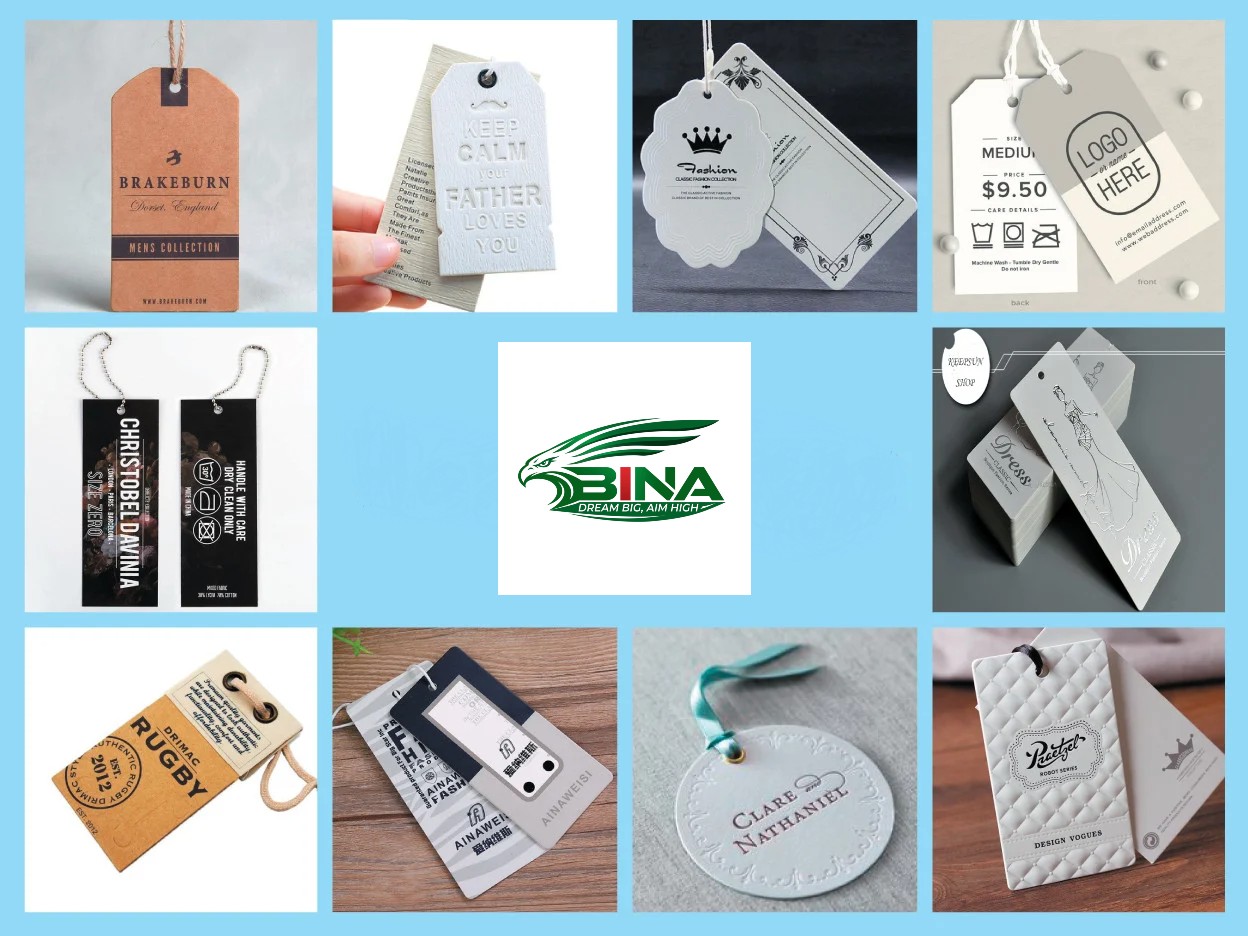
The materials used for hang tags are very diverse, mainly divided into four categories: paper, plastic, special synthetic materials, and other environmentally friendly materials. The most common are coated paper (two-sided/single-sided) and white cardstock, followed by kraft paper, black cardstock, and special art paper. High-end or specially functional hang tags may use PVC, PET, synthetic paper (pearl paper), metal, leather, or even cotton to enhance the brand’s perceived quality.
 |
I. Paper Materials (Most Common)
- Coated Paper: The most versatile and cost-effective option, with a smooth, glossy or matte surface that allows for vibrant color printing. Suitable for most types of clothing and everyday items.
- White Cardstock/White Board Paper: Highly rigid, with a clean and refined white surface, suitable for high-end color printing and embossed hang tags.
- Kraft Paper: Classic and eco-friendly, with high durability, commonly used for casual clothing and jeans.
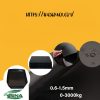
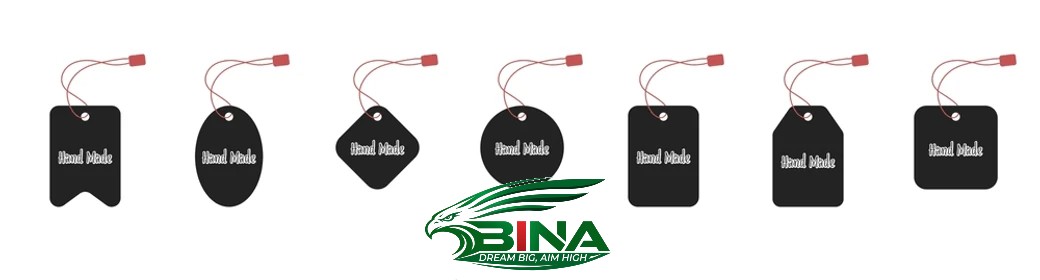
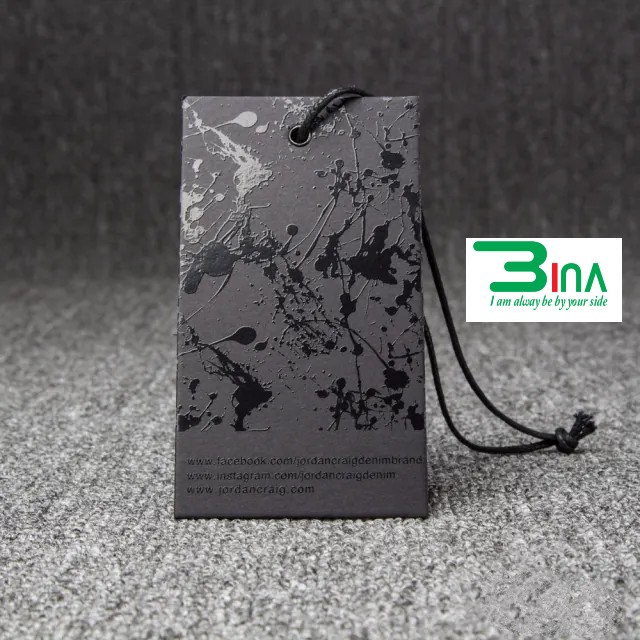
- Black Cardstock: A special type of paper with a stable surface, not suitable for color printing, commonly used for embossing, silver foil stamping, UV coating, and other processes.
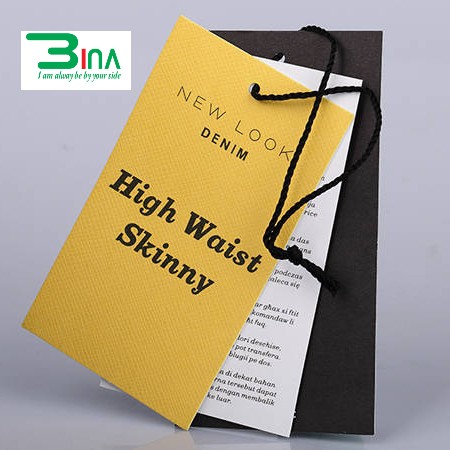
- Specialty Paper/Art Paper: Features unique textures, such as tactile paper and pearlescent paper, used to enhance the quality of high-end brands.
 |
II. Plastics and composite materials
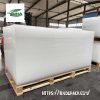
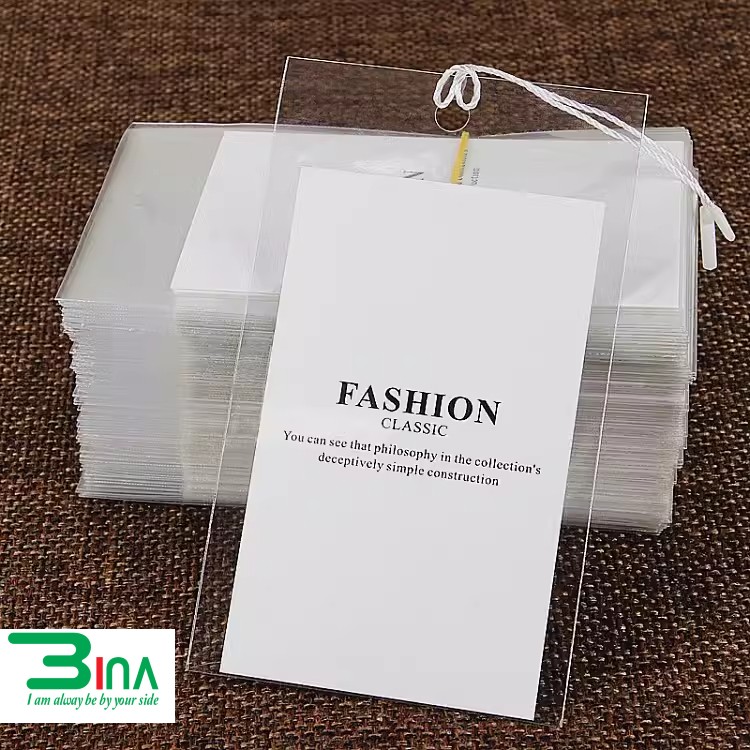
- PVC/PET: Transparent or opaque, waterproof and durable, used for products requiring high water resistance or those pursuing a modern appearance.
- Synthetic paper: Such as pearl paper and high-strength paper, combining the advantages of paper and plastic, tear-resistant, waterproof, and glossy.
- Tyvek paper: DuPont paper, ultra-lightweight, waterproof, tear-resistant, with a unique paper-like texture.
III. Special materials
- Metal: High-end brands, finely crafted, often used in jewelry and handbags.
- Leather/Fabric: Fabric labels, nylon, cotton, etc., emphasizing environmental protection or distinctive design styles.
 |
 |
Clothing tag printing process, hang tag printing
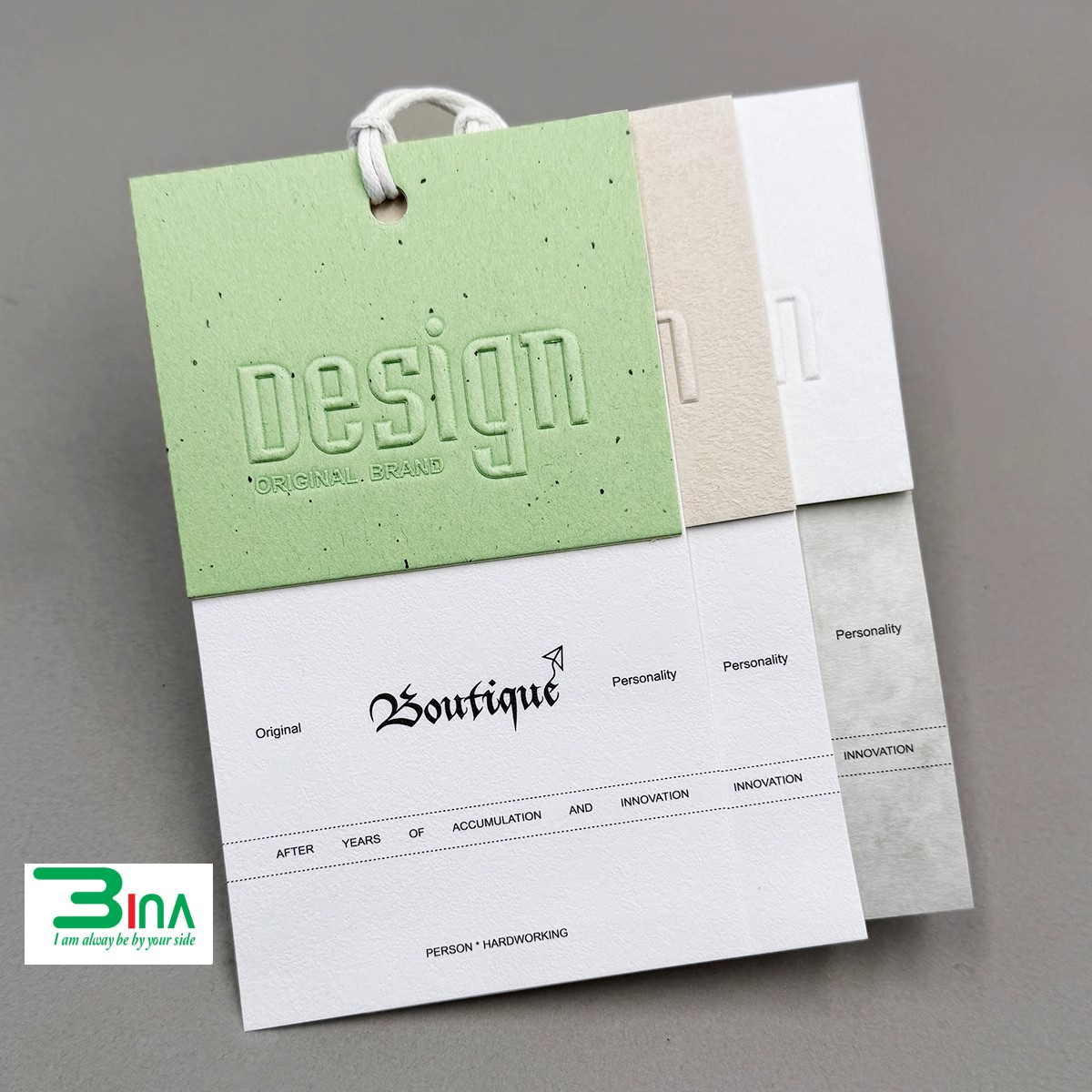
The hang tag production process includes prepress design, material selection (paper/plastic), printing (offset or digital), finishing (lamination, UV coating, foil stamping), die-cutting into the desired shape, hole punching, and stringing. High-quality printing ensures brand recognition, with options such as spot UV coating and embossing adding texture and elegance.
Main stages in hang tag production:
- Design & Prepress Preparation: Create design files (AI, Photoshop, CorelDraw) and arrange the layout to minimize material waste, known as layout planning.
- Material Selection: Choose the appropriate type of paper or plastic based on product requirements, such as 16-point glossy paper for increased durability.
 |
Printing methods:
- Offset printing: Ideal for large-volume orders requiring high quality.
- Digital printing: Flexible and cost-effective for smaller orders, using CMYK colors.
- Screen printing: Used for special colors or textured effects.
- Surface finishing: Enhances aesthetics with techniques such as UV coating, metallic foil stamping, embossing or lamination.
Post-print processing:
- Die cutting: Cuts tags into specific shapes.
- Hole punching: Punches holes for threading cords, carefully positioned to prevent tearing.
- Stringing/Tag attachment: Adds strings, cotton cords or plastic fasteners.
- Quality Control & Packaging: Checks for sharp, accurate print quality and precise cutting lines before final packaging.
To further enhance the material, brands often use:
- Lamination: Matte or glossy to increase durability and feel
- Embossing/Debossing: Creates logos or 3D textures that can be felt
- Hot stamping/Foil stamping: Adds metallic colors such as gold or silver.
- UV coating: Creates a glossy, spot-raised finish.
FSC-certified paper is increasingly popular thanks to its environmentally friendly benefits.
 |
 |
Common Issues in the Production of Clothing Tags and Hang Tags
Although the production process for printed hang tags may seem simple, it often involves many technical and procedural challenges from the design stage to the finished product. The following is a summary of common issues encountered during hang tag production:
1. Design and File Preparation Stage
- Font and line alignment errors: Failure to convert text to curves (create outlines) or to outline strokes can result in missing characters, white dots at intersections, or distorted strokes during printing.
- Dark backgrounds and small text: Dark backgrounds (especially solid black) can easily cause small text or outlines to become broken or blurred. If overprinting is not handled correctly, white edges can easily appear.
- CMYK mode errors: Design files that are not converted to CMYK color mode (using RGB) can result in significant color differences between the output and the colors displayed on the screen, appearing as dull gray tones.
- Die-cutting and bleed margins: Hang tags often require die-cutting. If the design does not include bleed margins (usually 3mm), white edges may appear during cutting, and die-cutting errors can affect the integrity of the four-sided border design.
 |
2. Color adjustment and printing stage
- Color errors: Due to batch size, paper characteristics, or ink mixing issues, the color of the finished product may differ from the design or sample.
- Insufficient black saturation: If only single-color black (K100) is used for a full-page dark background, it may look insufficiently saturated and slightly gray. It is recommended to use rich black (C30, K100).
3. Special processes and finishing stage
- Specific process errors: For processes such as embossing, UV coating, and debossing, if the details in the design file are too small, they can easily result in blurred embossing, unclear embossed text, or misalignment during processing.
- Protective coating peeling: Hang tags are often coated with a layer (glossy or matte) to protect the surface, but if the paper is too rough or the ink has not dried, the film may peel away from the paper.
- Uneven embossing texture: For papers with special textures (such as textured paper and art paper), the ink absorption rate varies, which can affect the clarity of the image.
4. Material and physical properties
- Difficulty in material selection: Choosing paper that is too thin may not support special processes (such as hot stamping or heavy embossing); choosing paper that is too thick will increase the difficulty of die cutting.
- Hole position errors: Holes on hang tags are usually punched after die cutting. If the equipment is not calibrated accurately, the holes may be misaligned or damage important text/images.
- Proposed solution: Before official printing, be sure to confirm the die-cutting file with the printing factory, set the correct CMYK color mode, convert text to outlines, and consider creating a proof to confirm the colors and processing effects.
 |
Tips for Choosing Hang Tag Printing
When choosing a printing option for product hang tags, it is essential to consider brand image, design requirements, budget, and functionality. A good hang tag not only displays product information but is also an important tool for enhancing brand image. Below are some important tips and steps for choosing a hang tag printing option:
1. Choosing the Material: Match the Brand Positioning
The material determines the feel and durability of the hang tag.
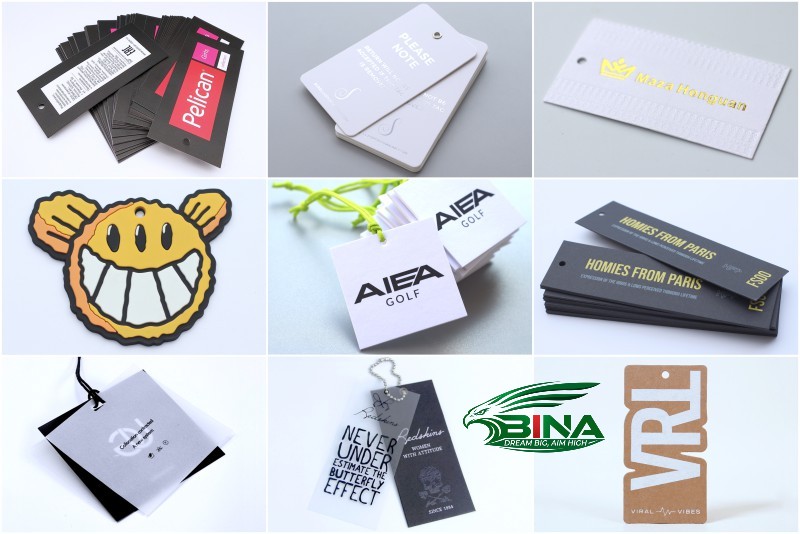
- Coated paper: The most common option, cost-effective and offering good color reproduction; suitable for clothing and gift boxes.
- White cardstock: Thick and sturdy, providing a premium feel; suitable for brands that need to convey quality.
- Kraft paper: Classic and eco-friendly, suitable for denim fabrics and creative handmade products.
- Specialty paper/Art paper: Features unique textures or colors; suitable for premium and design-oriented products.
- Plastic/PVC/TPU: Waterproof and durable; suitable for outdoor products, swimwear, and humid environments.
 |
2. Thickness and weight: The thickness of the hang tag determines its perceived quality.
- Standard thickness: 250g-350g (typical business card thickness), suitable for most products.
- Premium options: 400g, 600g, 800g, or even thicker, with a texture similar to a bank card, suitable for luxury goods.
3. Post-print finishing processes: Enhancing sophistication Special printing processes can make hang tags stand out from similar products.
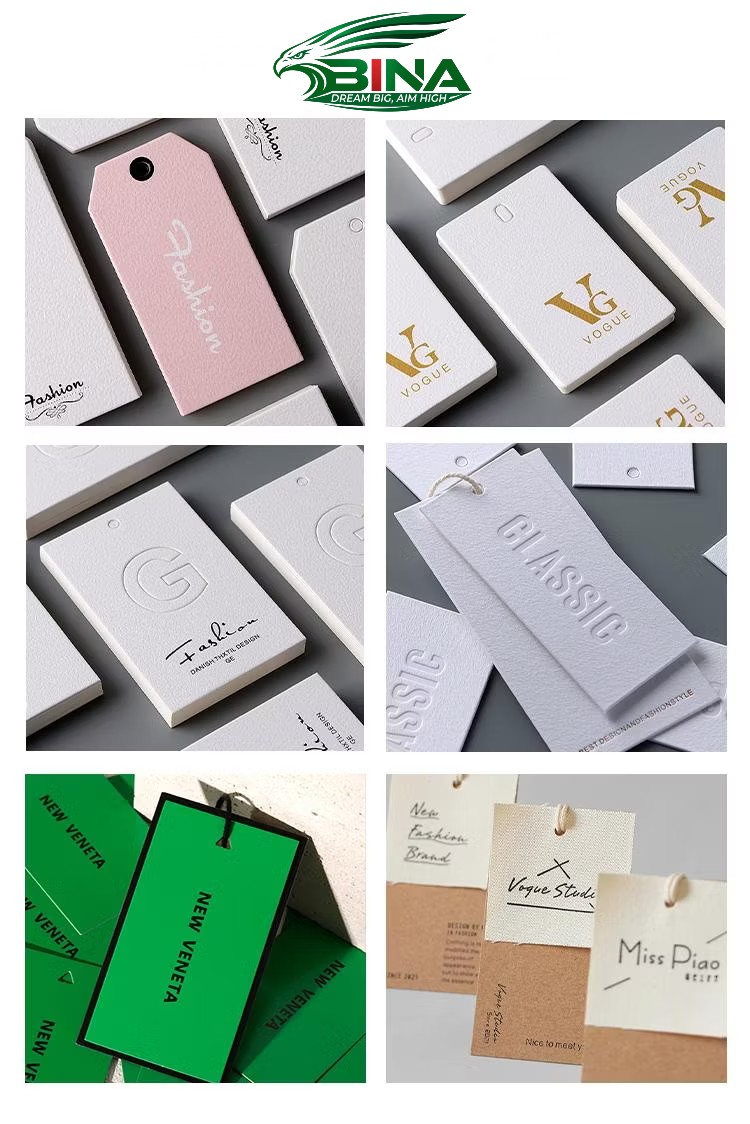
- Hot stamping: Adds a metallic sheen, suitable for displaying logos, creating a luxurious appearance.
- Spot UV coating: Creates a glossy finish on specific patterns or logos, creating a difference in texture.
- Embossing/Debossing: Creates a three-dimensional feel, subtle yet luxurious.
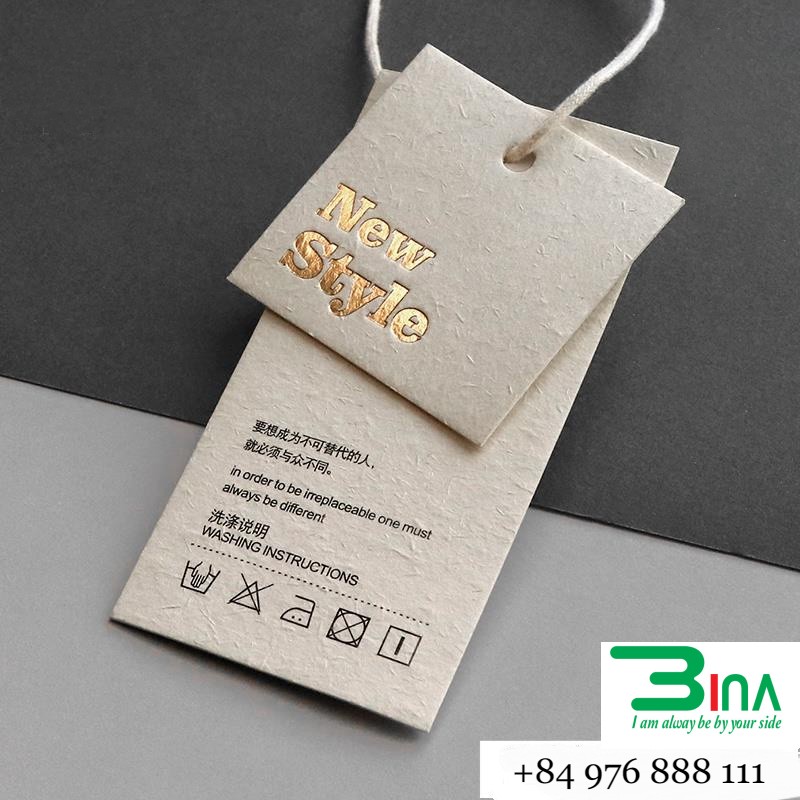
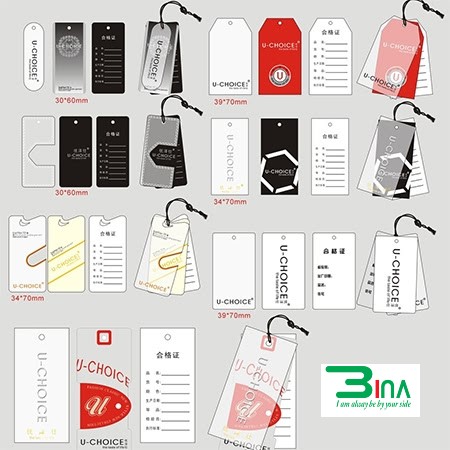
- Die-cutting: Irregularly shaped hang tags add a design element.
- Rounded corners: The edges of the hang tag are smoothed, reducing the risk of scratches and highlighting the design.
4. Color and print content design
- Content: Must include the brand logo, country of origin, product name, material composition, washing instructions, etc.
- Color: Ensure consistent brand colors. Font size must be easy to read; core information should be larger than 5 points.
- White space: Avoid too many details; appropriate white space gives the design an airy feel.
 |
5. Production costs and process
- Quantity and unit price: Small quantities can opt for digital printing (flexible and fast); large quantities are suitable for combined printing or standalone printing (more accurate colors, lower average cost).
- Proofing: This step is very important. Before mass production, be sure to check the proof for color, paper, and structure to ensure the final product meets expectations.
- Bleed handling: The design must have clearly defined bleed areas (usually 3mm on each edge) to avoid white edges after cutting.
- Summary: When choosing hang tag printing, first decide on the style (material) -> determine the thickness (texture) -> add finishing touches (processes) -> confirm with a sample. Choose the combination of processes that best suits the brand and product type (e.g.: retro-style stationery versus high-end fashion clothing).
 |
How do I attach hang tags?
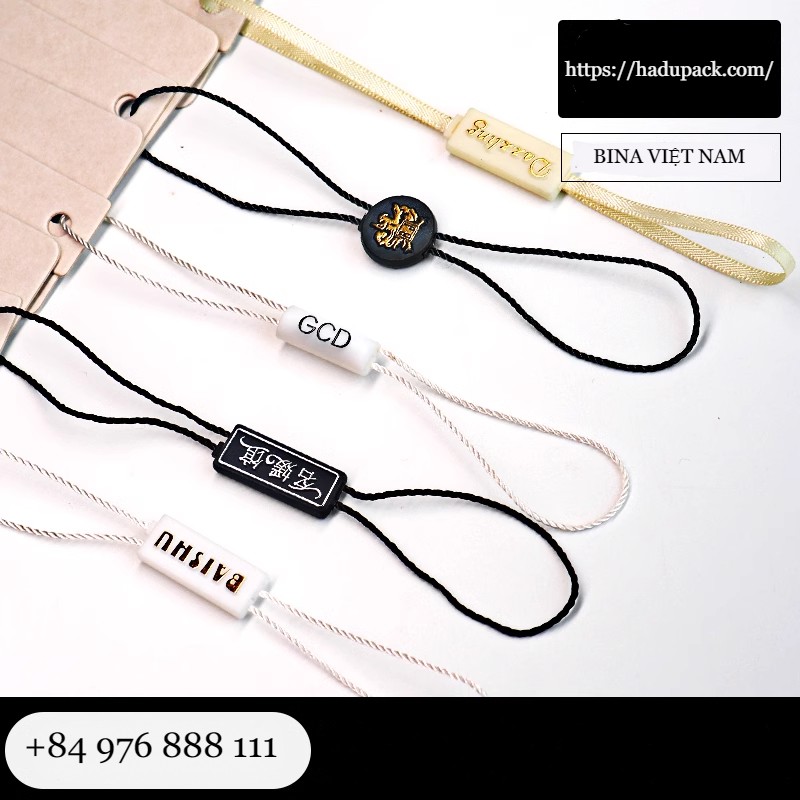
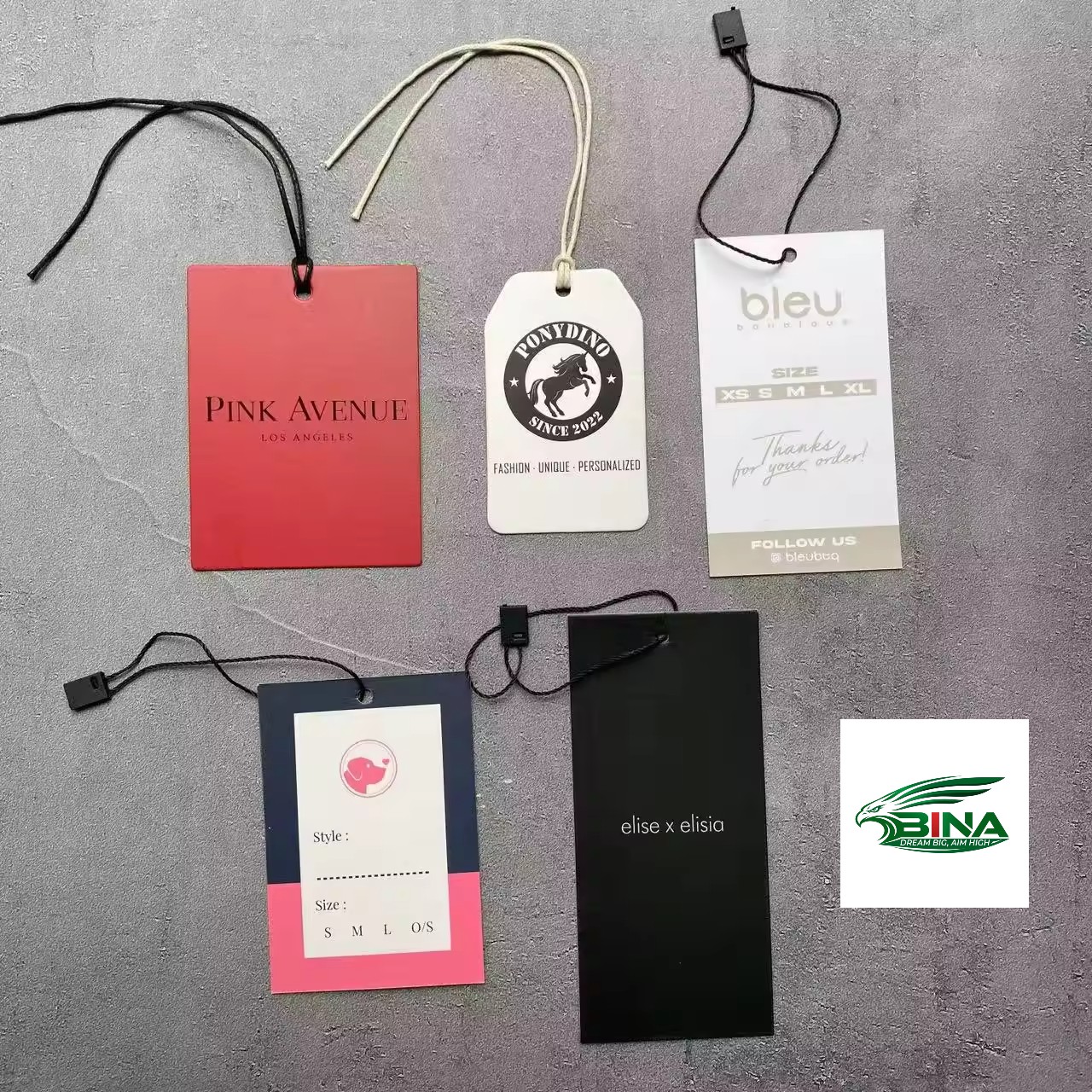
After customizing them with your design, you’ll want to show off your exquisite hang tags to the world on your products! First, get some eco-friendly ribbon or biodegradable jute twine. Prepare your hang tag and locate the string hole. Simply thread your string through the hole and tie it to attach the hang tag to your product. Hang tags for clothing can be tied directly to a strap or button or secured to garments and textiles with safety pins. And that’s it a cute little hang tag can create a beautiful branding accent right on your product!
How to use hang labels (retail labels/price tags):
- Tag gun method: Insert the plastic fastener into the gun, push the needle through the label hole and squeeze the trigger when the needle is in the seam or manufacturer’s label to avoid tearing the label.
- Clip/string method: Use a safety loop, safety pin or string to attach the label to the care label, buttonhole or zipper.
- Best practice: Place the label in locations that are easily visible to customers, such as the underarm seam or back neck area
 |
 |
What other packaging products can be paired with hang tags?
There is no maximum limit when it comes to going the extra mile to create a delightful customer experience! To complement your custom hang tags, consider the following packaging products while avoiding unnecessary waste:
- Custom tissue paper featuring a repeating pattern of your logo will reinforce your brand presence throughout the unboxing experience.
- Biodegradable garment bags will allow customers to preview what’s inside while protecting your products from the elements.
- Biodegradable Kraft shopping bags and personalized shipping boxes will get your products from point A to point B in sustainable style.
- Custom stickers featuring your logo or QR code can decorate the outside of your retail boxes and takeaway bags to create a surprise inside.
- Reusable fabric bags are compatible with your hang tags to create an eco-friendly package containing clothing, cosmetics, coffee bags, and more.
- Reusable drawstring bags containing Kraft hang tags will create an exceptionally luxurious jewelry and accessories box.
 |
 |
Conclusion on clothing tag printing, card printing, and hang tag printing
Based on market research and the application of hang tag printing technology, here are some summarized conclusions about hang tag printing:
Enhancing brand image and reflecting value
Hang tags are not only tools for product identification (origin, manufacturer, purpose, price), but also important means of enhancing brand image and building a brand story. Sophisticated designs can significantly improve the perceived quality of products and are crucial for building a high-quality brand image.
A wide range of materials to meet different needs
- Coated paper: Smooth surface, vibrant colors, suitable for high-performance products, cost-effective.
- Kraft paper: Natural texture, environmentally friendly, suitable for industrial or natural styles.
- Thick cardstock/Specialty paper: Highly durable, suitable for brands requiring textured details (such as pearlized paper, black cardstock).
 |
A variety of post-processing techniques enhance visual effects
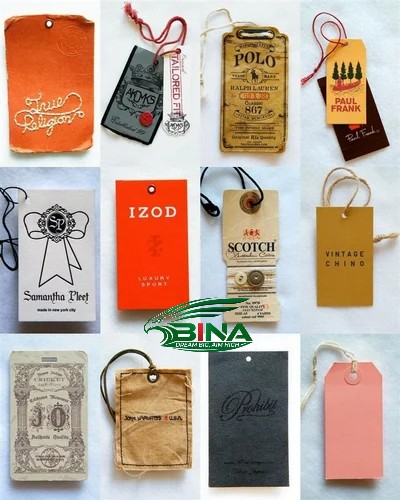
Hang tag printing is not simply about printing; It also includes various post-printing processing techniques, such as hot stamping, spot varnishing, embossing, special die-cutting (specially shaped hang tags), and rounded corners, to enhance the uniqueness and tactile feel of the hang tags.
Optimizing costs and quantities (Gang printing vs. individual printing)
For limited budgets or small quantities, gang printing is a cost-effective and easy-to-implement option. However, for extremely high color accuracy or special designs, individual printing is recommended.
 |
 |
Advanced printing technology and detailed quality control
Professional digital and offset printing technology ensures color accuracy, durability, and clarity of hang tags. Checking a proof before production is an essential step to ensure the finished product meets design expectations.
A high-quality hang tag requires a sophisticated design, suitable materials, clear information, and unique craftsmanship to maximize effectiveness in conveying the brand message and increasing sales.