


Description
What is PET shrink film?
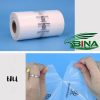
PET shrink film is an environmentally friendly thermoplastic film primarily made from polyethylene terephthalate (PET). It shrinks significantly when heated (typically to 90-120°C), fitting tightly around the packaging surface. It offers high transparency, high gloss, is non-toxic and easy to recycle, making it a green and environmentally friendly alternative to traditional PVC shrink film.
 |
◆Learn more:
- https://hadupack.com/san-pham/mang-co-pof/
- https://hadupack.com/san-pham/mang-co-nhiet-pe/
- https://hadupack.com/san-pham/mang-mpet/
PET shrink film production process
The PET heat-shrink film production process mainly includes raw material drying, melt extrusion, casting, biaxial stretching (longitudinal/transverse), shaping, and winding. The key lies in reducing crystallinity through copolymer modification (such as PETG) and performing transverse stretching above the glass transition temperature (Tg) to achieve high shrinkage at specific temperatures, making it suitable for complex bottle labels, etc.
 |
I. PET Heat-Shrink Film Production Process
- Raw Material Drying: Due to the moisture-absorbing properties of PET, it must be dried at a temperature of 65-75℃ to prevent hydrolysis during extrusion, which would reduce its molecular weight.
- Formulation and Melt Extrusion: Dried PET flakes, modifiers (such as CHDM), lubricants, plasticizers, etc., are mixed and melted in an extruder. Modification is crucial; By incorporating isophthalic acid (IPA) or 1,4 cyclohexanedimethanol (CHDM), the crystalline structure of PET is disrupted, allowing it to achieve high shrinkage.
- Casting and Cooling: The molten material is extruded through a die and cooled into a thick sheet using a casting machine.
- Machine Direction Orientation (MDO): Longitudinal stretching is performed using stretching rollers operating at different speeds to initially align the molecular chains.
- Transverse Direction Orientation (TDO): A critical step, typically involving heating in an oven and using a tenter frame to stretch the film at a high ratio in the transverse direction, aligning the molecular chains and generating shrinkage stress.
- Heat Setting and Winding: Heat setting is performed at a specific temperature to fix the film’s internal stress, followed by cooling and winding into the finished product.
II. Key Technical Points
- Material Selection: High-performance PET heat-shrink film typically uses PETG (amorphous copolyester), a material with excellent transparency and shrinkage properties.
- Process Adjustment: Adding modifiers can adjust the glass transition temperature and initial shrinkage temperature of the film.
- Stretching Ratio and Temperature: The transverse stretching temperature is generally in the range of 70 degrees C – 120 degrees C. A higher ratio generally results in a greater shrinkage ratio, making it suitable for different types of packaging.
 |
Main Features of PET Heat Shrink Film
- Environmentally friendly and recyclable: PET heat shrink film meets international environmental standards and can be easily recycled together with other PET packaging materials.
- High shrinkage rate: Through special processing, its horizontal or vertical heat shrinkage rate can reach over 70%, allowing it to fit bottles with irregular shapes.
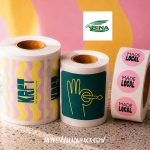
- Attractive appearance: High transparency and good gloss enhance product visibility, and its excellent printability supports high-quality 360° full-color label printing.
- Excellent performance: High mechanical strength, moisture resistance, and dust resistance provide excellent protection for packaged products.
 |
Main applications of PET shrink film
PET shrink film is widely used in various packaging applications for bottles, cans, and containers:
- Beverage and food labeling: Particularly used for labels on unusually shaped and curved beverage bottles (shrink sleeves).
- Pharmaceutical and consumer chemical packaging: Used as sealing film, providing leak and contamination protection.
- Essential consumer goods and electronic products: Sealed packaging for metal products and electronic components.
 |
Why should PET shrink film replace PVC?
PET shrink film is gradually replacing PVC shrink film, mainly due to its excellent environmental friendliness (recyclable, non-toxic, and odorless), making it suitable for the global trend toward green packaging. Compared with PVC, which produces toxic gases when burned and is difficult to recycle, PET maintains excellent mechanical properties, a high shrinkage rate, and a good label appearance, making it more suitable for the requirements of the modern circular economy.
 |
 |
Environmental advantages (Core reasons):
- Recyclability: PET (polyester) is recognized as a recyclable material and can be recycled together with PET bottles.
- Non-toxic and safe: PET is non-toxic and odorless, meeting strict hygiene standards for food and pharmaceutical packaging.
- Harmless when incinerated: Compared with PVC, which releases toxic substances (chlorine) when burned, burning PET primarily produces water and carbon dioxide, without causing environmental pollution.
 |
Physical properties and applications:
- High shrinkage rate and tight fit: PET has a high shrinkage rate while maintaining good transparency and impact resistance, making it suitable for irregularly shaped packaging, especially beverage bottle labels.
- Wide range of applications: PET has a stable structure at room temperature, making it suitable for long-term storage.
- Superior heat resistance: PET film has better heat resistance than PVC and is less prone to deformation at high temperatures.
- Market regulatory drivers: Many regions are tightening regulations on the use of PVC, requiring or encouraging the use of environmentally friendly materials.
In summary, PET heat-shrink film not only addresses environmental issues but also meets high-end requirements for packaging efficiency and material performance.
 |
PET Heat Shrink Film Selection Guide
PET heat shrink film, with its high transparency, excellent abrasion resistance, water and moisture resistance, and high shrinkage rate (particularly suitable for complex bottle shapes), has become a mainstream packaging material in the food, beverage, and daily chemical industries. When selecting it, priority should be given to the product shape, shrinkage rate requirements, environmental requirements (PET is recyclable and better than PVC), and whether high-resolution printing is needed. Key factors in the PET heat shrink film selection guide:
 |
Product Features and Applications
- Irregularly Shaped Bottles/Food and Beverage Labels: PET film (especially modified PETG film) is suitable for complex bottle shapes, such as wine bottles and juice bottles, due to its high shrinkage rate.
- Premium Packaging: Excellent transparency and gloss enhance the product’s texture.
- Environmental Requirements: Compared with PVC, PET shrink film is more environmentally friendly and meets food safety requirements.
 |
 |
Physical Performance Parameters
- Shrinkage ratio: Choose a film that can conform closely to the shape of the product; the high shrinkage ratio of conventional PET generally meets the requirements for irregular shapes.
- Transparency: Aim for maximum transparency to showcase the contents of the product.
- Heat-sealing/tear resistance: Ensure a low tear rate during the packaging process.
- Printability: PET film is suitable for high-quality gravure printing or new modular flexographic printing, making it ideal for printing labels with sharp colors.
- Operating temperature: PET shrink film typically shrinks within a high-temperature range and needs to be adjusted based on the packaging machine settings (usually around 180-220 degrees C; low-temperature film must be distinguished from conventional film).