



Description
What is laminated film packaging?
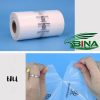
Multilayer laminated film packaging is a material created by bonding two or more different substrate layers (such as plastic, aluminum foil, paper, etc.) together using adhesives, heat pressing, or co-extrusion techniques. This type of packaging combines the advantages of each layer, overcomes the disadvantages of single-layer films, and typically offers high gas barrier properties, heat resistance, and excellent print quality.
 |
◆Learn more:
- https://hadupack.com/san-pham/bao-bi-banh-keo/
- https://hadupack.com/san-pham/bao-bi-cafe/
- https://hadupack.com/san-pham/bao-bi-gia-vi/
The following is a detailed analysis of multilayer film packaging:
1. Structure
Multilayer films are typically composed of different functional layers, from the outermost to the innermost:
- Outer layer (Printing layer/Protective layer): Requires good printability, heat resistance, transparency, or scratch resistance (e.g., PET, OPP).
- Middle layer (Barrier layer): Primarily used to block oxygen, moisture, and light, extending the product’s shelf life (e.g., aluminum foil, VMPET, EVOH).
- Inner layer (Heat-sealing layer): In direct contact with food, this layer must meet food safety and hygiene standards and have excellent heat-sealing properties (e.g., PE, CPP).
2. Main types of composite films
- Plastic-plastic composites: Examples include PET/PE and OPP/CPP, commonly used for snack food and frozen food packaging.
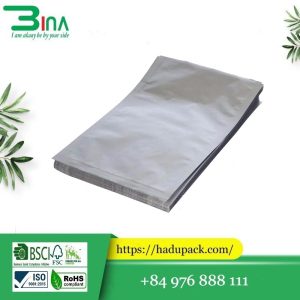
- Aluminum-plastic composites: Examples include PET/AL/PE, widely used in food, pharmaceutical, and face mask packaging thanks to their excellent light and gas barrier properties.
- Paper-plastic composites: Improve the rigidity and texture of packaging.
 |
3. Main Functions
- High gas barrier performance: Aluminum composite film or special films can effectively isolate moisture, oxygen, and light, preventing food spoilage.
- Protection: Improves the tensile strength and abrasion resistance of packaging bags, preventing damage during transportation.
- Convenience: Offers good heat-sealing properties, ensuring airtightness and facilitating the production of various types of bags (e.g., stand-up pouches, vacuum bags).
- Aesthetic printing: The composite layer protects the printed layer, keeping printed images vibrant and long-lasting.
4. Common Application Scenarios
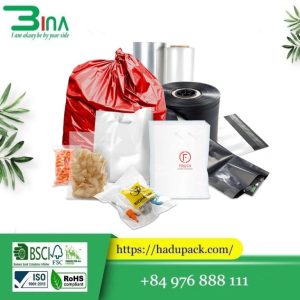
- Food packaging: Biscuits, snacks, frozen foods, vacuum bags, sauce packets.
- Daily necessities packaging: Face mask pouches, wet wipes, shampoo refill pouches.
- Industrial/Pharmaceutical: Electronic component packaging, pharmaceutical blister packaging.
Simply put, composite films leverage the advantages of different materials by stacking multiple layers to provide comprehensive protection.
 |
Composite film packaging printing production process
The composite film packaging printing process involves laminating multiple layers of substrate materials (such as PET, BOPP, NY, aluminum foil, etc.) together and then printing to meet the requirements for barrier properties, durability, and packaging aesthetics.
The main processes are:
- Raw material preparation
- Printing (usually gravure printing)
- Film lamination (dry or solvent-free)
- Drying
- Slitting
Bag manufacturing, achieving high barrier properties, fine print quality, and high durability.
 |
Detailed explanation of the core production process
- Raw Materials & Film Blowing: Select suitable plastic resin pellets, and produce the base film (such as BOPP, BOPA, CPP, PET) using film blowing technology or a casting process, with corona treatment applied when necessary to improve surface tension.
- Printing: Gravure printing is commonly used, making it suitable for large-volume packaging with bright colors.
- Reverse Printing: To ensure food safety, printing is usually performed on the inner surface of the transparent film before laminating it with other layers. This prevents direct contact between the ink and food while effectively protecting the ink layer from scratches.
- Surface Printing: Printing is performed on the outer surface of the film, typically used for packaging that does not require high barrier properties or is designed to be low-cost.
- Lamination: Bond a printed film to one (or more) other films/metal foils using an adhesive to combine the advantages of both materials.
- Dry Lamination: The adhesive needs to be dried in an oven.
- Solvent-Free Lamination: An environmentally friendly trend that is solvent-free, energy-efficient, and free of volatile organic compounds.
- Co-extrusion: Melt and directly extrude two or more layers of film.
- Curing/Hardening: Place the laminated film rolls in a curing oven (curing chamber) at a specific temperature (usually 40-50°C) for 12-48 hours to allow the adhesive to react completely and achieve maximum lamination strength.
- Slitting and Rewinding: The processed wide composite film rolls are slit into sizes required by customers for subsequent bag making.
- Bag Making: The final step is to heat-seal the slit film on a bag-making machine to produce various types of bags, such as three-side-seal bags, back-seal bags, stand-up pouches, zipper bags, and other shapes.
Common Composite Structures and Characteristics:
- PET/PE or BOPP/PE: Common packaging materials, transparent, high strength, suitable for food packaging.
- PET/AL/PE: High barrier properties; the aluminum foil layer provides excellent light, oxidation, and moisture resistance (e.g.: mask packaging bags, food vacuum bags).
- NY/PE (Nylon/PE): High strength and good toughness, commonly used in vacuum bags and frozen food bags.
Advantages of the Process:
- Reverse Printing Technology: The ink layer is protected from friction damage, improving corrosion resistance.
- Additional Performance: The combination of the printed layer (aesthetics) and the heat-seal layer (easy sealing) provides more comprehensive functionality.
- High Gas Barrier Properties: The multilayer structure meets the long-term preservation requirements of food and cosmetics.
 |
Common Problems in Printing Laminated Film Packaging
Common problems in printing and manufacturing composite film packaging (such as food packaging bags and aluminum foil bags) include print registration errors, poor ink adhesion (ink peeling), composite film delamination (air bubbles), and insufficient heat-seal strength. These problems are mainly caused by insufficient film surface tension, unsuitable ink formulations, incomplete drying, or improper lamination pressure. The following is a detailed summary of common problems:
1. Common Problems During the Printing Process
- Print registration errors: Colors do not align during multicolor printing, exceeding the allowable tolerance (usually on the main image).
Uneven ink marks (scratches): Unevenness or impurities in the doctor blade cause marks on the printed surface. - Poor adhesion (ink peeling): Ink does not adhere firmly to the film (such as PET or nylon), causing ink to peel off the surface. This is often related to insufficient corona treatment durability of the film or the use of the wrong type of ink.
- Incomplete drying (residual solvent): Laminating before the ink has completely dried leads to odors or air bubbles after lamination. Common Problems Encountered When Printing Laminated Film Packaging
Common problems in printing and manufacturing composite film packaging (such as food packaging bags and aluminum foil bags) include: print registration errors, poor ink adhesion (ink peeling), composite film delamination (air bubbles), and insufficient heat-seal strength. These problems are mainly caused by insufficient film surface tension, unsuitable ink formulations, incomplete drying, or improper lamination pressure. The following is a detailed summary of common problems:
1. Common Problems During the Printing Process
- Print registration errors: Colors do not align during multicolor printing, exceeding the allowable tolerance (usually on the main image).
- Uneven ink marks (scratches): Unevenness or impurities in the doctor blade cause marks on the printed surface.
- Poor adhesion (ink peeling): Ink does not adhere firmly to the film (such as PET, nylon), causing ink to peel off the surface. This is often related to insufficient corona treatment durability of the film or the use of the wrong type of ink.
- Incomplete drying (residual solvent): Laminating before the ink has completely dried leads to odors or air bubbles after lamination.
 |
2. Common problems during the lamination/coating process
- Delamination, bubbling, wrinkling: The laminated layer separates from the printed layer, air bubbles appear inside, or the film surface becomes uneven. Common causes include unsuitable adhesive viscosity, insufficient curing time, uneven lamination pressure, or incorrect film tension.
- Lamination odor: Residual adhesive or reactions between the adhesive and ink produce odors.
- Uneven laminated film thickness: Affects subsequent packaging forming processes.
3. Common problems during post-production
- Insufficient heat-seal strength: Laminated bags cannot withstand the weight of the product or cannot be heat-sealed, usually due to an unsuitable choice of laminating film or incorrect heat-sealing parameters.
- Uneven tightness of slit rolls: Air trapped during slitting causes the film rolls to become loose, or inappropriate pressure from the pressure rollers causes film deformation.
Common causes and preventive measures
- Surface tension treatment: Check the film’s corona treatment level using a dyne pen. If it is below the standard (typically PET>50, OPP>38, PE>37), online corona treatment or primer coating is required.
- Drying and pressure: Adjust the printing machine’s drying efficiency to ensure the ink is completely dry; appropriately increase the pressure of the laminating machine’s rollers.
- Material compatibility: Nylon (NY) film is prone to reduced lamination strength after absorbing moisture; pay attention to the storage environment.
|
|

Classification of laminated film packaging
Laminated film packaging (composite packaging) is a packaging structure created by combining multiple film materials to take advantage of the benefits of each type. The main classification methods include:
1. Classification by the number of composite layers:
- Two-layer composite film: Common examples include PET/PE, paper/aluminum foil and NY/PVDC.
- Three-layer composite film: Examples include BOPP/PE/OPP and PET/PVDC/PE, which enhance printability and gas barrier properties.
- Multilayer composite film: Often used in professional packaging, incorporating additional functional layers such as composite barrier layers and heat-sealing layers.
 |
2. Classification by constituent materials:
- Aluminum foil composite film: Has the highest gas barrier properties, high rigidity, and good stability; commonly used in food and pharmaceutical packaging.
- PE heat-sealable composite film: Has high heat-sealing strength and is commonly used as the inner sealing layer.
- PET+PE composite film: Has excellent transparency, strength, and gloss.
- Nylon composite film (PA/PE): High strength and puncture resistance.
3. Classification by lamination process
- Dry lamination: Uses adhesives, provides high adhesion, and is widely used.
- Extrusion lamination (Film lamination): Directly extrudes molten plastic onto a substrate.
- Co-extrusion lamination: Combines multiple materials during blown film or cast film production, is environmentally friendly, and is suitable for food packaging.
4. Functional layers of laminated film
Laminated films typically consist of multiple functional layers:
- Printing layer: Highly aesthetic (e.g.: OPP, PET).
- Barrier layer: Blocks oxygen, moisture, and light (e.g.: aluminum foil, VMCPP).
- Heat-sealing layer: Enables airtight sealing (e.g.: PE, CPP).
Common applications include high-barrier food packaging, mask packaging, and frozen food packaging.
 |
Main selection criteria for laminated packaging film
- Gas barrier properties: If the product is prone to oxidation (e.g., coffee, dried fruit), choose materials containing aluminum foil or PA with high gas barrier properties.
- Seal strength: Liquids or heavier products require inner-layer materials with higher heat-seal strength.
- Corrosion resistance: For products containing oil, acids, or alcohol, choose a corrosion-resistant inner film.
- Printability: For high-resolution printing, PET is a good choice for the outer la
 |
Considerations when using laminated film packaging
When using composite film packaging, it is important to ensure gas barrier properties, airtightness, material compatibility, and hygienic safety. The composite structure (such as aluminum foil, nylon, PP) should be selected based on the characteristics of the product, and the heat-sealing temperature and time must be strictly controlled to prevent delamination and wrinkling. It is also essential to confirm that the packaging materials comply with food safety regulations. The following are the key considerations for composite film packaging:
 |
1. Material selection and structure (Based on product characteristics)
- Light resistance and gas barrier: For products requiring long-term storage, moisture resistance, and oxidation resistance (such as coffee and masks), a composite structure with aluminum foil should be selected.
- Vacuum resistance and puncture resistance: For vacuum or frozen packaging, use composite bags made from nylon (PA) and low-density polyethylene (LDPE), which can effectively maintain a vacuum and offer flexibility.
- High-temperature sterilization: If food requires high-temperature sterilization, ensure the use of RCPP or high-temperature-resistant PP film.
2. Production process and bag making (Ensuring the quality of the finished product)
- Heat-sealing parameters: Excessively high heat-sealing temperatures or durations may cause wrinkling and material shrinkage at the sealed edges.
- Cooling and shaping: Sufficient cooling time after heating is necessary to prevent deformation or insufficient strength at the seals.
- Preventing delamination: Ensure that all layers of the composite film (e.g., PET/PE, AL/PE) are firmly bonded to prevent adhesive failure and subsequent damage to the contents.
 |
 |
3. Hygiene and safety labeling
- Material compatibility: Ensure that the type of plastic film used is suitable for direct contact with food and meets the relevant food safety standards.
- Vietnamese labeling: The product must be labeled with clear information on the material, heat resistance temperature, and manufacturer, and attention must be paid to food hygiene and safety regulations related to ingredients and additives.
4. Storage and usage environment
- Protection from moisture and light: Composite film materials must be stored in a dry, cool, well-ventilated, and uncontaminated environment.
- Low-temperature resistance: Frozen products must be made from materials that can maintain flexibility without becoming brittle at -20 degrees C.