


Description
Can silica gel desiccant prevent mold?
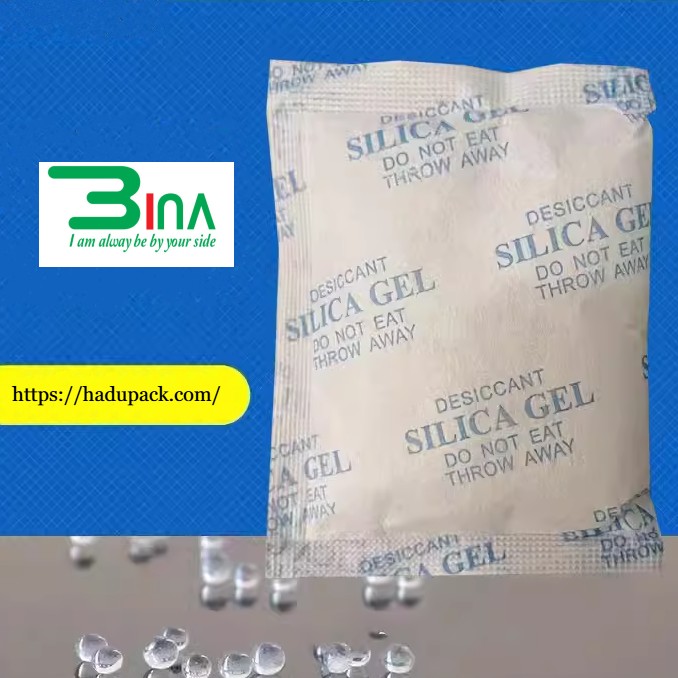
Whether desiccants or silica gel desiccant can prevent mold is a concern for many customers. The customers who use desiccants are very diverse, ranging from small items such as medicines and snacks to large objects such as furniture and household appliances, covering many different fields. However, the amount of desiccant used is also very large. Desiccants are used in many types of food packaging and industrial products, so there are many different desiccant manufacturers. So, in what forms do desiccants commonly appear? How does silica gel desiccant usually work?
 |
☞See more:
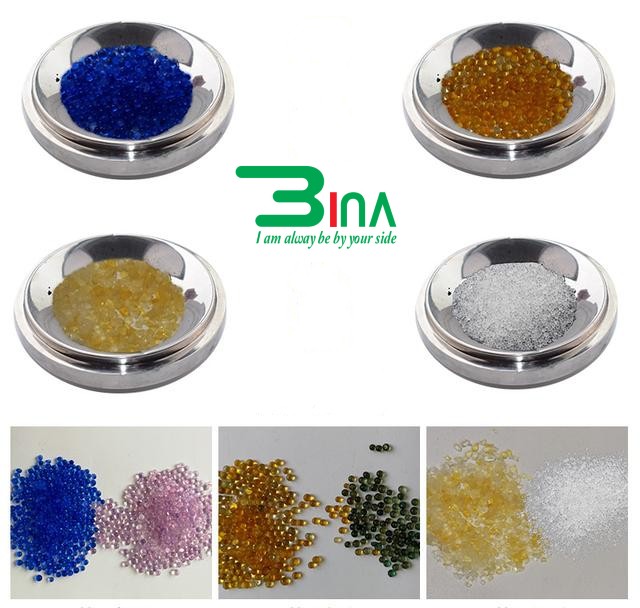
Types of desiccants, silica gel desiccant beads on the market and how they work
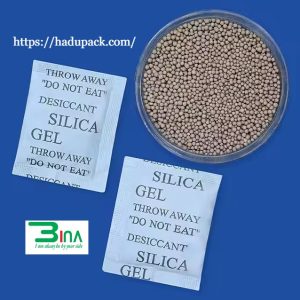
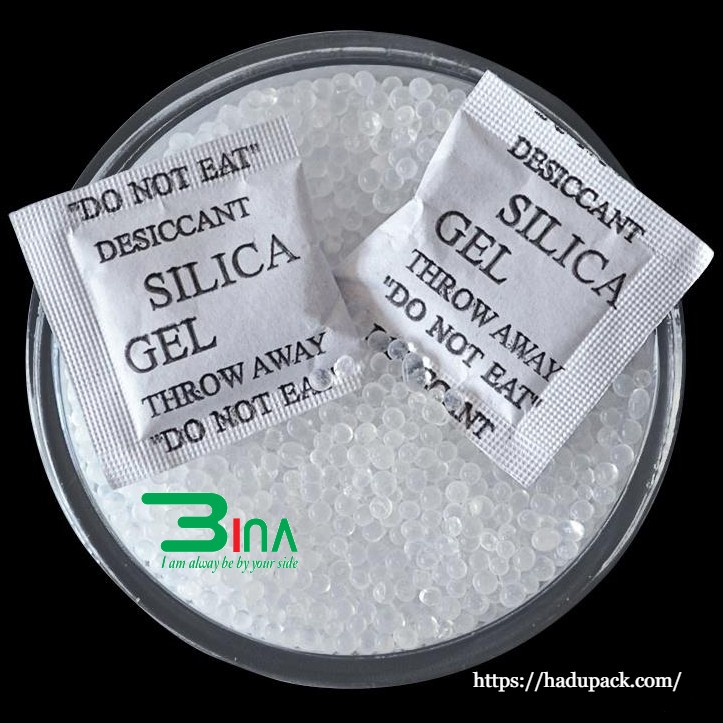
In addition, there are many other types of desiccants on the market. The most common desiccants are: silica gel desiccant, calcium chloride desiccant, mineral stone desiccant, activated charcoal desiccant and clay compound desiccant. The working principle of these desiccants is generally based on their ability to absorb moisture. Silica gel desiccant consists of oval-shaped beads containing many tiny pores. These porous beads are used to absorb water. Other desiccants also mainly work by absorbing moisture. The most effective is calcium chloride desiccant, calcium chloride (quicklime). Everyone is well aware of the water-absorbing ability of lime. Activated charcoal is a stronger desiccant than silica gel. It can not only absorb water but also absorb certain types of gases. It can eliminate odors, absorb unpleasant smells and absorb water.
 |
Desiccant production process
The desiccant production process varies depending on the raw materials, mainly including silica gel (made from sodium silicate through hydrogelation, washing and drying), molecular sieves (produced through hydrothermal synthesis, shaping and activation) and calcium chloride (using acid-base reactions or physical drying). The core steps include gel formation, shaping (spherical shaping), drying and activation, and packaging. The key is to control pore size and moisture absorption rate.
Comprehensive analysis of common desiccant production processes:
1. Silica Gel Desiccant Production Process
Silica gel desiccant is the most widely used type, usually in the form of spherical granules.
- Raw material pretreatment: Sodium silicate (water glass) is saturated with water to prepare a silicate solution.
- Gelation and condensation: An acid such as sulfuric acid is added to the solution to control the pH value, and condensation forms silica hydrogel.
- Aging and washing: After the gel forms, it is aged in a water bath (to increase strength), then washed to remove impurities (Na+ ions, etc.) and control pore size.
- Drying and screening: The washed gel is dried, dehydrated and screened within a specified temperature range to form transparent spherical silica gel granules.
2. Molecular Sieve Desiccant Production Process
Molecular sieves have extremely high moisture absorption capacity due to their unique pore structure.
- Composition: A mixture of sodium aluminate, sodium silicate and related additives.
- Hydrothermal synthesis: Hydrothermal synthesis is carried out in a high-pressure reactor to crystallize and produce molecular sieve powder.
- Shaping: The powder is mixed with a binder (such as kaolin) and shaped into spheres or columns through extrusion, ball rolling or other processes.
- Calcination and Activation: Calcination is carried out in a kiln at high temperatures (typically reaching several hundred degrees Celsius) to remove physically bound water, giving it strong adsorption capacity.
3. Calcium Chloride Desiccant Production Process
Calcium chloride generally has an extremely high moisture absorption capacity, making it particularly suitable for sea transportation.
- Neutralization reaction (acid method): Limestone is reacted with hydrochloric acid to produce a calcium chloride solution.
- Physical mixing (powder/granules): Calcium chloride is adsorbed onto the surface of bentonite, silica gel or starch to form a composite desiccant, enhancing its gel-like properties so that it does not flow after absorbing water.
- Shaping and sealing: The dry powder is packaged into breathable composite bags.
4. Mineral Desiccant (Montmorillonite) Production Process
- Hydrolysis and impurity separation: Calcium-based montmorillonite raw material is stirred in a cylindrical separation device, suspended and stratified to separate light impurities.
- Purification and drying: The purified montmorillonite is dried, crushed and ground.
- Granulation: It is formed into spherical shapes to improve moisture absorption efficiency.
- Summary: The performance of a desiccant depends on the pore structure, pore size and surface chemical properties of the material. Modern desiccant production uses automated control systems to ensure stable chemical composition and physicochemical properties (such as porosity and water absorption capacity), and uses methods such as SPC to validate the process.
Shortcomings of desiccants on the market
Desiccants on the market have many major drawbacks. For example, silica gel desiccants have a weak moisture absorption effect, and silica gel itself is non-biodegradable, which has a certain impact on the environment. Although calcium chloride desiccants have a strong moisture absorption effect, they generate heat and can easily cause burns to people. They also absorb moisture and may cause reverse osmosis, which can have the opposite effect.
Activated carbon has moisture absorption and deodorizing effects, but as a single substance, it also has certain limitations, and its moisture absorption effect is not really good. In summary, the limitations of desiccants on the market are that their moisture absorption effect is not very good, their effectiveness is relatively limited, and their environmental protection performance is poor. Calcium chloride has certain side effects, and the packaging materials also have certain disadvantages. The packaging materials of some desiccants are prone to wear and damage, and the desiccant may leak and contaminate products.
Where can I find desiccants with mold-resistant properties?
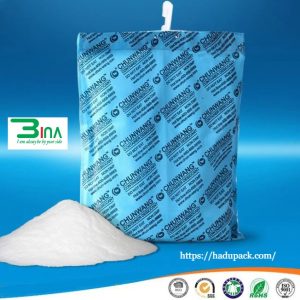
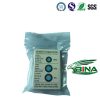
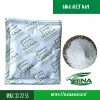
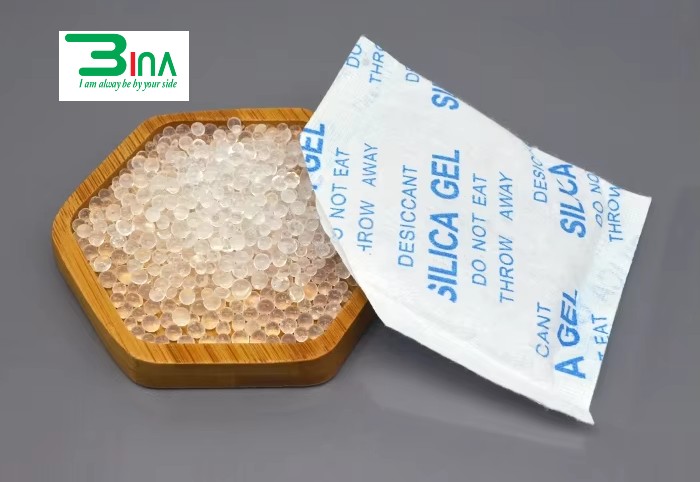
The desiccant with the best mold-resistant effect is the mold-resistant desiccant from BiNa Vietnam Joint Stock Company. The raw material of iHeir mold-resistant dry bags is extracted from natural minerals and is a type of aluminosilicate with stable chemical properties. At a temperature of 25°C and a relative humidity of 80%, its water vapor adsorption capacity can exceed 200% and its moisture absorption capacity can reach more than 250 grams, 10-20 times the water absorption rate of ordinary silica gel. It is not chemically formed, so it has more advantages than silica gel in terms of cost and environmental protection. The heavy metal content is lower than the limits prescribed by the EU and the United States. The product contains no acid and does not pollute soil, water, air, or other environments when disposed of after use.
 |
Characteristics of silica gel desiccant
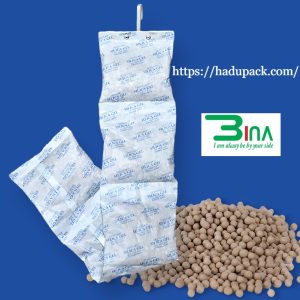
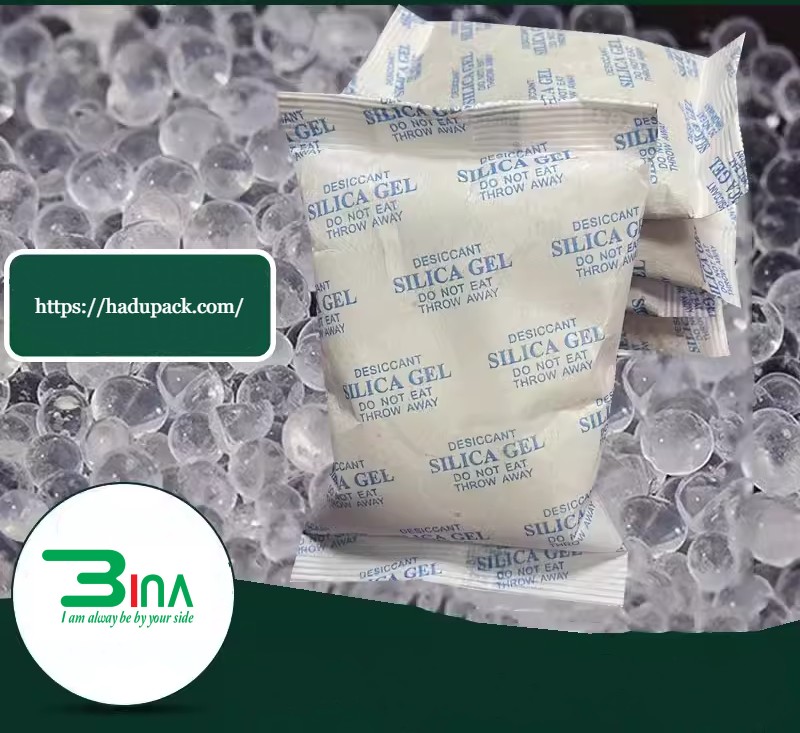
The product uses natural plant fibers as the moisture-absorbing carrier, which can naturally decompose and is an environmentally friendly desiccant. It has high adsorption performance at room temperature and normal humidity, with adsorption activity and a saturated moisture absorption capacity that can reach up to 3 times its own weight, 20 times that of ordinary silica gel desiccants. The effective humidity control period is 30-90 days. Static dehumidification and deodorization.
The packaging material is made of cotton paper with strong moisture absorption, good toughness, puncture resistance, corrosion resistance, no reverse seepage and anti-static properties. Compared with other desiccants currently available on the market, it not only has a fast adsorption rate and high adsorption capacity but also has a high adsorption capacity for water vapor and other condensable vapors. It is non-toxic, colorless, odorless, non-corrosive upon contact and does not cause environmental pollution. It can be used for food packaging and is harmless to the human body. The product is additionally supplemented with unique antibacterial elements, effectively combining “moisture-proof, mold-proof and antibacterial” properties, making it unique in this field.
 |
Summary of Desiccant Benefits
Customized with environmentally friendly American microcrystalline materials, it has an exceptionally strong moisture absorption capacity, 20 times that of ordinary silica gel desiccants. The packaging is not easily damaged and does not contaminate products. Unlike silica gel desiccants, which are uneven and may cause dents and contamination to products, this desiccant can be customized according to customers’ specifications for the desiccant, as well as customized branding and fragrance. When exposed to moisture, it actively releases anti-mold agents to kill fungi and bacteria, and will naturally decompose after being buried in soil for three months. Unlike silica gel desiccants, which cannot decompose when buried in soil, it can be used for growing flowers and grass and also has an odor-absorbing function. It is 5 times more effective than ordinary activated carbon and can effectively absorb adhesive odors, leather odors, and other odors.
Applications of Silica Gel Desiccant Granules
This product contains no additives, corrosive substances, or chlorides and is processed from pure natural minerals. Its pH is neutral and it does not corrode any metals. It can be widely used for moisture protection of high-end and low-end products such as textiles, footwear, clothing, electronics, household appliances, machinery, medicines, and food. In short, this is an improved and upgraded version of the desiccants currently on the market, with multiple functions.