



Description
PET Polyester Plastic Strapping
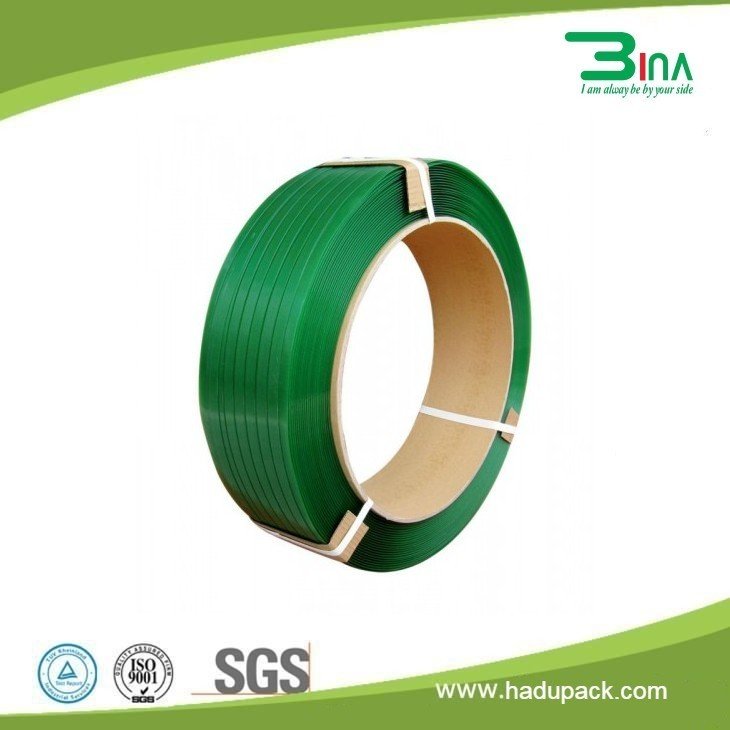
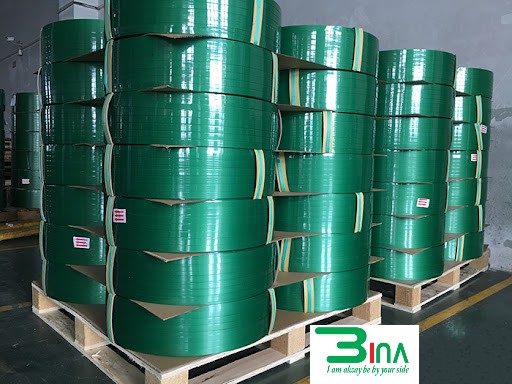
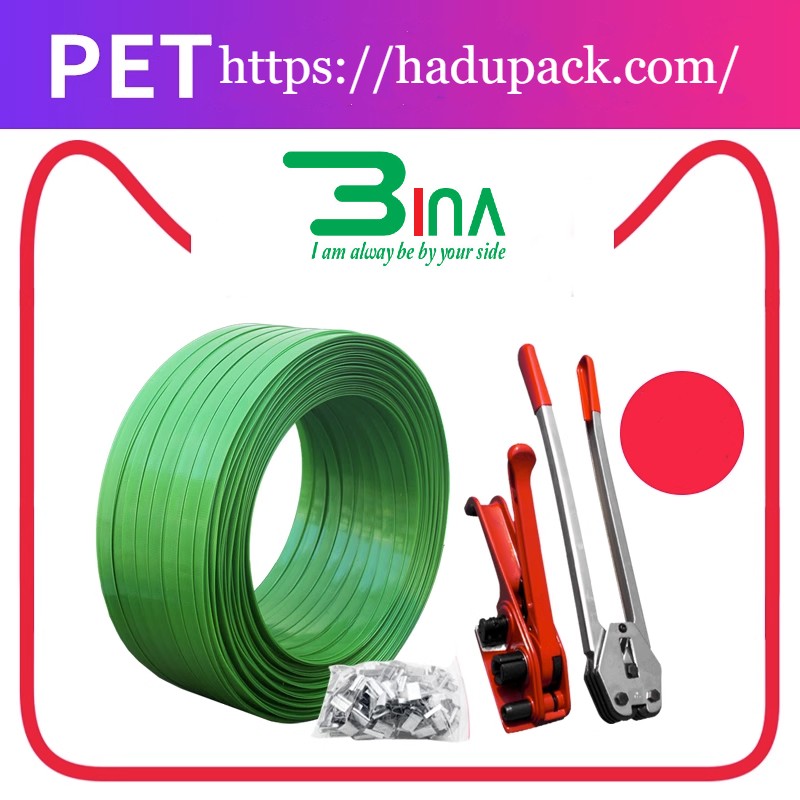
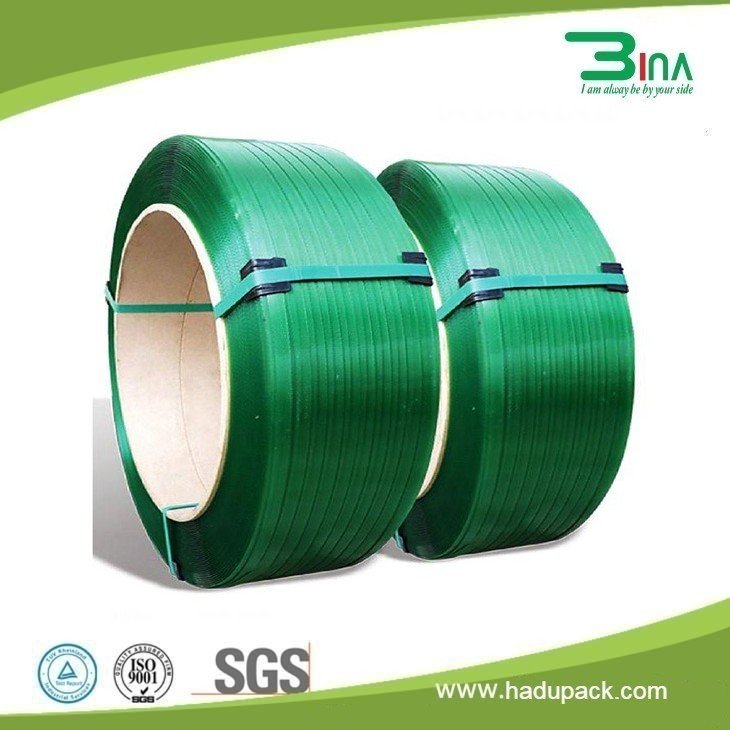
PET plastic strapping (also known as PET plastic steel strapping or polyester strapping) is a high-strength, environmentally friendly packaging material made from polyethylene terephthalate (PET) through extrusion and uniaxial stretching. It combines the tensile strength of steel strapping with the toughness of PP strapping and is commonly used for packaging heavy goods in the metal, wood, and paper industries. It is an ideal environmentally friendly alternative to steel strapping.
 |
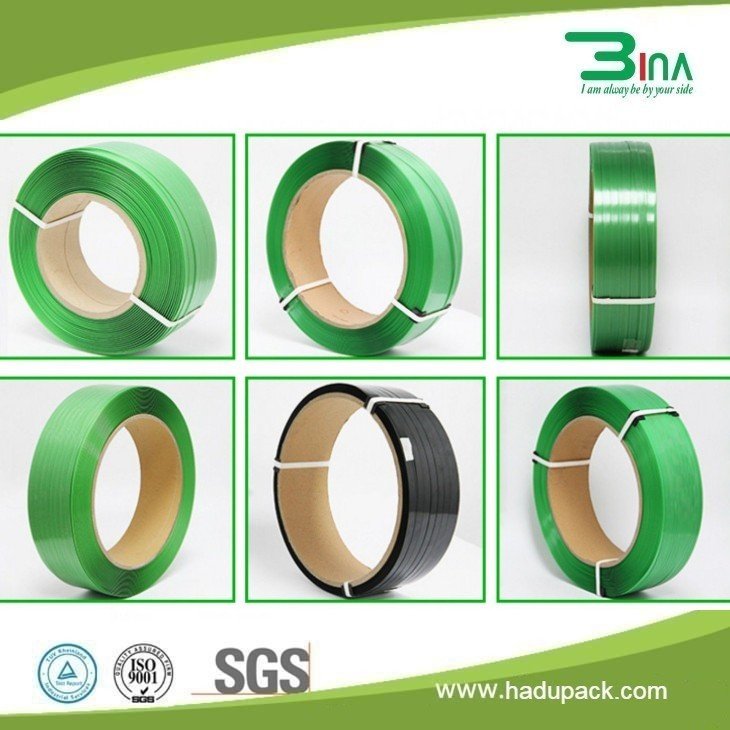
Hadupack is a world-leading company in the production and distribution of PET plastic strapping. Available in widths from 9 – 32mm. Our PET strapping is compatible with all types of friction-welding strapping tools and our strapping machines.
 |
 |
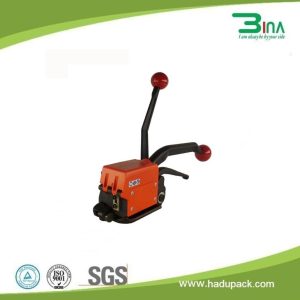
For PET manufacturing plants located in the North, we use modern extrusion methods to ensure that our strapping is produced to the highest possible standard. Our range of PET strapping products is complemented by manual and battery-powered strapping tools.
◆Learn more:
- https://hadupack.com/san-pham/day-dai-thep/
- https://hadupack.com/san-pham/day-dai-nhua-pp/
- https://hadupack.com/san-pham/day-dai-composite/
Our Polyester strapping is used across many industries, from bundling, food & beverage, wood, among many others. Our strapping is available in various sizes with high breaking strength.
 |
 |
High breaking load
For users strapping heavy loads, PET is often the most reasonable strapping material of choice. With a breaking load of up to 1030KG, it can be used for many heavy-duty applications such as building materials & steel/aluminum bundling.
 |
PET plastic strapping production process
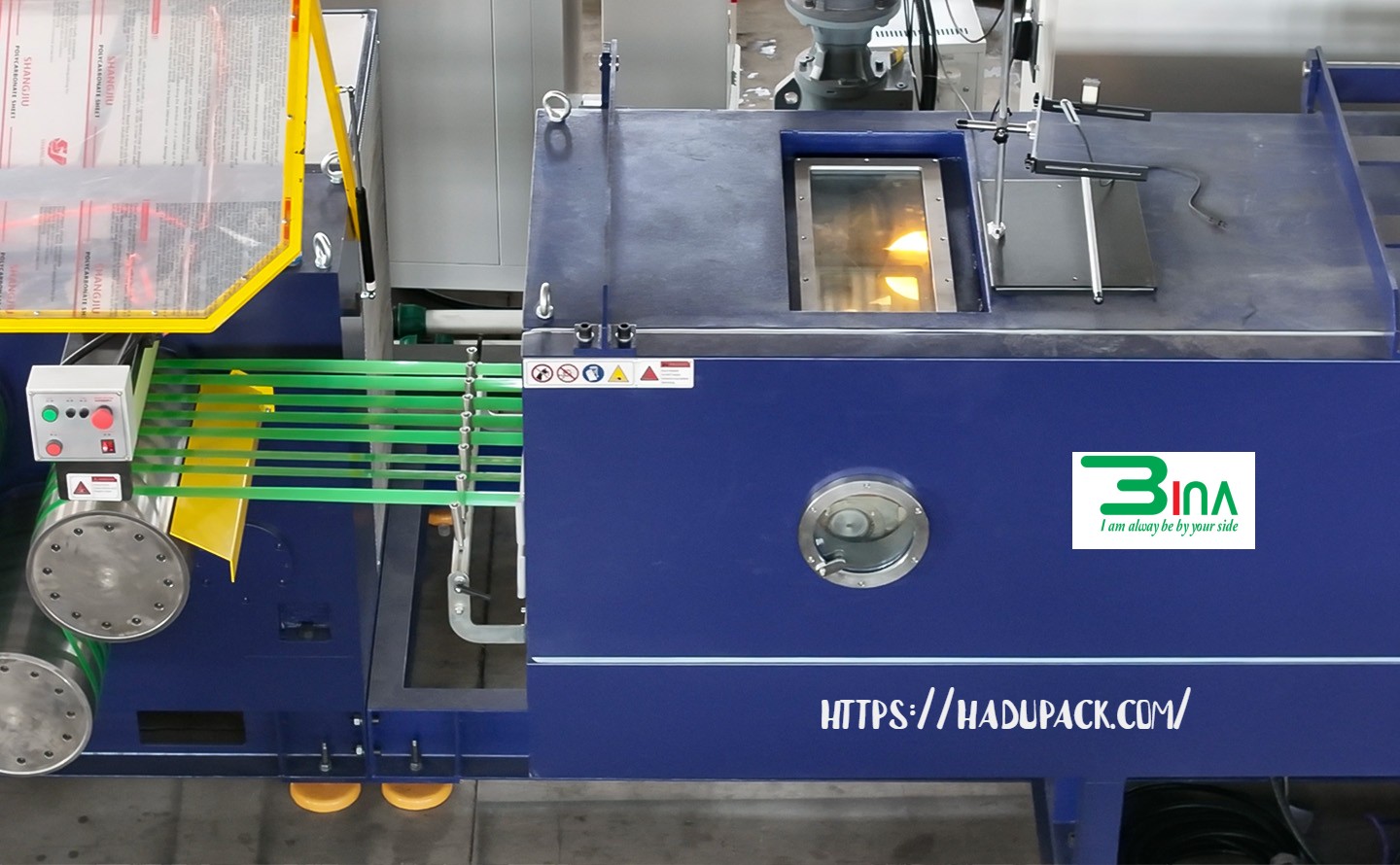
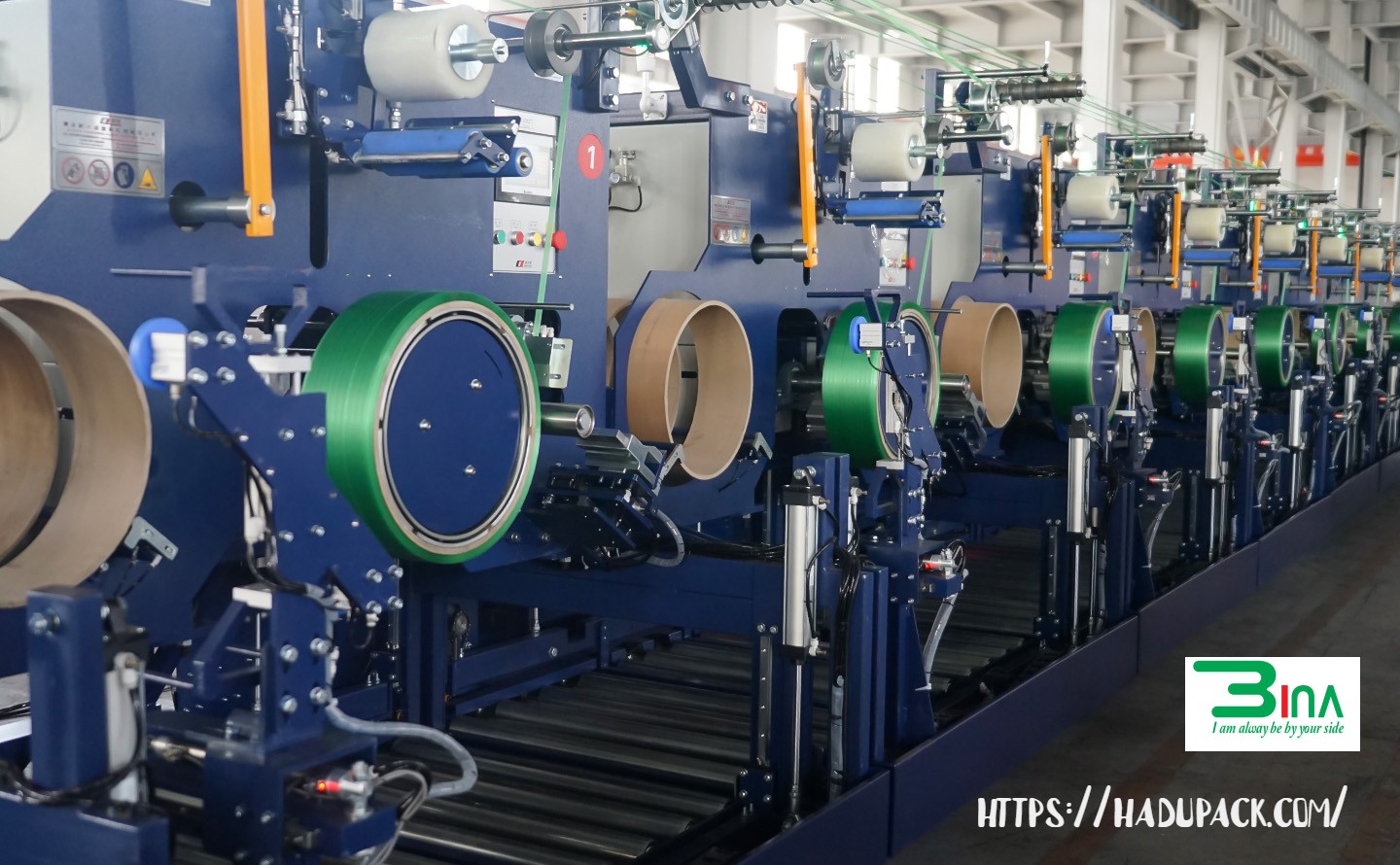
The core process for producing PET (polyethylene terephthalate) strapping is “extrusion – stretching – shaping”, mainly including: drying the raw material (dehumidifying to <40 PPM), hot-melt extrusion, cooling and shaping with cold water to form the strapping preform, multi-stage stretching in heating ovens (to increase strength), heat treatment shaping (to eliminate internal stress), and finally automatic winding and packaging. This process can produce high-strength, high-elongation (5%-25%) steel-like plastic strapping.
Raw material processing (Key step):
- Drying: PET is hygroscopic and easily degrades when heated directly. A dehumidifying dryer must be used to control the moisture content of the raw material (PET flakes or pellets) to <40 PPM to ensure that the finished strapping is not brittle and has a smooth surface.
- Raw material mixing and blending: The dried PET is mixed with additives (such as antioxidants, reinforcing agents, etc.) at high speed while still in a dry state.
- Extrusion (Hot-melt extrusion): The material is fed into a single-screw extruder, heated and melted (typically at 250-280℃). The material is then mixed and plasticized by a specially designed PET screw and formed into a preform through the extrusion die.
- Cold-water cooling: The molten preform is cooled in a cold-water tank (typically around 15℃) for rapid cooling and formation of a stable solid preform.
- Multi-stage stretching (Longitudinal stretching): The cold-water-cooled preform is preheated in a hot-water bath or hot-air drying oven, then stretched at a high ratio by a multi-stage stretching machine. This step helps align the PET molecular chains along the direction of the strapping, significantly improving the tensile strength of the strapping.
- Heat treatment (Heat setting): The stretched strapping is heat-treated under constant tension in a setting chamber (typically at 100℃-150℃) to stabilize the molecular structure, reduce elongation, and prevent deformation of the finished product during storage.
- Rewinding and packaging: After shaping, the finished strapping is automatically rewound, then inspected and packaged before being placed in storage.
 |
Key Production Technology Details
- High-viscosity raw material: High intrinsic viscosity (IV) PET is generally required, such as above 0.85 Pa·s, to ensure service life.
Temperature control: The drying temperature (~140℃) and melting temperature must be strictly controlled to prevent PET hydrolysis or degradation. - Continuous filter screen replacement: Advanced production lines are usually equipped with continuous filter screen changers to ensure continuous production and prevent raw material leakage.
Through the above steps, PET plastic strapping has a tensile strength close to that of steel strapping with the same specifications, but is lighter and safer, and is widely used for packaging various heavy goods.
 |
Ideal replacement for steel strapping
In some cases, steel strapping can be replaced with PET. This often provides significant cost savings along with many other benefits:
- Does not damage or contaminate packaged goods (PET is corrosion-resistant)
- High shock absorption capacity in the event of excessive loads during transport
- Simple and safe handling, with a low risk of injury to operators
- Much less stress on the edges of the secured goods (reducing the need for edge protection)
 |
 |
100% recyclable
Our PET strapping is made from recycled polyester bottle material (from our own recycling plants!) – and is also 100% recyclable. Other specifications and many colors are available upon request to suit every application and customer requirement.
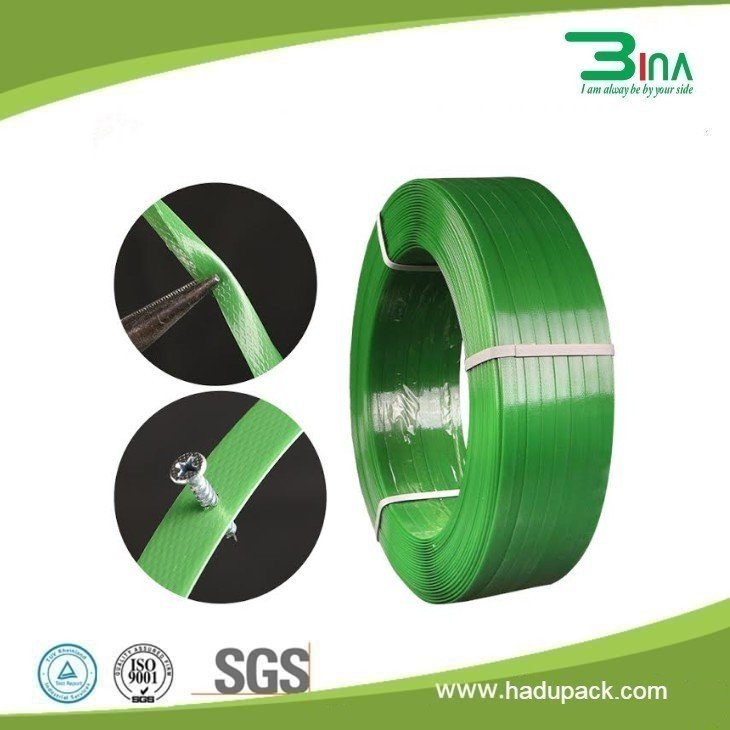
PET Strapping Features
- Compatible with Hadupack manual plastic strapping & friction welding tools
- High impact resistance
- Corrosion resistant
- Elastic memory
- Can be used as a replacement for steel strapping to achieve significant cost savings (depending on the strapping application and load weight)
 |
 |
Benefits of PET strapping
- Significant cost savings compared to steel
- Safe handling, reducing the risk of injury to employees
- Easy to use
- Can withstand higher tensile strength than PP strapping and lower than composite strapping
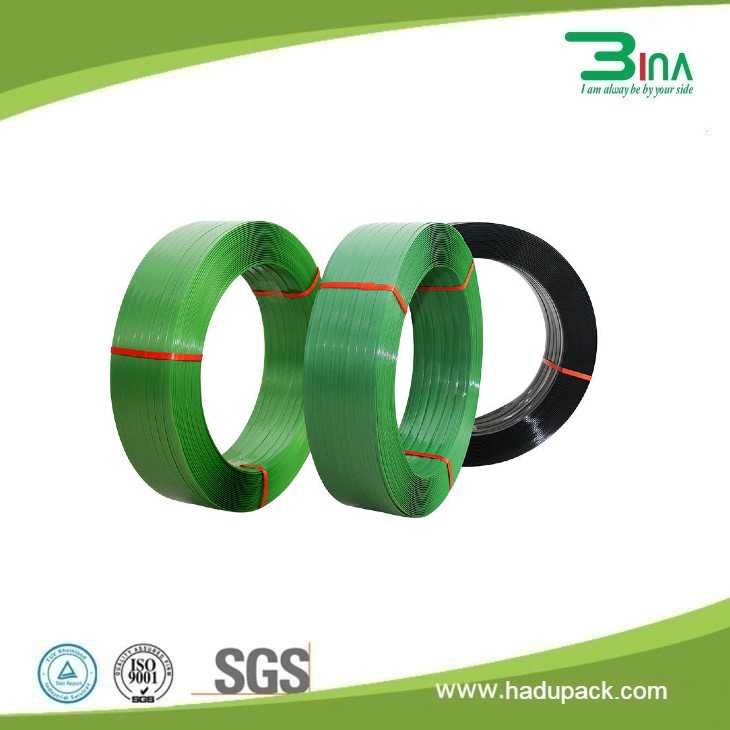
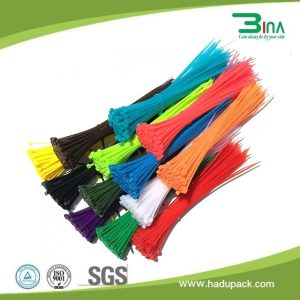
- Available in a variety of colors
How to use PET strapping
Using PET strapping typically requires a specialized manual strapping tool (tensioner + buckle) or an electric/pneumatic strapping machine. The steps are as follows: wrap the strapping around the goods, thread the end of the strapping into the tensioner, tighten the strapping, place the metal buckle and secure it with pliers, and finally cut the strapping. This method is suitable for heavy-duty packaging, offering high strength and impact resistance. The specific operating steps are as follows:
 |
1. Method using manual tools (Most common)
- Wrapping: Wrap the PET strap around the package, thread the end of the strap underneath into the clamp of the strapping tool (tensioner).
- Tightening: Thread the other end of the strap through the gear of the tensioner, and move the handle up and down until the strap is taut.
Applying the buckle: Place the metal buckle (usually the open type) over the two overlapping ends of the strap. - Buckling: Use buckle-clamping pliers to firmly clamp the buckle and press down firmly to lock it onto the PET strap, ensuring a secure connection.
- Cutting: Push the cutting handle to cut off the excess PET strap and remove it from the strapping tool.
2. Method using an electric/pneumatic strapping machine (High efficiency)
- Tensioning and threading the strap: Wrap the strap around the packaging, lay the two straps flat and overlap them, then simultaneously insert them into the strap slot at the front of the strapping machine.
- Tightening: Press the tightening button; the machine will automatically tighten the strap until it reaches the preset tension.
- Welding and cutting: The machine will weld the strap using friction heat and automatically cut it.
- Removal: Wait for the weld point to cool (about a few seconds), then the machine will release the strap and remove it.
3. Notes when using
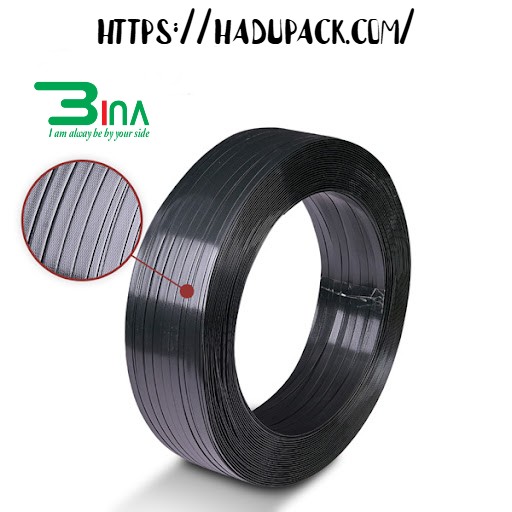
- Tools: PET straps are very rigid; therefore, high-strength specialized PET buckles and strapping machines must be used. Ordinary PP strapping tools cannot be used.
- Protection against moisture and impact: PET straps have high impact resistance, but prolonged direct exposure to sunlight should be avoided to prevent aging.
- Safety requirements: For goods packaged with PET straps, a safety factor of 1.5 to 2 should be used.
 |
How to use PET plastic strapping
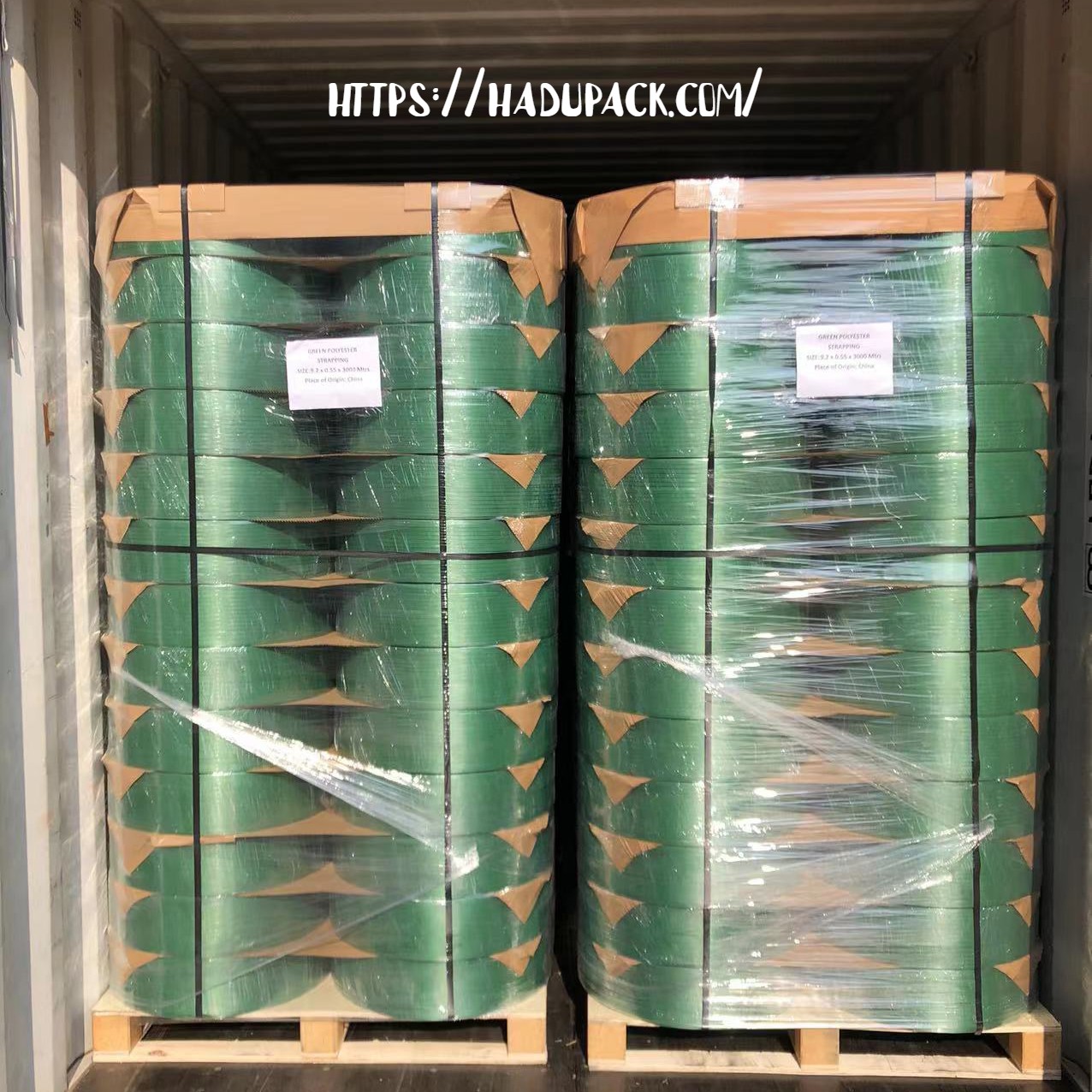
PET plastic strapping should be stored in a dry, well-ventilated warehouse, away from direct sunlight and rain. The suitable storage temperature is from -15°C to 40°C. Avoid sudden temperature changes and maintain a distance of at least 2 meters from heat sources. Avoid storing together with chemicals. When stacking, pay attention to humidity and deformation.
Storage precautions:
- Ambient temperature: Keep at room temperature, not exceeding 40°C to prevent deformation or deterioration of material quality.
- Keep away from heat sources: Absolutely do not allow direct exposure to sunlight. The storage area should be kept away from dryers, heaters and other high-temperature equipment.
- Protection from moisture and sunlight: Keep dry and avoid direct sunlight that can cause aging of the polyester material.
- Neat stacking: It is recommended to use the original packaging or stack flat and neatly to prevent compression from deforming or damaging the strapping.
- Chemical protection: Avoid contact with corrosive chemicals such as acids and alkalis to prevent damage to the plastic components.
 |
How to Choose and Buy PET Plastic Strapping
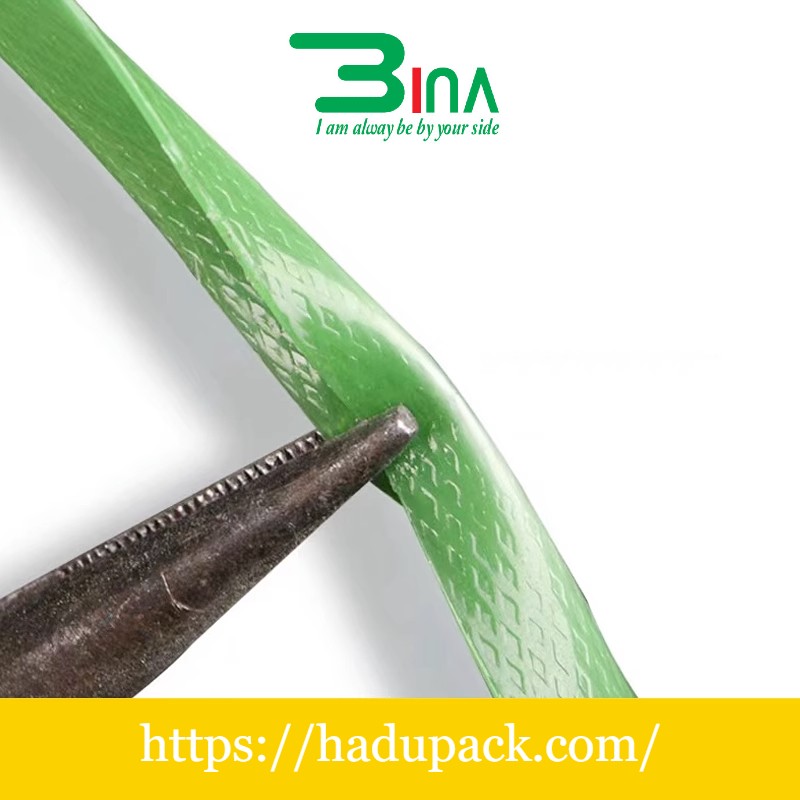
Choosing and purchasing high-quality PET plastic strapping (plastic steel strapping) mainly depends on the tensile strength, toughness of the strapping (not easily broken), and surface smoothness. Prioritize materials with uniform color, no air bubbles, and consistent thickness, while selecting a width and thickness suitable for the specifications of the packaged heavy goods. High-quality PET strapping provides strong holding force and will not loosen over time.
I. How to Choose PET Plastic Strapping
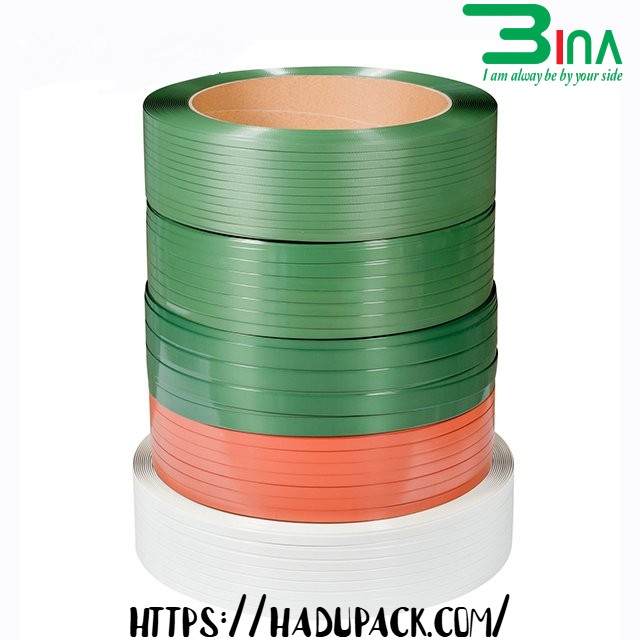
- Observe the appearance and color: High-quality PET strapping has a uniform color and good transparency (such as transparent blue or bright transparent white), indicating purer raw materials; conversely, if the color is cloudy and there are many black spots, it usually indicates the presence of recycled materials, and the strength will be reduced.
- Check the surface quality: The surface of the strapping should be free of burrs, air bubbles, and cracks. Burrs indicate poor hot-melt extrusion and make the strapping prone to breaking.
- Check toughness and elongation: PET strapping should have good flexibility and should not easily develop white marks when bent. The elongation of the strapping should be moderate; too high will cause looseness, while too low will cause breakage.
- Tensile strength: Choose according to the weight of the packaged goods. PET strapping has better heat resistance and is less prone to deformation than PP strapping, making it suitable for packaging heavy goods.
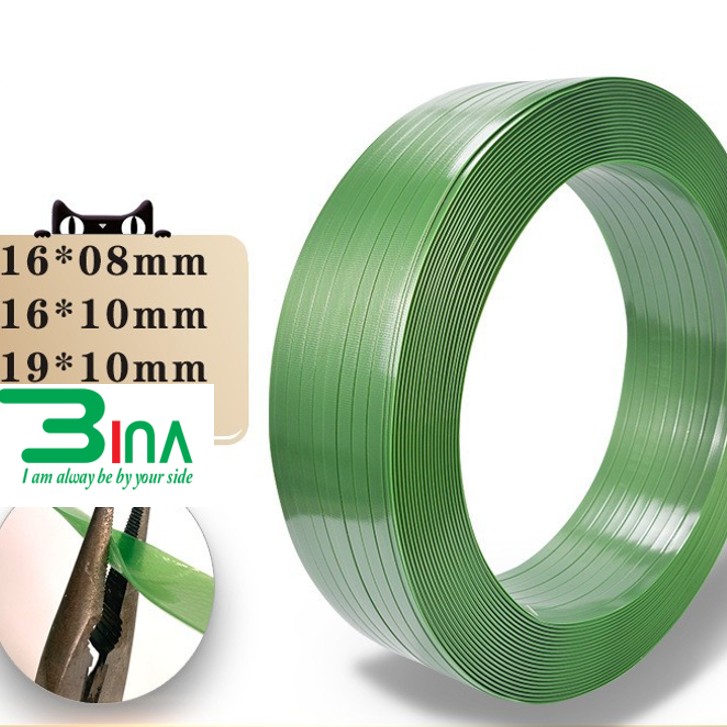
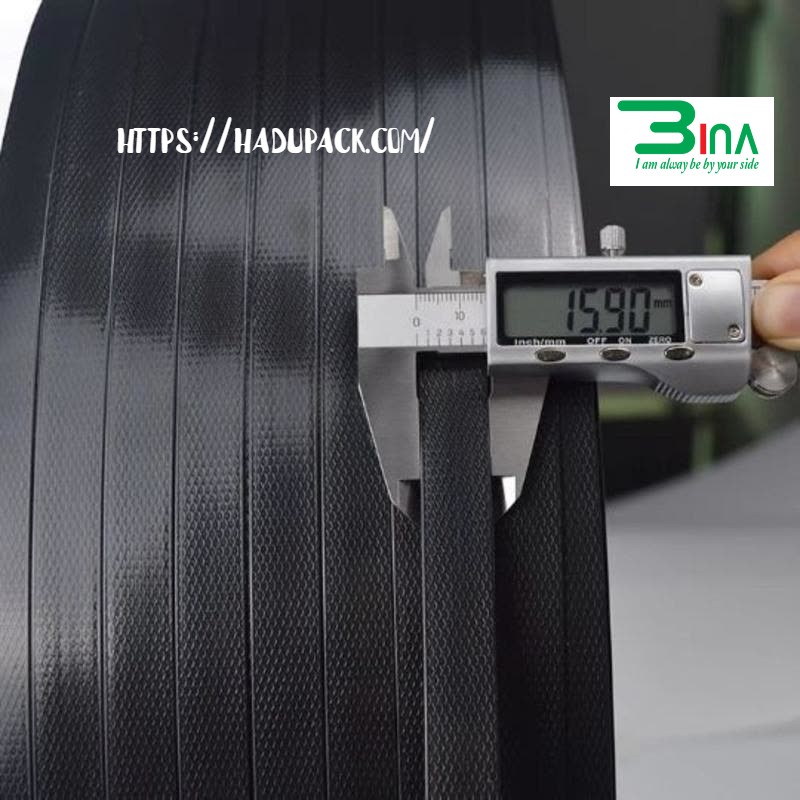
- Specifications: The standard width is 13mm -19mm, and the thickness is 0,8mm – 1,2mm. Heavier goods require wider and thicker strapping.
 |
II. How to buy PET plastic strapping
Determine the purchasing channel:
- E-commerce platforms Shopee, Lazada, Tiki: Offer many options, suitable for small quantities or customized orders.
- Specialized packaging material stores: Suitable for bulk purchases, often providing more professional technical specification guidance.
- Purchase directly from Hadupack: Suitable for large, long-term demand, offering the best cost/performance ratio.
Pay attention to test reports: Ask the seller whether they provide test data on tensile strength and hot-melt adhesive strength.
Compare price and quality: Don’t just look at the lowest price. Low-quality PET strapping often has substandard density or contains many impurities. Although cheap, it is prone to breaking during transportation, causing damage to goods.
Ask about the recycled material ratio: Ask whether it is made from virgin material or has a high proportion of recycled material (RPET). Virgin material has better quality stability. When purchasing, focus on the gloss and smoothness of the strapping, prioritize reputable manufacturers, and choose the thickness and width according to the needs of the goods.



Reviews
There are no reviews yet.