

Description
What is a removable adhesive label?
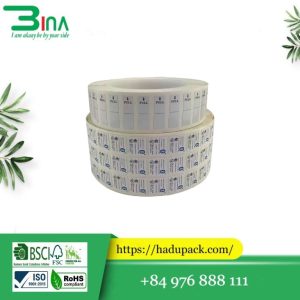
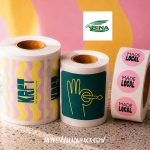
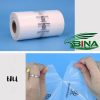
Self-peeling labels, also known as removable adhesive labels, are designed to be produced and applied to products displayed at trade fairs, sales events, promotions, new product launches…Thanks to their durability and strength, self-peeling labels are used for many types of products, including cosmetics, beverages, electronics, food, and agricultural products. Self-peeling labels consist of two parts: one part that has been peeled off and one part that still has adhesive on it (the adhesive part).
 |
Peel-off labels (or “peel-and-reveal” labels) are advertising tools that can be designed with multiple, interactive layers, allowing consumers to peel off the top layer to reveal hidden content, such as discount coupons, game codes, or detailed instructions. These labels allow brands to add important information, QR codes, or marketing messages to small packaging without cluttering the design or requiring additional packaging components.
◆Learn more:
- https://hadupack.com/san-pham/in-tem-nhua/
- https://hadupack.com/san-pham/decal-keo-remove/
- https://hadupack.com/san-pham/nhan-dan-epoxy/
 |
 |
 |
 |
 |
 |
Production process for self-peeling, adhesive-removable labels
The production of self-peeling or “peel and reveal” labels involves multiple laminated layers, printing on specialized adhesive film (polypropylene/paper), and precision die-cutting to create multi-page labels that can be resealed. These labels, commonly used in the pharmaceutical/cosmetics industries, allow text to be expanded and the label to be resealed without losing adhesion, and are produced using flexographic or digital printing.
 |
Main steps in the production of peel-off labels:
- Material selection: Choose durable materials such as polypropylene (PP) film or synthetic paper, typically using a “sandwich” structure consisting of a label backing and a top layer.
- Printing: The front and back sides of the top layer, as well as the top side of the backing, are printed. Printing can be done on the adhesive side for hidden information.
- Lamination and layer separation: The layers are laminated together. Some processes include partially separating the layers to apply adhesive, then laminating them back together to create a “repositionable” feature. Special coating: A release varnish (silicone) is applied to specific areas to prevent the adhesive from permanently bonding to the top layer, ensuring it can be peeled off multiple times.
- Die-cutting & Waste removal: The labels are die-cut into shape, and excess liner and adhesive (matrix) are removed, leaving multilayer labels on the backing paper.
- Inspection & Slitting: Automated inspection ensures accurate printing and peeling functionality. Finally, large rolls are slit into smaller, finished rolls.
 |
Typical structure of a peel-off label
- Top layer: Printable material, peelable (can be reapplied).
- Adhesive: Specially designed for multiple opening/closing cycles.
- Base layer: Permanently adheres to the product.
- Release liner: Backing paper removed before application.
 |
Key Features and Benefits
- Multi-layer design: Includes two or more layers, typically with three printable surfaces (the back of the top layer, the front of the base layer, and the top surface).
- Reusable adhesive: The top layer can be resealed, allowing it to be peeled off multiple times without compromising its appearance or leaving adhesive residue on the packaging.
- Large-volume information: Ideal for multilingual instructions, regulatory data, or detailed nutritional information.
- Enhanced interaction: Used in marketing to conceal promotional codes, sweepstakes prizes, or “instant redeem” coupons that require user interaction.
- Material variety: Available in paper, foil, and metallized materials, with up to nine flexographic printing colors.
Common Applications
- Cosmetics & Beauty: To include instructions in multiple languages.
- Pharmaceuticals/Healthcare: To display dosage and ingredient information without requiring separate leaflets.
- Promotional Items: Instant-win games, special offers, and QR codes.
- Food & Beverages: Recipes or contest details kept hidden.
 |
Things to know about adhesive-removing labels
Peel-off labels (often called peel-and-reveal labels or multi-layer labels) consist of at least two layers, allowing the top layer to be peeled off to reveal hidden information, such as additional text, recipes, or regulations. They are ideal for limited packaging space but require durable materials such as synthetics, vinyl, or polypropylene, combined with specially designed adhesives for reliable resealing.
 |
Key considerations and troubleshooting
- Application environment: Labels applied in cold, dirty, or greasy conditions often peel or warp. Ideally, apply them at room temperature to dry containers, allowing the adhesive to dry completely for 24-48 hours before placing them in the refrigerator.
- Preventing premature peeling: High temperatures and high humidity can damage the adhesive bond. Using full-wrap labels can prevent, or at least improve, edge lifting (edge cracking) on curved containers.
- Fixing peeling labels: For existing labels that are peeling, you can try applying a small amount of adhesive or using a hair dryer on a low setting to soften the adhesive.
- Shelf life: The adhesive has a shelf life of approximately one year. Using expired labels can lead to label failure, often indicating that the adhesive has degraded.
- Material selection: Labels must be flexible enough to conform to the packaging while still retaining sufficient durability to withstand repeated peeling and reapplication.
 |
Causes of label failure
- Improper surface cleaning: Dirty, dusty, or greasy surfaces prevent the adhesive from bonding securely.
- Unsuitable material: Rigid, inflexible labels on small-diameter cylinders will peel off.
- Rapid cooling: Placing the item in the refrigerator too soon after applying the label does not allow the adhesive to dry completely.