


Description
What is a tamper-evident seal?
Tamper-evident seals are labels made from special materials and using specialized printing techniques that can indicate whether a product has been opened or tampered with. When someone attempts to tear off or move these labels, they are permanently damaged, leaving a “VOID” mark or an irreparable “torn” pattern, proving that the product has been tampered with. They are commonly used for packaging seals, seals on valuable items, and anti-counterfeiting applications in the electronics and medical industries.
 |
◆Learn more:
- https://hadupack.com/san-pham/decal-cam-nhiet/
- https://hadupack.com/san-pham/tem-7-mau/
- https://hadupack.com/san-pham/in-tem-ma-vach/
Core technologies and features of tamper-evident security seal labels:
- Physical damage: Uses highly fragile materials, such as fragile paper or special films, that cannot be completely removed after application.
- Residual traces: Uses VOID label materials that leave a specific pattern or text (such as VOID, VOIDED) on the object after peeling.
- High-tech anti-counterfeiting: Combines laser holographic technology (laser anti-counterfeiting), invisible fluorescent ink, color-changing ink, and high-precision serial number/barcode printing to ensure that the labels cannot be copied.
- Peel resistance: Uses high-strength adhesives that withstand chemicals and temperature fluctuations, adapting to various packaging environments.
 |
Application scenarios:
- Security sealing: Electrical equipment, confidential documents, and express delivery packaging seals.
- Brand anti-counterfeiting: Labels for electronic products, healthcare products, high-end goods, and cosmetics.
- Technical calibration: Calibration certificates and equipment warranty labels.
 |
Sealing label printing production process
The printing and production process for anti-counterfeiting labels typically includes: customized design, material preparation, printing, variable data printing (anti-counterfeiting codes), silver coating/scratch-off coating production, die-cutting, quality inspection and defective product removal, and shipping. Roll paper is mainly used for high-speed production, employing technologies such as QR codes and holographic anti-counterfeiting, and finally, quality inspection ensures that the labels remain intact and valid.
 |
Label printing process:
- Design and prepress preparation: Design the artwork, separate colors, and prepare printing plates (flexographic, gravure) or print directly (digital printing).
- Material selection and printing: Choose paper, PE, PET, PP, etc., depending on the application. Common methods include flexographic printing (transferring ink using an anilox roller), offset printing, or digital printing.
- Surface treatment: Apply glossy/matte lamination, hot stamping, spot UV coating, etc., to enhance aesthetics and abrasion resistance.
- Die-cutting and slitting: The printed material roll is cut into labels of specific shapes (die-cutting), and the excess material is removed, forming finished rolls.
 |
Sealing process
- Product filling: Goods are placed into plastic bags, bottles, or specialized packaging.
- Pre-sealing preparation: The sealing area is prepared using robotic arms or manually to ensure it is free of foreign objects and flat, preventing leaks caused by incomplete sealing.
- Heat sealing: The sealing machine rapidly heats the specialized packaging material to a specific temperature (usually 150-200℃) to soften the material, and applies uniform pressure through pressing rollers.
- Cooling and forming: Brief cooling solidifies the molten plastic layer, forming a strong seal to prevent leakage of the product inside.
 |
Variable Data Printing/Lamination
- Digital printing: Print anti-counterfeiting codes (regular or encrypted) and shipping codes.
- Anti-counterfeiting linkage: Ensure the uniqueness of labels and enter them into the database.
- Scratch-off layer: Print a silver or black scratch-off layer over the encrypted area to conceal the anti-counterfeiting code and prevent premature scanning.
- Die-cutting: Use a die-cutting tool to cut the printed material into predetermined shapes and remove unwanted excess material.
- Inspection: Remove labels with unclear codes or defective designs using quality inspection equipment or manually to ensure that all shipped products meet the standards.
- Shipping: Cut and package qualified products into the required final format (individual sheets or rolls) and ship them.
 |
Important technical points about seal labeling
- Composite materials: Labels and packaging are often made of multiple layers of composite materials, with an inner heat-sealing layer (such as PE, CPP) and an outer printing layer (such as PET, BOPP).
- Static electricity control: During high-speed production, static electricity buildup can lead to inaccurate label application and film warping in the sealing area, making the use of static eliminators necessary.
- Quality control: Printing defects and seal strength are detected through visual inspection systems.
 |
Classification of anti-tampering labels
Anti-counterfeiting labels are primarily classified according to their technical principles, materials, and presentation formats, including common QR code anti-counterfeiting labels (digital verification), laser anti-counterfeiting labels (three-dimensional images), and fragile paper/VOID anti-counterfeiting labels (single-use). They are widely used in industries such as electronics, consumer chemicals, and food to ensure product uniqueness and authenticity. Detailed explanations of the main types:
 |
Classification by anti-counterfeiting technology/form
- QR code anti-counterfeiting labels: Modern and widely used, supporting one code per item, which can be scanned to verify authenticity, including technologies such as color coding, temperature sensitivity, and light sensitivity.
- Digital anti-counterfeiting (electronic anti-counterfeiting codes): Scratch off the coating to reveal a unique password, which can be verified by phone, SMS, or website.
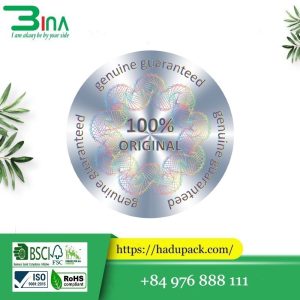
- Three-dimensional laser anti-counterfeiting (Laser): Uses rainbow three-dimensional laser technology to create vivid images that are difficult to counterfeit.
- Special breakable/tearable labels: After being peeled off, they leave behind the words “VOID”, “opened” or become torn, preventing the labels from being reused.
 |
Classification by material and process
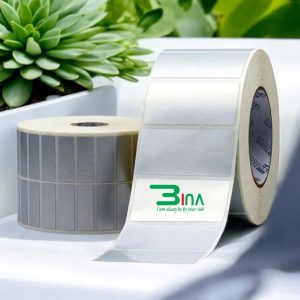
- Self-adhesive labels: The most commonly used conventional material.
- Tearable paper/Tearable self-adhesive labels: Paper that tears easily and is easily damaged when peeled off.
- Special substrates: Including PVC, PET, aluminum foil, fiber paper (with anti-counterfeiting patterns), etc.
Classification by functional characteristics
- Temperature-sensitive/humidity-sensitive labels: Disappear or change color when exposed to high temperatures or water droplets.
- NFC/RFID chip labels: Smart chip sensing technology.
 |
Methods for selecting anti-counterfeiting security seal label printing
The choice of anti-counterfeiting label printing methods should be based on the level of security, cost, and appearance requirements. Common methods include: laser hologram anti-counterfeiting printing (visual anti-counterfeiting), digital barcode/QR code anti-counterfeiting printing (digital tracking), special ink printing (fluorescent, temperature-sensitive color-changing), gravure printing technology (high-security embossed feel), and a combination of multiple processes (such as flat embossing). For high-risk products, priority should be given to complex, high-cost, and unique combined processes.
 |
1. Common anti-counterfeiting label printing technologies
- Laser hologram printing creates a barrier film effect: It creates unique visual features through the diffraction of micro-nano structures, such as rainbow effects and 3D effects, making counterfeiting very difficult.
- Anti-counterfeiting serial number/QR code printing: Assigns a unique identification code to each label, which can be used with anti-counterfeiting systems for encryption, tracking, and terminal queries.
Special ink printing:
- Temperature-sensitive color-changing ink: The color changes with temperature.
- Infrared/fluorescent ink: Develops color under ultraviolet light, suitable for high-security requirements.
- Gravure printing and combined printing processes: Gravure printing creates a raised, tactile effect, making it suitable for high-end anti-counterfeiting; embossing combines different processes on a single label.
 |
2. Selection criteria
- Security level: For products with a high risk of counterfeiting, choose a high security level (laser hologram + spot color ink + serial number); for products with a lower risk, choose a regular QR code.
- Brand image: High-end products use materials with good visual effects, such as laser engraving and hot stamping; For daily necessities, focus on ease of scanning.
- Cost budget: Combined processes and customized anti-counterfeiting solutions are the most expensive; standard QR codes and digital codes are the most cost-effective.
- Application scenarios: For electrical equipment, choose heat-resistant and wear-resistant composite materials; for food, choose environmentally friendly materials.
3. Selection of printing manufacturers
- Capability verification: Have official printing certificates and anti-counterfeiting licenses.
- Technological innovation: Manufacturers with independent design and research and development capabilities in anti-counterfeiting technology.
- Compliance: Ensure the uniqueness, confidentiality and non-duplication of anti-counterfeiting data.
Overall, it is recommended to combine the above anti-counterfeiting methods to achieve the best anti-counterfeiting results.
 |
Tips for preserving tamper-evident security seals
The key to preserving anti-counterfeiting labels lies in sealing, moisture protection, temperature control, and avoiding light exposure. Labels should be stored at room temperature ( 5 degrees C – 30 degrees C), in a dry and well-ventilated environment, away from direct sunlight and cold weather (such as temperatures below 0 degrees C) to prevent damage to the adhesive.
 |
Specific preventive measures for storage:
- Sealed storage: Before and after use, anti-counterfeit labels should be sealed in an airtight bag or their original packaging to prevent the adhesive from drying out and losing its effectiveness when exposed to air.
- Temperature control: The optimal temperature is usually around . Avoid storing them in environments that are too hot or too cold.
- Moisture and water protection: The environment must be dry to prevent moisture from warping the release liner or reducing adhesion.
- Light protection: Avoid prolonged exposure to direct sunlight to prevent the label material from aging or fading.
- Proper placement: Anti-counterfeit labels should be laid flat and must not be folded or stacked on top of one another to avoid damaging the chip or coating.