


Description
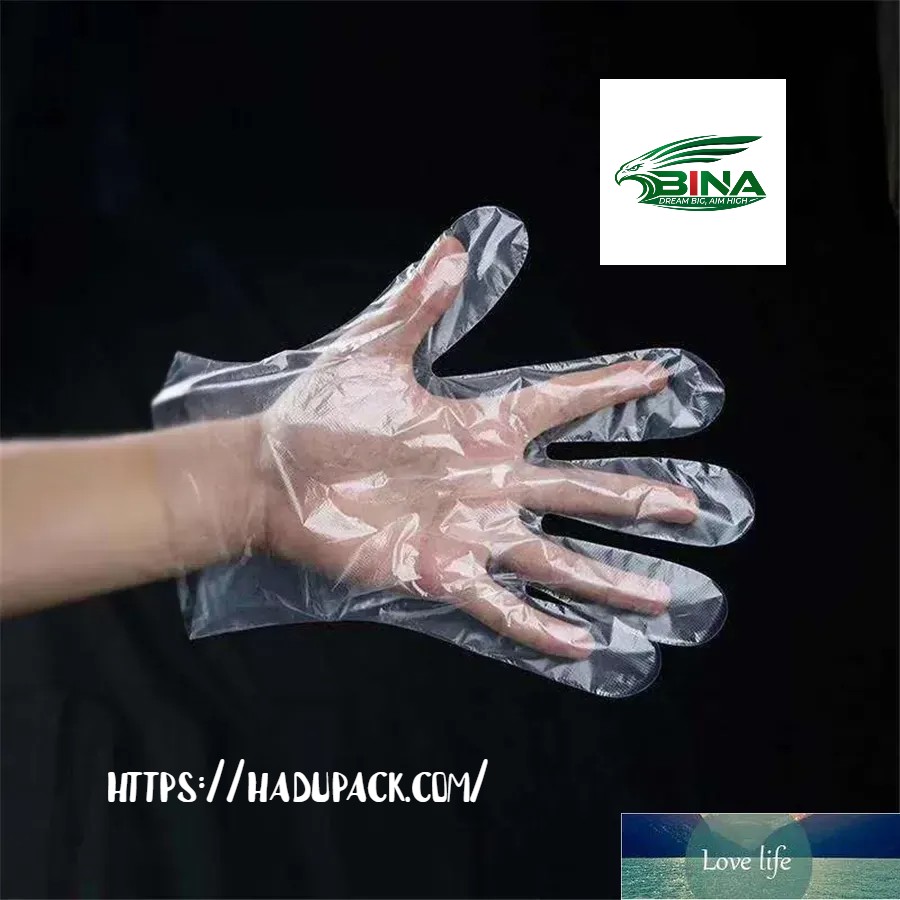
What are PE gloves?
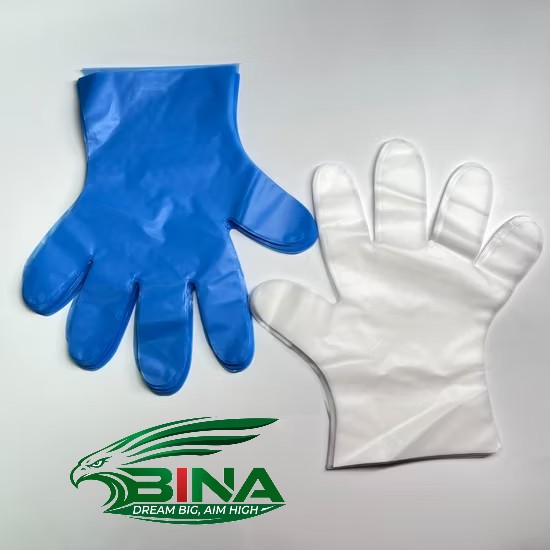
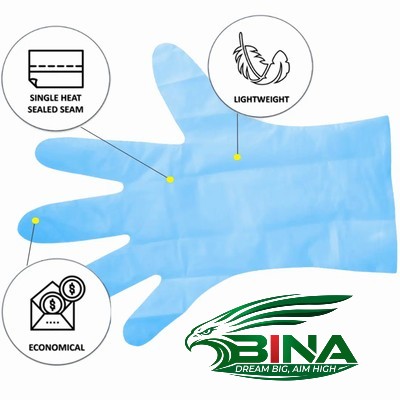
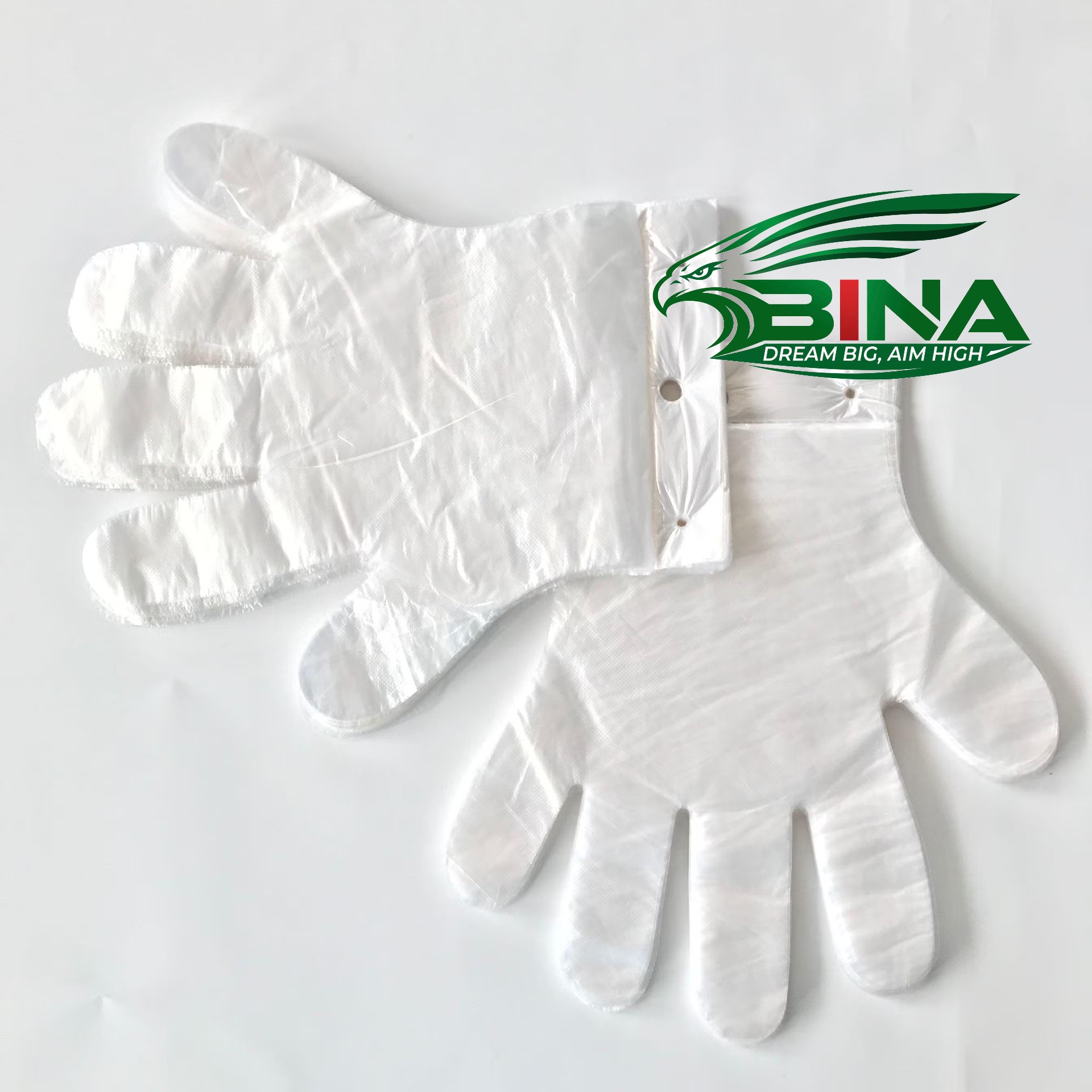
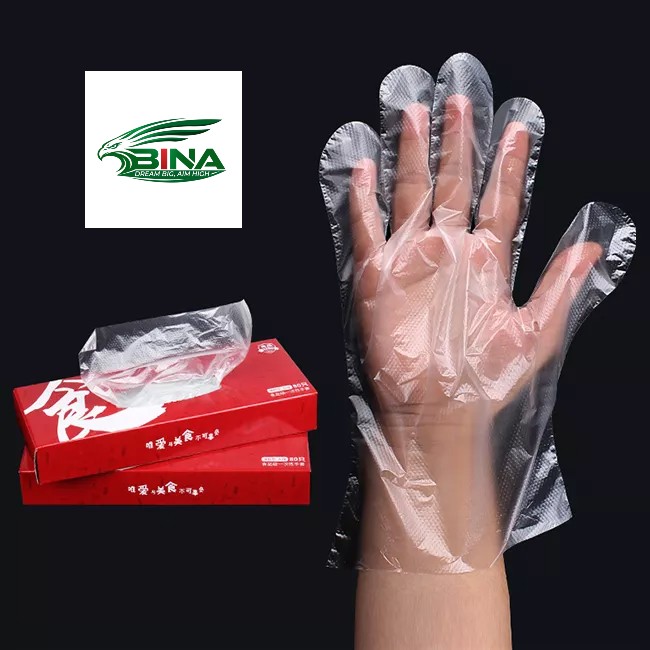
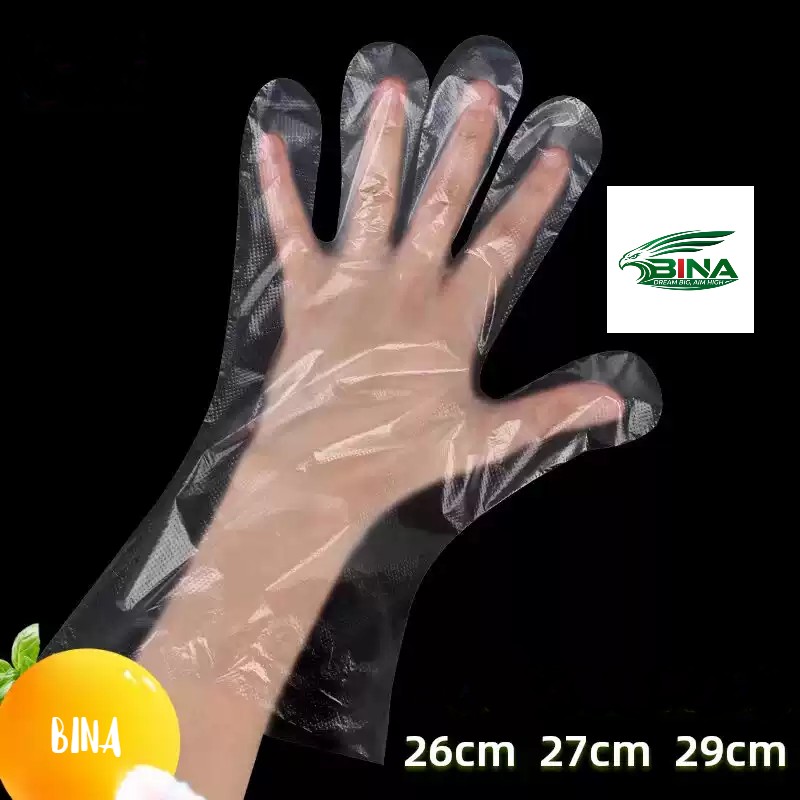
PE (Polyethylene) gloves are thin, disposable, and inexpensive plastic gloves, commonly used for light-duty tasks, food service, and hygiene protection. Designed to be easy to put on and take off, they are usually loose-fitting, latex-free, and waterproof, making them ideal for tasks that require frequent glove changes. They are very economical but have lower durability and flexibility compared to other materials.
 |
 |
Key features and main uses of PE nylon gloves:
- Material: Made from thermoplastic materials (LDPE resin or HDPE resin), similar to plastic bags.
- Applications: Widely used in food processing, bakeries, pizza shops, supermarkets, and food service.
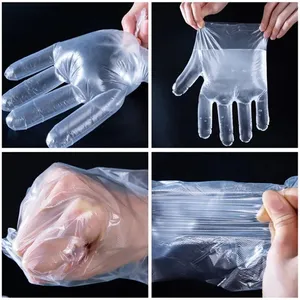
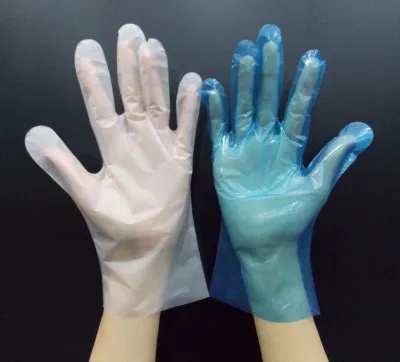
- Design: Usually loose-fitting, allowing for quick changes and often suitable for use on either hand.
- Protection: Excellent for preventing direct contact with food or contaminants, but not suitable for heavy-duty tasks or high-temperature environments.
- Cost-effective: Low production costs make them popular for high-volume, low-risk, short-term uses.
 |
 |
 |
 |
Advantages and disadvantages of PE nylon gloves:
- Advantages: Low cost, easy to use, and usually latex-free.
- Disadvantages: Low durability, a loose fit that makes handling fragile items difficult, and low puncture resistance.
Variants of PE nylon gloves:
- CPE (Cast Polyethylene): A type of PE glove with improved durability and sometimes texture.
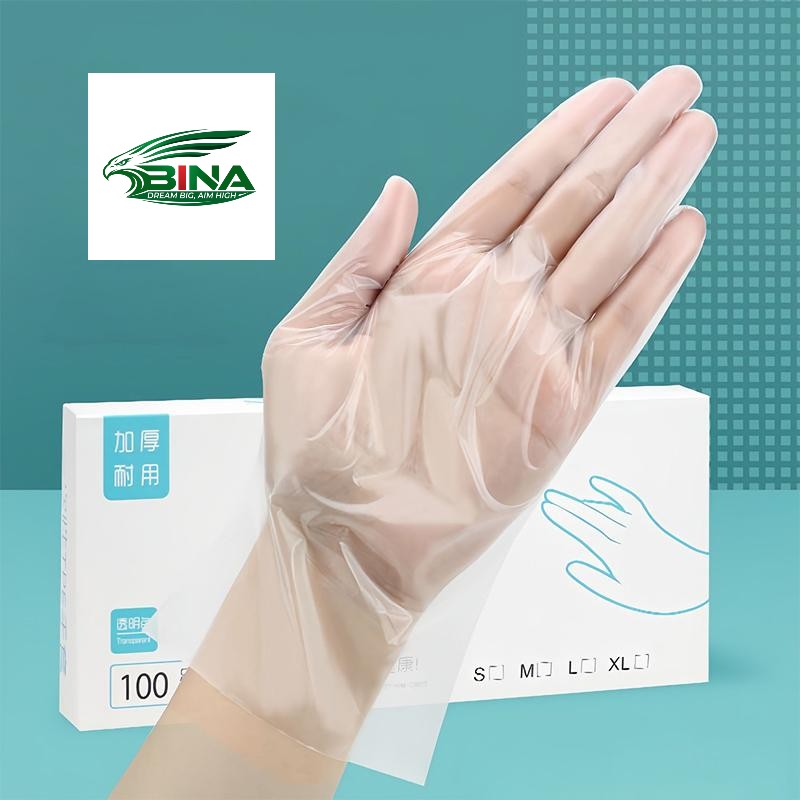
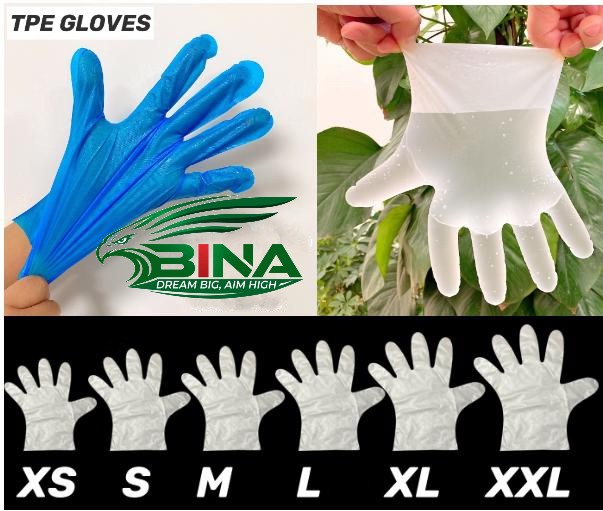
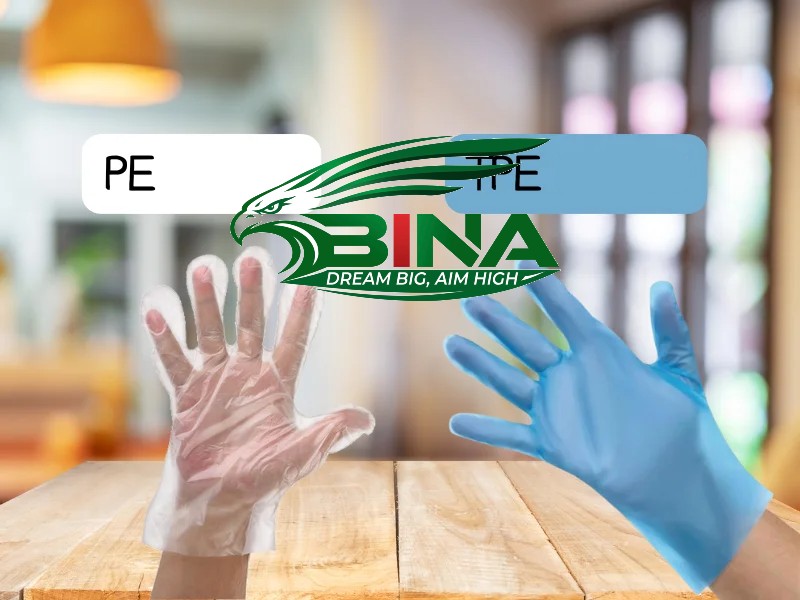
- TPE (Thermoplastic elastomer made from TPE resin pellets): A more flexible alternative with a better fit.
 |
 |
PE Glove Manufacturing Process
The production of PE (polyethylene) gloves is a high-speed automated process focused on cutting and heat-sealing thin plastic films. The raw material, LDPE or HDPE, is blown into tubes, flattened into sheets, and fed through a heated die-cutting machine to cut and seal the hand shape. Automated machinery can produce more than 150 gloves per minute, automatically sealing and separating the products.
Main Steps in PE Glove Manufacturing
- Film Blowing/Extrusion: Polyethylene (LDPE for flexibility, HDPE for strength) is heated and extruded through a circular die, then blown into a thin, long tube, which is flattened into a two-layer film.
- Printing (Optional): If the gloves require a logo or branding, the film is printed at this stage.
- Heated Die Cutting and Sealing: The film is fed into a glove-making machine equipped with a heated copper or metal die shaped like a hand. The machine presses the film, simultaneously cutting the glove shape and heat-sealing the edges, typically leaving a thickness of 0.02mm to 0.06mm.
- Waste Separation: The machine automatically separates the finished gloves from excess plastic scrap (edge material).
- Inspection and Packaging: The finished gloves are inspected, typically through automated quality checks, and packaged.
 |
 |
Characteristics of the production process
- High efficiency: Modern machinery is controlled by computers and servo motors, enabling high-speed, 24/7 automated production with minimal human intervention.
- Waste management: Excess plastic is often recycled immediately through a recycling grinder integrated into the production line.
- Flexibility: Mold sizes and shapes can be adjusted to produce different sizes (S, M, L).
- PE gloves are commonly used in food service, medical examinations (low risk), and other tasks that require frequent glove changes at low cost.
 |
Common Problems in PE Glove Production
The production of polyethylene (PE) gloves, often used as a low-cost, food-safe option, commonly encounters issues related to material quality, inconsistent sealing, and high defect rates. These problems often stem from cost-cutting efforts, resulting in products with high defect rates sometimes reaching 61% due to poor strength and thin, uneven materials.
The main challenges and problems in PE glove production include:
1. Poor sealing and heat-sealing issues
- Improper sealing: Because PE gloves are produced by cutting and heat-sealing film, improper temperature or speed control during sealing can cause weak, open, or broken seams.
- Temperature fluctuations: Unstable temperatures in the heat-sealing machine can result in seals that are prone to tearing during use.
2. Low material strength and quality
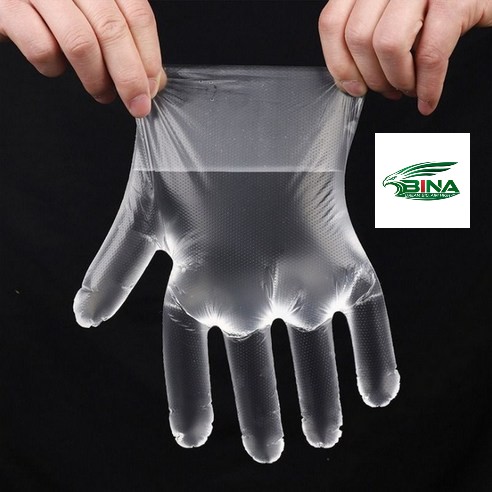
- High tear/pinhole rate: Due to the low-density structure (typically LDPE) and minimal thickness (0.01-0.02mm), PE gloves are highly susceptible to tearing.
- Uneven film thickness: Differences in raw material quality and the extrusion process can result in thin spots, causing gloves to fail immediately or during use.
- Brittle or stiff material: The material may lack flexibility and feel excessively stiff, leading to user discomfort and reduced tactile sensitivity.
 |
 |
3. Pollution and hygiene issues
- Chemical contamination: Poor-quality raw materials or fillers can lead to chemical residues that cause skin irritation for users.
- Microbial contamination: Unsanitary production environments, such as outdoor packaging rooms with high humidity, can introduce pathogens, mold, and impurities into gloves. Water quality: If contaminated water is used during production, it can lead to high bacterial levels on gloves.
4. Production process defects
- Poorly managed defect rates: Unlike medical gloves, food-grade PE gloves may not have strict Acceptable Quality Level (AQL) standards for small-hole defects.
- Inadequate drying: Insufficient drying during production can lead to moisture retention, creating conditions for mold growth, or making gloves difficult to package and use.
5. Design and physical weaknesses
- Poor design and fit: Inconsistent sizing, such as being too loose or poorly shaped, reduces dexterity and contributes to gloves snagging or tearing.
- Lack of durability: They are typically designed for short-term, low-intensity use, making them highly susceptible to punctures.
Common solutions to these issues:
- Switching to TPE (Thermoplastic Elastomer): TPE gloves are increasingly being used as a better, more durable alternative to PE.
- Improved quality control: Implementing stricter inspections of raw materials, ensuring consistent heat sealing, and establishing a cleaner production environment.
 |
Notes when using PE nylon gloves
Polyethylene (PE) gloves are lightweight, loose-fitting, disposable gloves designed primarily for light-duty tasks, food handling, and hygiene protection. Because they are affordable and easy to replace frequently, they are widely used in the food service industry, fast-food outlets, and light cleaning applications.
Below are the key considerations and best practices when using PE gloves:
Best uses:
- Food service: Ideal for making sandwiches, serving food, and preparing salads.
- Light cleaning: Suitable for tasks that do not involve harsh chemicals or heavy-duty cleaning.
- High-volume environments: Best for tasks that require frequent glove changes (e.g., fast-food counters, bakeries).
- Public interaction: Good for short-term protection, such as using fuel pumps or in retail situations.
Limitations:
- Limited durability: Not suitable for heavy-duty tasks or jobs requiring high puncture resistance. Not heat resistant: PE has a low melting point and should not be used near hot food, hot equipment, or in hot water.
- Low flexibility: Due to their loose-fitting design, they are not ideal for tasks requiring high tactile sensitivity.
- Permeability: They provide only limited protection against chemical solvents.
 |
Instructions for use:
- Single use only: Never reuse PE gloves; they are designed for single use to prevent cross-contamination.
- Replace frequently: Replace gloves if they are torn, dirty, or when switching tasks (e.g., from handling raw food to processed food).
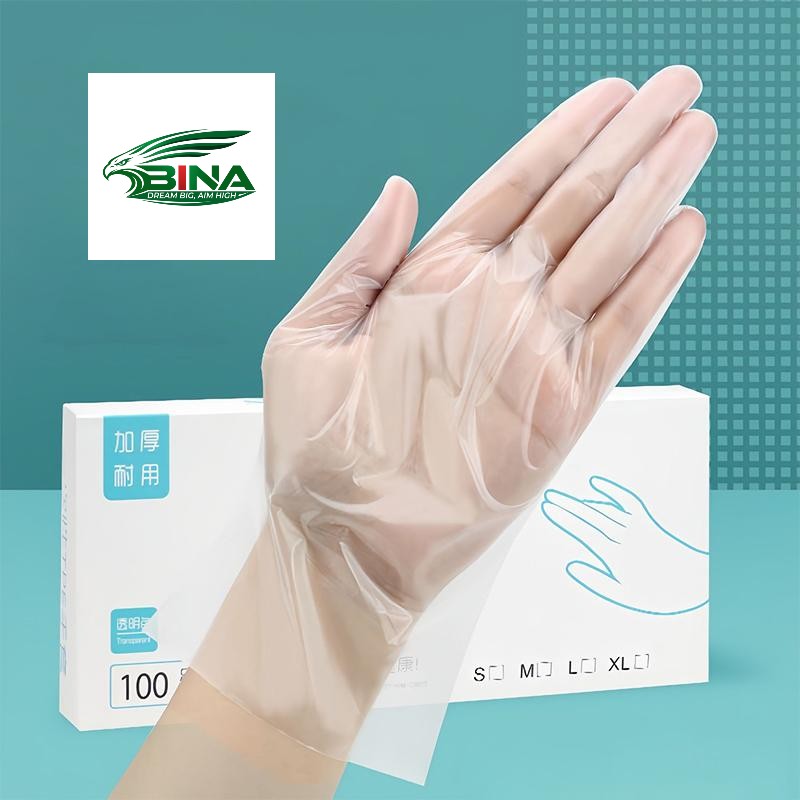
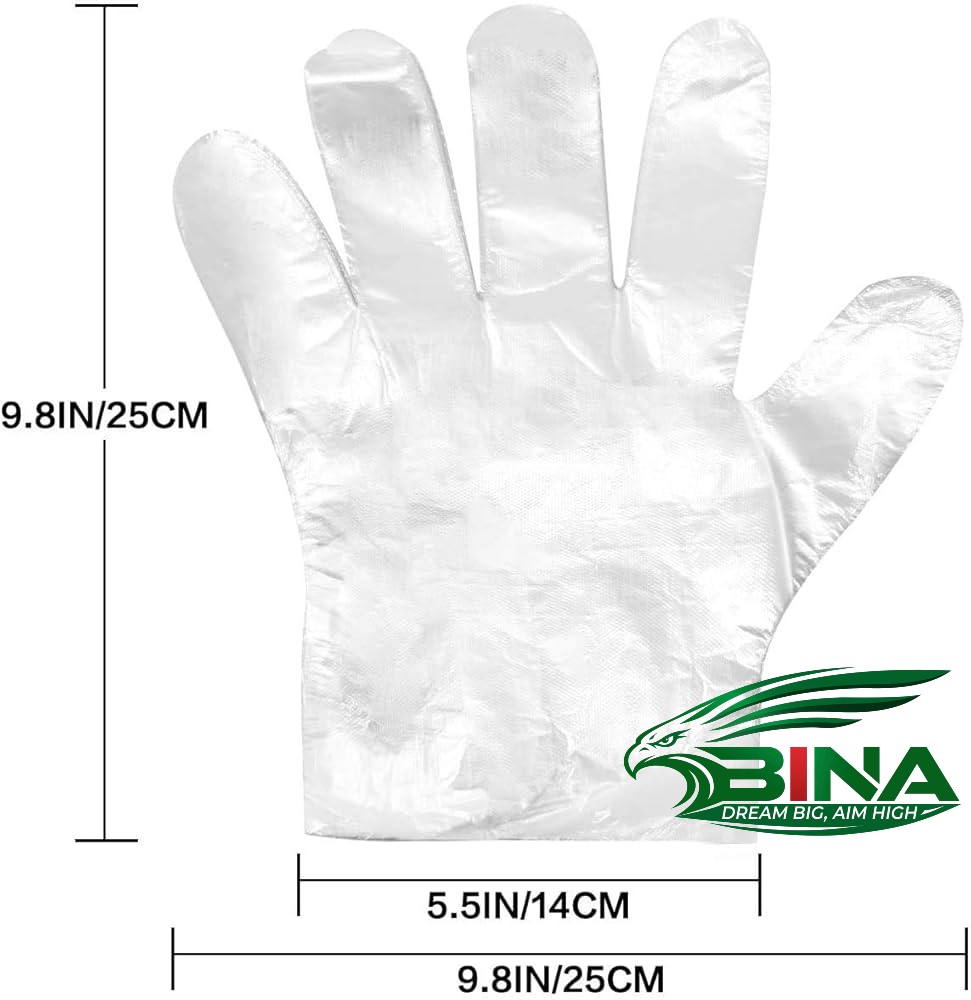
- Ensure a proper fit: Choose the correct size (small, medium, large, XL) to prevent them from slipping off or tearing too easily.
- Check durability: Check the gloves for tears or punctures before putting them on.
- Wash hands: Always wash your hands with soap and water before putting on gloves and immediately after removing them.
Types of PE gloves
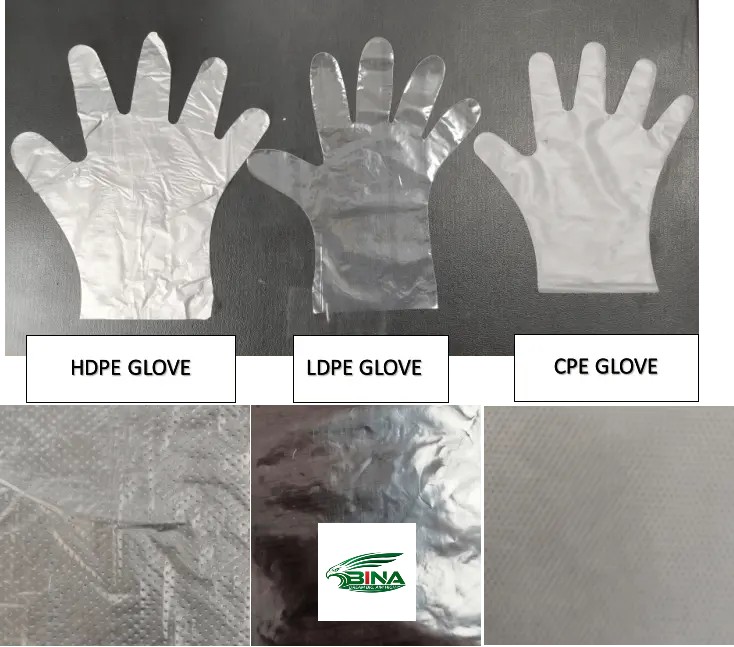
- HDPE (High-density polyethylene): More rigid, stronger, and less prone to tearing; good for food service.
- LDPE (Low-density polyethylene): Softer, more flexible, and better for tasks requiring greater comfort.
- CPE (Cast polyethylene): Thicker, embossed, and provides better grip for oily or slippery items.
- TPE (Thermoplastic elastomer): A flexible, more elastic “premium” PE option, serving as a bridge between standard PE and vinyl, offering better dexterity..
Storage and handling
- Storage: Store in a cool, dry, well-ventilated place, away from direct sunlight or excessive heat.
- Disposal: Dispose of in an appropriate trash bin immediately after use.
- Environmental protection tip: Although PE can be recycled, used gloves are often contaminated, making them difficult to recycle. Some brands offer biodegradable alternatives.
Comparison of PE gloves, CPE gloves, and TPE gloves
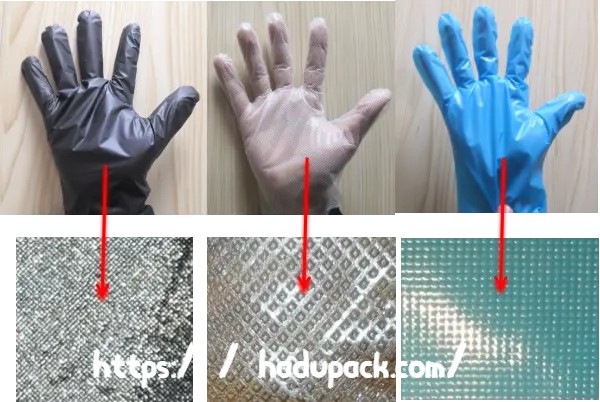
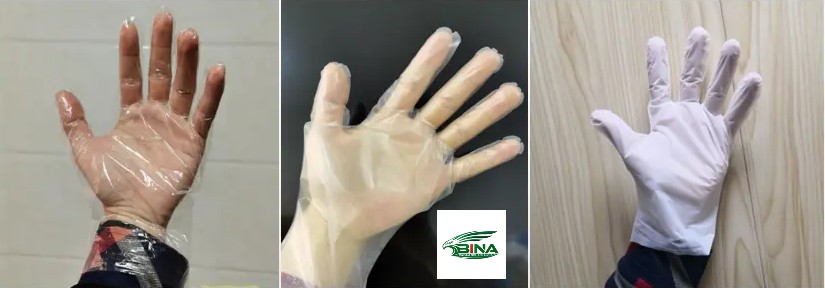
PE nylon gloves, CPE gloves, and TPE gloves are types of disposable gloves that are latex-free. PE (Polyethylene) is the cheapest and thinnest option for light-duty tasks. CPE (Cast Polyethylene) is thicker, more durable, and has a textured surface for better grip. TPE (Thermoplastic Elastomer) is the most elastic, comfortable, and durable, offering a superior fit similar to rubber.
 |
 |
Key differences:
- PE (Polyethylene) gloves: Best for quick, low-cost tasks such as food handling, hygiene protection, and tasks requiring frequent changes. They are loose-fitting and have poor resistance to grease or tearing.
- CPE (Cast Polyethylene) gloves: Thicker and sturdier than standard PE, they are designed for better durability and feature an embossed surface for improved grip, making them popular in the food service and light cleaning industries.
- TPE (Thermoplastic Elastomer) gloves: Made from a blend of plastic and rubber, they offer superior elasticity, durability, and a better, more comfortable fit compared with other poly gloves. They provide greater dexterity than CPE but may be more expensive.
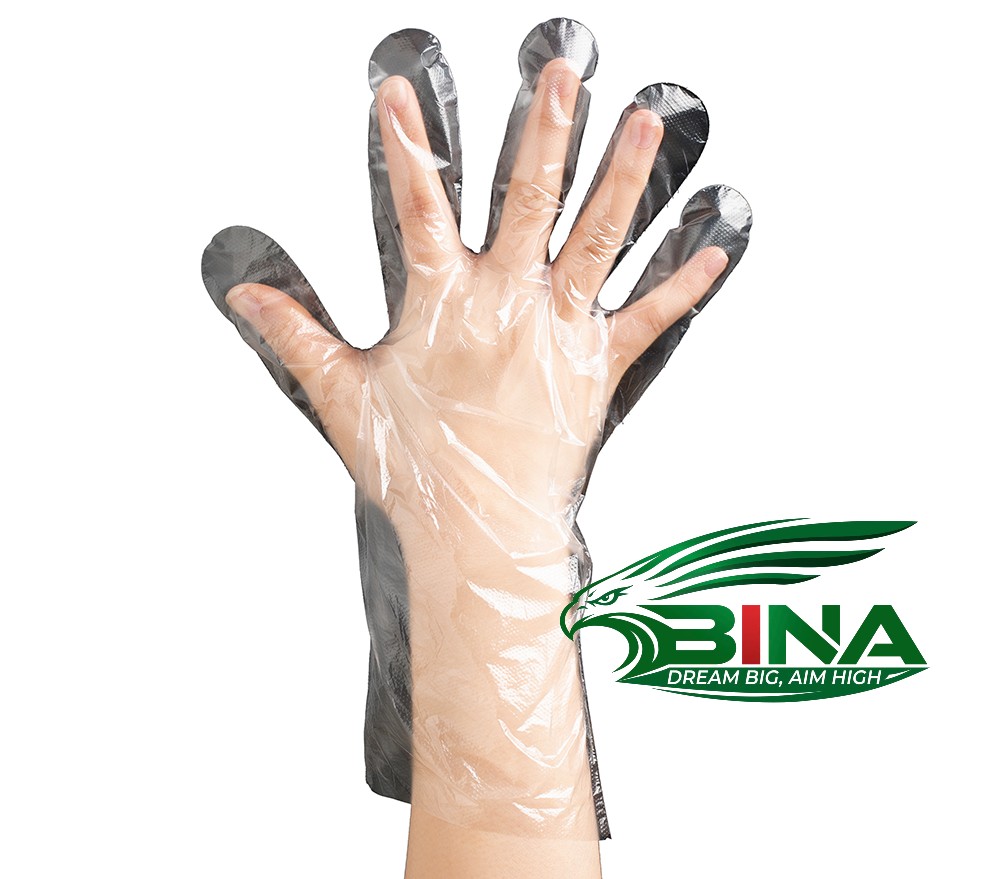 |
Tabla resumen comparativa de guantes de nailon PE, CPE, TPE:
| Feature | PE gloves | CPE gloves | TPE gloves |
| Material | Low-density polyethylene (LDPE) | Cast polyethylene | Thermoplastic elastomer |
| Durability | Low | Medium-High | Tall |
| Elasticity | Very low | Low | Tall |
| Fit/Comfort | Loose | Vừa phải | Chật/Thoải mái |
| Trị giáThấp nhất | Thấp nhất | Low-Medium | Average |
| Suitcase | Smooth/Basic | Embossed/Excellent | Smooth/Soft |
| Best for | Prepare some light snacks | Heavy cleaning/Wet work | High dexterity/Long-term use |
In summary:
- To maximize savings: Choose PE.
- For greater durability/better grip: Choose CPE.
- For greater comfort, fit, and flexibility: Choose TPE.
Detailed information about Hadupack we
 |