


Description
Disposable Warning Barrier Tape
Non-Adhesive Polyethylene and Polypropylene Warning Tape Rolls for Quick Area Isolation. When you need to quickly isolate a potentially hazardous area, barrier tape is one of the fastest and most cost-effective solutions available.
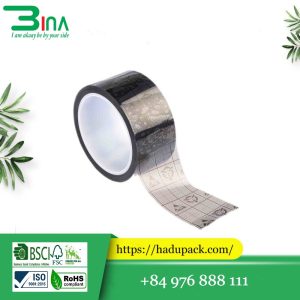
Disposable Warning Barrier Tape (Product Code: Hadupack-I) is a non-adhesive polyethylene warning tape designed to provide clear visual warnings and effective area restriction at construction sites, electrical maintenance areas, traffic accident scenes, and restricted-access zones.
◆ Learn More:
- https://hadupack.com/san-pham/bang-keo-che-phu/
- https://hadupack.com/san-pham/bang-dinh-kraft/
- https://hadupack.com/san-pham/bang-dinh-dien/
 |
Professional-grade warning barrier tape is typically made from non-adhesive polyethylene film because it is lightweight, flexible, and suitable for temporary indoor and outdoor applications.
- Product Name: Disposable Warning Tape / Isolation Warning Tape / Road Barrier Warning Tape
- Product Code: Hadupack-I
- Material: Non-adhesive PE (Polyethylene) Film / PP (Polypropylene) Film
- Width: 6 cm
- Standard Length: 65 m/roll
- Custom Length: Available (up to 500 m)
- Printing Options: Standard Warning Patterns and Custom-Printed Isolation Warning Tape (Logos, Text, Phone Numbers, and Multilingual Messages)
- Customization Options: Wide Range of Colors and Pre-Designed Warning Message Templates (Final Wording and Designs Must Comply with Site Regulations and Local Requirements)
 |
What Is Safety Barrier Tape?
Safety barrier tape is commonly used to warn, guide, and restrict access by establishing boundaries around temporary hazardous areas. It creates clearly defined boundaries, informs people where they should remain, and helps site managers maintain order during construction, maintenance, or emergency response operations.
Safety barrier tape is typically non-adhesive. It is designed to be stretched and secured between traffic cones, posts, fences, or barricades. Depending on site conditions, it can be fastened using ropes, clips, nails, or other suitable fixing methods.
Safety barrier tape is different from adhesive warning tape or floor marking tape. Adhesive warning and floor marking tapes are designed to adhere to various surfaces and withstand foot traffic, cleaning, and abrasion.
In contrast, safety barrier tape is primarily used for temporary perimeter control and rapid area isolation. Understanding this distinction helps prevent purchasing the wrong type of tape and ensures proper use in different working environments.
 |
PE Film Performance: Why Is Non-Adhesive PE Warning Barrier Tape So Effective?
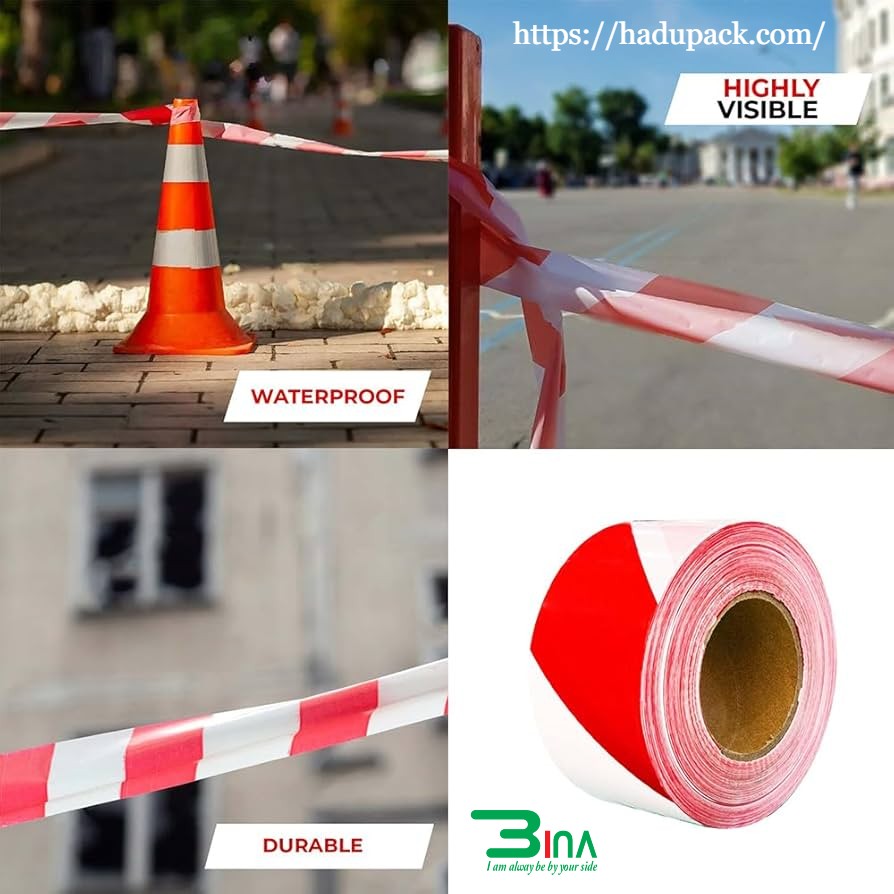
Warning barrier tape must maintain its visibility and structural integrity when subjected to tension, repeated stretching, wind and rain exposure, and frequent handling. Polyethylene (PE) film is widely used for this purpose because of its excellent flexibility and higher tensile strength compared to many brittle materials.
- Consistent Tension and Fewer Breakage Points: “Consistent tension” refers to the uniform thickness and stable unwinding performance of the film, which help prevent the tape from becoming loose or sagging in certain areas. In practical applications, this reduces accidental tearing and saves valuable time, as workers do not need to repeatedly replace broken sections of tape.
- Cold-Weather Preparation and Handling: Many types of non-adhesive warning barrier tape are suitable for both indoor and outdoor applications. Their practical performance includes resistance to sagging over long distances and the ability to maintain flexibility at low temperatures. These properties help ensure reliable installation and effective area isolation under varying weather conditions.
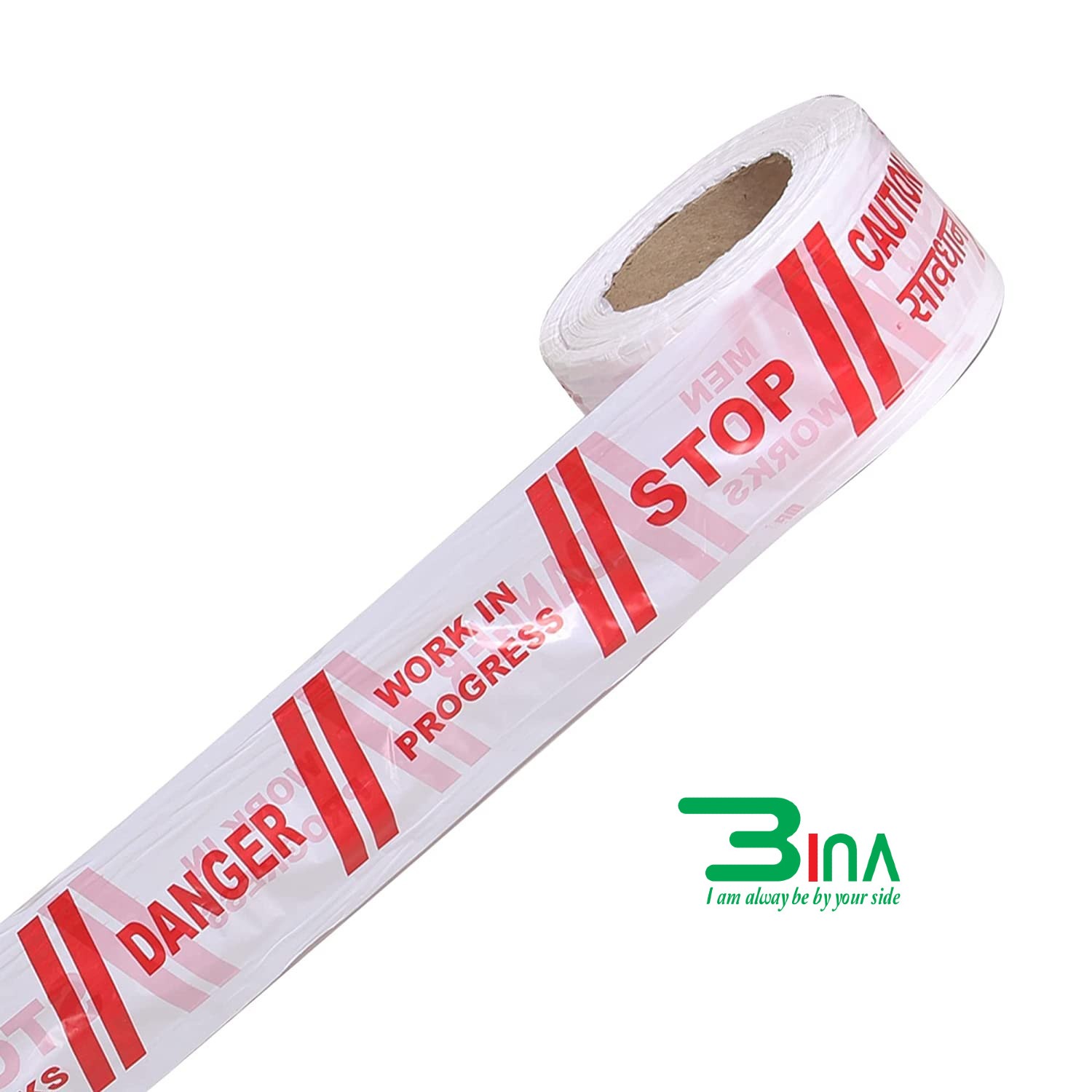
- Printed Message Visibility as a Key Performance Factor: At busy construction sites, warning barrier tape is only effective when its warning message is immediately noticeable. Product specifications often emphasize the importance of high-visibility printing and clear, consistent messaging. Repeated, Highly Visible Warnings: Bold warning text is printed repeatedly along the entire length of the tape roll, ensuring that safety messages remain clearly visible from multiple viewing positions.
 |
Thickness Classification and How to Choose the Right Thickness
Warning barrier tape is commonly classified by its thickness, which is measured in mils (thousandths of an inch). Common thickness options on the market range from 2 mil to 4 mil, with 3 mil being a popular choice for standard-duty applications.
Typical Selection Guidelines (Simple and Practical):
- 2 mil (Economy Grade): Suitable for short-term work areas, light wind conditions, and temporary construction sites requiring quick installation and removal.
- 3 mil (Standard Grade): Ideal for general construction sites, utility work, and routine maintenance applications. It provides a practical balance between durability, flexibility, and cost-effectiveness.
- 4 mil (Heavy-Duty Grade): Designed for applications requiring greater tensile strength, longer barrier spans, and resistance to rough handling. These tapes generally offer higher tensile strength and elongation performance.
When comparing warning barrier tape specifications from different suppliers, it is important to evaluate not only the tape thickness but also the clarity of printed warning messages and roll quality.
Even thicker barrier tape may fail to perform effectively in real-world applications if the printing is unclear or the roll quality is poor.
 |
Warning Systems: Colors, Stripes, and Warning Patterns
Warning barrier tape is effective because it enables quick hazard identification. High-contrast stripes and clearly printed warning messages help reduce hesitation and encourage people to follow safety regulations, even when their attention is divided.
Color Guidelines (Following General Safety Standards):
Many workplaces use yellow warning markings for general caution purposes. The Occupational Safety and Health Administration (OSHA) safety color-coding system designates yellow as the primary color for caution signs and the marking of physical hazards, such as tripping and falling risks.
Warning Patterns Matter:
A. Striped Warning Barrier Tape
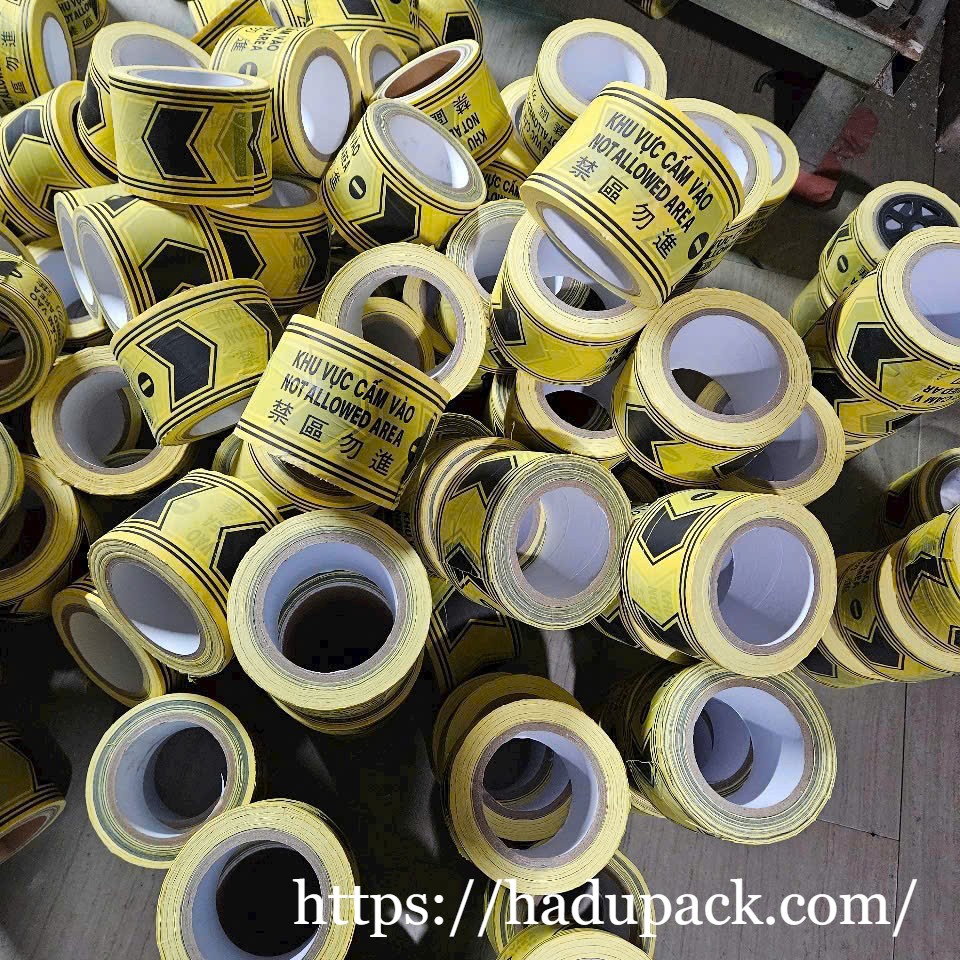
For example, yellow and black striped warning tape is commonly used in situations requiring an immediate visual indication of potential danger. Additional printed warning messages reinforce the intended meaning and help prevent confusion.
Color Selection Guide (Quick Reference for Purchasing):
We maintain a comprehensive color selection guide to help customers choose suitable warning barrier tape colors based on workplace regulations, local safety standards, and project requirements.
Popular options include:
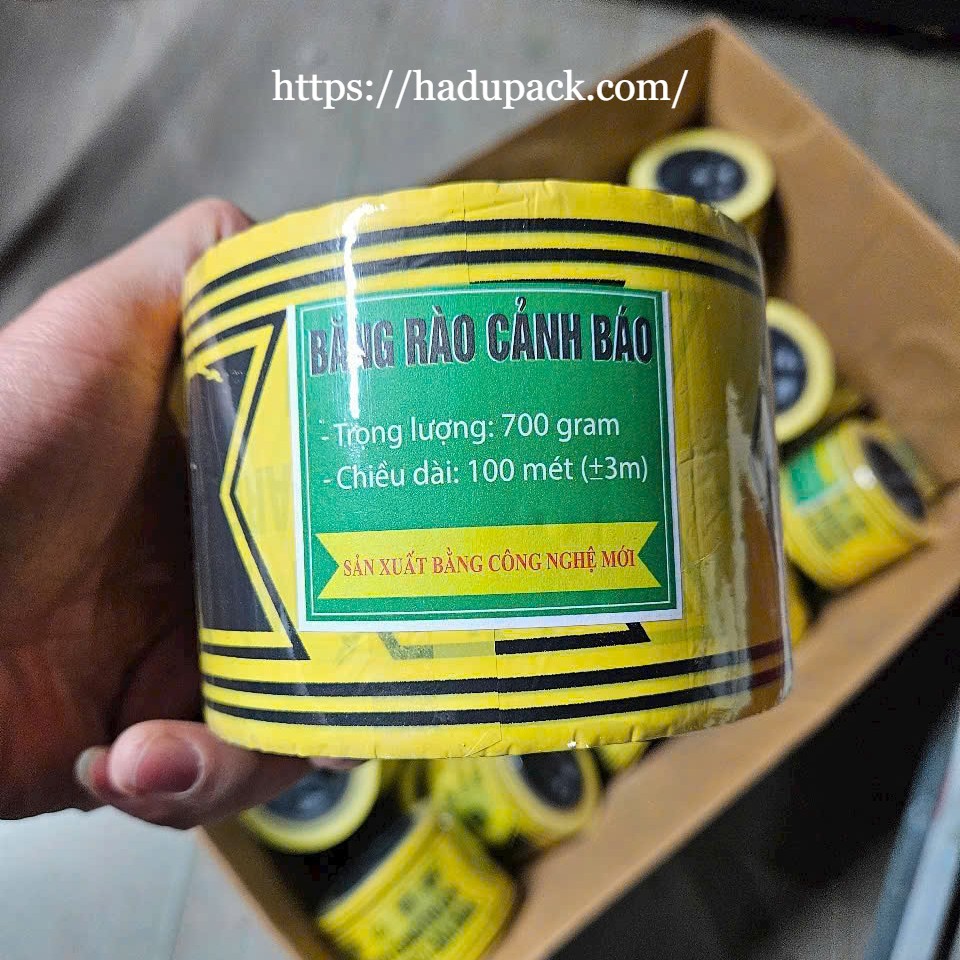
- Yellow and Black Striped Warning Tape: General Hazards, Caution, and Work Areas.
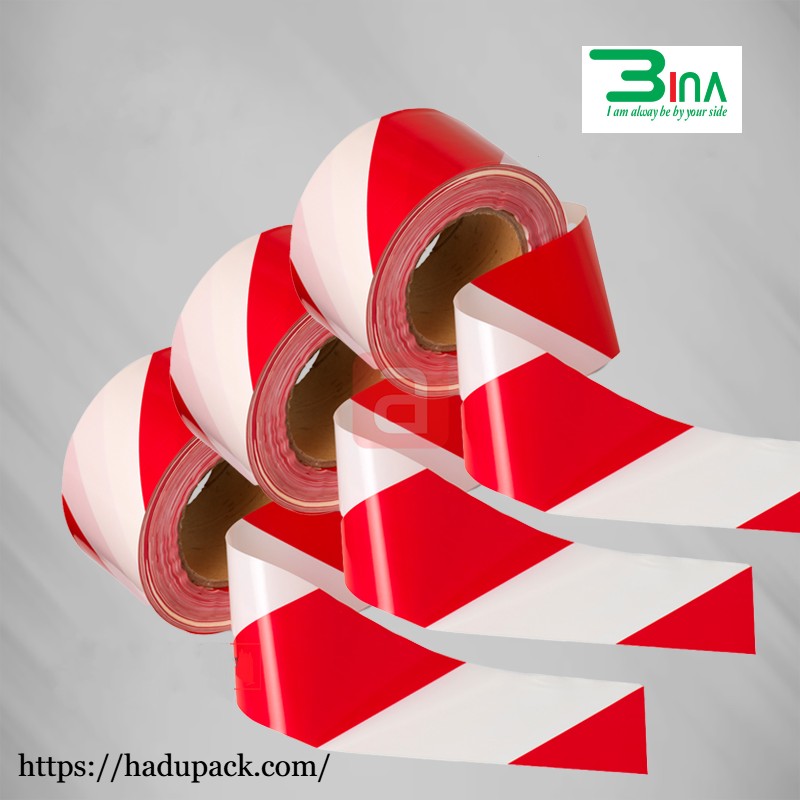
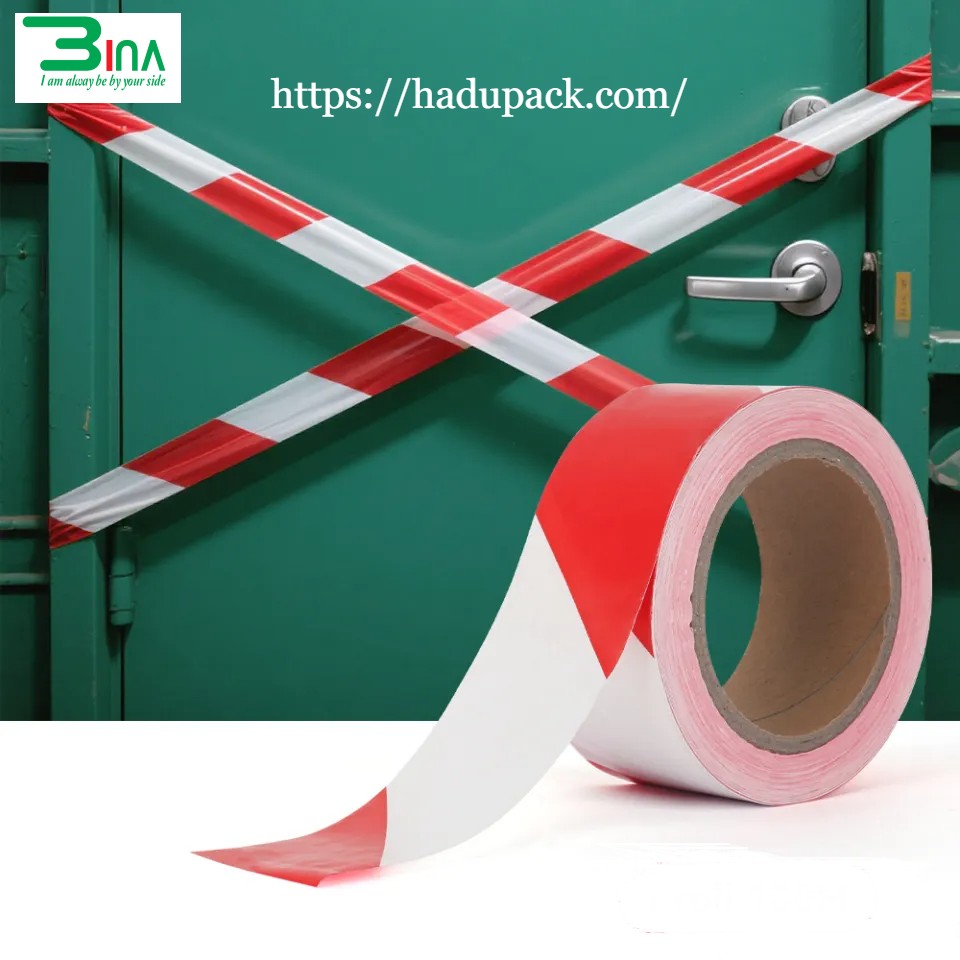
- Red and White Striped Warning Tape: Danger Zones and Restricted Access Areas.
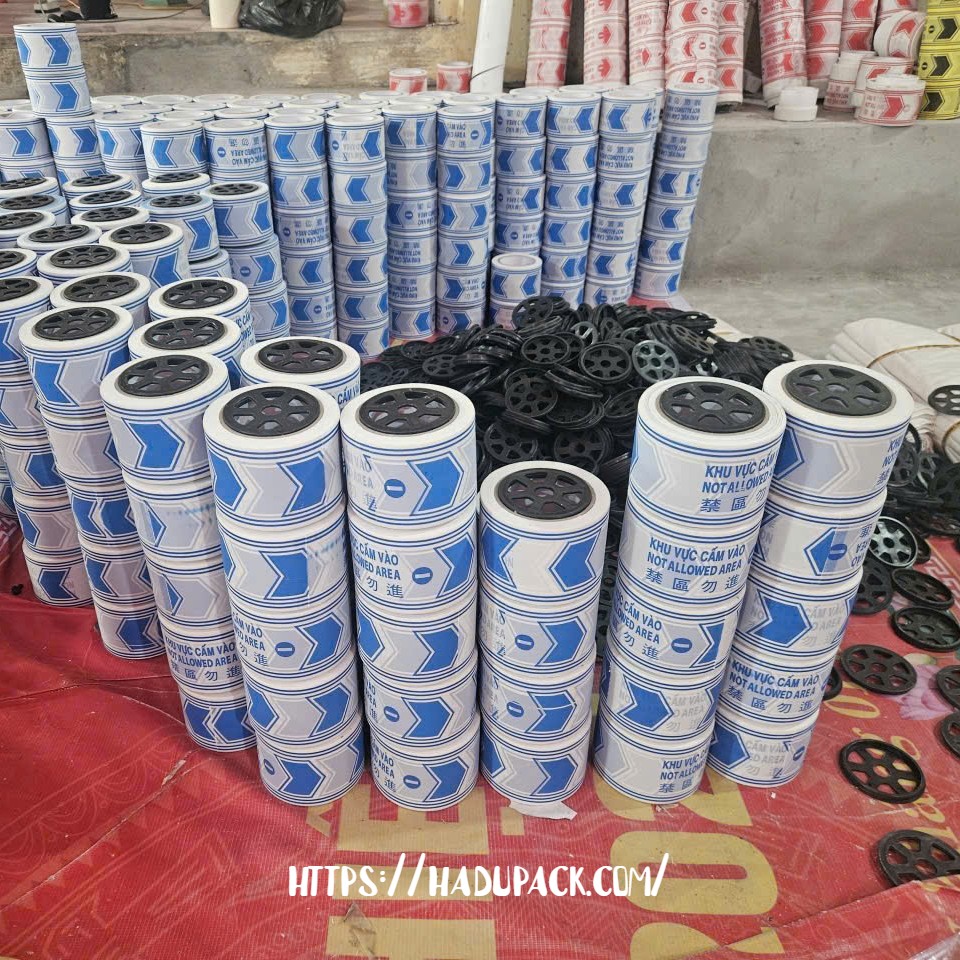
- Blue and White Striped Isolation Tape: Safe Routes, Temporary Areas, and Informational Boundaries.
- Green Isolation Tape: Controlled Areas and Designated Zones.
- Orange Warning Tape: Construction Areas and Temporary Access Routes.
- Pink Isolation Tape: Special Temporary Markings and Incident Control Areas.
- White Isolation Tape / Transparent Isolation Tape: Indoor Area Management Where Subtle Visual Marking Is Required.
Note: These color applications are general examples. Actual color meanings and requirements may vary depending on local regulations, industry standards, and site-specific safety procedures.
If you require a specific warning tape pattern or need to comply with particular workplace color-coding standards, we can customize production according to your requirements.
Warning Message Template Library (Standard Examples + Custom Text)
To streamline the purchasing process and minimize unnecessary back-and-forth communication, we provide a comprehensive library of warning message templates, including standard warning phrases and customizable text options.
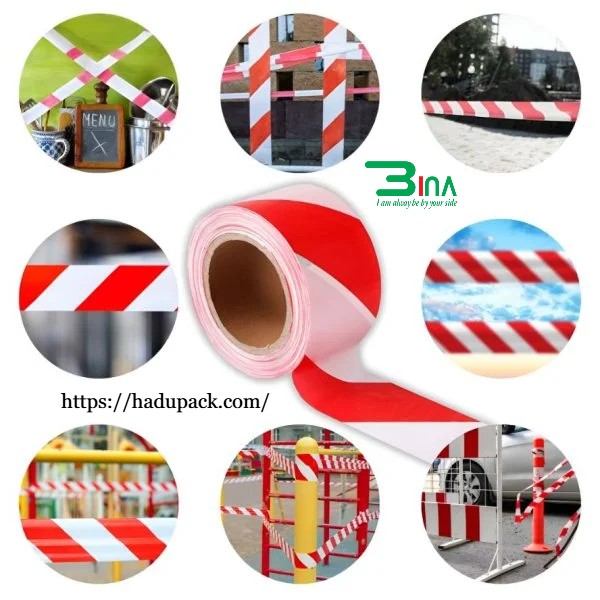 |
Warning Barrier Tape Product Options (Customizable)
Common Warning Messages Include:
CAUTION / DANGER / WARNING
- DO NOT ENTER / NO ENTRY / NO PARKING
- AUTHORIZED PERSONNEL ONLY
- WORK AREA / CONSTRUCTION AREA
- CUSTOM TEXT (Tailored to Your Site-Specific Regulations)
For projects requiring more clearly defined access control, you can specify:
- Company name, contact phone number, and project identification code.
- Multilingual warning messages for international or multilingual workforces.
- Any specific safety instructions required by the site safety manager.
Custom-Printed Warning Barrier Tape
Custom-printed warning barrier tape not only enhances brand visibility but also supports better safety compliance and more effective site management.
Customization Options:
- Company logo and name.
- On-site contact phone number.
- Project-specific warning messages, including multilingual text.
- Special printing patterns, such as stripes combined with text or repeating colored blocks.
How We Maintain Printing Quality:
Many professional-grade warning barrier tapes feature warning messages repeated continuously along the length of the roll. This ensures that safety warnings remain clearly visible even after the tape has been cut, installed, or repositioned.
Proofing and Approval Process (Risk Reduction):
A reliable customization process includes reviewing and approving the artwork before production. This helps minimize printing errors and ensures that the finished warning barrier tape meets your expectations.
Electrical Hazard Warning Tape: Utility and High-Voltage Work Areas
The primary objective of electrical maintenance safety is straightforward: prevent unauthorized personnel from entering hazardous work areas and maintain clearly defined safety boundaries.
Electrical hazard warning tape, utility warning barrier tape, and high-voltage warning tape are commonly used as visual safety barriers in the following areas:
- Electrical Switching and Maintenance Areas: Marking boundaries around electrical switching equipment and maintenance operations.
- Temporary Access Restrictions: Restricting unauthorized entry during electrical maintenance and repair work.
- Substation and Utility Corridor Construction: Establishing visible safety boundaries around substations, utility corridors, and construction zones.
- Emergency Response Perimeters: Defining restricted areas during electrical incidents and emergency response operations.
Important Note:
This page focuses on above-ground, non-adhesive warning barrier tape designed for visual area control and temporary access restriction.
If you require underground detectable warning tape, please note that this is a different product category and must be quoted separately.
Non-adhesive warning barrier tape is intended for visual warnings and should not be used as a substitute for physical barriers or other required electrical safety measures.
 |
Choosing the Right Warning Barrier Tape
- Construction Site Warning Tape: Construction warning barrier tape is used to cordon off excavation areas, scaffolding zones, equipment movement routes, and temporarily restricted areas. High-contrast colors help guide visitors and construction workers while improving safety awareness on-site.
- Police Line Tape / Crime Scene Barrier Tape: For incident control and crime scene management, police line tape and crime scene warning tape help establish clearly defined boundaries and communicate specific access restrictions.
- Asbestos Hazard Tape / Radiation Warning Tape / Biohazard Warning Tape: In high-risk areas, accurate warning messages are more important than color alone. We offer standard warning message templates and support customized text based on your Environmental, Health, and Safety (EHS) requirements.
- Do Not Enter Tape / No Parking Barrier Tape: These warning tapes are commonly used in applications requiring strict access control and compliance with site regulations. Clear, direct warning messages can help minimize disputes on-site and improve the enforcement of access restrictions.
How to Properly Install Warning Barrier Tape
Consistent and proper installation of warning barrier tape can significantly improve its effectiveness.
- Secure the Tape Firmly: Attach the warning barrier tape to traffic cones, posts, fences, or road barricades. Keep the tape properly tensioned to prevent sagging and maintain clear visibility.
- Use Repeated Warning Messages: Choose barrier tape with continuously repeated warning text when managing areas with multiple entry points or heavy pedestrian and vehicle traffic. This helps ensure that safety messages remain visible from different directions.
- Combine Warning Tape with Physical Barriers: When the level of risk requires stricter access control, use warning barrier tape together with physical safety equipment, such as traffic cones, posts, or temporary fencing.
These measures help improve compliance with safety requirements and reduce the likelihood of unauthorized individuals crossing restricted-area boundaries.
 |
Supplier Quality and Reliability
What You Should Check Before Purchasing
When purchasing warning barrier tape from a manufacturer or supplier, it is important to verify the practical quality factors that directly affect its performance:
- Consistent Film Thickness: Helps minimize accidental tearing and ensures reliable performance during installation and use.
- Roll Quality: Ensures smooth unwinding with minimal twisting or tangling.
- Print Clarity and Alignment: Makes warning messages easy to read from a distance.
- Color Consistency Between Production Batches: Ensures compliance with factory standards and maintains a uniform appearance across different orders.
For applications involving strong winds or repeated handling, reinforced warning barrier tapes are also available on the market. These products offer higher tensile strength and improved dimensional stability.
Related Types of Warning Tape (Different Product Categories)
Some of the search terms in your list refer to different categories of warning and safety tapes:
- Warning Tape / Warning Stickers / Adhesive Caution Tape: Self-adhesive products designed for direct application to various surfaces.
- Floor Warning Tape / Floor Hazard Marking Tape: Specifically designed to adhere to floor surfaces and withstand regular pedestrian traffic.
- Anti-Slip Warning Tape / Anti-Trip Safety Tape: Features a textured surface that enhances slip resistance and helps prevent slipping accidents.
- Reflective Safety Warning Tape: Manufactured using reflective materials to improve visibility in low-light conditions and enhance safety.
- ESD Warning Tape / Anti-Static Warning Tape: Used to mark electrostatic discharge (ESD) controlled areas and support static electricity control procedures.
- Halloween Warning Tape / Decorative Caution Tape: Decorative tapes commonly used for retail displays, themed events, and Halloween decorations, rather than for industrial safety or hazard control.
Frequently Asked Questions (FAQs)
Is Barrier Tape Adhesive?
No. Most barrier tapes and barricade tapes are made from non-adhesive polyethylene (PE) film. They are typically secured to posts, poles, or barriers using ropes, clips, nails, or other suitable fastening methods.
What Is Barrier Tape Used For?
Barrier tape is used to warn the public and restrict access to temporarily hazardous areas, such as construction sites, maintenance zones, repair areas, and accident scenes. It helps establish visible boundaries and improve safety awareness.
Which Thickness Should I Choose: 2 Mil, 3 Mil, or 4 Mil?
Common barrier tape thicknesses range from 2 to 4 mil, with 3 mil being a widely used standard option that offers a good balance between durability and cost-effectiveness.
For longer barrier spans, strong winds, or demanding outdoor environments, thicker and more durable tape is generally recommended.
Can You Supply 500-Meter Barrier Tape Rolls?
Yes. Our standard barrier tape is available in rolls of 65 meters. We also offer customized roll lengths, including rolls up to 500 meters, to accommodate large perimeter control requirements.
Can You Print Our Company Logo and Phone Number?
Yes. We offer custom-printed barrier tape featuring company logos, warning messages, contact phone numbers, and other personalized information. Repeated printing patterns are also available to improve visibility along the entire length of the tape.
Do You Have a Library of Warning Message Templates?
Yes. We provide a selection of standard warning message templates and can also print customized text based on your site-specific safety regulations and local requirements.
Which Color Should I Choose: Yellow/Black, Red/White, or Blue/White?
- Yellow/Black: Commonly used for general caution warnings, potential hazards, and work areas.
- Red/White: Often used to indicate danger zones and restricted-access areas.
- Blue/White: Commonly used for designated areas, temporary boundaries, or informational markings, depending on site regulations.
The U.S. Occupational Safety and Health Administration (OSHA) designates yellow as the primary color for caution signs and the marking of physical hazards.
However, color requirements may vary depending on local safety standards and workplace regulations.
Is Your Barrier Tape Suitable for Outdoor Construction Sites?
Yes. Barrier tape is generally suitable for both indoor and outdoor applications. Many products are designed to withstand typical weather conditions while maintaining flexibility, visibility, and reliable handling performance during installation.
Does Cold-Resistant Barrier Tape Perform Well in Cold Weather?
Many non-adhesive barrier tapes are designed to maintain good flexibility at low temperatures and resist sagging under tension. These characteristics make them suitable for winter construction projects and temporary outdoor area isolation.
Actual cold-weather performance depends on the material formulation and product specifications.
What Factors Affect the Price of Warning Barrier Tape?
The price of warning barrier tape typically depends on several factors, including:
- Tape Thickness: Common options include 2 mil, 3 mil, and 4 mil.
- Roll Length: Standard or customized roll lengths.
- Color and Printing Complexity: Solid colors, striped patterns, or custom designs.
- Warning Messages: Standard printed text or customized multilingual information.
- Packaging Requirements: Individual rolls, bulk packaging, or customized packaging solutions.
What Is the Difference Between Barrier Tape and Floor Warning Tape?
Barrier tape is typically non-adhesive and is used to establish temporary warning boundaries around hazardous or restricted areas. It is usually stretched between posts, cones, fences, or other physical supports.
In contrast, floor warning tape features an adhesive backing and is designed to be applied directly to floor surfaces. It is commonly used for floor marking, hazard identification, and traffic guidance in warehouses, factories, and other workplaces.
Floor warning tape is generally engineered to withstand pedestrian traffic, cleaning, and abrasion, making it more suitable for longer-term surface marking applications.
Request a Quote: Standard or Custom-Printed Warning Barrier Tape Rolls
If you are looking to source warning barrier tape rolls for regular use at construction sites or industrial facilities, we can provide the following products and services:
Bulk Supply of Standard Hadupack-I Warning Barrier Tape (65 m/Roll)
- Custom Roll Lengths: Available in customized lengths of up to 500 meters per roll.
- Custom Printing Services: Personalized printing options, including company logos, warning messages, contact phone numbers, and multilingual text.
- Color and Warning Message Selection: A wide range of colors and pre-designed warning message templates to streamline the design approval and ordering process.
Please share your intended application (such as construction, electrical maintenance, security, or incident control), preferred tape colors, and warning message requirements.
At Hadupack, we will recommend the most suitable warning barrier tape solution based on your specific on-site requirements, helping you achieve effective safety management, reliable performance, and cost efficiency.