


Description
What is cleanroom anti-static fabric?
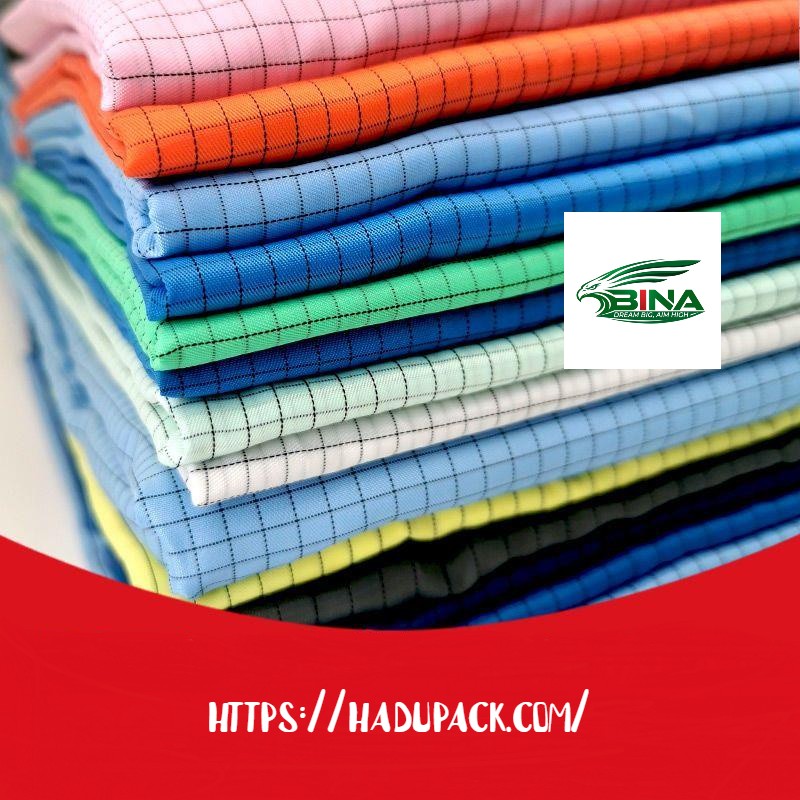
Anti-static fabric used in cleanrooms (commonly known as conductive silk or cleanroom anti-static fabric) is a special type of fabric designed specifically for cleanroom environments. It combines two core functions: “anti-static” and “clean (ultra-clean)”, aiming to prevent the accumulation of static electricity that can lead to dust adhesion, while ensuring that the fabric itself does not generate lint, protecting precision components from damage or contamination.
 |
◆Learn more:
- https://hadupack.com/san-pham/cuon-giay-lau-may-smt/
- https://hadupack.com/san-pham/gang-tay-latex/
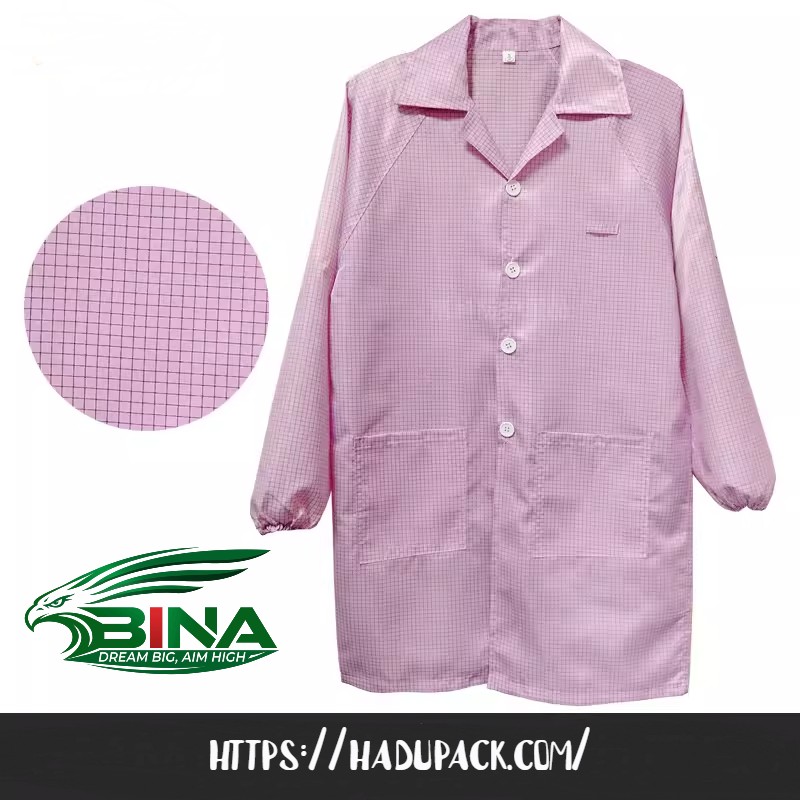
- https://hadupack.com/san-pham/quan-ao-phong-sach/
Here is a detailed introduction to anti-static fabric used in cleanrooms:
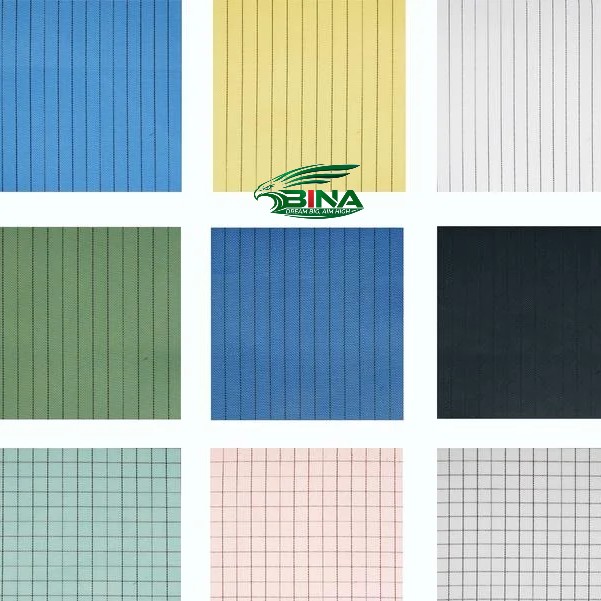
1. Core composition and structure
- Material: Polyester fibers are commonly used as the main material because they are less prone to pilling.
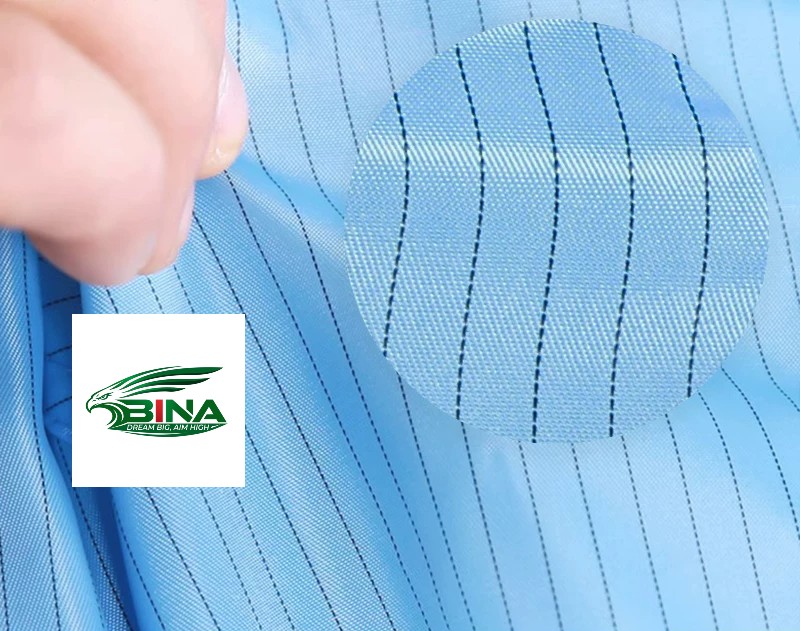
- Anti-static principle: Conductive fibers (typically carbonized conductive fibers or metal composite fibers) are embedded into the fabric at specific intervals.
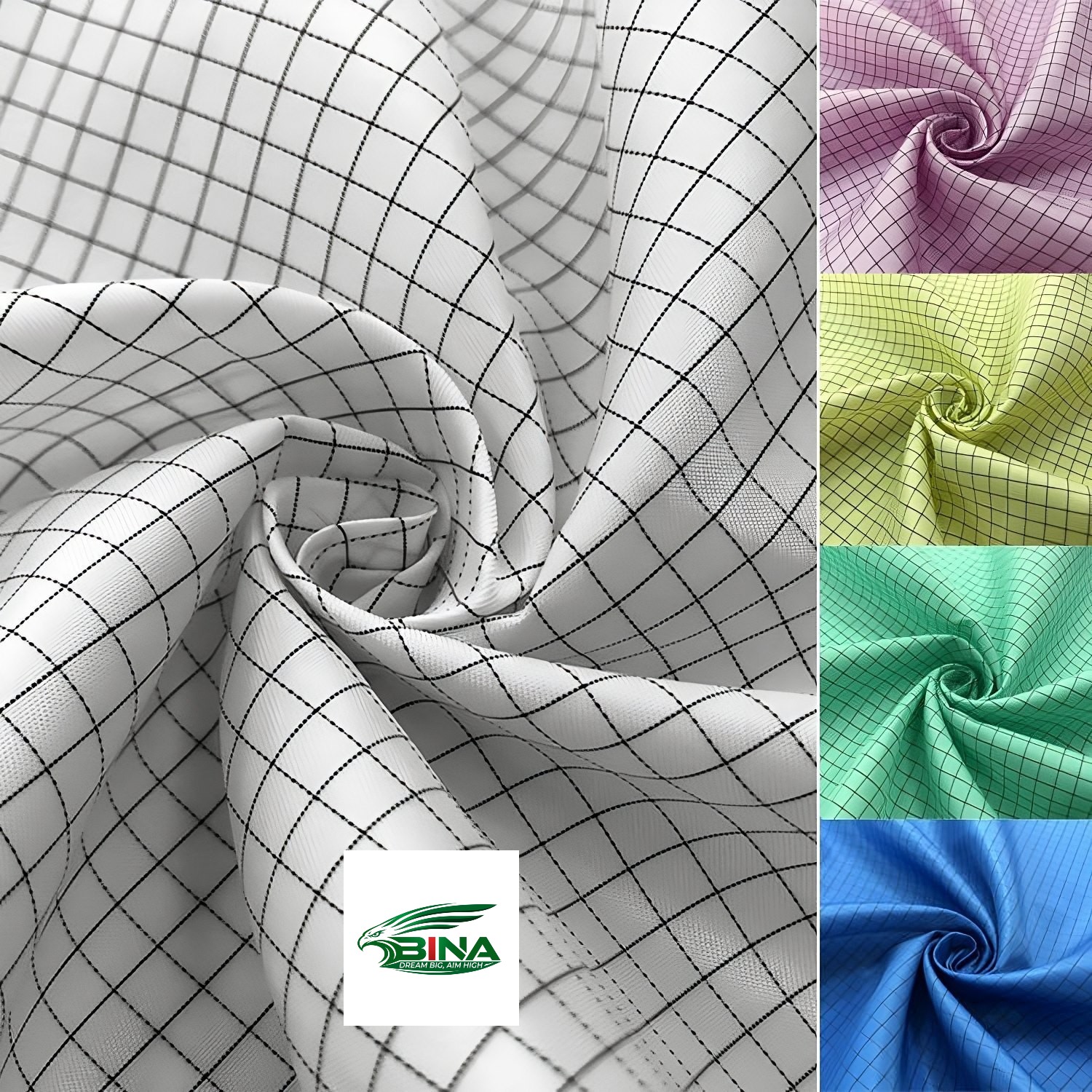
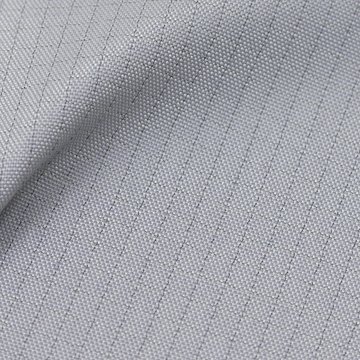
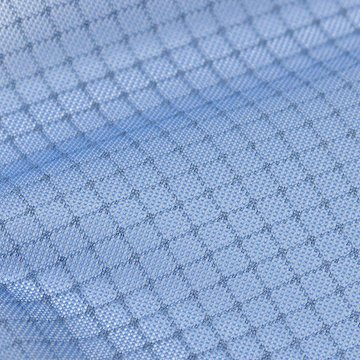
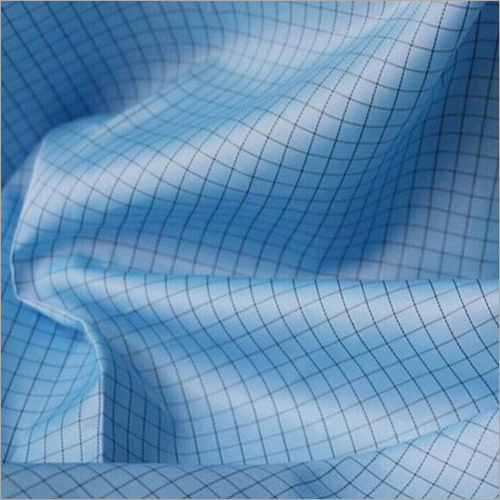
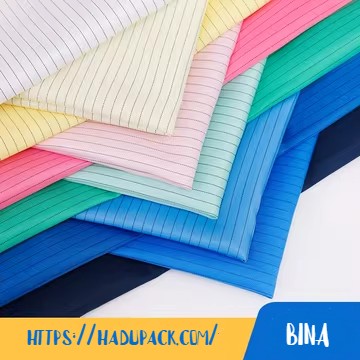
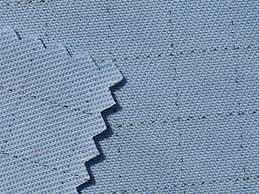
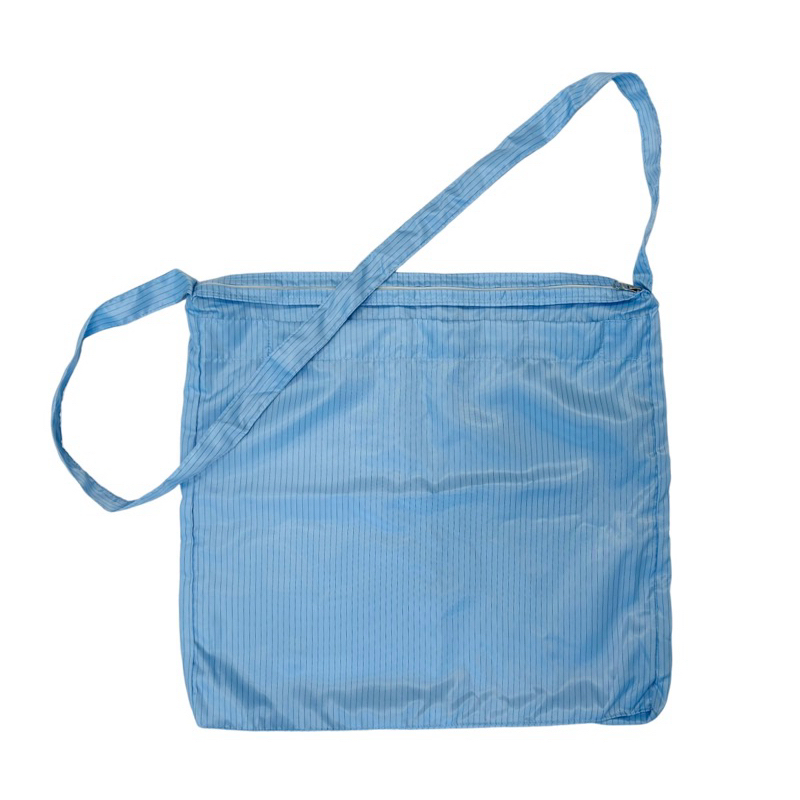
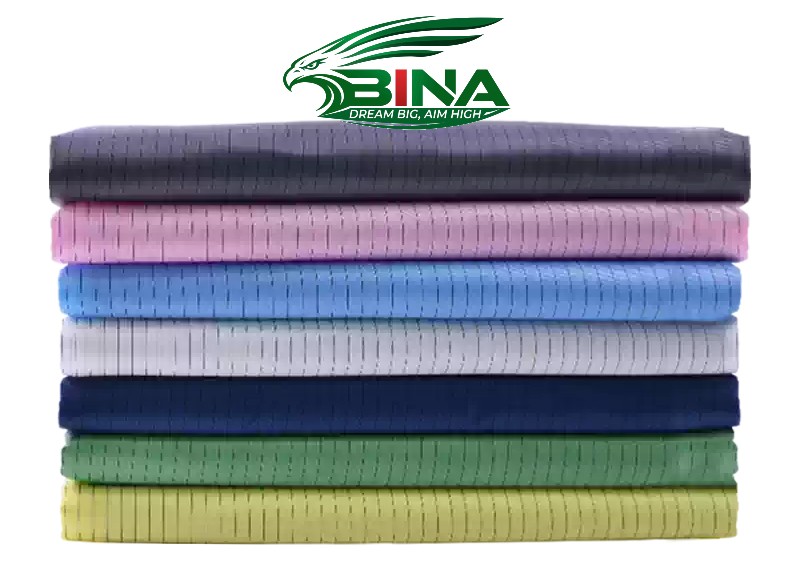
- Weaving method: Special weaving techniques (such as stripe weaving or grid weaving) are used to create a dense structure that effectively prevents the leakage of ultrafine dust or human skin flakes from inside the fabric.
 |
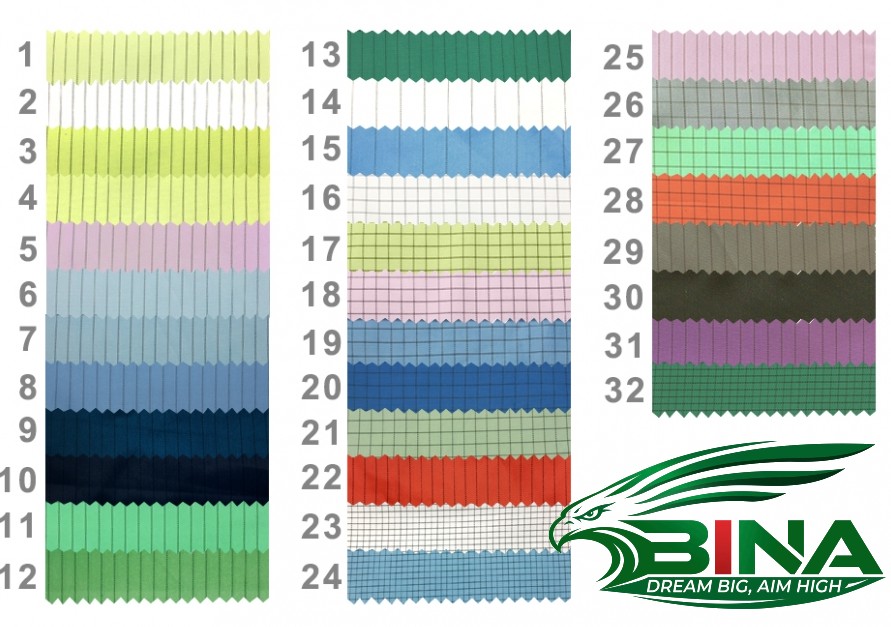
2. Key Features
- Permanent antistatic: Conductive fibers are integrated to discharge static electricity from the human body and clothing through conductive pathways, unaffected by environmental dryness, preventing static electricity from attracting dust.
- Dust-free/Low-dust: Made from synthetic fibers with smooth surfaces, generating very little dust even under friction, suitable for high-cleanliness environments.
- Washability: Excellent washability, able to withstand special cleaning and sterilization methods designated for cleanrooms.
High-efficiency filtration: The extremely small gaps between fibers effectively limit the leakage of particles from clothing.
 |
3. Industries and Application Scenarios
Anti-static cleanroom fabric is widely used in environments with strict requirements for electrostatic sensitivity and cleanliness:
- Electronics Manufacturing: Semiconductor factories, display manufacturing, circuit board assembly (ESD environments).
- Precision Instruments: Optical components, aerospace equipment.
- Pharmaceuticals and Biotechnology: Pharmaceutical factories, laboratories, microbiological engineering.
- Oil and Gas/Chemicals: Explosion-proof anti-static protection in high-risk areas.
 |
Cleanroom Antistatic Fabric Production Process
The cleanroom antistatic fabric production process is a high-tech manufacturing process that combines high-performance synthetic fibers with specialized conductive technology. The core objective is to ensure that the fabric not only has long-lasting antistatic properties but also controls particle generation (dust emission).
The following are the main steps in the production process of cleanroom antistatic fabric:
1. Raw Material Selection
- Base fibers: Mainly use continuous polyester fibers or microfiber blends made from polyester and nylon. Continuous fibers are used instead of staple fibers to prevent fiber shedding and cleanroom contamination.
- Conductive fibers: Conductive fibers or antistatic synthetic fibers are produced by incorporating metallic or organic conductive materials during the weaving process. Carbonized conductive fibers are commonly used.
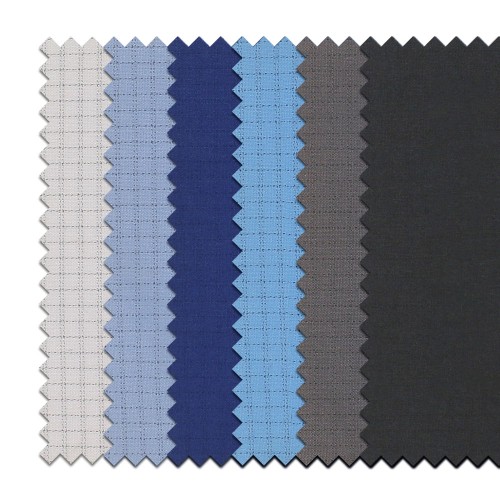
2. Weaving Technology
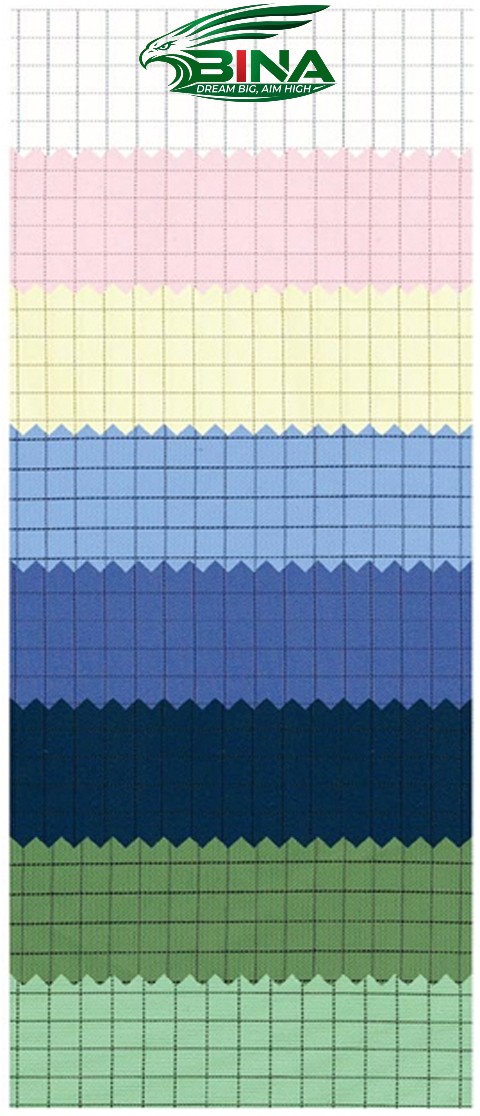
- Integration method: Conductive fibers are woven into the fabric at nearly equal or regular intervals during the weaving process.
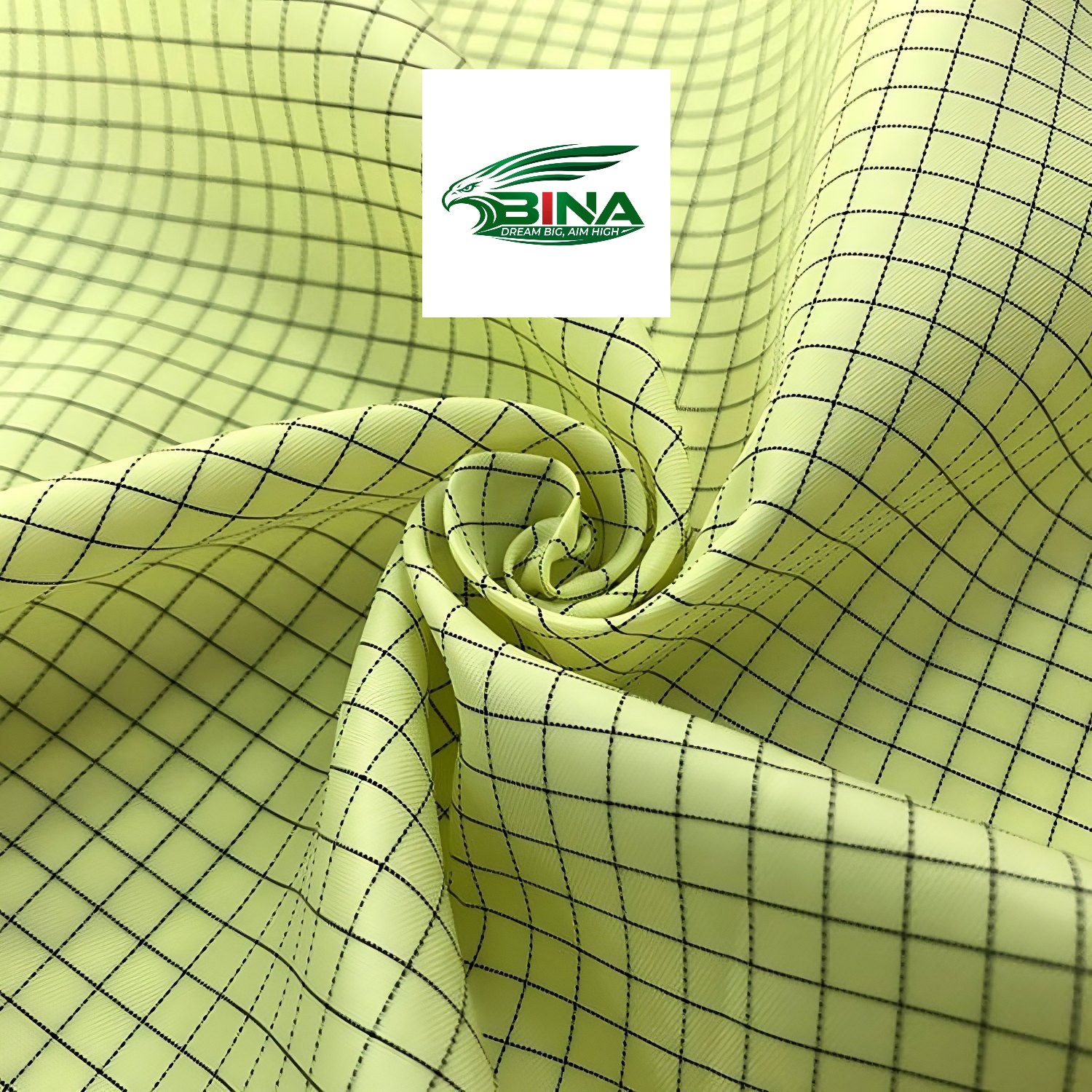
Fabric structure: Striped or grid structures are mainly used. These structures effectively disperse electrical charges. - Specifications: The weaving process must minimize particle generation, typically using high-density weaving to enhance the fabric’s dust resistance. Weaving types include woven fabric (machine weaving) and knitted fabric.
 |
 |
3. Principles and functions of anti-static protection
- Conductive mechanism: Anti-static fabric relies on corona discharge between carbonized conductive fibers and the air, as well as the dissipation and neutralization of charges.
- Structural requirements: It is essential to ensure that the anti-static fibers form a continuous conductive network on the surface of the fabric.
4. Finishing process
- Cleaning and purification: The textile undergoes professional dust-free cleaning (typically using deionized water) to remove particles and residual chemicals from the manufacturing process.
- High-temperature setting: The setting process ensures a tight fiber structure, preventing expansion.
- Inspection and verification: Helmke roller tests are conducted regularly to measure the particle (dust) emissions of the fabric, ensuring compliance with ISO cleanroom standards (e.g.: ISO Class 5).
5. Garment production details
- Overlock technology: Overlock machines are used during cleanroom garment production to effectively minimize particle emissions.
- Special accessories: Dust-free hook-and-loop fasteners are used to prevent fabric dust from contaminating the environment.
 |
 |
 |
 |
 |
 |
Common Problems in the Production of Anti-Static Fabric
In the production process of cleanroom anti-static fabric (ultra-clean anti-static fabric), to ensure that the fabric has high cleanliness, excellent washability, and outstanding anti-static performance, the technical and production issues commonly encountered mainly focus on the handling of conductive fibers, weaving defects, pretreatment, and finishing processes.
The following are common problems encountered during production:
1. Problems with the Embedding and Connection of Conductive Fibers
- Breakage or floating of conductive fibers: Conductive fibers (usually carbon fibers or metal composite fibers) are relatively brittle and prone to breaking during weaving. Broken conductive fibers will protrude from the fabric surface, not only affecting its appearance but also reducing its anti-static performance.
- Breakage of the conductive grid (Poor connection): Anti-static fabric requires the conductive fibers to form a continuous grid (stripes or mesh). If the weaving process is improper, the grid will be broken and fail to form an effective static discharge channel.
2. Problems with Static Electricity Accumulation During Production and Processing
- Fabric attracting metal components: In a dry environment, fabric fibers generate strong static electricity due to friction. During drying or finishing, the fabric is easily attracted to metal machinery, causing tangling and affecting production continuity.
- Uneven fabric rolling: Since fabrics of the same type carry the same electrical charge, repulsion occurs when layers of fabric are stacked, making it difficult to neatly fold the finished fabric rolls, thereby affecting the subsequent finishing process.
 |
 |
3. Defects during pretreatment and dyeing
- Uneven dyeing and white spots: If the pretreatment process before bleaching is incomplete (e.g., incomplete removal of grease and limescale residues), white spots and white patches will appear after dyeing, resulting in a fabric surface that does not meet clean standards and fails to meet cleanroom requirements.
- Differences in dyeing color in conductive fibers: The dye absorption capacity of conductive fibers (usually coated with polyester or nylon) and the main fibers (polyester) differs, easily leading to uneven color intensity in the conductive strips.
4. Weaving quality issues (affecting cleanroom properties)
- Insufficient fabric density/incorrect structure: Cleanroom fabrics require strict control of the weaving process, often using strips or meshes. If the density is insufficient or the fabric structure is loose, it cannot effectively prevent dust particles generated by the human body from dispersing into the environment.
- Uneven fabric thickness: In the production of nonwoven fabrics, uneven thickness can easily occur, affecting its filtration efficiency.
5. Finishing and surface treatment issues
- Antistatic agent contamination: To temporarily improve antistatic performance, antistatic agents may be added to the surface. However, these organic substances can cause chemical contamination in cleanrooms, and the antistatic effect does not last.
- Over-drying: If temperature control is not properly managed during high-temperature drying of synthetic fibers such as polyester, it will lead to uneven fabric shrinkage, affecting the spacing of the antistatic mesh and the physical properties of the fabric.
 |
3. Defects during pretreatment and dyeing
- Uneven dyeing and white spots: If the pretreatment process before bleaching is incomplete (e.g., incomplete removal of grease and limescale residues), white spots and white patches will appear after dyeing, resulting in a fabric surface that does not meet clean standards and fails to meet cleanroom requirements.
- Differences in dyeing color in conductive fibers: The dye absorption capacity of conductive fibers (usually coated with polyester or nylon) and the main fibers (polyester) differs, easily leading to uneven color intensity in the conductive strips.
4. Weaving quality issues (affecting cleanroom properties)
- Insufficient fabric density/incorrect structure: Cleanroom fabrics require strict control of the weaving process, often using strips or meshes. If the density is insufficient or the fabric structure is loose, it cannot effectively prevent dust particles generated by the human body from dispersing into the environment.
- Uneven fabric thickness: In the production of nonwoven fabrics, uneven thickness can easily occur, affecting its filtration efficiency.
5. Finishing and surface treatment issues
- Antistatic agent contamination: To temporarily improve antistatic performance, antistatic agents may be added to the surface. However, these organic substances can cause chemical contamination in cleanrooms, and the antistatic effect does not last.
- Over-drying: If temperature control is not properly managed during high-temperature drying of synthetic fibers such as polyester, it will lead to uneven fabric shrinkage, affecting the spacing of the antistatic mesh and the physical properties of the fabric.
 |
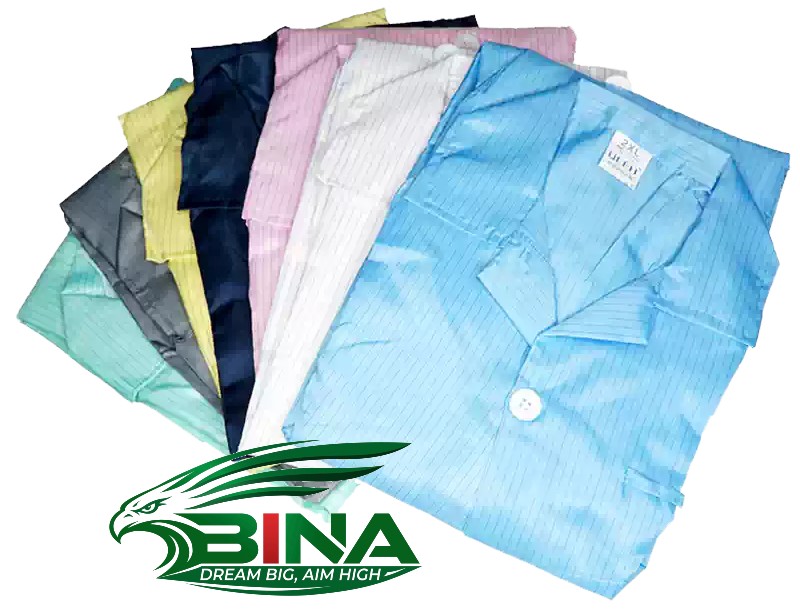
2. Mesh ESD Fabric
- Structure: Conductive fibers are embedded in polyester fibers in a mesh pattern (interwoven).
- Features: Compared with striped fabric, the conductive fibers in the mesh pattern are denser, resulting in lower electrical conductivity, better anti-static performance and superior dust resistance.
- Common specifications: 0.5cm mesh, 0.25cm mesh.
- Applications: Suitable for environments with high cleanliness requirements, such as Class 100 to Class 1000 microelectronics, precision instruments, aerospace and biopharmaceutical industries.
3. Ultra-clean Fabric
- Structure: Tightly woven from high-density, high-strength polyester fibers and high-performance conductive fibers, processed using special techniques.
- Features: Dust-free: Only continuous filaments are used, producing no lint.
- Durable anti-static properties: Electrical conductivity does not decrease significantly due to washing or friction.
- High filtration capability: Effectively prevents the dispersal of dust particles from the human body.
- Applications: Suitable for ultra-high-grade cleanrooms from Class 10 to Class 100.
4. Anti-static Knitted Fabric (ESD)
- Structure: Woven from conductive fibers and polyester using a special process.
- Features: Excellent breathability, warmth retention and comfort, while providing anti-static and dust-resistant properties.
- Applications: Commonly processed into anti-static knitted gloves, anti-static underwear and two-piece suits.
 |
 |
Precautions for Using Anti-Static Fabrics in Cleanrooms
The use of anti-static fabrics in cleanrooms (commonly used in the production of cleanroom clothing and workwear) is very important for industries sensitive to static electricity, such as electronics, precision instruments, and pharmaceuticals. To ensure their anti-static effectiveness and cleanliness, the following precautions should be observed:
1. Precautions for Wearing and Handling
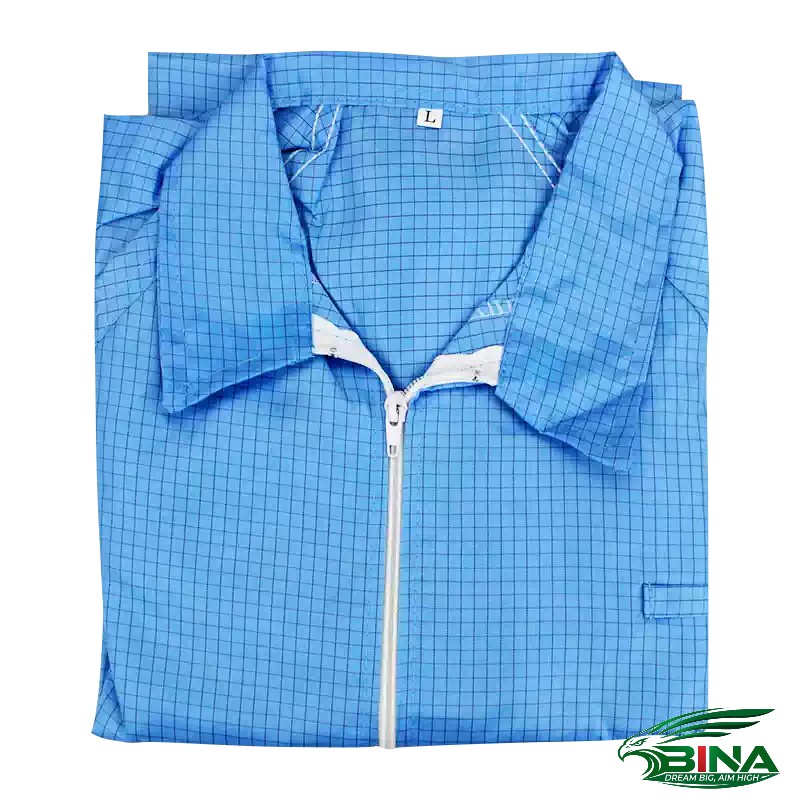
- Complete wearing requirements: Anti-static workwear must be made entirely of anti-static fabric, generally without a lining. If a lining must be used, the contact area of the lining must not exceed 20% of the total inner surface area of the garment.
- Designated areas for putting on and removing clothing: It is strictly prohibited to attach or wear any metal objects on anti-static clothing in the cleanroom. Clothing must be put on and removed in the designated changing room; this is strictly prohibited in areas where static-sensitive products are handled.
- Maintain cleanliness and integrity: Clothing must be kept clean and neat to ensure its anti-static function. If there are grease stains after use, they must be thoroughly cleaned before washing.
- Use with appropriate equipment: Must be used in combination with anti-static shoes, anti-static gloves, and other anti-static consumables.
 |
2. Precautions for Washing and Maintenance
- Special Washing Procedure: Anti-static clothing should follow the manufacturer’s washing instructions. Use a mild, neutral detergent and avoid using detergents containing bleach, fabric softeners, or harsh chemicals, as they may damage the conductive fibers.
- Avoid High Temperatures: Avoid washing and drying at high temperatures to prevent the fabric from deforming or reducing its anti-static properties.
- Check for Damage: Before washing, check for scratches, damage, and loose fasteners.
- Professional Cleaning: It is recommended to have the clothing regularly washed and maintained by a professional laundry service for cleanrooms.
 |
3. Storage and Regular Inspection
- Dry storage: Keep the clothing dry and store it in a dry, well-ventilated warehouse, away from direct sunlight.
- Regular inspection: Anti-static clothing does not have permanent effectiveness. Its conductive function (such as surface resistance) must be checked regularly. If the conductivity decreases or the clothing is damaged and no longer meets safety requirements, it must be replaced immediately. Complying with the above requirements can effectively prevent static discharge from damaging precision components, while maintaining the cleanliness level of the cleanroom.
In summary, the core of cleanroom anti-static fabric production is “long-staple polyester + conductive carbon fiber (stripes/grid) + high-density weaving + dust-free finishing”, ensuring effective anti-static performance while meeting the environmental requirements of the cleanroom.
Detailed information about Hadupack us
 |