



Description
What is shoe stuffing paper?
Shoe stuffing material (or filler) is usually paper, foam, or cotton, placed inside shoes to maintain their shape, prevent creasing, absorb moisture, and prevent mold during storage or transportation. It ensures that footwear retains its structure and, in industrial environments, protects products from collapsing when stacked on top of one another.
 |
 |
◆Learn more:
- https://hadupack.com/san-pham/ong-hut-giay/
- https://hadupack.com/san-pham/tui-khi-chen-hang-container/
- https://hadupack.com/san-pham/giay-chong-am/
Shoe insert paper production process
The shoe insert paper production process (shoe shape-retaining form) primarily uses pulp molding technology. This process includes pulping, mixing, forming, drying, and hot pressing raw materials such as waste paper and wood pulp. The process combines environmental friendliness with load-bearing capacity and is widely used to maintain the shape of shoe toes and for packaging. Some products are also treated for mold resistance and antibacterial properties.
 |
 |
Core production process:
- Raw material preparation: Waste cardboard boxes, waste hemp fibers, kraft wood pulp, etc. are used, and the raw materials are mixed with water in a pulping machine.
- Pulp mixing: The pulp concentration is adjusted according to the strength requirements. Water-repellent agents or environmentally friendly binders are often added to improve the stiffness and compressive strength of the liner.
- Pulp molding: Through pulp molding equipment, the suspended pulp is adsorbed onto a specially designed mold through an adsorption process, forming the initial shape of the shoe shape-retaining insert.
- Drying: The wet molded insert needs to be dried using hot air or in a tunnel drying oven to achieve the specified dryness.
- Thermoforming: After drying and heating, the paper shoe shape-retaining insert is formed in a thermoforming mold, increasing its density, surface smoothness, and structural stability, helping it fit the shape of the shoe more closely.
 |
Common materials and structures:
- Paper selection: White cardboard and kraft paper are commonly used.
- Molded pulp: Advantages include customizable designs for different shoe styles, eco-friendliness, and high durability.
 |
Important details:
- Custom design: From design to finished product, structure and cost must be considered. AI or CDR files are commonly used for layout design.
- Environmental characteristics: Molded pulp products have good moisture absorption, which is beneficial for ventilation inside shoes and can be 100% recycled.
 |
Shoe lining paper, shoe stuffing paper
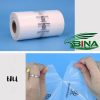
Shoe lining paper (or stuffing paper) is a lightweight material, typically weighing 17–35g/m², used in the footwear industry to maintain shape, prevent deformation during transportation, and absorb moisture to prevent mold growth. It keeps leather firm and protects against scratches, and is commonly used in the final packaging stage in white, brown, or custom colors.
 |
Applications and main functions:
- Shape retention & Structural support: Tissue paper, such as the type displayed at Shubh Paper, is inserted inside shoes to prevent them from being crushed or collapsing during storage.
- Moisture control & Preservation: Absorbent paper, which is very important for preventing mold, especially on leather and suede products.
- Protection against deformation: It keeps the toe box firm and prevents creasing during transportation.
- Surface protection: It prevents internal abrasion, scratches, and damage to delicate materials such as patent leather or embellished uppers.
- Brand experience: Often used in high-end fashion, paper is used to line, cushion, and enhance the professional unboxing experience, as seen in the solutions from https://hadupack.com/en/.
 |
Common types of materials:
- Kraft paper: A durable, eco-friendly option that is often biodegradable, supplied in rolls for industrial purposes.
- Tissue paper: Commonly used to provide superior protection against scratches.
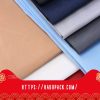
- Specialty tissue paper/Unbleached paper: White tissue paper or brown tissue paper, typically with a basis weight of 17-35 GSM, suitable for different shoe materials.
|
|
 |
 |
 |

Notes on using shoe stuffing paper
When using shoe stuffing paper, it is important to use acid-free tissue paper to prevent yellowing and damage to the leather or fabric over time. Avoid using newspaper, as the ink can stain and stick to the shoe lining. Stuff the toe area firmly to maintain its shape and prevent creasing, but do not overstuff it, as this can deform the shoe.
 |
Important considerations when using shoe stuffing paper:
- Material selection: Use acid-free paper to avoid damaging delicate materials or causing yellowing on white shoes.
- Moisture management: Although paper absorbs moisture, it can also retain moisture in humid environments, leading to mold. Replace the paper regularly, especially if storing for a long time.
- Ink transfer: Avoid using newspapers, as the ink may bleed onto the inside of the shoes.
- Shape retention: Make sure the paper properly fills the toe area without stretching the material, especially for suede or delicate leather.
 |
Alternative solutions for long-term storage:
To maintain their shape better and control moisture, consider using cedar shoe trees, which also help eliminate odors.