


Description
What is an ionizing fan for static elimination?
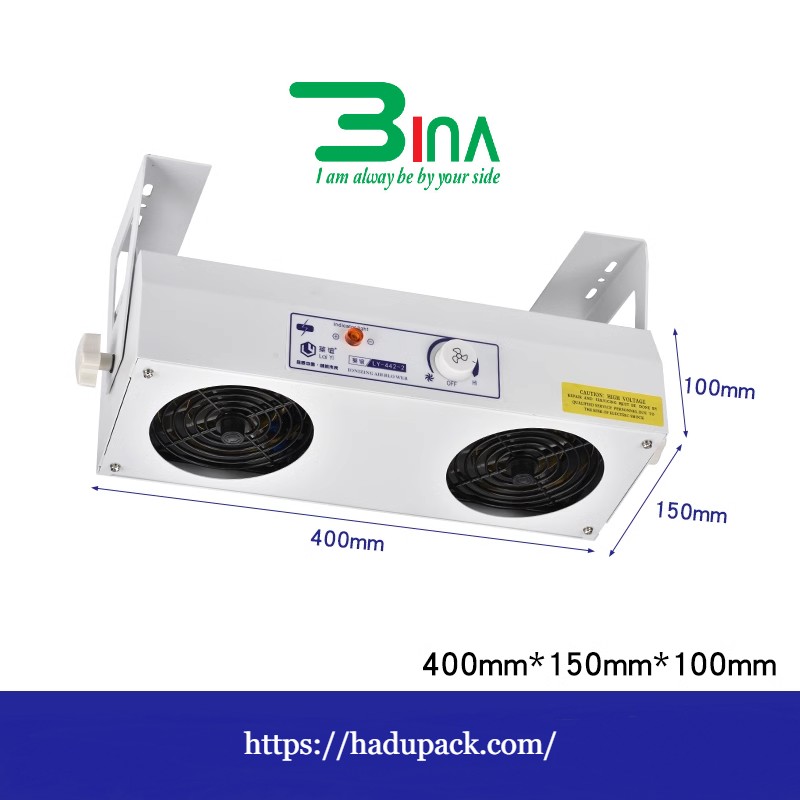
An ionizing fan for static elimination is an industrial-grade anti-static device. It uses a built-in high-voltage generator to ionize the air into a large number of positive and negative ions, which are then blown by the fan toward the object requiring static elimination. This helps neutralize static charges on insulators or object surfaces and is widely used in electronics manufacturing, precision machining, and other fields.
 |
Construction of an ion blower fan for static electricity elimination
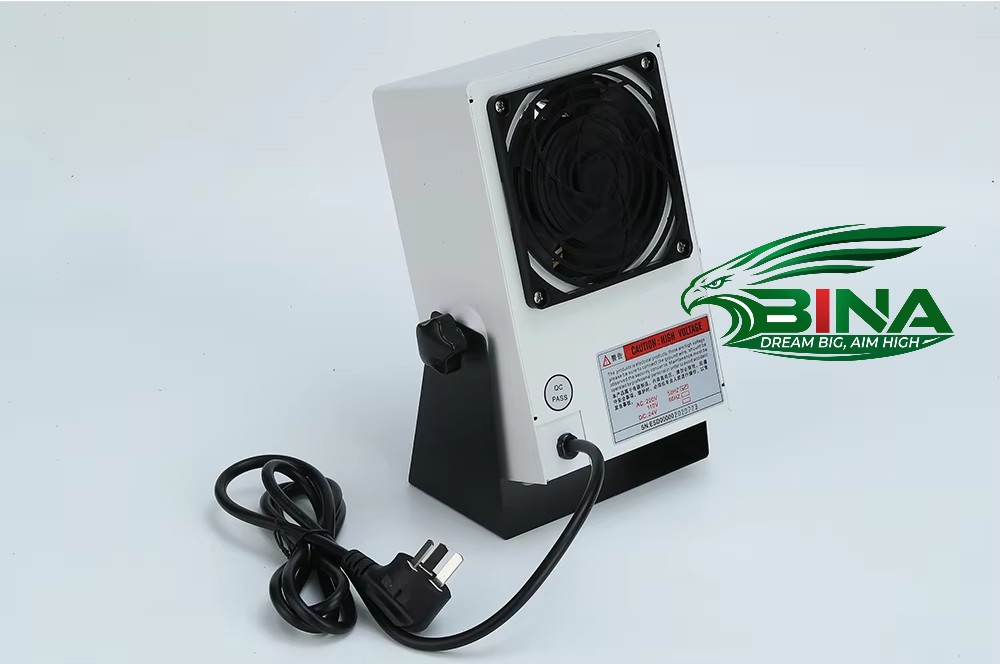
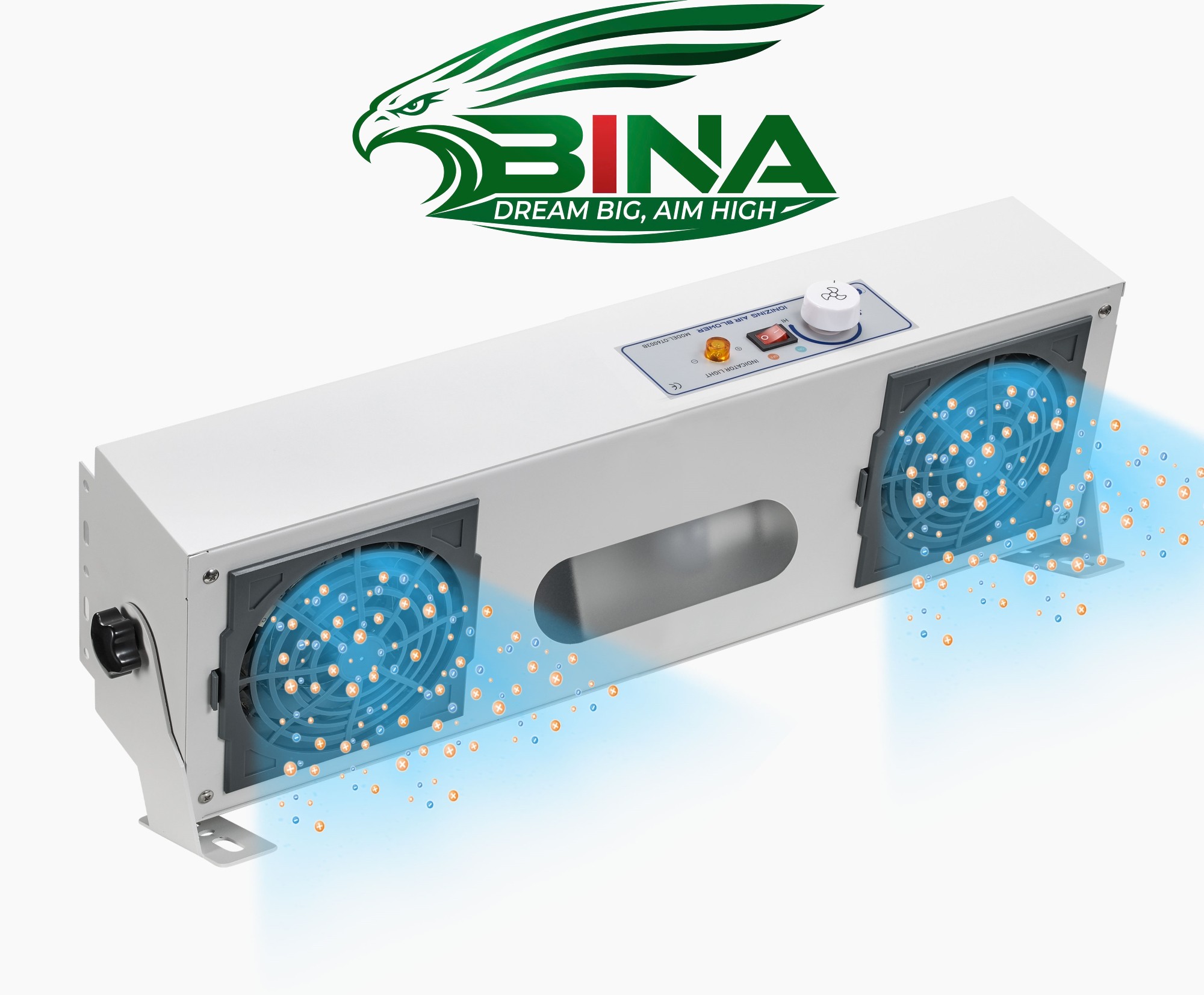
An ion blower (ion fan) mainly consists of three core components: a high-voltage corona discharge system (to generate positive and negative ions), a fan system (to provide ionized air), and the housing and control system. It typically includes ion needles (discharge needles), a high-voltage power supply, a fan/impeller (axial or centrifugal), a fan motor, and the housing.
Detailed description of the core components of an ion blower fan for static electricity elimination:
- Ion needles/Electrodes: Usually made of tungsten steel or special alloys, with pointed tips, generating corona discharge under high voltage to ionize air molecules and form positive and negative ions.
- High-voltage power supply: Provides a stable and high voltage (typically several kilovolts) to the ion needles, continuously or intermittently generating positive and negative ions depending on the type (AC or DC).
- Fan and motor: Includes an axial fan or centrifugal impeller, responsible for drawing in surrounding air and directing charged ions toward the object requiring static electricity elimination.
- Housing and airflow structure: Optimizes the direction of the ion flow, blowing the generated ions at high speed into the electrostatic field area.
 |
Principles, Features, and Applications of Ionizing Fans for Static Electricity Elimination
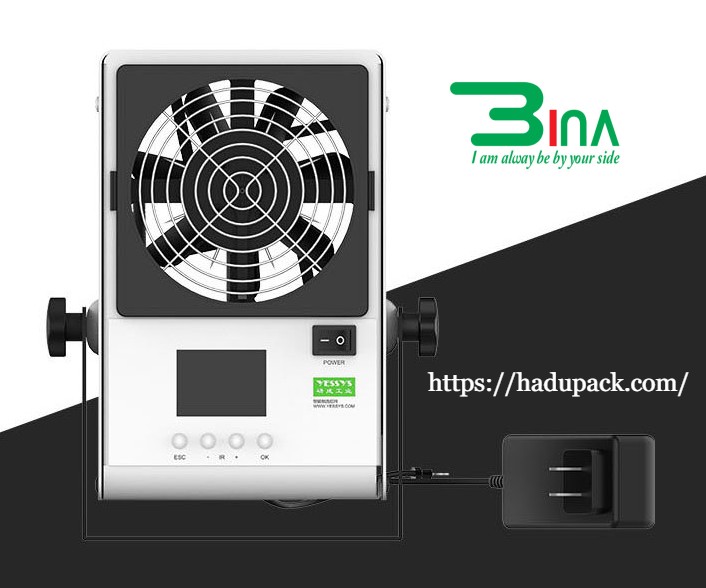
An anti-static ion blower fan is a common device used to eliminate static electricity. It generates ionized airflow to neutralize the surrounding static electricity, thereby achieving static elimination. Let’s take a detailed look at the principles, features, and applications of static-eliminating ion fans.
 |
☞See more:
1. Principle of ion fan static elimination
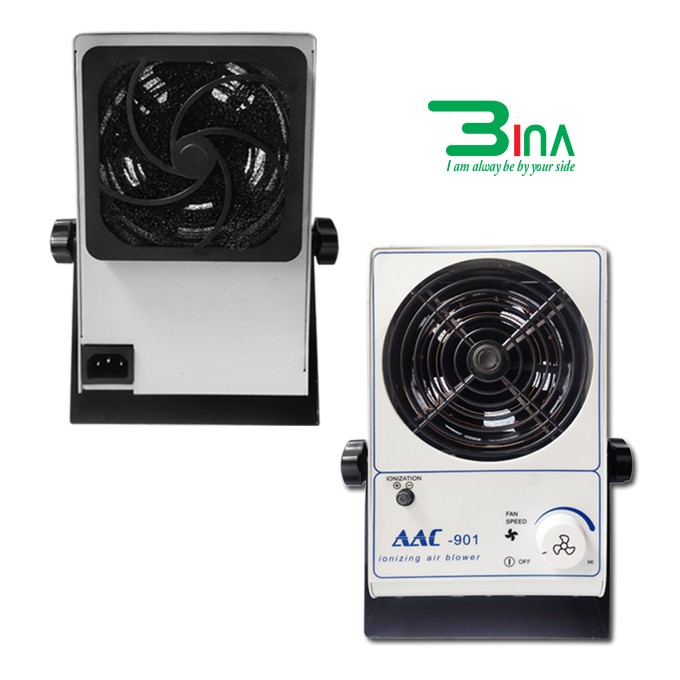
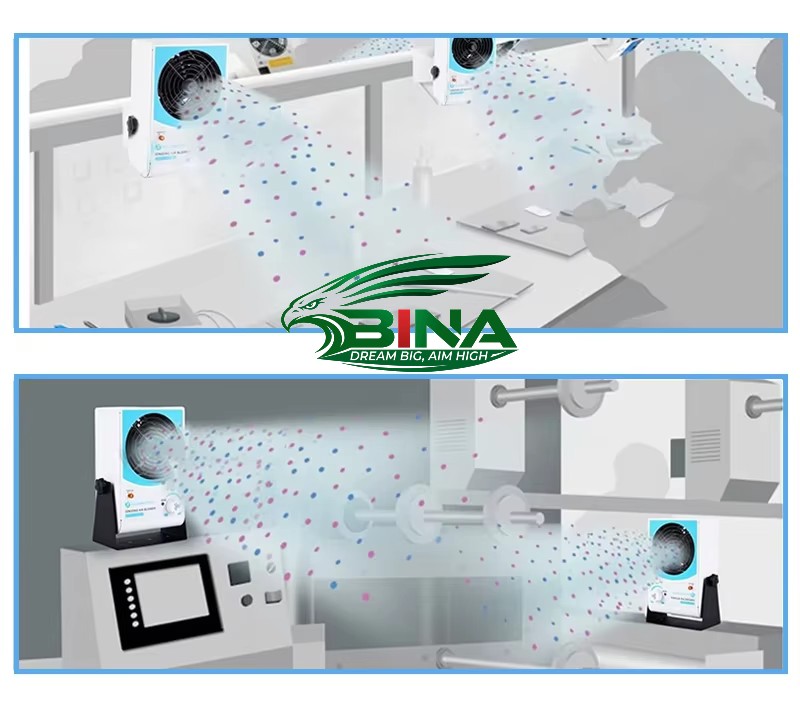
Why can an ion blower eliminate static electricity? This is because the ion blower uses a static generator to ionize the air, producing a large amount of positive and negative charges, while using a fan to blow out the positive and negative charges. It forms an airflow carrying positive and negative charges to neutralize the charge on the surface of an object. When the surface of an object is negatively charged, it attracts the positive charges in the airflow. When the surface of the object is positively charged, it attracts the negative charges in the airflow, thereby neutralizing the static electricity on the surface of the object to eliminate static electricity.
 |
2. Features of the ionizing static eliminator fan
- Efficiency: The ionizing static eliminator blower can quickly remove static electricity with high efficiency and obvious results.
- Safety: The ionizing static eliminator blower uses electrode-less discharge technology, does not generate electromagnetic radiation or electromagnetic interference, and is safe and harmless to the human body and equipment.
- Stability: The ion static eliminator blower adopts digital control technology, which can automatically adjust the amount of ion generation and wind speed to maintain stable elimination performance.
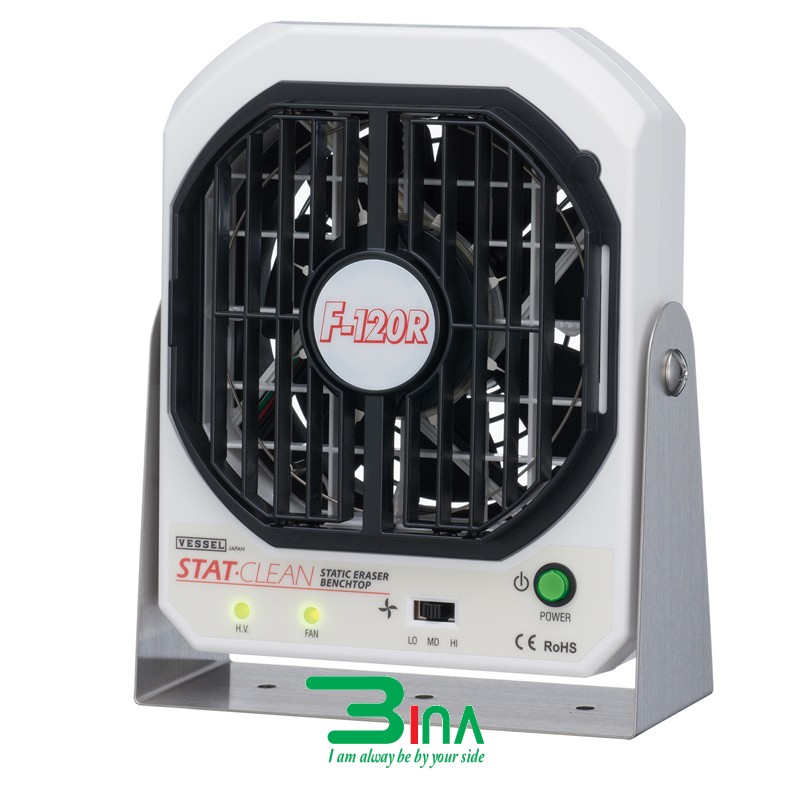
- Easy installation: The static ion eliminator fan is small in size, lightweight, easy to install, and can be moved and adjusted at any time.
 |
3. Applications of ion blowers
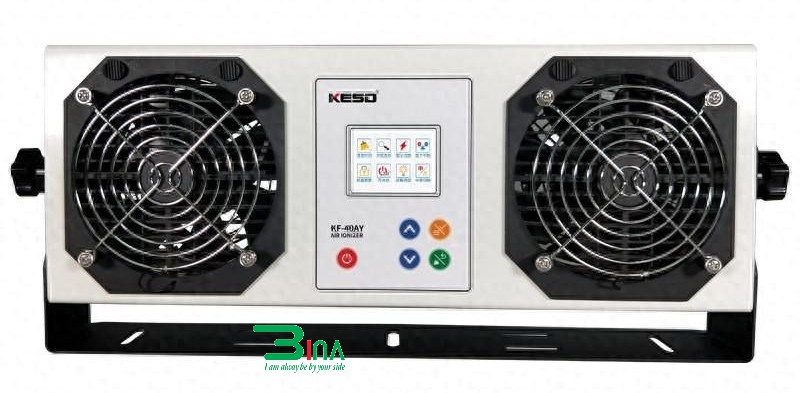
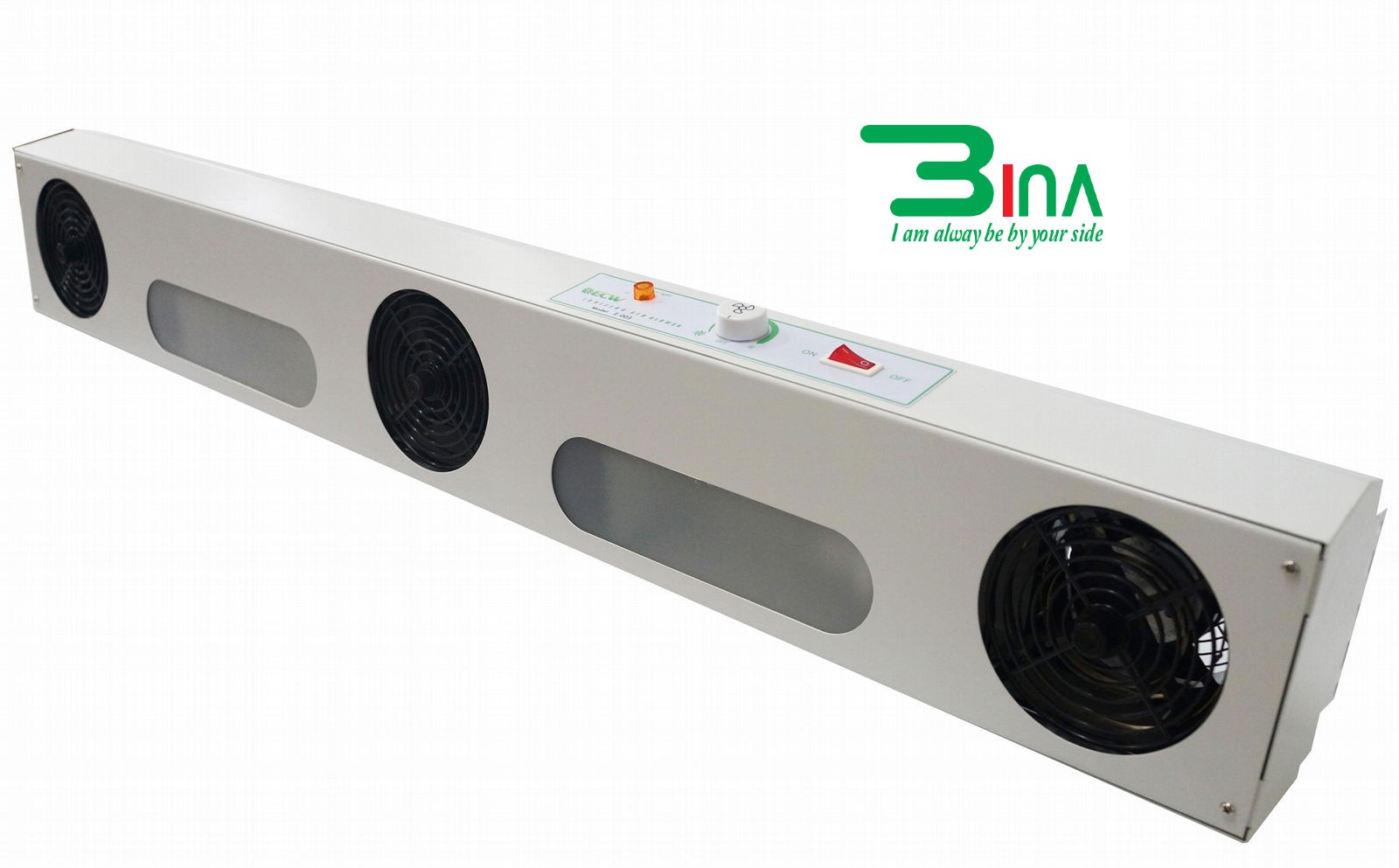
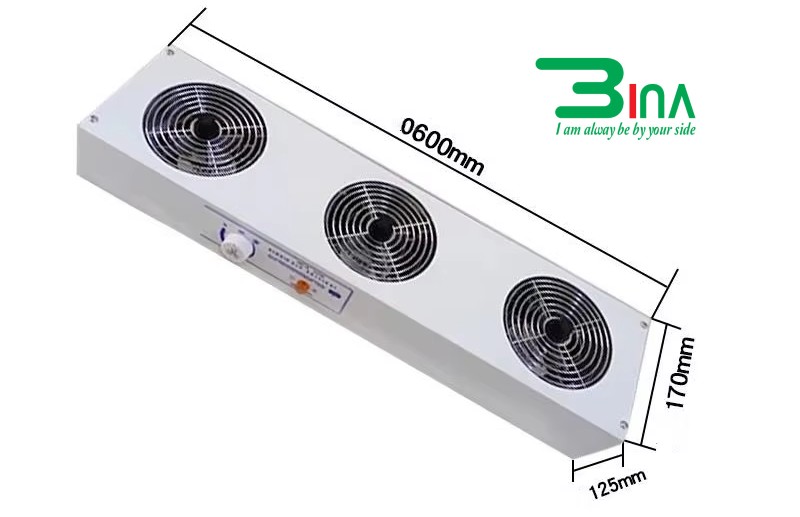
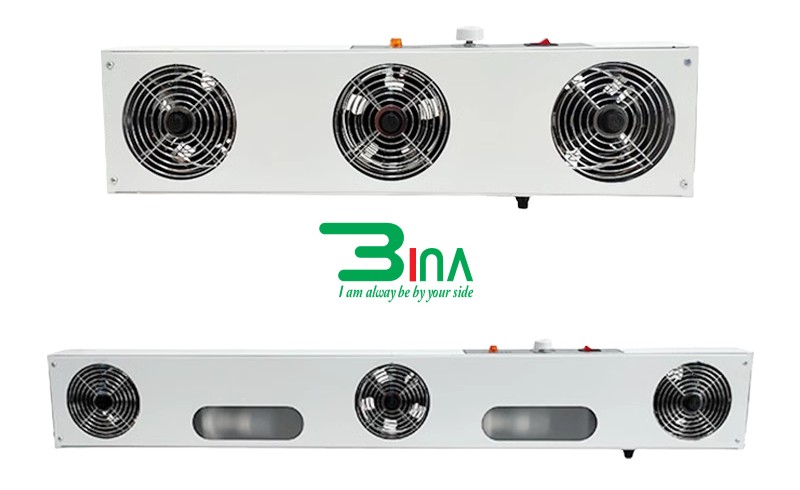
Ionizing fans for static elimination are widely used in electronics, semiconductors, optics, healthcare, food, chemicals, and other industries to eliminate static electricity, prevent electrostatic interference and electrostatic fires. Specific applications include:
 |
 |
 |
 |
 |
- Electronics industry: Used to eliminate static electricity on the surface of electronic components to prevent static interference and electrostatic damage.
- Healthcare industry: Used to eliminate static electricity in operating rooms, laboratories, and other environments to prevent static interference and electrostatic fires.
- Food industry: Used to eliminate static electricity generated during food processing, preventing static interference and electrostatic fires.
- Chemical industry: Used to eliminate static electricity generated during chemical production, preventing static interference and electrostatic fires.
In summary, the ionizing fan blower is an effective, safe, stable, and easy-to-install static elimination device, widely used in many industries, providing convenience and safety for production and daily life.
 |
Classification of ionizing blowers for static elimination
Ionizers (ion blowers) are mainly classified according to their installation structure and ionization principle, and are widely used to eliminate static electricity in industry. The main types include desktop, horizontal, suspended, and mini ionizers, and according to their operating principle, they are divided into AC, DC, and high-frequency AC ionizers. They are commonly used in electronics assembly, plastic products, and automation industries to eliminate static electricity.
I. Classification by structure/installation method (Common)
- Desktop ionizer: Compact, suitable for desks and workstations, placed on the tabletop.
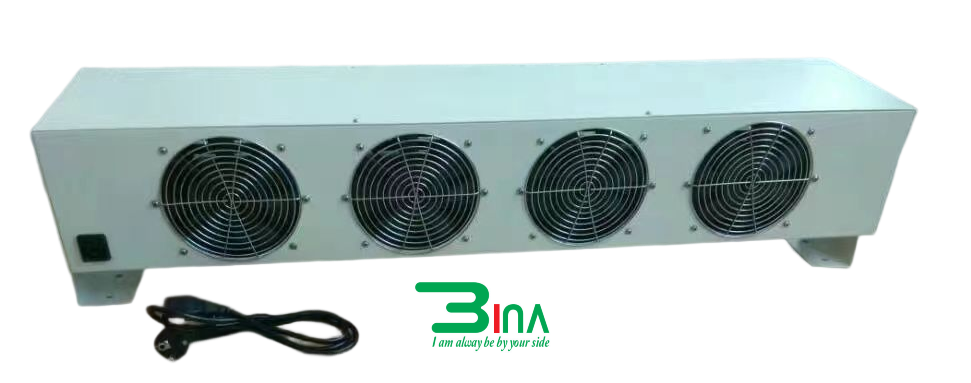
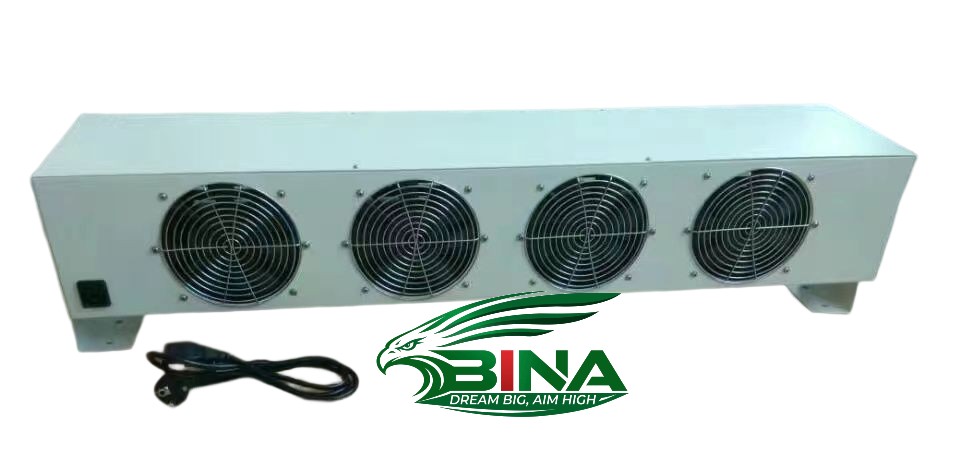
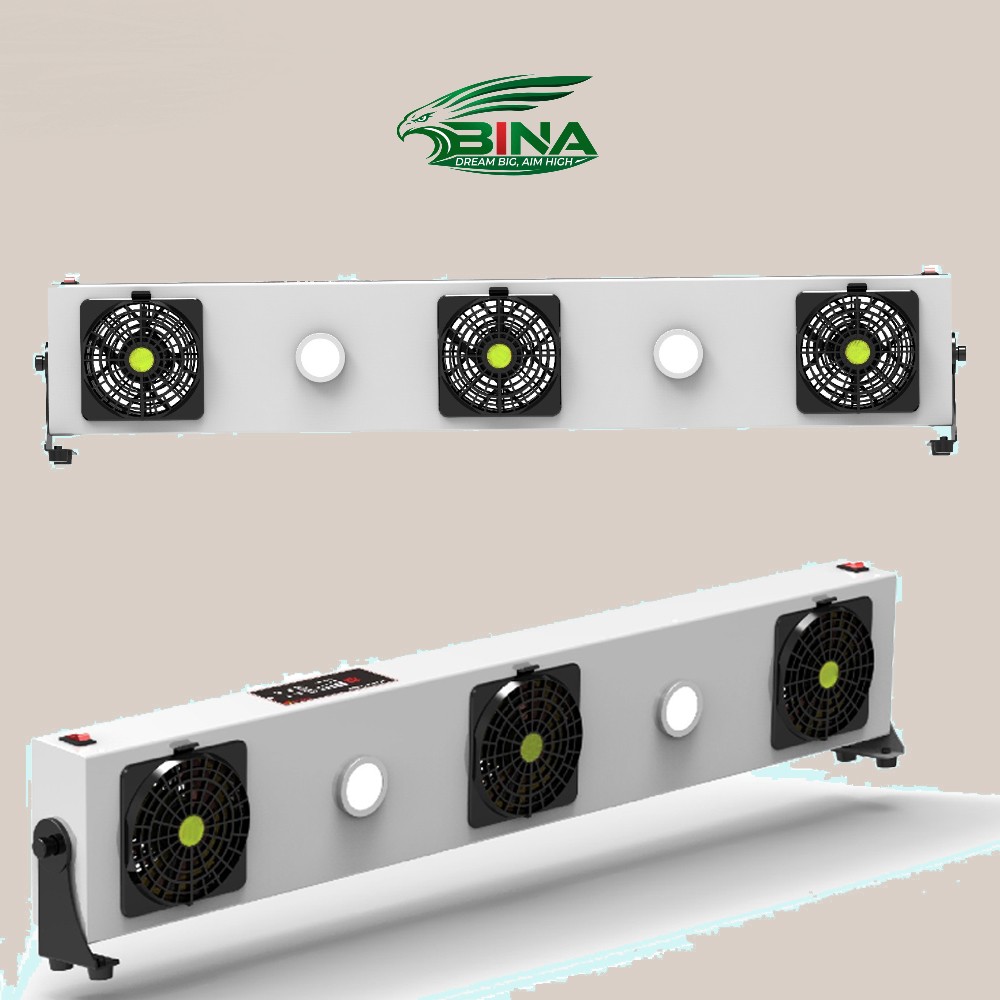
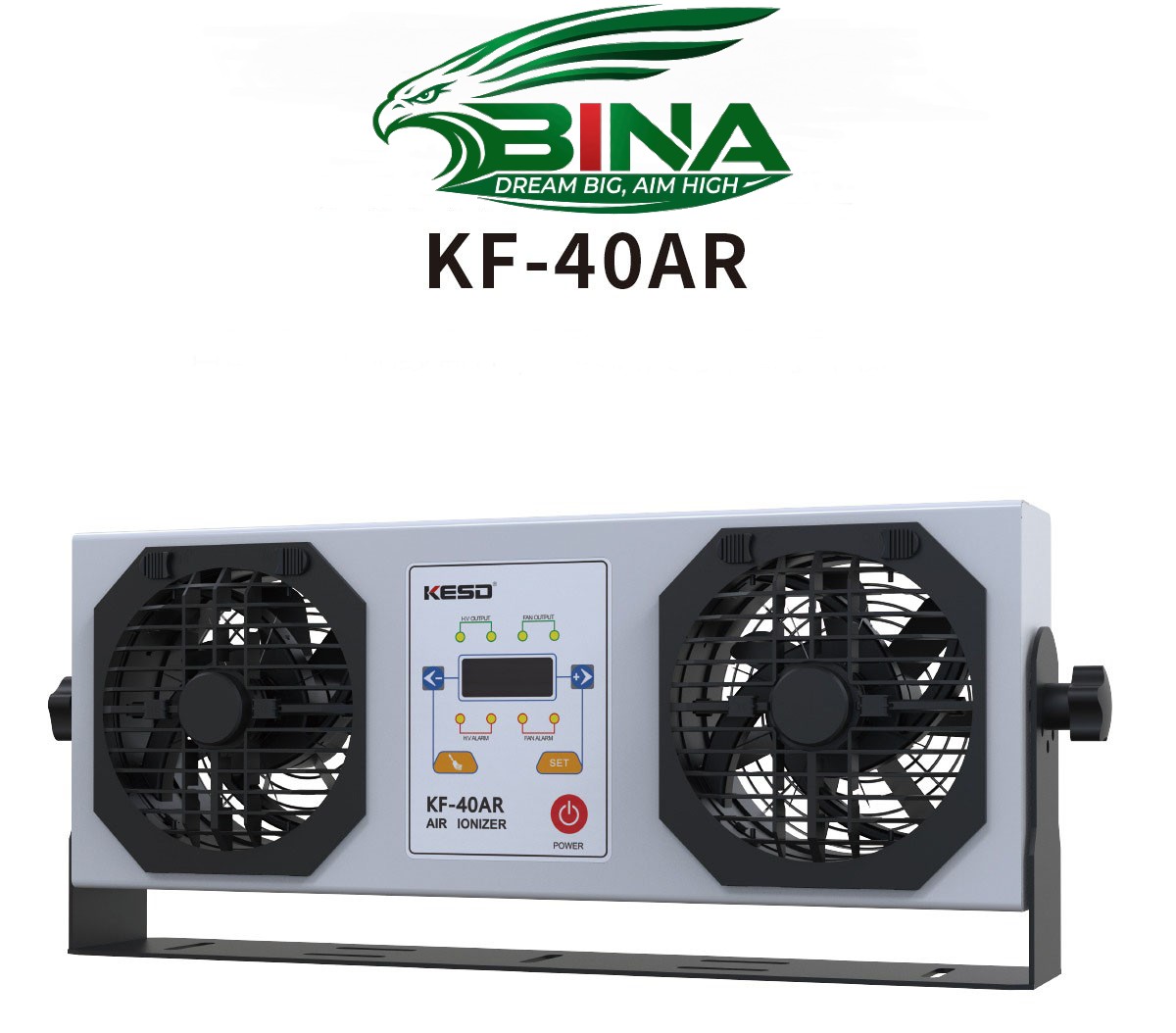
- Horizontal ionizer: Longer, with multiple fans, providing a wider coverage area for worktables on assembly lines.
- Suspended ionizer: Suspended above the work area, does not occupy tabletop space, suitable for high-cleanliness environments.
- Mini ionizer: Specially designed to eliminate static electricity from precision components in limited, localized spaces.
II. Classification by operating principle/ionization method
- AC ion blower: Uses a high-voltage transformer to alternately generate positive and negative ions through emitter needles, suitable for eliminating medium to high levels of static electricity.
- DC ion blower: Uses two sets of discharge electrodes to emit positive and negative ions simultaneously, enabling stable and rapid elimination of low levels of static electricity.
- High-frequency AC ion blower: Higher frequency than the AC type, producing a finer ion flow, ideal for precision components.
III. Products related to ion-based static elimination
- In addition to ion blowers, common industrial ion-based static elimination equipment includes:
- Ion gun/nozzle: Used to locally remove dust and high-intensity static electricity.
- Ionizing cord: Flexible and adjustable direction, suitable for localized static elimination on irregularly shaped parts.
- Ion bar/Air curtain: Suitable for linear high-speed production lines such as films and roll materials.
 |
Maintenance of ionizing blower for static elimination
Maintenance of an ion blower (ion fan) depends on regularly cleaning the discharge needles and the air inlet/outlet filters to ensure effective ion generation and stable airflow. The discharge needles should be cleaned every work shift or daily (using the self-cleaning function or an alcohol-soaked cotton swab), the filters should be cleaned monthly, the blower should be operated in a dry, non-corrosive environment, and the static discharge time should be checked regularly to ensure performance. Main maintenance guidelines :
Cleaning the discharge needles (Important step):
- Frequency: The discharge needles should be cleaned once every work shift; the frequency may be increased in harsh environments.
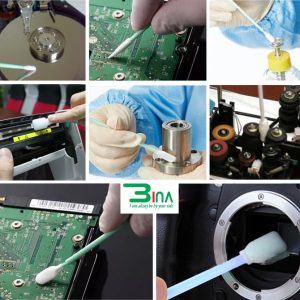
- Method: Use the cleaning brush supplied with the ion blower to rotate and clean, or after disconnecting the power, use a lint-free cloth/cotton swab dipped in anhydrous alcohol to clean carbon deposits and dirt from the needle tips.
- Note: This must be performed after the power has been turned off.
Cleaning the air filter and blower housing:
- Frequency: Cleaning is recommended monthly.
- Method: Clean the inlet filter and the metal mesh covering the ionized outlet to prevent debris from obstructing the airflow. A soft brush or vacuum cleaner may be used.
Operating environment and electrical inspection:
- Environment: Keep the working environment clean and dry, and avoid moisture affecting the motor.
- Electrical: Check the power connection to ensure stable voltage. Operation with a single-phase power supply is strictly prohibited.
- Inspection: Observe the fan operation for any abnormalities (abnormal noise, vibration, overheating). If any abnormality is detected, stop the machine immediately for inspection.
- Performance monitoring: Use equipment with static detection capabilities (such as a static field meter) to periodically check the balance and static discharge time of the ion fan (for example: monthly) to ensure it meets static elimination standards.
- Safety precautions: All maintenance operations must be performed with the power turned off. Operation while energized is strictly prohibited. Restart only after confirming that there are no abnormalities following maintenance.
 |
How to choose and buy an ionizing fan for static elimination
The important factors when choosing and buying an ion fan (static eliminator) are ion balance (10V/minute), static elimination speed, coverage area and reliability. You should choose a desktop, wall-mounted or rotating type based on the working environment (cleanroom or conventional production line). Avoid focusing only on low prices; prioritize brands with self-cleaning functions and ion balance fault alerts.
I. Key selection factors
The important factors when choosing and buying an ion fan (static eliminator) are ion balance (10V/minute), static elimination speed, coverage area and reliability. You should choose a desktop, wall-mounted or rotating type based on the working environment (cleanroom or conventional production line). Avoid focusing only on low prices; prioritize brands with self-cleaning functions and ion balance fault alerts.
Ion balance:
- Core indicator: Ion balance determines whether the fan generates new reverse static electricity while eliminating static electricity. High-quality ion fans typically maintain static balance within 10V/minute.
- Requirement: High ion balance is required for precision electronic components (such as IC chips).
Voltage decay time:
- Measurement: Measure the time required for the fan to reduce the voltage from 1000V (or 5000V) to 100V (or 500V) over a certain distance.
- Situation: High-speed production lines require shorter static elimination times.
Types and suitability for the environment:
- Desktop ionizer: Suitable for use on workbenches in small spaces.
- Suspended ionizer: Suitable for suspended applications on production lines, providing a large static elimination range without taking up much operating space.
- Ionizing cord/air gun: Suitable for point-to-point static elimination in small, localized spaces or on objects with complex shapes.
- Cleanliness: For cleanroom environments, models with cleanliness testing and low residual ion levels should be selected.
Maintenance and functions:
- Automatic ion needle cleaning function: Dust accumulating on the ion needle can reduce effectiveness; automatic cleaning functions (such as brushes) help reduce maintenance.
- Alarm system: Provides timely alerts in the event of ion imbalance or high-voltage faults.
 |
II. Purchasing Steps and Recommendations
- Determine technical specifications: Based on the electrostatic conditions at the application point, determine the required airflow (CFM/m³/min), static elimination speed (s), and effective control distance.
- Check certifications: Ensure that the product has obtained relevant certifications such as FCC and CE to ensure safety and long-term stability.
- Avoid low-price traps: Ionizing fans are not disposable consumables. Poor-quality products require more frequent maintenance and replacement of ion needles, resulting in higher total costs.
- Consider after-sales service: Choose a professional supplier that can provide ion balance testing services and after-sales technical support.
III. Summary and Recommendations:
When purchasing, request the product specification sheet and determine the best option by checking the ion balance and static elimination time on site. For sensitive operations, highly reliable brands not only provide more stable static elimination performance but also reduce the daily maintenance workload.