



Description
What are PE bags (polyethylene bags)?
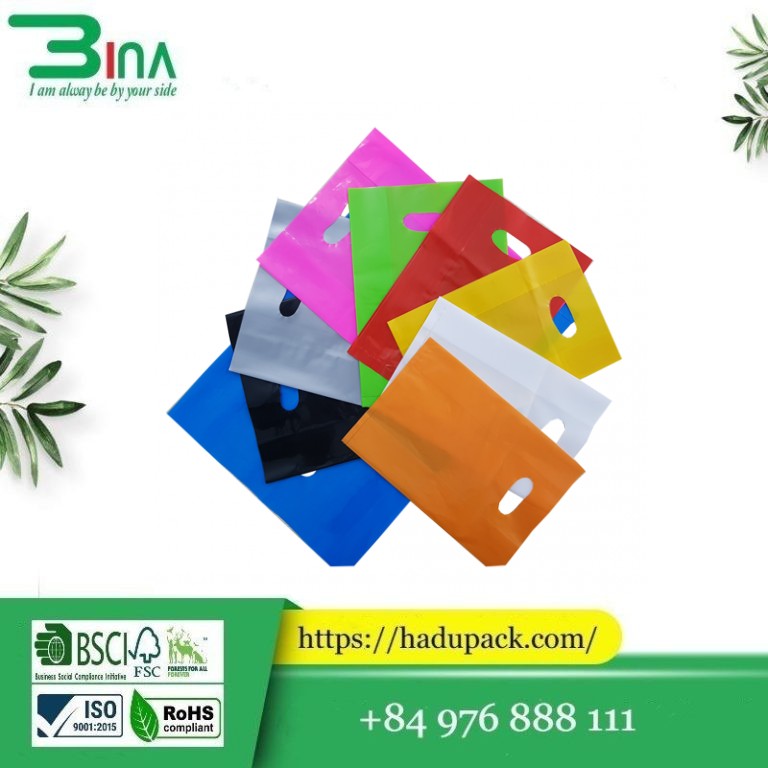
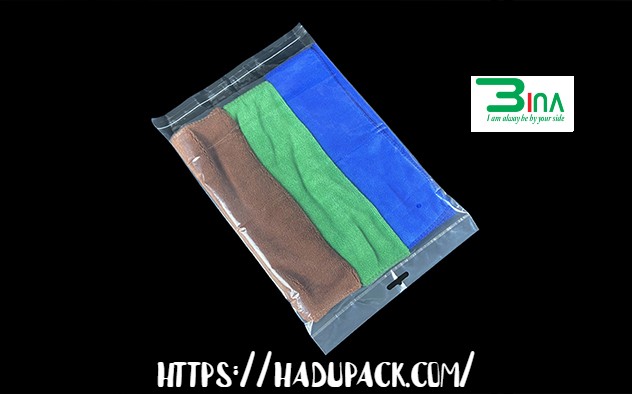
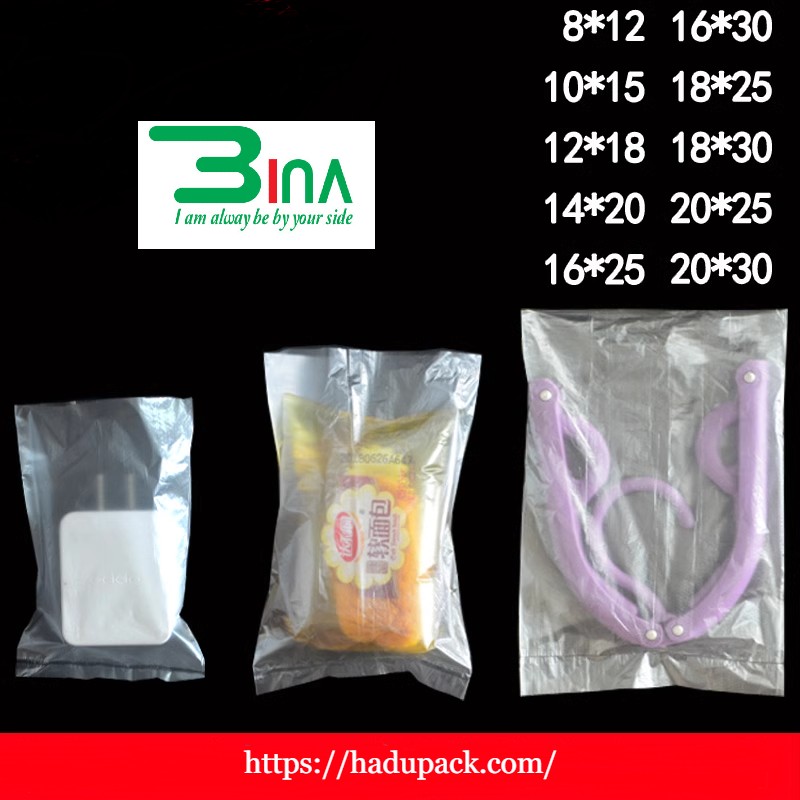
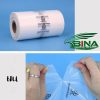
PE bags (polyethylene bags) are plastic bags made from polyethylene and are one of the most common plastic packaging materials. They are waterproof, moisture-resistant, acid- and alkali-resistant, withstand low temperatures, and have excellent flexibility. They are commonly used for packaging food, clothing, industrial products, and daily necessities. They have a soft, waxy feel, are safe and non-toxic, and have a very wide range of applications.
 |
Detailed characteristics and classification of PE bags
Hadupack introduces them to you as follows:
Characteristics of PE plastic bag material:
- Soft and semi-transparent: Feels soft and smooth like wax to the touch, usually with a matte surface.
- Low-temperature resistance: Does not easily become brittle in freezing environments, suitable for frozen food packaging.
- Moisture and oil resistance: Good chemical stability, protecting goods from wind, sand, and moisture.
 |
Common types of PE bags:
- LDPE bags (Low-Density Polyethylene): Soft texture, good transparency, and high flexibility, commonly used for supermarket shopping bags, food wrap, and resealable bags.
- HDPE bags (High-Density Polyethylene): Higher rigidity, greater strength, and better tensile strength, commonly used for express delivery bags, garbage bags, and vest-style shopping bags.
- LLDPE bags (Linear Low-Density Polyethylene): High tear resistance, widely used in industrial stretch wrap and heavy-duty packaging bags.
 |
Common applications of PE plastic packaging:
- Food: Packaging for vegetables, frozen foods, and snacks.
- Industry: Anti-static packaging for electronic products, bags for chemical raw materials.
- Consumer goods: Shopping bags, clothing bags, storage bags.
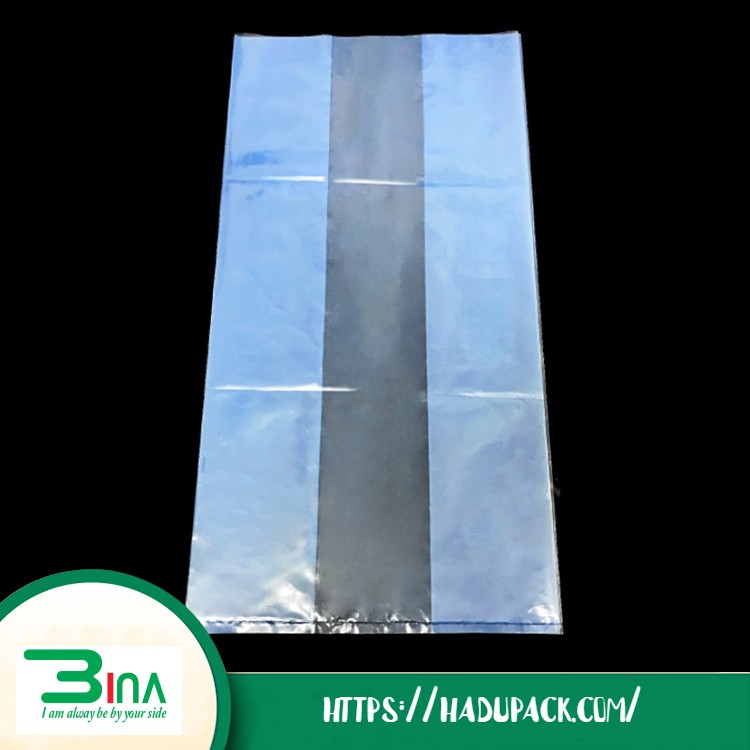 |
PE plastic bag production process
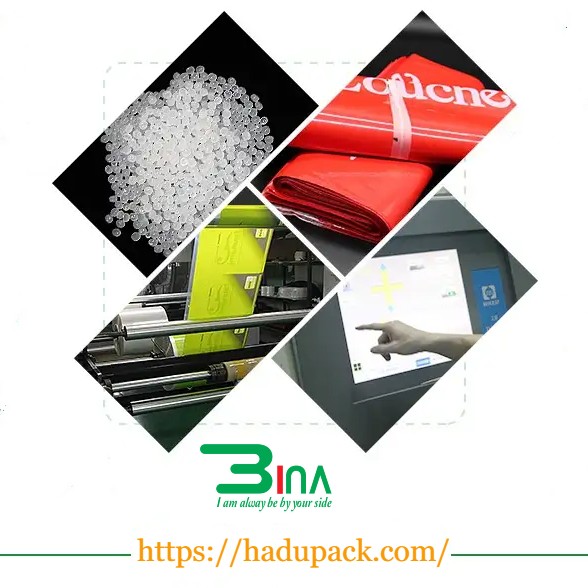
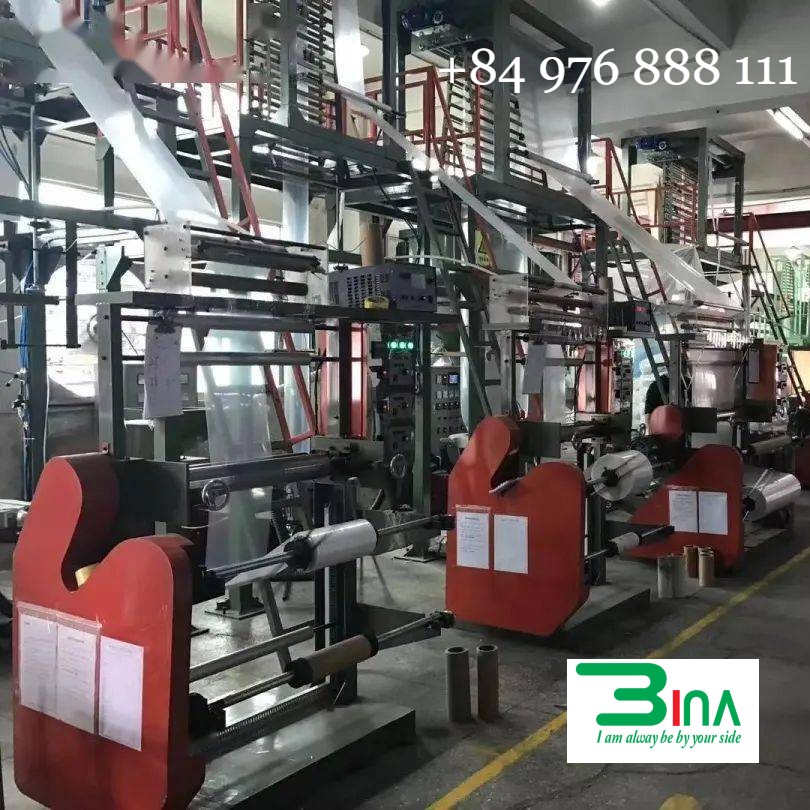
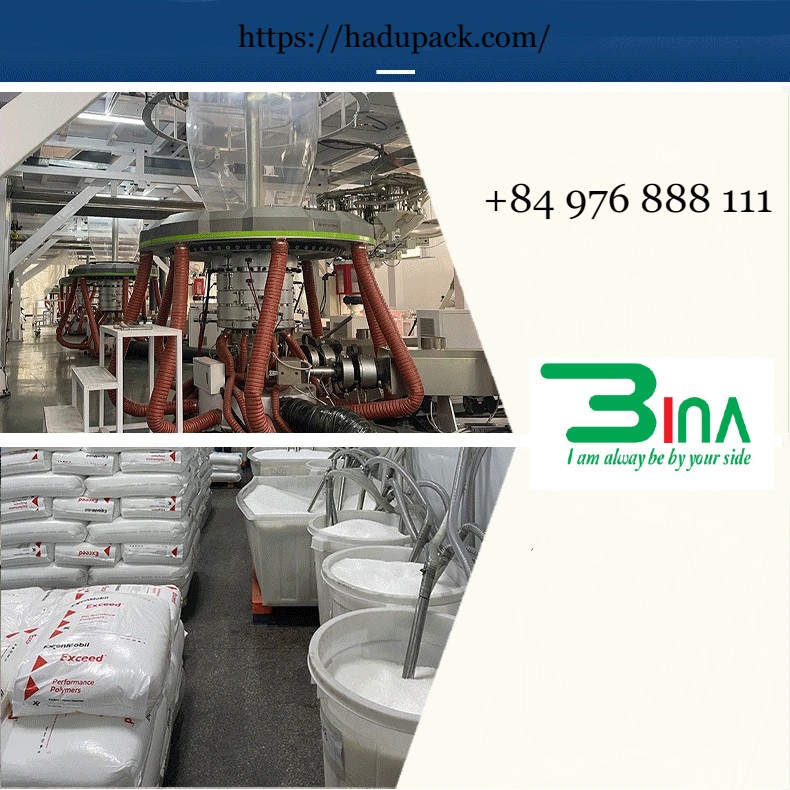
The PE (polyethylene) plastic bag production process mainly includes raw material mixing, film blowing (hot-melt extrusion, blowing, cooling, and winding), printing, bag making (sealing and cutting), and packaging. The core step is film blowing, which involves heating and melting PE pellets in an extruder, blowing a cylindrical film from the die, cooling it, and then winding it into a tube. Finally, the bags are cut and sealed according to requirements.
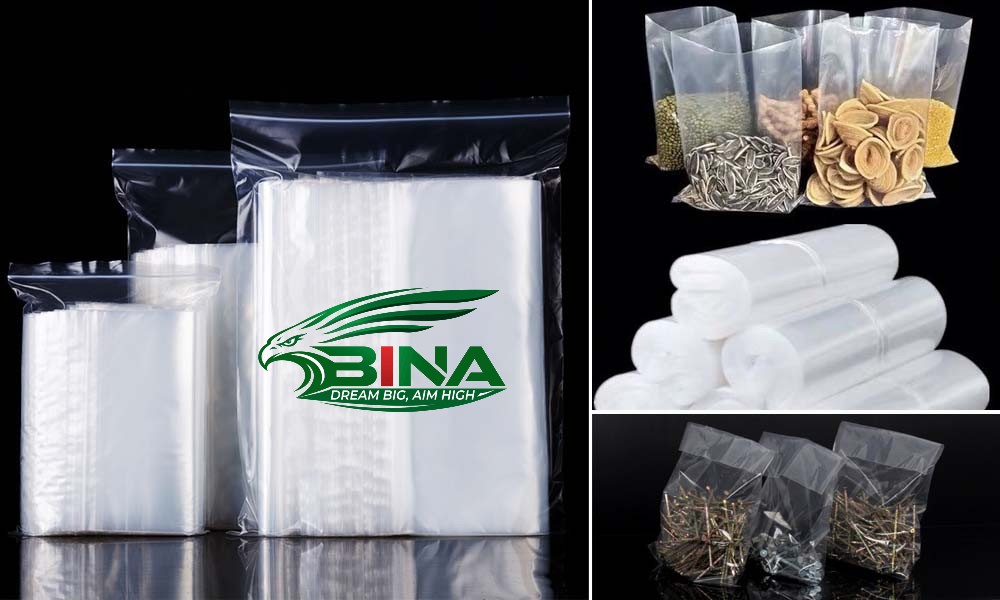 |
Detailed explanation of the PE plastic bag production process:
Raw material preparation: PE resin (usually LDPE, HDPE or LLDPE) is mixed with masterbatch and additives (such as lubricants and antistatic agents) to ensure uniformity. The raw materials are dried (optional, depending on moisture content) to remove moisture and reduce air bubbles during the blown film production process.
- Extrusion: The mixed raw materials are fed into the extruder of the blown film machine. Under the action of the screw’s shear force and heat, they change from a solid state into a high-viscosity molten liquid.
- Blowing: The molten plastic is extruded through a circular die, and compressed air is blown in from the center of the die head, causing the molten plastic film to be blown into a tubular shape (the blow-up ratio determines the width of the film).
- Cooling & Sizing: The air ring evenly blows air onto the surface of the plastic film bubble to cool and size it.
- Winding: The cooled film bubble is flattened by nip rollers and conveyed to the winding machine through guide rollers to be wound into a film roll. This usually produces film in lay-flat form.
- Printing: If patterns or text need to be printed, the printing machine performs flexographic or gravure printing on the film. This usually takes place after film blowing and before bag making.
- Bag Making/Cutting: The lay-flat film is fed into the bag-making machine, where it is cut to the required length using heat-sealing technology (such as heat cutting or heat sealing) and one end is sealed to form the bottom of the bag.
- The heat-cut bag-making machine can perform cutting and heat sealing simultaneously.
- Finished Product Inspection and Packaging: The finished bags are inspected for thickness, strength and mouth sealing.
Products that meet the standards are packaged for shipment. - Summary: PE plastic bag production uses the thermoplastic properties of plastic, which melts when heated and solidifies when cooled. The blown film machine is the core equipment on the production line, and controlling its parameters (such as temperature, blow-up ratio and speed) directly affects the thickness uniformity and tensile strength of the plastic bags.
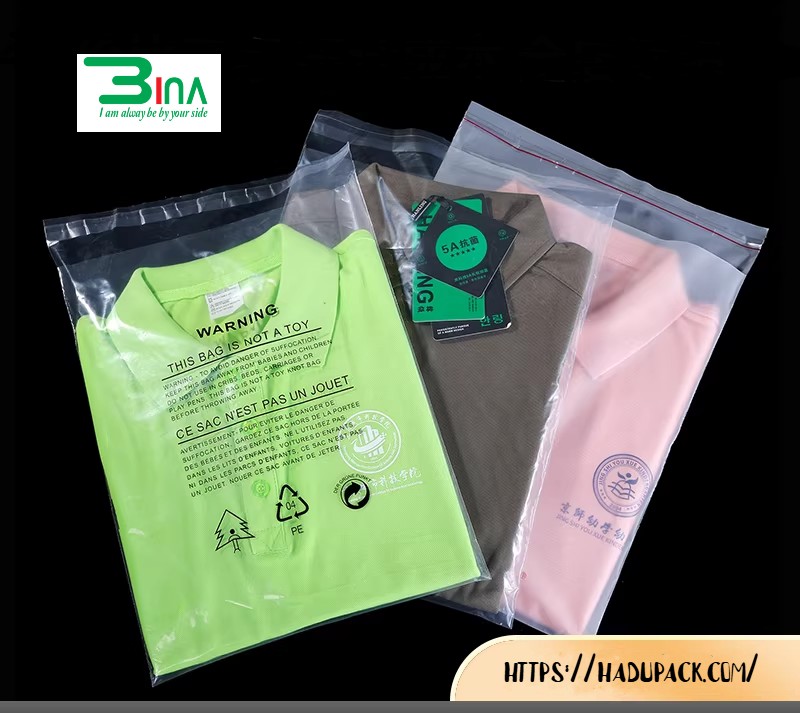 |
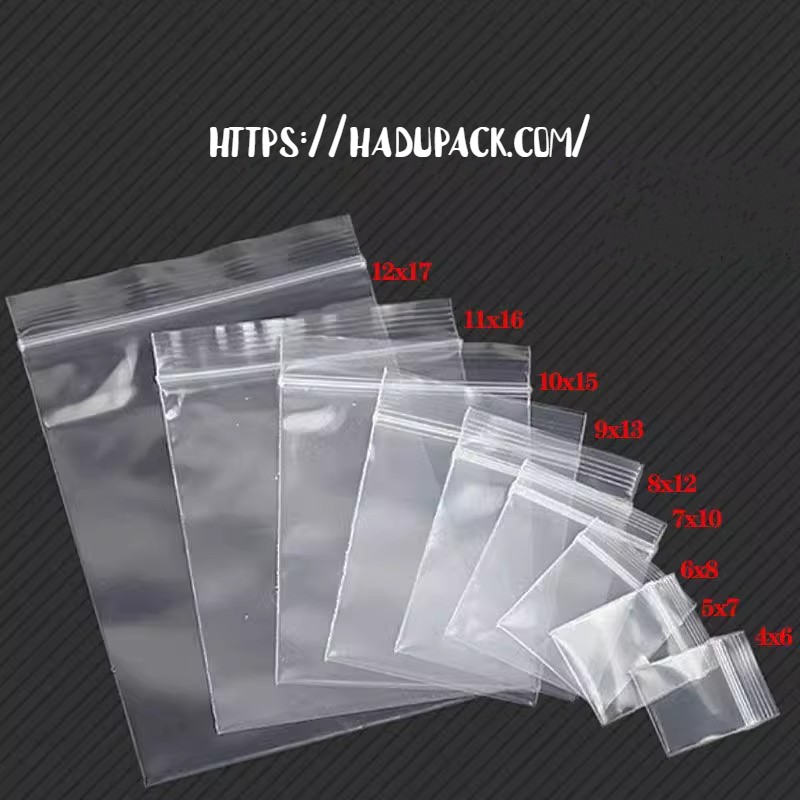
PE bag sizes
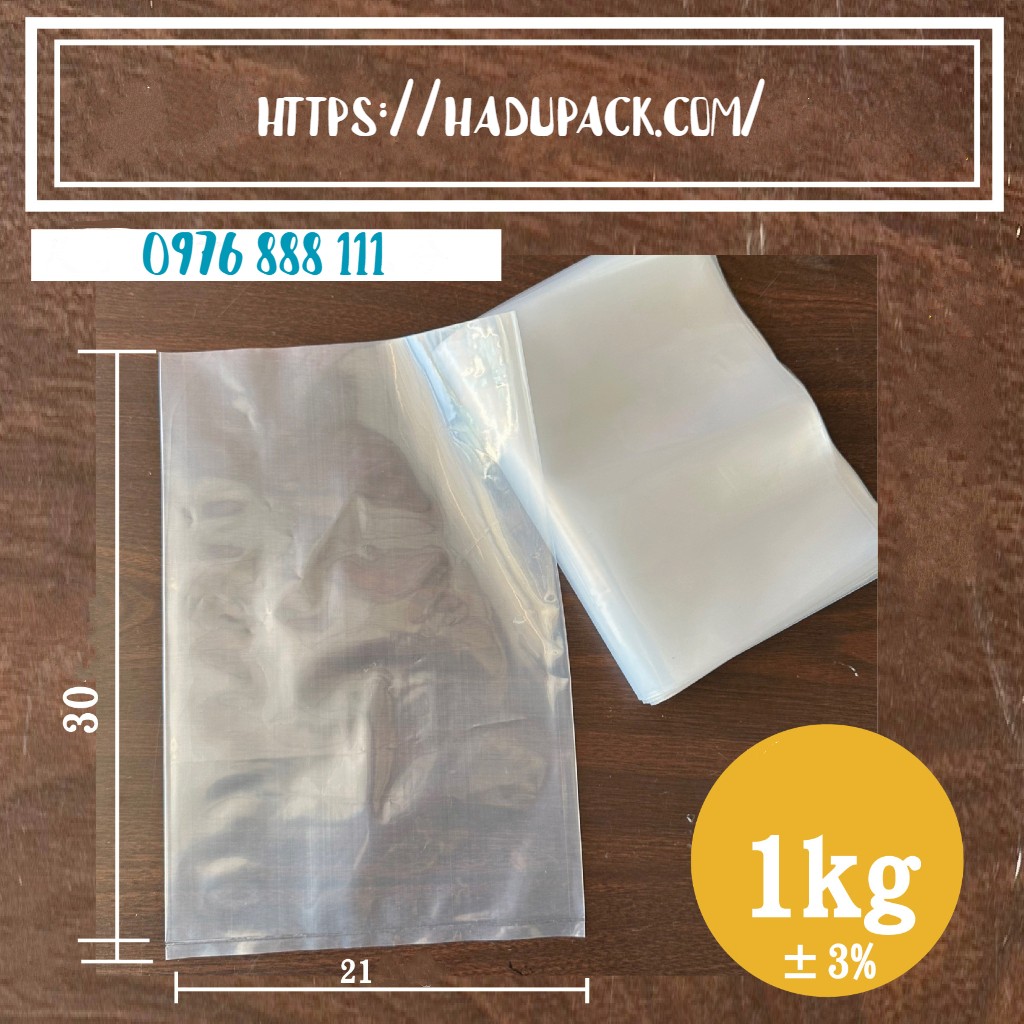
PE bags (polyethylene bags) come in various sizes, typically expressed in inches or centimeters, ranging from the smallest 4.5 x 6.5 inches (approximately 11 x 16 cm) to the largest 20 x 30 inches (approximately 50 x 76 cm). They are also classified by thickness (thin (approximately 0.03 mm – 0.05 mm)) and weight (4 ounces – 10 pounds), making them suitable for various industrial packaging or storage purposes.
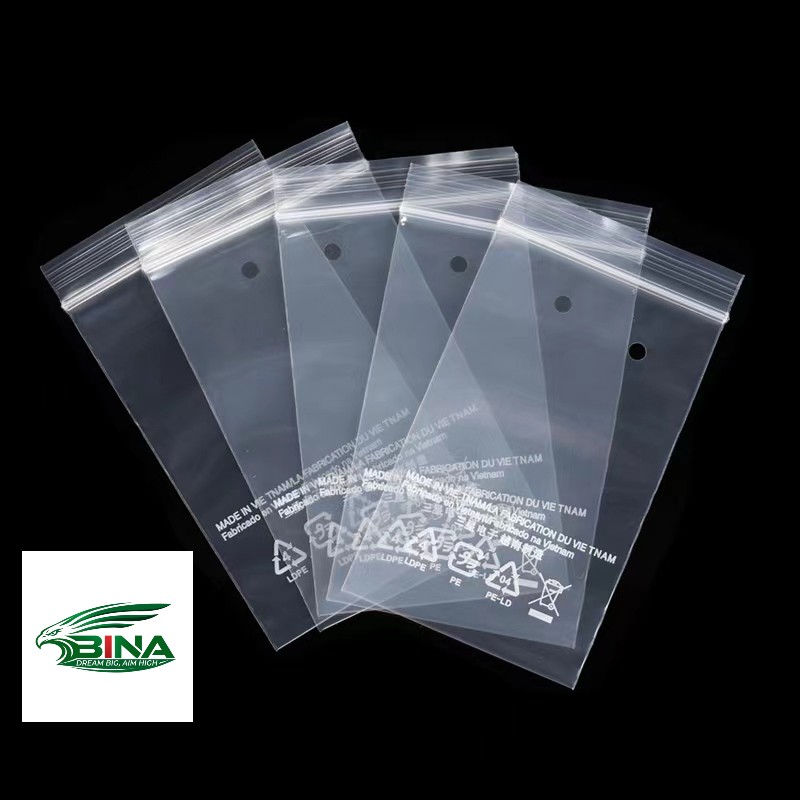 |
Common PE bag specifications (inches, 1 inch = 2,54 cm):
- Small: 4×6, 5×7, 6×8, 6×9, 7×10 (Commonly used for small parts and items)
- Medium: 8×12, 9×13, 10×14, 12×16 (Commonly used for clothing and repackaging food)
- Large: 13×19, 15×22, 18×24, 20×30 (Commonly used for packaging large items)
Specifications for size and thickness:
- Thin (0,03mm): More transparent, suitable for lightweight items.
- Thick (0,08mm): More durable, suitable for slightly heavier or sharp items.
- Special sizes: Custom lengths or widths can be ordered, usually measured in inches.
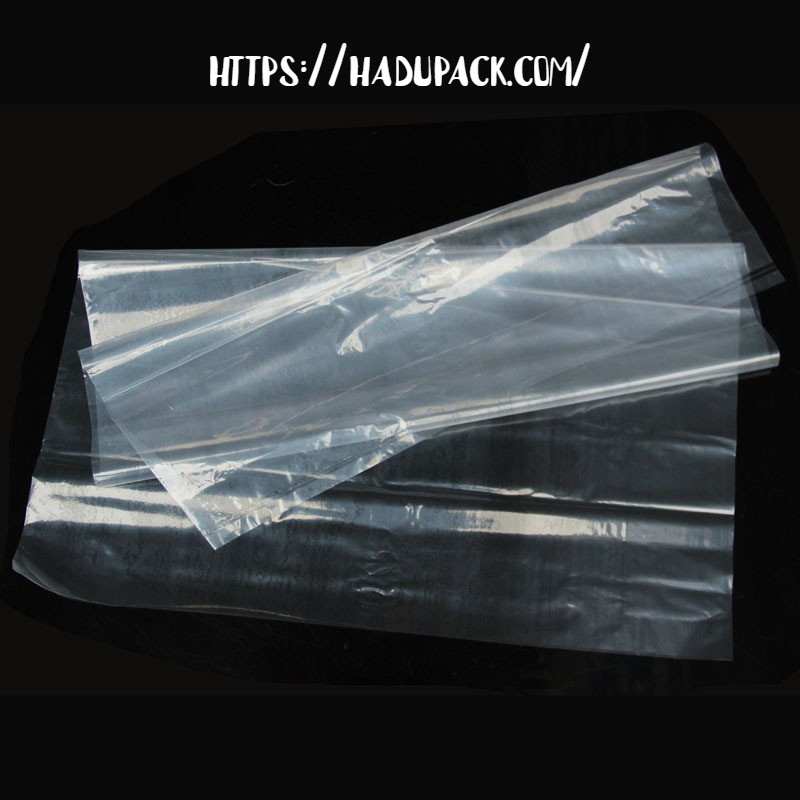
- Tips for choosing bags: PE bag sizes usually refer to the maximum external length and width of the bag. When putting items inside, you need to consider the bag wall thickness and the clearance needed for sealing. It is recommended to choose a bag slightly larger than the size of the item.
 |
How to Store PE Plastic Bags
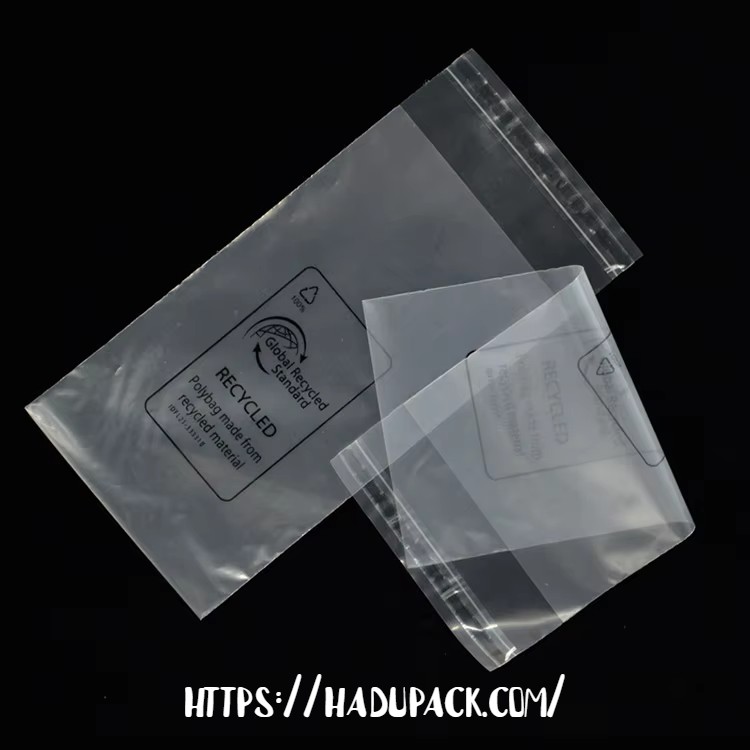
PE (polyethylene) plastic bags should be stored in a dry, cool, well-ventilated place away from light. The optimal ambient temperature is 5-35℃. Avoid high temperatures, which may cause softening and deformation, or excessively low temperatures, which may cause brittleness. Keep away from acids, alkalis and organic solvents. Avoid direct sunlight and strong light to prevent aging. Store on a flat surface and avoid sharp objects.
The following are the specific storage requirements:
- Temperature and humidity: Maintain the storage environment temperature between 5-35℃. Avoid excessively high temperatures, which may cause softening, deformation and sticking, or excessively low temperatures, which may cause brittleness and cracking. Humidity should be controlled at around 40%-60% to prevent condensation on the surface and the growth of microorganisms.
- Storage location: Store in a dry, cool, well-ventilated place away from direct sunlight, as ultraviolet rays will accelerate the aging, fading and embrittlement of PE materials.
- Environmental requirements: Good ventilation must be maintained to avoid hot and humid conditions.
- Separate storage: Keep away from strong acids, strong alkalis and organic solvents to prevent chemical reactions that could damage the bags.
- Storage method: It is recommended to stack them flat or roll them up to avoid permanent deformation caused by twisting and prolonged compression.
 |
Tips for buying PE bags
When buying PE (polyethylene) plastic bags, you can choose a purchasing channel according to your needs: for daily use in small quantities, you can buy them at supermarkets, grocery stores, or online platforms such as Tiki, Lazada; for industrial/packaging use in large quantities, you can look for plastic product manufacturers https://hadupack.com or place custom orders on shoppe. When purchasing, you need to specify the density (HDPE/LDPE), size, thickness, and intended use (food-grade types need to have QS certification). Specific purchasing guide:
Determine the type of product you need:
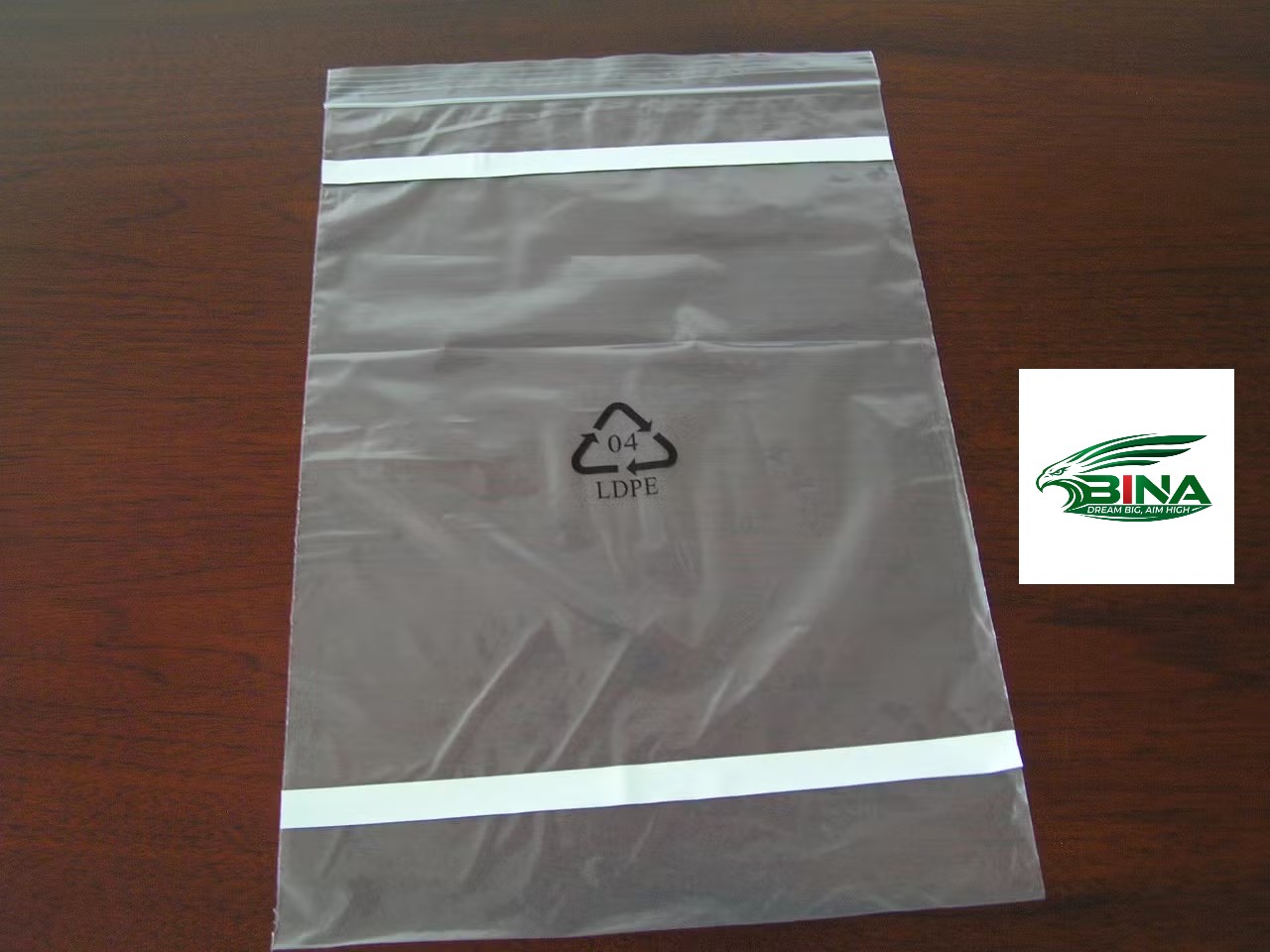
- LDPE (Low-Density Polyethylene): Relatively soft, with good transparency, suitable for making food storage bags and food packaging.
- HDPE (High-Density Polyethylene): Relatively rigid, with good toughness, commonly used for making garbage bags and shoulder bags.
 |
Purchasing channels:
- Retail/Small quantities: Supermarkets, household goods stores, online e-commerce platforms (search for keywords such as “clear PE sealing bags”, “PE garbage bags”).
- Wholesale/Custom orders: Website https://bina.com.vn industrial packaging companies, wholesale packaging material markets.
Important notes:
- Food safety: If used for food packaging, make sure the product is labeled “food-grade”. Thickness and load-bearing capacity: Choose the appropriate thickness based on the weight of the product inside (usually measured in mil, 1 mil = 0,01mm).
- Transparency and texture: High-quality PE bags are usually odorless and have a uniform material.
 |
Tips for calculating the number of PE bags per 1 kg
The key to calculating the number of PE bags per 1 kg is to determine the weight of one bag.
I. Basic calculation formula
- The formula for calculating the weight of one bag is usually: Quantity = Length (cm) x Width (cm) x Thickness (mm) x 2 (double layer) x Density (approximately 0.92).
- Number of PE bags per 1 kg (1000g): 1000/ (Length (cm) x Width (cm) x Thickness (mm) x 2 (double layer) x Density (approximately 0.92))
(Note: Thickness is usually measured in millimeters (mm). If it is “silk”, 1 sil = 0.01mm)
II. Specific example
- Suppose the specifications of your PE bag are: Length 30cm, Width 20cm, Thickness 5 sils (i.e. 0.05mm).
- Calculate the weight of one bag: 30 x 20 x 0.05 x 2 x 0.92=55.2g
- Calculate the quantity per kilogram: 1000:55.2=18.11.
- Result: Approximately 18 PE bags of this size are available in 1 kilogram.
(Note: If the formula uses the unit “centimeter”, the result needs to be divided by 100 to obtain the approximate weight in grams. Some factories often multiply directly by the thickness value for quick estimation; please refer to the manufacturer’s method)
III. Factors affecting the result
- Thickness (mil/mm): The thicker the plastic bag, the fewer bags are available per kilogram.
- Bag type: Flat bags, zipper bags and vest-style bags have different weights.
- Density: The density of PE raw material is usually in the range of 0.91-0.94 g/cm3 and is generally taken as 0.92g/cm3.
 |
Polyethylene (PE) Bags Compared with Polypropylene (PP) Bags
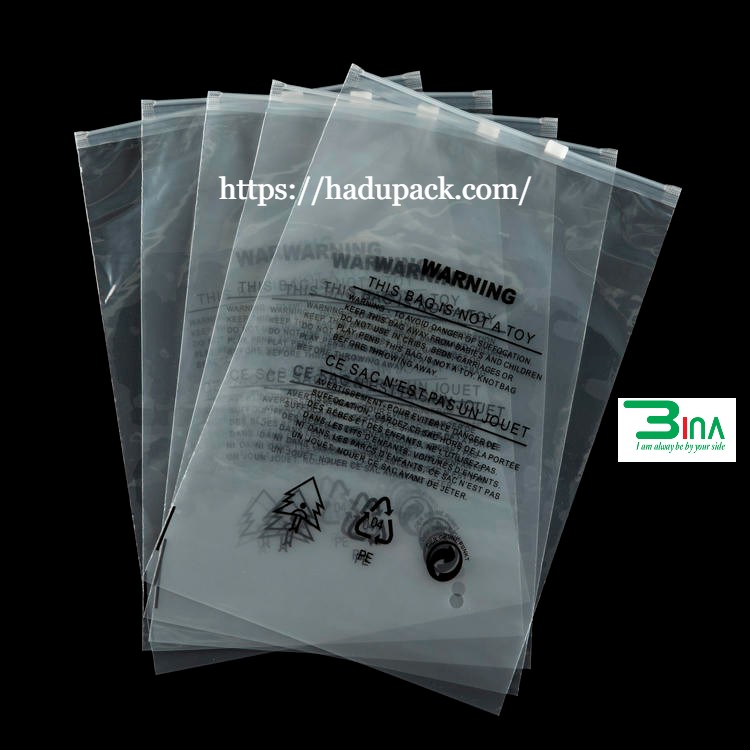
If you are looking for plastic PE bags, polyethylene (PE) and polypropylene (PP) are the two most common types of materials you will encounter. While some people believe that these two plastics can be used interchangeably, in reality they are two distinct types of materials. Some differences are more noticeable than others, with varying degrees of opacity between the two. However, there are many more differences that set these thermoplastics apart. If you need packaging for very specific applications, you will need to understand the advantages and disadvantages of both types of materials.
 |
 |
◆Learn more:
- https://hadupack.com/san-pham/tui-pp/
- https://hadupack.com/san-pham/tui-nilon/
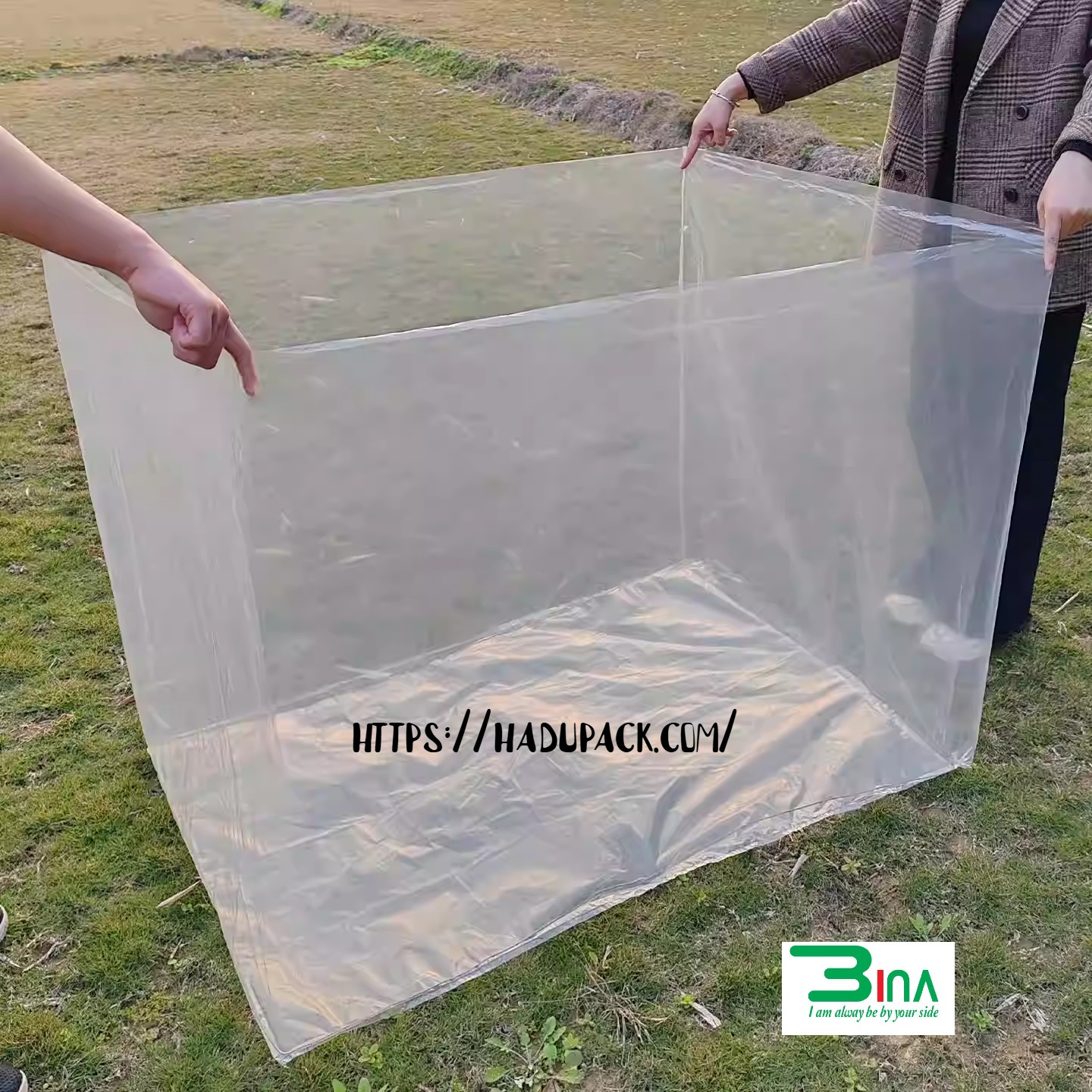
- https://hadupack.com/san-pham/tui-trum-pallet/
What is a detailed definition of polyethylene (PE) bags?
Polyethylene (PE) is one of the most resilient types of plastic available today. In addition to its incredible durability, it is also tear-resistant. Furthermore, it is an extremely versatile type of plastic. These characteristics combine to create a sturdy packaging solution suitable for bulky items.
Polyethylene bags and polyethylene liners are commonly used in industrial environments, with their rugged nature making them perfect for storing heavy items such as machinery parts and spare parts. However, their protective properties can also be used in completely different environments. Because polyethylene bags are only partially transparent, they also protect belongings from the harmful effects of UV rays. This makes them ideal for storing delicate materials that may fade when exposed to sunlight. They are even used as storage solutions for priceless works of art and historical artifacts.
There are several types of polyethylene plastic, with the most widely used being polyethylene terephthalate (PET). This type of PE plastic is manufactured and has many applications. Common applications include food packaging, the production of beverage bottles, the creation of microfiber materials, and more.
Low-density polyethylene (LDPE) is another option. This type of plastic is not only flexible but also quite impermeable. This means it has impressive moisture resistance. It is also impact-resistant, resistant to chemicals, and able to withstand extreme temperatures. It is commonly used in protective packaging such as bubble wrap and stretch film but is primarily used to manufacture plastic bags. High-density polyethylene (HDPE) is significantly stronger than LDPE, but there are some trade-offs when it comes to flexibility.
What are Polypropylene (PP) Bags?
Are you looking for a more transparent packaging solution? With exceptional clarity, polypropylene bags are the obvious choice. Because they are less cloudy than similar PE bags, these poly bags are ideal for packaging food. In addition to their transparency, polypropylene bags are also valued for their durability and flexibility.
Furthermore, polypropylene’s high tensile strength makes it highly effective for storing goods or preparing them for shipment. Its flexible structure makes it an easy-to-process material, regardless of how oddly shaped the item is, while also protecting against dents and scratches. Its low permeability makes polypropylene bags a perfect fit for food products, preventing contaminants and harmful bacteria.
The transparency of this material is also useful for customers. By providing a clear view of the products inside, consumers do not have to take a risk when handing over their hard-earned money. Although polypropylene bags offer many benefits, they remain an affordable option and can comfortably cope with a wide range of environmental conditions.
 |
 |
Advantages of PE (polyethylene) bags
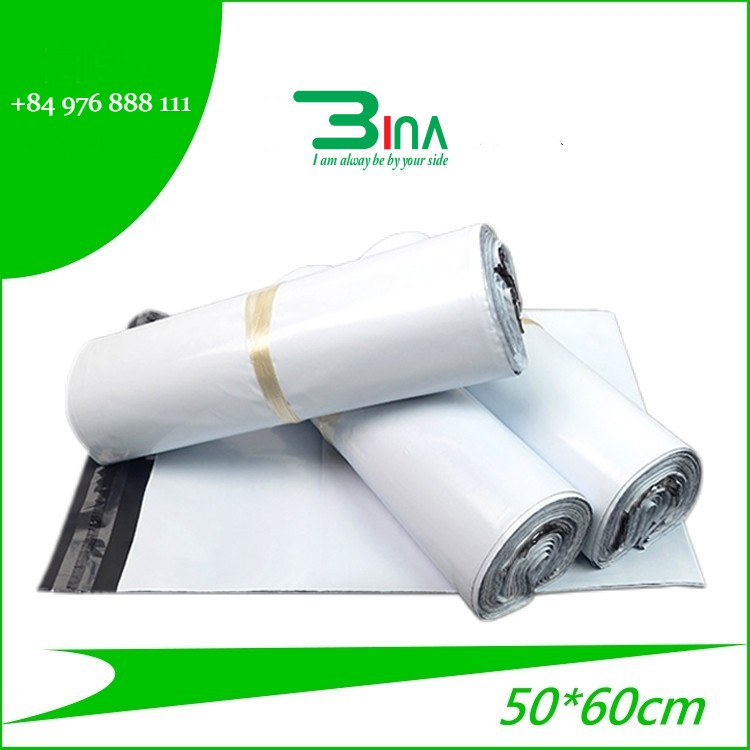
Although polyethylene bags tend to be more expensive than polypropylene bags, they offer many attractive benefits. In addition to exceptional tear resistance and durability, the flexible nature of polyethylene gives it a surprisingly soft finish. This means that when used as packaging, polyethylene bags will not damage the items inside.
Polyethylene bags can withstand cold temperatures, making them a good choice for storing items in freezing conditions such as poorly heated warehouses. Dust and dirt are also kept out, while the relatively low static charge means you no longer have to worry about health and safety.
 |
 |
Advantages of Polypropylene Bags
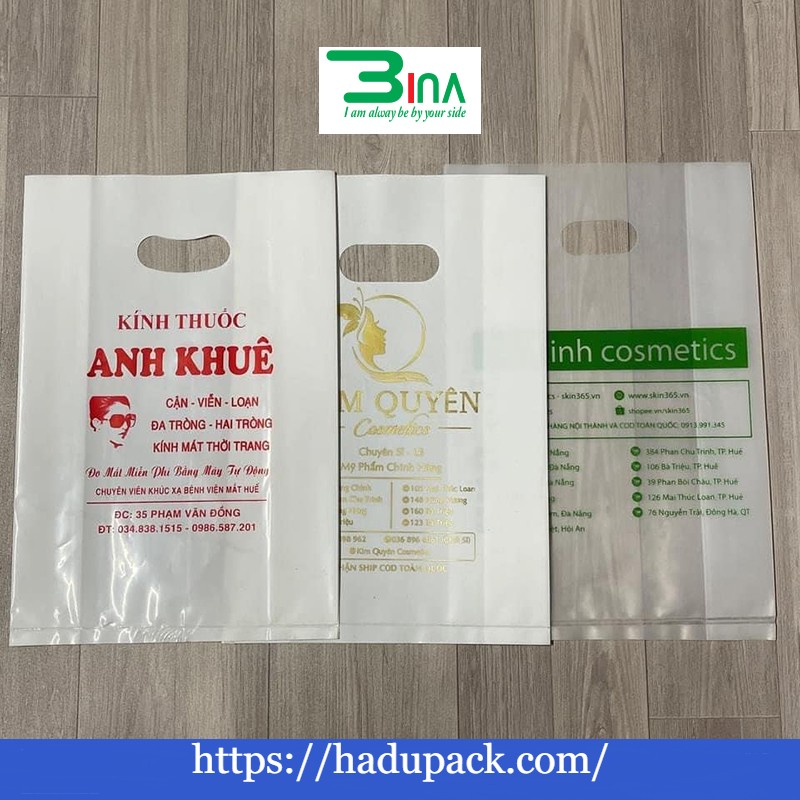
If you are looking for a lightweight and durable poly bag, then Jones polypropylene bags are an easy choice. Ideal for use in food processing and manufacturing industries, polypropylene bags must fully comply with the latest regulations and industry recommendations if you source them from a legitimate supplier.
Furthermore, despite their exceptional tensile strength, they remain extremely flexible, making them a versatile packaging solution. Their high melting point also provides peace of mind and expands their applications, while you can rest assured that the contents are protected from external steam, moisture, and harmful contaminants. Need more convincing? In most cases, polypropylene bags are also cheaper than polyethylene bags.
 |
 |
Chemical and Heat Resistance
If you plan to use poly bags in harsher environments, you will need to consider the heat and chemical resistance properties of each type. Will your packaging come into contact with chemicals and corrosive agents? Although polyethylene bags are generally more durable than polypropylene bags, the latter outperforms the former when it comes to chemical resistance.
PP bags also have much better resistance to extremely high temperatures than PE bags. PP bags can withstand high temperatures of up to 340 degrees F, while PE bags can only withstand extremely high temperatures of around 240 degrees F. However, PE bags outperform them in terms of resistance to extremely low temperatures. They can withstand temperatures as low as -110 degrees F. In contrast, PP bags begin to lose their structural integrity when they pass below the freezing point.
 |
 |
Can Poly Bags Be Recycled?
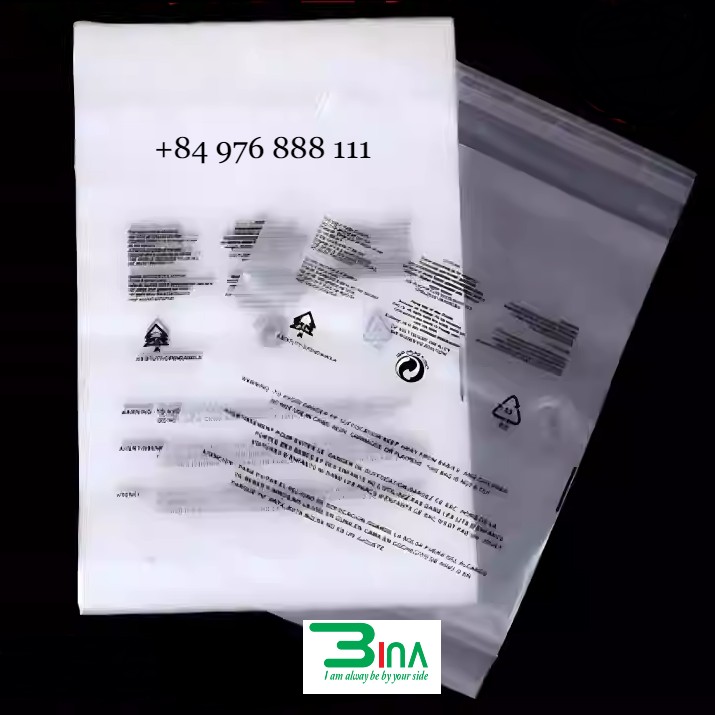
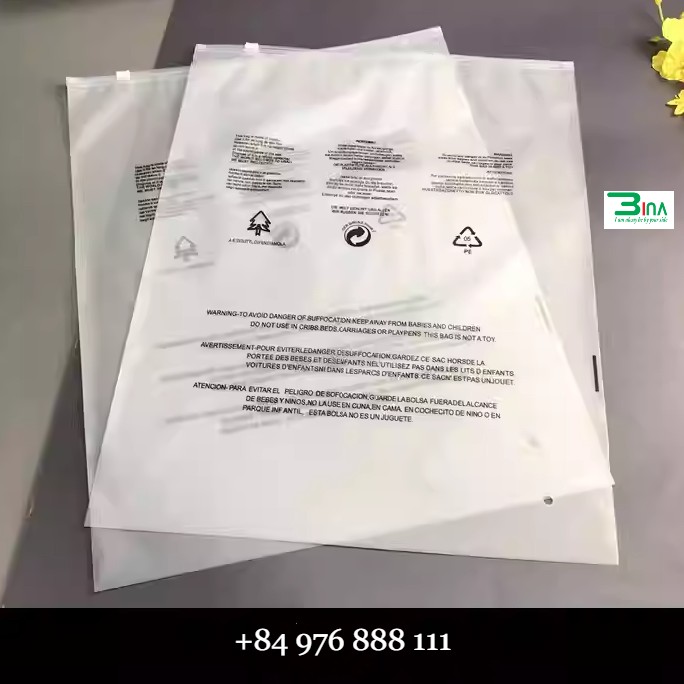
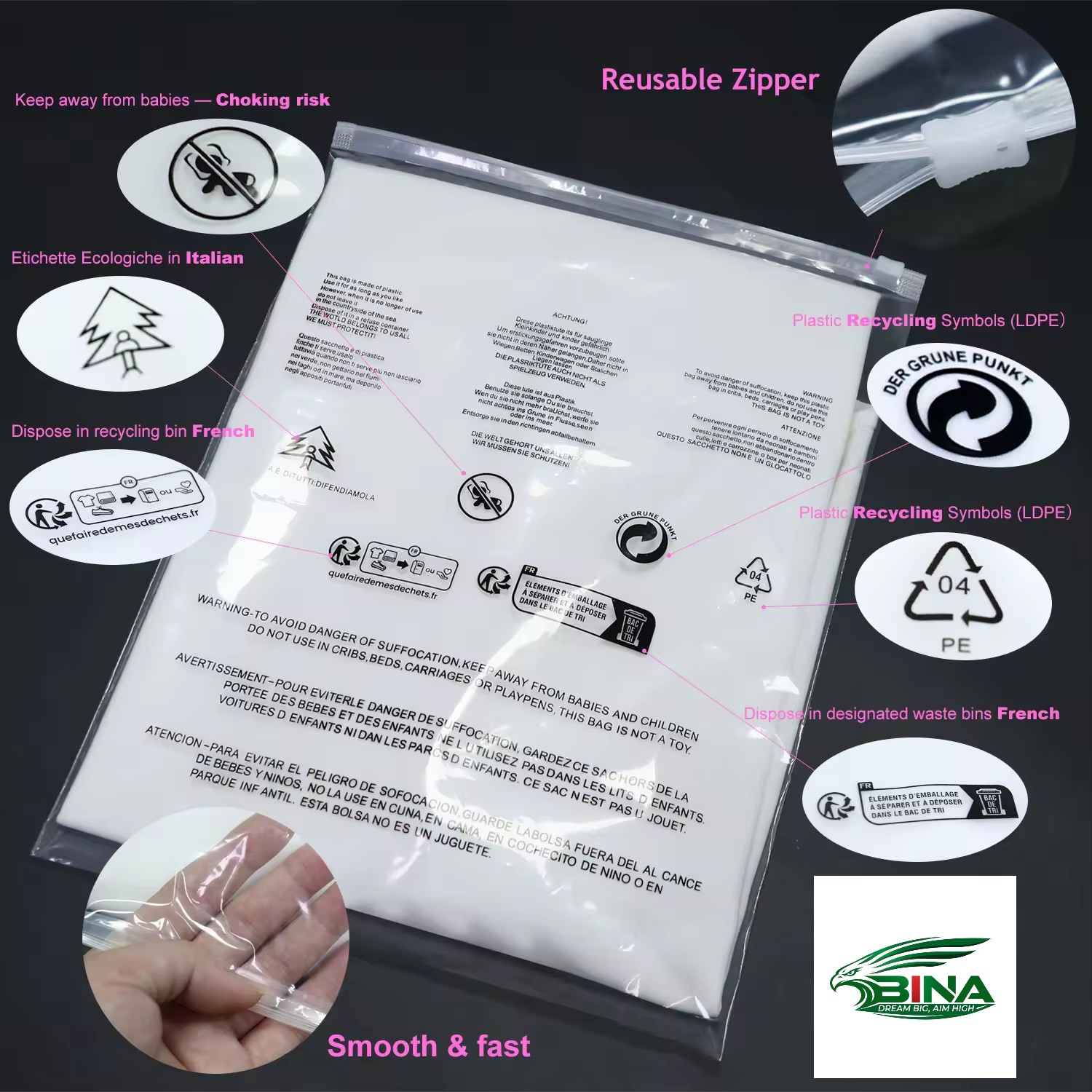
With many businesses looking for ways to make more sustainable choices, one question you may be asking is whether PE and PP bags can be easily recycled. The good news is that both types of thermoplastics are readily recyclable, requiring only high temperatures to melt and reshape the material into a new form. However, polyethylene tends to be recycled more often than polypropylene.
 |
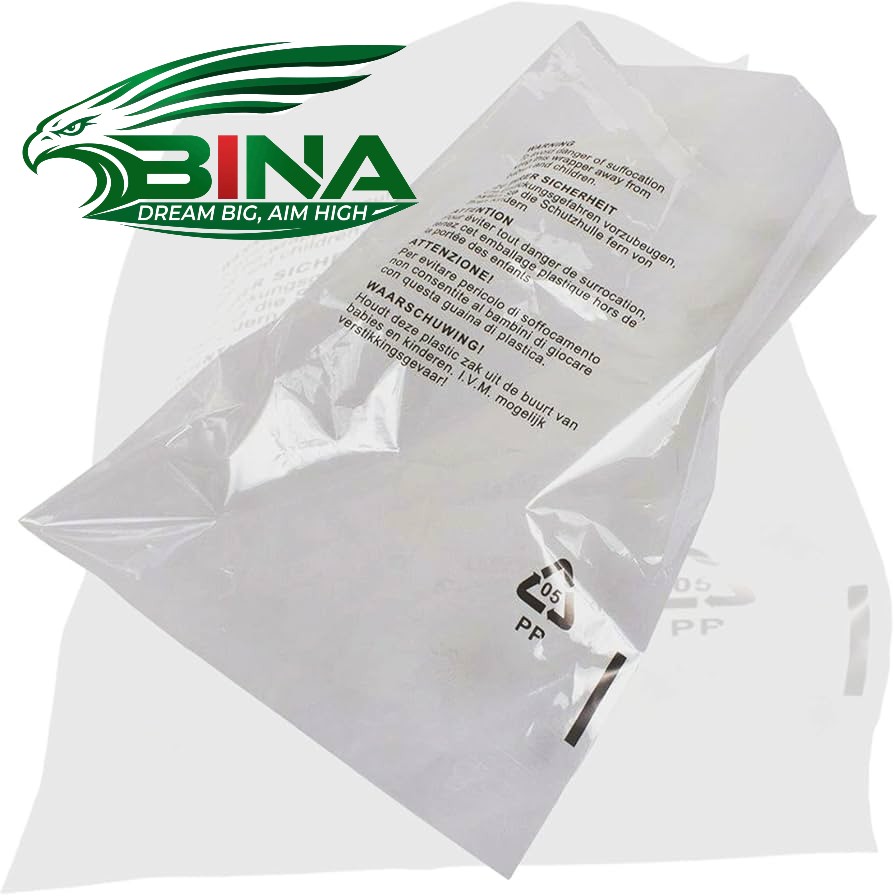
Common issues with PE plastic bag packaging
Common issues with PE bags (polyethylene plastic bags) focus on physical damage (cracking, brittle seals), aging due to improper storage, lack of safety at high temperatures (not suitable for heating in a microwave, not suitable for oily or hot foods), and opacity and toxicity caused by recycled materials. The proper way to use them is to store them in airtight containers at room temperature, avoiding high temperatures and direct sunlight. Common issues and precautions for PE bags:
 |
1. Physical performance issues (Quality and transportation)
- Brittle/cracked seals: Often caused by insufficient heat-sealing strength due to too low a sealing temperature, or by the bags being damaged during transportation.
- Opaque plastic surface (Recycled material): If PE bags are not naturally pure in color and contain impurities or particles, this often indicates the addition of recycled material, making them unsuitable for food packaging.
- Brittleness at low temperatures: Although PE can withstand low temperatures, the performance of ordinary PE bags will deteriorate at extremely low temperatures.
2. Safety issues (Food and high temperatures)
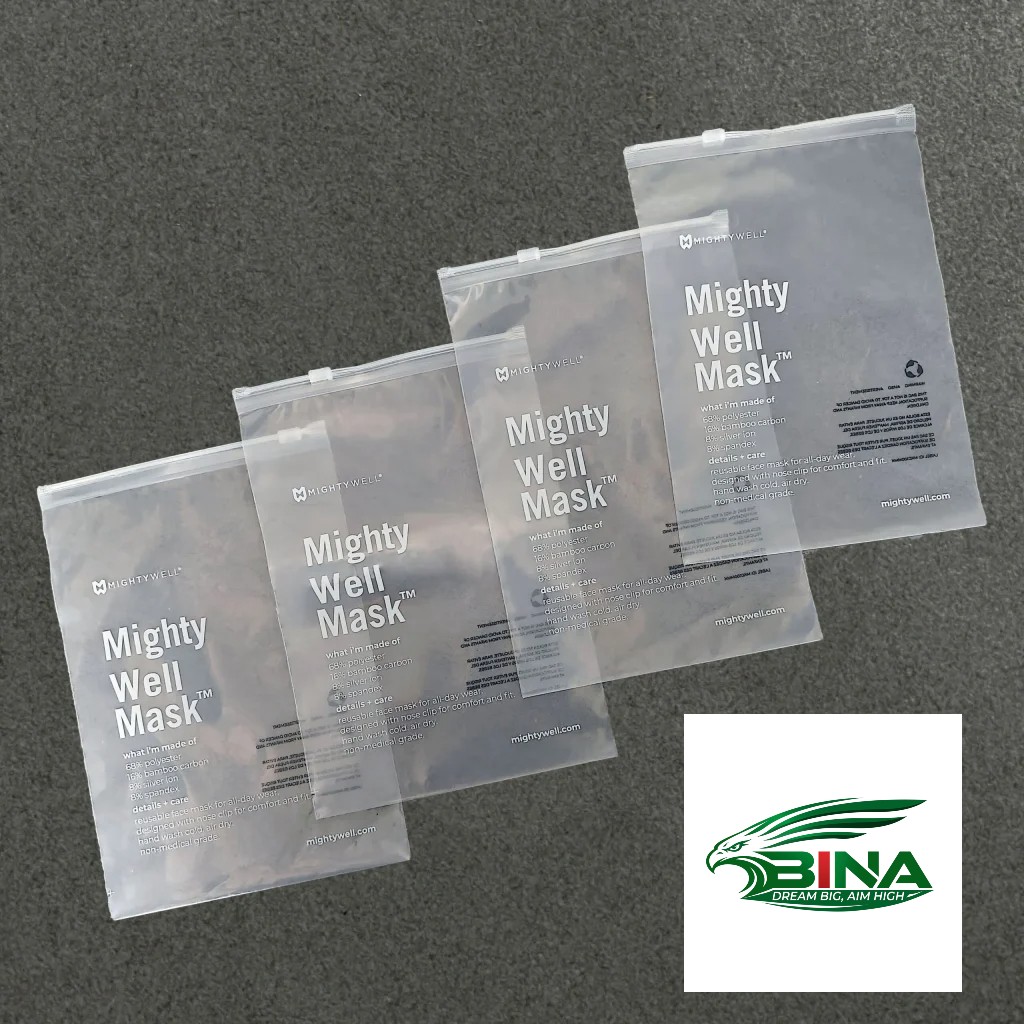
- Do not use in microwaves: PE material has poor heat resistance. Although it can be used at room temperature, it must never be used in a microwave to avoid the release of toxic substances.
- Do not use for hot/fried foods: PE bags may decompose and release toxic substances at temperatures above 110 degrees C. They are not suitable for holding freshly fried foods such as fried dough sticks or hot porridge.
Do not reuse: Food bags should only be used to prevent the growth of bacteria.
 |
3. Issues with storage environment
- Aging and brittleness: High storage temperatures (above 30°C) will accelerate the aging process of PE bags, reducing their transparency and strength.
- Damage: A humid storage environment may affect the material’s properties.
4. Issues with structural design
- Vacuum packaging bags need perforations: Vacuum packaging usually uses two layers of bags. If the outer bag is not perforated, it will be difficult to flatten the inside. In addition, packaging bags often have a tear line on the side to ensure a neat appearance.
- Recommendation: For food packaging, please confirm whether it is labeled as meeting food-grade standards. Avoid using PE bags in high-temperature environments and store them in a dry, cool, and well-ventilated place.







Reviews
There are no reviews yet.